

The United Nations Office at Geneva
Multimedia Newsroom
Famine risk spikes amid conflict, COVID-19 and funding gaps: WFP
The impact of conflicts old and new, climate shocks and COVID-19 in addition to a lack of funding have left millions more people on the verge of famine than six months ago, the World Food Programme (WFP) said on Friday.
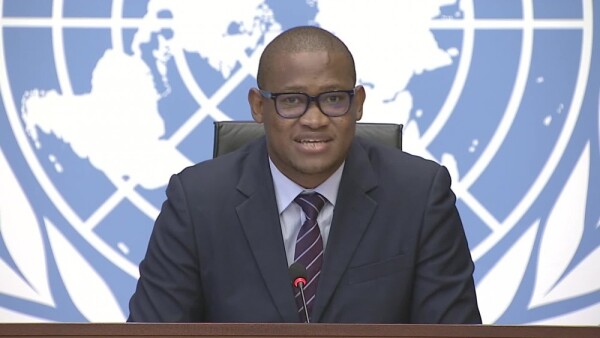
“The United Nations World Food Programme, WFP, is worried that millions of refugees are looking to a future of uncertainty and hunger as the impact of the pandemic on aid budgets plays out in funding shortages for emergency operations,” said spokesperson Tomson Phiri.
“The number of people teetering on the brink of famine has risen from 34 million projected at the beginning of the year, to 41 million projected as of June. Without immediate emergency food assistance, they too face starvation, as the slightest shock will push them over the cliff into famine conditions.”
According to the latest IPC food insecurity assessments - which humanitarians use to assess needs on a scale of one to five – the 41 million “are people who are in IPC phase 4 – emergency”, the WFP spokesperson explained.
New refugee influxes linked to conflict and drought have increased needs for people in “IPC phase 5 – catastrophe” and “that number stands at 584,000 people”, Mr. Phiri continued. “These are people in in Ethiopia’s Tigray region, Madagascar, particularly the southern part; South Sudan, especially as we are now at the height of the lean season in that country, and Yemen.”
Launching the WFP Global Operational Response Plan, the UN agency highlighted operations in no less than eight countries and regions where it has had to make “brutal choices” because of significant funding shortfalls.
In practice, this has meant reduced rations “across east and southern Africa, as well as the Middle East…among some of the world’s most vulnerable people who rely on WFP to survive”, said Mr. Phiri.
Highlighting the economic impact of the coronavirus pandemic on the most vulnerable recipients of humanitarian aid, the WFP spokesperson explained that “more and more people (were) in need because of the rising food crisis in the region. We have a lot of people unable to work, mainly because of the fallout from COVID-19. So, the situation in west Africa, or in west African countries – west and central Africa, indeed - countries like Chad, Niger and Burkina, Mauritania; these are all countries of concern, including Sierra Leone as well.”
Appealing for $5 billion this year “to avoid famine” and meet the urgent needs of those most at risk, Mr. Phiri noted that ration cuts differed from country to country. “In some cases it’s 40 per cent, in some cases it’s 25 per cent, in some cases it’s 60 per cent…The fact is, the assistance we provide is a basic need, the assistance we provide is just enough to help people get by.”
The world is no longer moving towards Zero Hunger, according to WFP, which said in a statement that “progress has stalled, reversed, and today, more than 270 million people are estimated to be acutely food insecure or at high risk in 2021”.
ends
STORY: 41 Million Face Famine - WFP
TRT: 3 mins 29s
SOURCE: UNTV CH
RESTRICTIONS: NONE
LANGUAGE: ENGLISH / NATS
ASPECT RATIO: 16:9
DATELINE: 18 June 2020 GENEVA, SWITZERLAND
SHOTLIST
- Exterior wide shot, Palais des Nations flag alley, nations’ flags flying, a sunny day.
- Medium-wide shot, podium with speakers and TV screen for outside speakers, Room XIV, Palais des Nations.
- SOUNDBITE (English) — Tomson Phiri, spokesperson, World Food Programme (WFP): “The United Nations World Food Programme is worried that millions of refugees are looking to a future of uncertainty and hunger as the impact of the pandemic on aid budgets play out in funding shortages for emergency operations.”
- Medium shot, showing a microphone in foreground, blurred and conference attendee to rear, seated and masked in front of chairs marked off with blue and white security tape, in line with COVID-19 distancing recommendations, Room XIV, Palais des Nations.
- SOUNDBITE (English) — Tomson Phiri, spokesperson, World Food Programme (WFP): “The number of people teetering on the brink of famine has risen from 34 million projected at the beginning of the year, to 41 million projected as of June. Without immediate emergency food assistance, they too face starvation as the slightest shock will push them over the cliff into famine conditions.”
- Medium shot, podium speakers, Room XIV, Palais des Nations.
- SOUNDBITE (English) — Tomson Phiri, spokesperson, World Food Programme (WFP): “These 41 million are people who are in IPC phase 4 emergency. But there is another category that this year is already facing famine-like conditions. That number stands at 584,000 people. These are people in in Ethiopia’s Tigray region, Madagascar, particularly the southern part; South Sudan, especially as we are now at the height of the lean season in that country, and Yemen.”
- Medium shot, conference attendee, masked and seated, head shot, with UNTV camera on tripod to rear, Room XIV, Palais des Nations.
- SOUNDBITE (English) — Tomson Phiri, spokesperson, World Food Programme (WFP): “Significant funding shortfalls across east and southern Africa, as well as the Middle East, have forced ration cuts among some of the world’s most vulnerable people who rely on WFP to survive.”
- Medium shot, podium speakers, Room XIV, Palais des Nations.
- SOUNDBITE (English) — Tomson Phiri, spokesperson, World Food Programme (WFP): “We see more and more people in need because of the rising food crisis in the region. We have a lot of people unable to work, mainly because of the fallout from COVID-19. So, the situation in west Africa, or in west African countries – west and central Africa, indeed - countries like Chad, Niger and Burkina, Mauritanie; these are all countries of concern, including Sierra Leone as well.”
- Medium shot, podium speaker, Room XIV, Palais des Nations.
- SOUNDBITE (English) — Tomson Phiri, spokesperson, World Food Programme (WFP): “The cuts differ from country to country; in some cases it’s 40 per cent, in some cases it’s 25 per cent, in some cases it’s 60 per cent, but the message is, ‘What do I take home from this after saying so much?’ The fact is, the assistance we provide is a basic need, the assistance we provide is just enough to help people get by.”
- Close-up, podium speaker, Room XIV, Palais des Nations.
- SOUNDBITE (English) — Tomson Phiri, spokesperson, World Food Programme (WFP): ““WFP needs $5 billion in 2021 to avoid famine and meet the urgent food and nutrition needs of those people who are most at risk.”
- Close-up, conference attendee, masked, head shot, with TV screen to rear showing speakers and chairs marked off with blue and white security tape, in line with COVID-19 distancing recommendations, Room XIV, Palais des Nations.
- Medium shot, podium speaker, Room XIV, Palais des Nations.
- Medium shot, conference attendee seated alone with laptop, amid chairs marked off with blue and white security tape, in line with COVID-19 distancing recommendations, Room XIV, Palais des Nations.
Similar Stories
1
1
1
Edited News | OCHA , UNICEF , WFP
Aid agencies warned on Friday of the fast-developing humanitarian emergency inside Taiz City in Yemen, which has been encircled by de facto Houthi forces fighting government troops along the country’s west coast.

2
17
1
2
Edited News , Press Conferences , Images | OCHA , WMO
Two UN agencies teamed up on Wednesday to issue an appeal for immediate assistance to help communities already being impacted by the strongest El Niño on record.

3
16
2
2
Edited News , B-roll , Conferences , Images | UNITED NATIONS , UNOG
Sixth Consultative Meeting on Enhancing Coordination of Peace Initiatives and Efforts for Sudan

1
1
1
Edited News | UNICEF , WHO , UNHCR
Yemen war continues to force families from homes amid hunger and disease
More than 250,000 people have now fled renewed fighting in Yemen, the UN said on Tuesday, citing particular concern for those sheltering in the southwestern city of Taiz and the wider governorate, where access is “essentially blocked”.

1
1
1
Edited News | UNICEF
A little over one year since a ceasefire agreement was announced between Hamas fighters and Israel, more than 340 children have been reported killed and hundreds more injured, the UN Children’s Fund, UNICEF, said on Friday.

1
1
1
Edited News | UNICEF , IFRC
Six weeks after Nepal’s deadly flooding disaster, communities are still struggling to rebuild their lives, but they will need sustained help as global warming increases the risk of another Himalayan catastrophe, the UN Children’s Fund (UNICEF) said on Friday.

1
1
1
Edited News | WHO
In suspected Russia plague death, testing and monitoring underway – WHO
The death of a lab worker in Russia’s Siberia region has sparked concerns about plague being the cause, the UN World Health Organization (WHO) said on Tuesday, adding that it was following the situation closely.

1
1
Edited News | OHCHR , UNOG
UN Human Rights Chief Volker Türk on Friday provided and oral update to the 63rd session of the Human rights Council on Ukraine.

1
1
1
Edited News | OHCHR , UNOG
UN Human Rights Chief Volker Türk on Friday provided and oral update to the 63rd session of the Human rights Council on the human rights situation in Haiti.

1
1
1
Edited News | WHO
Repeated delays in bringing lifesaving medicines, prosthetics and more from Israel into Gaza risk having devastating consequences on Palestinians who urgently need them in the wartorn enclave, the UN World Health Organization (WHO) said on Friday. “A truck full of non-priority supplies or the right supplies arriving too late, doesn't save lives. That's the question that actually matters," said Dr Reinhilde Van De Weerdt, WHO Representative in the OPT.

1
1
1
Edited News | WHO
DRC: Early access to care and oxygen decisive for Ebola patients’ survival – WHO
In the Democratic Republic of the Congo (DRC), health workers fighting the country’s largest-ever Ebola outbreak are struggling to overcome critical challenges to patient care, the UN World Health Organization (WHO) warned on Tuesday.

1
1
1
Edited News | OCHA , UN
Civilians in Iran are continuing to feel the consequences of months of conflict and military escalation, the UN’s top official in the country has said, as loss of life, damage to civilian infrastructure and mounting economic pressures leave many facing continued uncertainty.