

The United Nations Office at Geneva
Multimedia Newsroom
Edited News | WHO , UNITED NATIONS
UNOG Bi-weekly press briefing Ebola Outbreaks WHO 12 February 2021
Close to 300 Ebola contacts identified in the latest outbreak in the Democratic Republic of Congo, 109 more in Guinea – WHO
Following the latest resurgence of Ebola in West Africa since Guinea's outbreak in 2013-2016, the World Health Organization (WHO) today provided further details on the spread and tracking of the disease so far, both in Guinea and in the eastern regions of the Democratic Republic of Congo (DRC).
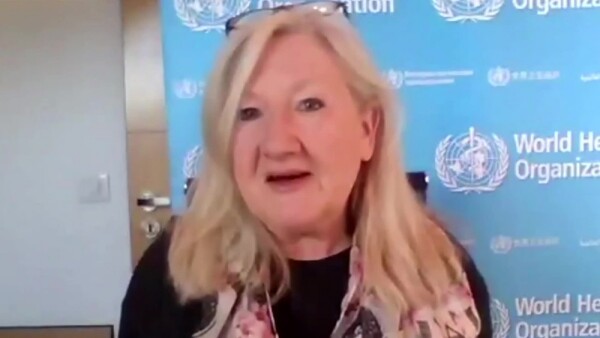
« We know now there are seven cases, three confirmed, four probable, in Guinea, and three of those have died. We have identified 115 contacts and the majority of those have been traced. That’s a 109. The contacts are in N’Zerekore but also in Conakry,” said Dr. Margaret Harris, a spokesperson for the WHO.
In a parallel development in the eastern DRC, more than 4'000 km away from Guinea, Dr. Harris said, “we also have an outbreak going on in North Kivu. There is no connection between the two. We have not seen any evidence of any connection. But they are going on at the same time”.
The Democratic Republic of Congo (DRC) reported a resurgence of the Ebola virus on the 7th of February, a week before the Guinea outbreak.
According to Dr. Harris the previous experience the health teams have in curbing the Ebola outbreaks in the two countries will be potentially be of great help to them, as contacts can be traced quickly to prevent further infection.
“What is critical is decentralising the operations to the lowest levels, making sure your operations are with the community and that the community owns the operations – that your work is community centered and that you work with the community,” Dr. Harris said.
The WHO’s spokesperson stressed that “a one size fits all approach to community engagement isn’t effective. Every community is unique, and engagement has to really, really, be hyper-contextualized with the affected communities. That’s the lesson we learn each time, and each time we improve on that and need to improve on that”.
According to WHO, once an Ebola outbreak has taken place, it is likely that it will reoccur in the same area -- as seen in several outbreaks. Whether this is because Ebola persists in human beings or whether the disease is simply moving again from animal populations to humans in those areas, is still unknown. Ongoing genetic sequencing may provide this information, WHO experts say.
WHO has alerted six countries to watch out for potential Ebola cases after the recent Ebola outbreaks in Guinea and Democratic Republic of Congo. With the epicentre of the current outbreak in a border area, WHO is already working with health authorities in Liberia and Sierra Leone to scale up community surveillance of cases in their border districts as well as strengthening their capacity to test for cases and conduct surveillance in health facilities. WHO is reaching out to Cote d’Ivoire, Mali, Senegal and other countries at risk in the West Africa sub-region.
Regarding the health response in North Kivu, DRC, Ms Harris said that “insecurity adds a much higher level of complexity and certainly makes it much more difficult to do the work that’s already difficult because you are in a geographically difficult location as well”.
WHO is also supporting the country to procure the Ebola vaccine which has proven instrumental in controlling outbreaks in the DRC.
“Normally the vaccination is done around reported cases and all sort of frontline workers. But again these are decisions that the local authorities make in terms of what their community needs, and also of course what is feasible”, WHO’s Margaret Harris said.
Guinea was one of the three most-affected countries in the 2014–2016 West Africa Ebola outbreak which was the largest since the virus was first discovered in 1976.
During the West Africa Ebola outbreak in 2014 there were 28 000 cases, including 11 000 deaths. The outbreak started in Guinea and then moved across land borders to Sierra Leone and Liberia.
- Exterior wide shot, Place des Nations with Palais des Nations
- Wide shot, press briefing room
- SOUNDBITE (English) — Margaret Harris, Spokesperson for the World Health Organization (WHO): “We know now there is 7 cases, 3 confirmed, 4 probable in Guinea, and 3 of those have died. We have identified 115 contacts and the majority of those have been traced. That’s a 109. The contacts are in Nzerekore but also in Conakry”.
- Medium shot, podium with spokesperson and screen
- SOUNDBITE (English) - Margaret Harris, Spokesperson for the World Health Organization (WHO): “We also have an outbreak going on in North Kivu, there is no connection between the two. We have not seen any evidence of any connection. But they are going on at the same time”.
- Medium shot, journalists in press briefing room
- SOUNDBITE (English) - Margaret Harris, Spokesperson for the World Health Organization (WHO): “What is critical is decentralising the operations to the lowest levels, making sure your operations are with the community and that the community owns the operations – that your work is community centered and that you work with the community. A one size fits all approach to community engagement isn’t effective. Every community is unique, and engagement has to really really be hyper contextualized with the affected communities. That’s the lesson we learn each time and each time we improve on that and need to improve on that”.
- Wide shot, journalist in press briefing room
- SOUNDBITE (English) — Margaret Harris, Spokesperson for the World Health Organization (WHO): “Insecurity adds a much higher level of complexity and certainly makes it much more difficult to do the work that’s already difficult because you are in a geographically difficult location as well”.
- Medium shot, monitor next to podium in press briefing room
- SOUNDBITE (English) — Margaret Harris, Spokesperson for the World Health Organization (WHO): “Normally the vaccination is done around reported cases and all sort of frontline workers. But again these are decisions that the local authorities make in terms of what their community needs, and also of course what is feasible”.
- Wide shot, spokesperson at podium
- Close up, writing on paper
- Medium shot, journalists in press briefing room
- Wide shot, journalist in press briefing room
Similar Stories
1
1
1
Edited News | OCHA , UNICEF , WFP
Aid agencies warned on Friday of the fast-developing humanitarian emergency inside Taiz City in Yemen, which has been encircled by de facto Houthi forces fighting government troops along the country’s west coast.

2
17
1
2
Edited News , Press Conferences , Images | OCHA , WMO
Two UN agencies teamed up on Wednesday to issue an appeal for immediate assistance to help communities already being impacted by the strongest El Niño on record.

3
16
2
2
Edited News , B-roll , Conferences , Images | UNITED NATIONS , UNOG
Sixth Consultative Meeting on Enhancing Coordination of Peace Initiatives and Efforts for Sudan

1
1
1
Edited News | UNICEF , WHO , UNHCR
Yemen war continues to force families from homes amid hunger and disease
More than 250,000 people have now fled renewed fighting in Yemen, the UN said on Tuesday, citing particular concern for those sheltering in the southwestern city of Taiz and the wider governorate, where access is “essentially blocked”.

1
1
1
Edited News | UNICEF
A little over one year since a ceasefire agreement was announced between Hamas fighters and Israel, more than 340 children have been reported killed and hundreds more injured, the UN Children’s Fund, UNICEF, said on Friday.

1
1
1
Edited News | UNICEF , IFRC
Six weeks after Nepal’s deadly flooding disaster, communities are still struggling to rebuild their lives, but they will need sustained help as global warming increases the risk of another Himalayan catastrophe, the UN Children’s Fund (UNICEF) said on Friday.

1
1
1
Edited News | WHO
In suspected Russia plague death, testing and monitoring underway – WHO
The death of a lab worker in Russia’s Siberia region has sparked concerns about plague being the cause, the UN World Health Organization (WHO) said on Tuesday, adding that it was following the situation closely.

1
1
Edited News | OHCHR , UNOG
UN Human Rights Chief Volker Türk on Friday provided and oral update to the 63rd session of the Human rights Council on Ukraine.

1
1
1
Edited News | OHCHR , UNOG
UN Human Rights Chief Volker Türk on Friday provided and oral update to the 63rd session of the Human rights Council on the human rights situation in Haiti.

1
1
1
Edited News | WHO
Repeated delays in bringing lifesaving medicines, prosthetics and more from Israel into Gaza risk having devastating consequences on Palestinians who urgently need them in the wartorn enclave, the UN World Health Organization (WHO) said on Friday. “A truck full of non-priority supplies or the right supplies arriving too late, doesn't save lives. That's the question that actually matters," said Dr Reinhilde Van De Weerdt, WHO Representative in the OPT.

1
1
1
Edited News | WHO
DRC: Early access to care and oxygen decisive for Ebola patients’ survival – WHO
In the Democratic Republic of the Congo (DRC), health workers fighting the country’s largest-ever Ebola outbreak are struggling to overcome critical challenges to patient care, the UN World Health Organization (WHO) warned on Tuesday.

1
1
1
Edited News | OCHA , UN
Civilians in Iran are continuing to feel the consequences of months of conflict and military escalation, the UN’s top official in the country has said, as loss of life, damage to civilian infrastructure and mounting economic pressures leave many facing continued uncertainty.