

The United Nations Office at Geneva
Multimedia Newsroom
Edited News | UNOG , OHCHR
Myanmar military controlled ballot exacerbates violence and social division
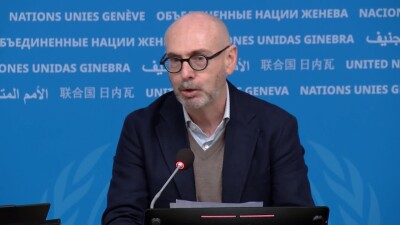
“After the military grabbed power from the democratically elected government, Myanmar has lost half a decade of peace and development. The profound and widespread despair inflicted on the people of Myanmar has only deepened with the recent election staged by the military,” Laurence said.
“Many people chose either to vote or not to vote purely out of fear, flatly at odds with their internationally guaranteed civil and political rights, and with ripple effects on their enjoyment of economic, social and cultural rights. The conflict and insecurity continued unabated in large parts of the country, and opposition candidates and some ethnic groups were excluded,” he said.
“Elections were held in only 263 of 330 townships, often exclusively in urban centers under military control, and limited in conflict areas and hence excluding large segments of the population, especially displaced and minorities, such as the Rohingya,“ Laurence stated.
“Credible sources verified that 170 civilians were killed in some 408 military aerial attacks reported by open sources during voting between December 2025 and January of this year,” he said.
To curb any dissent the military arrested 324 men and 80 women under its unilaterally adopted election protection law, including for minor online activity, with grossly disproportionate penalties such as a 49-year sentence for posting anti-election materials.
Voter coercion was reported nationwide. In an emblematic incident on 6 January 2026 over 100 villagers in Sagaing region were arbitrarily detained and compelled to cast advance ballots. They were released the following day. Others reported voting under the fear of forced conscription, losing access to food, or administrative consequences like denial of border passes, passport renewal or university registration. While some reported being threatened by armed groups if they voted.
“For five years now, the military’s rule has been characterized by repression of political dissent, mass arbitrary arrests, arbitrary conscription, widespread surveillance and limitation of civic space. Now, the military is seeking to entrench its rule-by-violence after forcing people to the ballot box. This couldn’t be further from civilian rule,” the spokesperson stated.
“The Myanmar military created the human rights atmosphere in the country today. As I have briefed you all many times, it is an environment of fear, oppression, violence and despair. Civilians do not feel safe and they increasingly do not see hope for their futures if the military is able to declare victory or that their coup has succeeded,” Rodehaver added.
“These elections did not prevent violence from continuing throughout 2025. Last year was the deadliest year since the coup for children. It was also the year in which more civilians died from airstrikes than any other since 2021. Airstrikes continued even through election days, even in townships where voting was going on. Detentions and other forms of repression were also rife,” Rodehaver said.
“As the military seeks legitimacy, we think it is important not just to look at these elections, but at the five-year track record they have established. It tells you all you need to know,” he said.
For more information and media requests, please contact
In Geneva:
Ravina Shamdasani: +41 22 917 9169 / ravina.shamdasani@un.org
Jeremy Laurence: +41 22 917 9383 / jeremy.laurence@un.org
James Rodehaver / james.rodehaver@un.org
Tag and share - X: @UNHumanRights and Facebook: unitednationshumanrights
STORY: Myanmar: Military-controlled ballot exacerbates violence and social division
TRT: 03:50
SOURCE: UNTV / OHCHR
RESTRICTIONS: NONE
LANGUAGE: English /NATS
ASPECT RATIO: 16:9
DATELINE: 30 January 2026 GENEVA, SWITZERLAND
SHOTLIST”
- SOUNDBITE (English) – Jeremy Laurence, Spokesperson United Nations Human Rights (OHCHR): “After the military grabbed power from the democratically elected government, Myanmar has lost half a decade of peace and development. The profound and widespread despair inflicted on the people of Myanmar has only deepened with the recent election staged by the military.”
- Cutaway: Briefing room
- SOUNDBITE (English) – Jeremy Laurence, Spokesperson United Nations Human Rights (OHCHR): “Many people chose either to vote or not to vote purely out of fear, flatly at odds with their internationally guaranteed civil and political rights, and with ripple effects on their enjoyment of economic, social and cultural rights. The conflict and insecurity continued unabated in large parts of the country, and opposition candidates and some ethnic groups were excluded.”
- Cutaway: Briefing room
- SOUNDBITE (English) – Jeremy Laurence, Spokesperson United Nations Human Rights (OHCHR): “Elections were held in only 263 of 330 townships, often exclusively in urban centers under military control, and limited in conflict areas and hence excluding large segments of the population, especially displaced and minorities, such as the Rohingya.”
- Cutaway: Briefing room
- SOUNDBITE (English) – Jeremy Laurence, Spokesperson United Nations Human Rights (OHCHR): “Credible sources verified that 170 civilians were killed in some 408 military aerial attacks reported by open sources during voting between December 2025 and January of this year.”
- Cutaway: Briefing room
- SOUNDBITE (English) – Jeremy Laurence, Spokesperson United Nations Human Rights (OHCHR): “For five years now, the military’s rule has been characterized by repression of political dissent, mass arbitrary arrests, arbitrary conscription, widespread surveillance and limitation of civic space. Now, the military is seeking to entrench its rule-by-violence after forcing people to the ballot box. This couldn’t be further from civilian rule.”
- Cutaway: Briefing room
- SOUNDBITE (English) – James Rodehaver, Chief, Myanmar Team United Nations Human Rights (OHCHR): “The Myanmar military created the human rights atmosphere in the country today. As I have briefed you all many times, it is an environment of fear, oppression, violence and despair. Civilians do not feel safe and they increasingly do not see hope for their futures if the military is able to declare victory or that their coup has succeeded.”
- Cutaway: Briefing room
- SOUNDBITE (English) – James Rodehaver, Chief, Myanmar Team United Nations Human Rights (OHCHR): “These elections did not prevent violence from continuing throughout 2025. Last year was the deadliest year since the coup for children. It was also the year in which more civilians died from airstrikes than any other since 2021. Airstrikes continued even through election days, even in townships where voting was going on. Detentions and other forms of repression were also rife.”
- Cutaway: Briefing room
- SOUNDBITE (English) – James Rodehaver, Chief, Myanmar Team United Nations Human Rights (OHCHR): “As the military seeks legitimacy, we think it is important not just to look at these elections, but at the 5 year track record they have established. It tells you all you need to know.”
Similar Stories

2
17
1
2
Edited News , Press Conferences | OCHA , WMO
Two UN agencies teamed up on Wednesday to issue an appeal for immediate assistance to help communities already being impacted by the strongest El Niño on record.

3
16
2
2
B-roll , Conferences , Edited News | UNITED NATIONS , UNOG
Sixth Consultative Meeting on Enhancing Coordination of Peace Initiatives and Efforts for Sudan

1
1
1
Edited News | UNICEF , WHO , UNHCR
Yemen war continues to force families from homes amid hunger and disease
More than 250,000 people have now fled renewed fighting in Yemen, the UN said on Tuesday, citing particular concern for those sheltering in the southwestern city of Taiz and the wider governorate, where access is “essentially blocked”.

1
1
1
Edited News | UNICEF
A little over one year since a ceasefire agreement was announced between Hamas fighters and Israel, more than 340 children have been reported killed and hundreds more injured, the UN Children’s Fund, UNICEF, said on Friday.

1
1
1
Edited News | UNICEF , IFRC
Six weeks after Nepal’s deadly flooding disaster, communities are still struggling to rebuild their lives, but they will need sustained help as global warming increases the risk of another Himalayan catastrophe, the UN Children’s Fund (UNICEF) said on Friday.

1
1
1
Edited News | WHO
In suspected Russia plague death, testing and monitoring underway – WHO
The death of a lab worker in Russia’s Siberia region has sparked concerns about plague being the cause, the UN World Health Organization (WHO) said on Tuesday, adding that it was following the situation closely.

1
1
Edited News | OHCHR , UNOG
UN Human Rights Chief Volker Türk on Friday provided and oral update to the 63rd session of the Human rights Council on Ukraine.

1
1
1
Edited News | OHCHR , UNOG
UN Human Rights Chief Volker Türk on Friday provided and oral update to the 63rd session of the Human rights Council on the human rights situation in Haiti.

1
1
1
Edited News | WHO
Repeated delays in bringing lifesaving medicines, prosthetics and more from Israel into Gaza risk having devastating consequences on Palestinians who urgently need them in the wartorn enclave, the UN World Health Organization (WHO) said on Friday. “A truck full of non-priority supplies or the right supplies arriving too late, doesn't save lives. That's the question that actually matters," said Dr Reinhilde Van De Weerdt, WHO Representative in the OPT.

1
1
1
Edited News | WHO
DRC: Early access to care and oxygen decisive for Ebola patients’ survival – WHO
In the Democratic Republic of the Congo (DRC), health workers fighting the country’s largest-ever Ebola outbreak are struggling to overcome critical challenges to patient care, the UN World Health Organization (WHO) warned on Tuesday.

1
1
1
Edited News | OCHA , UN
Civilians in Iran are continuing to feel the consequences of months of conflict and military escalation, the UN’s top official in the country has said, as loss of life, damage to civilian infrastructure and mounting economic pressures leave many facing continued uncertainty.
1
1
1
Edited News | WHO , UNICEF
Aid agencies in Yemen highlighted the growing hunger emergency sparked by renewed fighting between Houthi opposition forces and Government troops, after mobile health clinics reported that hundreds of children displaced by the violence are suffering from the most deadly form of malnutrition.