

The United Nations Office at Geneva
Multimedia Newsroom
Global deliveries of critical equipment to tackle COVID-19 pandemic will grind to a halt unless urgent funding is made available to maintain air fleet, UN World Food Program warns
Crucial humanitarian air flights that deliver desperately needed medical supplies and humanitarian workers are in danger of shutting down in July if funding can’t be secured to keep them running, the UN agency in charge of the logistics has said. The UN's World Food Program has been operating such flights to some 132 countries, providing a lifeline of support just as travel bans and closed borders in many parts of the world have caused logistics nightmares for deliveries.
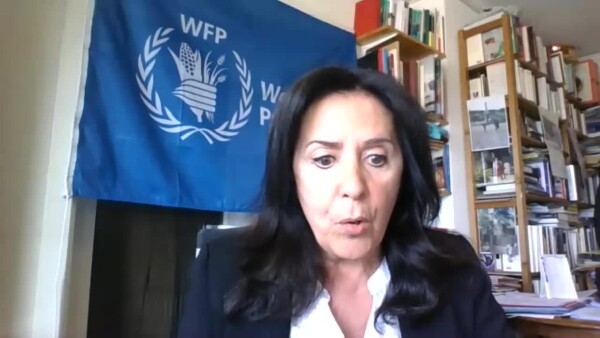
“Unless a substantial injection of funds is provided by donors by the end of the first week of July, WFP will have no choice but to ground most of its humanitarian air fleet by the end of July," said Elisabeth Byrs, spokesperson for the World Food Programme (WFP), speaking at a press briefing at the United Nations in Geneva." This is a response on a scale never seen before, and with the pandemic showing no signs of unabating it is crucial that the response doesn’t stop now when it is needed most”.
Using a network of global and regional transportation hubs, the WFP aviation service has over recent months transported huge volumes of urgently-needed medical supplies – including Personal Protective Equipment (PPE), masks and ventilators – as well as staff from scores of aid organisations. WFP also transports goods on behalf of other UN agencies and non-government organisations by road and by sea.
“The common services budget of $965 million to maintain the air service until the end of the year is only 14 per cent funded. Only 178 million US$ has so far been confirmed or advanced,” Ms. Byrs said. Some 787 million US$ are urgently required to sustain these essential air cargo and passenger movement operations until the end of the year.
WFP’s operates a network of so-called "global humanitarian response hubs" - in Guangzhou (China), Liège (Belgium) and Dubai (UAE) -- near the locations where supplies are manufactured, in addition to "regional hubs" (in Ethiopia, Ghana, South Africa, Malaysia, Panama and Dubai). From there, aid workers and humanitarian cargo – such as medicines, ventilators and PPE - can be transported by WFP Aviation to their final destinations in Africa, Asia and Latin America. Cargo transport between global and regional hubs is provided free of charge to the beneficiaries.
WFP’s Byrs warned of severe consequences should the humanitarian flights cease. “Without the logistical support provided by these common services, global aid operations would be severely compromised,” she said.
“Hospitals in developing countries would not receive desperately needed medical supplies," Ms. Byrs added. "Health centres serving pregnant women and undernourished children would not receive life-saving nutritional products for the prevention and treatment of malnutrition.”
Since the beginning of the pandemic, the World Food Program has completed 375 cargo and passenger emergency flights, delivering “more than 2,500 responders from more than 80 aid organisations flown to destinations where their assistance is urgently needed”. Byrs added that “I could also tell you that we have provided enough cargo to fill 120 jumbo jets, waiting to be transported in coming weeks”.
As part of this system, WFP also has access to a global network of contracted air ambulances which have so far carried out nine medical evacuations of United Nations staff.
“The demand is expected to increase as supply comes online, and current projections indicate that approximately 700,000 cubic meters of cargo will need to be delivered across the world by the end of the year. It is therefore paramount that the critical funding gap is filled imminently,” Byrs said.
- Wide shot: exterior, flag alley, Palais des Nations, United Nations Geneva.
- SOUNDBITE (EN) – Elisabeth Byrs, Spokesperson for the World Food Programme (WFP): “Unless a substantial injection of funds is provided by donors by the end of the first week of July, WFP will have no choice but to ground most of its humanitarian air fleet by the end of July. This is a response on a scale never seen before and with the pandemic showing no signs of unabating it is crucial that the response doesn’t stop now when it is needed most”.
- Medium shot: flag alley, Palais des Nations, United Nations Geneva.
- SOUNDBITE (EN) – Elisabeth Byrs, Spokesperson for the World Food Programme (WFP): “The Common Services budget of $965 million to maintain the air service until the end of the year is only 14 per cent funded. Only 178 million US$ has so far been confirmed or advanced”.
- Medium-wide shot: Palais des Nations, United Nations Geneva.
- SOUNDBITE (EN) – Elisabeth Byrs, Spokesperson for the World Food Programme (WFP): “Without the logistical support provided by these common services, global aid operations would be severely compromised. Hospitals in developing countries would not receive desperately needed medical supplies. Health centres serving pregnant women and undernourished children would not receive life-saving nutritional products for the prevention and treatment of malnutrition”.
- Close up: Palais des Nations, United Nations Geneva.
- SOUNDBITE (EN) – Elisabeth Byrs, Spokesperson for the World Food Programme (WFP): “More than 2,500 responders from more than 80 aid organisations flown to destinations where their assistance is urgently needed. I could also tell you that we have provided enough cargo to fill 120 Jumbo Jets waiting to be transported in coming weeks”.
- Wide shot: UN flag with ICRC headquarters
- Medium shot: delegate looking at podium (out of shot) holding pen in hand.
- SOUNDBITE (EN) – Elisabeth Byrs, Spokesperson for the World Food Programme (WFP): “The demand is expected to increase as supply comes online, and current projections indicate that approximately 700,000 m3 of cargo will need to be delivered across the world by the end of the year. It is therefore paramount that the critical funding gap is filled imminently”.
- Wide shot: UN Geneva, Entry Pregny Gate
- Wide shot: Place des Nations with Broken Chair
- Wide shot: Broken Chair with UN in background
Similar Stories
1
1
1
Edited News | OCHA , UNICEF , WFP
Aid agencies warned on Friday of the fast-developing humanitarian emergency inside Taiz City in Yemen, which has been encircled by de facto Houthi forces fighting government troops along the country’s west coast.

2
17
1
2
Edited News , Press Conferences , Images | OCHA , WMO
Two UN agencies teamed up on Wednesday to issue an appeal for immediate assistance to help communities already being impacted by the strongest El Niño on record.
3
16
2
2
Edited News , B-roll , Conferences , Images | UNITED NATIONS , UNOG
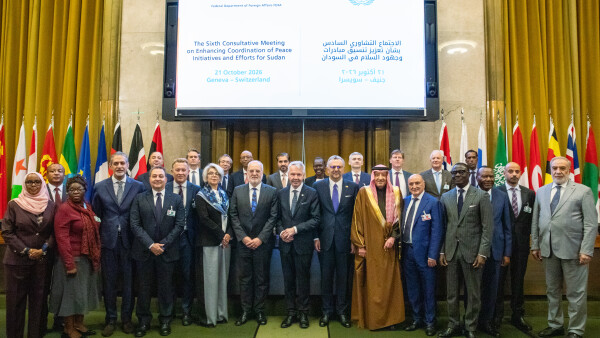
Sixth Consultative Meeting on Enhancing Coordination of Peace Initiatives and Efforts for Sudan

1
1
1
Edited News | UNICEF , WHO , UNHCR
Yemen war continues to force families from homes amid hunger and disease
More than 250,000 people have now fled renewed fighting in Yemen, the UN said on Tuesday, citing particular concern for those sheltering in the southwestern city of Taiz and the wider governorate, where access is “essentially blocked”.

1
1
1
Edited News | UNICEF
A little over one year since a ceasefire agreement was announced between Hamas fighters and Israel, more than 340 children have been reported killed and hundreds more injured, the UN Children’s Fund, UNICEF, said on Friday.

1
1
1
Edited News | UNICEF , IFRC
Six weeks after Nepal’s deadly flooding disaster, communities are still struggling to rebuild their lives, but they will need sustained help as global warming increases the risk of another Himalayan catastrophe, the UN Children’s Fund (UNICEF) said on Friday.

1
1
1
Edited News | WHO
In suspected Russia plague death, testing and monitoring underway – WHO
The death of a lab worker in Russia’s Siberia region has sparked concerns about plague being the cause, the UN World Health Organization (WHO) said on Tuesday, adding that it was following the situation closely.

1
1
Edited News | OHCHR , UNOG
UN Human Rights Chief Volker Türk on Friday provided and oral update to the 63rd session of the Human rights Council on Ukraine.

1
1
1
Edited News | OHCHR , UNOG
UN Human Rights Chief Volker Türk on Friday provided and oral update to the 63rd session of the Human rights Council on the human rights situation in Haiti.

1
1
1
Edited News | WHO
Repeated delays in bringing lifesaving medicines, prosthetics and more from Israel into Gaza risk having devastating consequences on Palestinians who urgently need them in the wartorn enclave, the UN World Health Organization (WHO) said on Friday. “A truck full of non-priority supplies or the right supplies arriving too late, doesn't save lives. That's the question that actually matters," said Dr Reinhilde Van De Weerdt, WHO Representative in the OPT.

1
1
1
Edited News | WHO
DRC: Early access to care and oxygen decisive for Ebola patients’ survival – WHO
In the Democratic Republic of the Congo (DRC), health workers fighting the country’s largest-ever Ebola outbreak are struggling to overcome critical challenges to patient care, the UN World Health Organization (WHO) warned on Tuesday.

1
1
1
Edited News | OCHA , UN
Civilians in Iran are continuing to feel the consequences of months of conflict and military escalation, the UN’s top official in the country has said, as loss of life, damage to civilian infrastructure and mounting economic pressures leave many facing continued uncertainty.