

The United Nations Office at Geneva
Multimedia Newsroom
War and hunger could destroy Sudan, warns UN
War and hunger are fueling a "humanitarian emergency of epic proportions” that could destroy Sudan, UN’s humanitarian chief, Martin Griffiths warned on Friday. In a statement, Mr. Griffiths, who heads the UN's humanitarian affairs coordination office (OCHA), called it a “viral conflict” that “threatens to consume the entire country”.
The intense fighting that has ravaged the capital Khartoum and Darfur since mid-April has spread to Kordofan, OCHA spokesperson Jens Laerke told reporters in Geneva.
Mr. Laerke warned that food stocks have been fully depleted in south Kordofan’s capital, Kadugli, while in West Kordofan’s capital, El Fula, humanitarian offices have been ransacked and supplies looted. He also quoted Mr. Griffiths as being
“extremely worried” about the safety of civilians in Al Jazira State, which is “the breadbasket of Sudan”.
Mr. Laerke pointed out that there could be a “lost generation” of children due to the war, which has left hundreds of thousands severely malnourished and at imminent risk of death if left untreated and forced millions to have “their education replaced by the devastating traumas of war”.
The UN Children’s Fund, (UNICEF) warned that two million children have been displaced by the war in Sudan. Also speaking in Geneva, spokesperson James Elder painted a grim picture of the coming rainy season, where lack of access to clean water risks “becoming a death sentence” for children. “We're going to keep seeing spikes in child deaths that are all utterly avoidable,” he added.
According to the UN World Health Organization (WHO), with the coming rainy season, there was also an increased risk of outbreaks of water-borne and vector-borne diseases. WHO spokesperson Tarik Jašarević told journalists that there were "reports of dengue, measles, acute watery diarrhoea, but also of severe acute malnutrition”.
According to the WHO spokesperson, there have already been 2,199 suspected measles cases with 30 deaths and 300 cases of acute watery diarrhoea with seven deaths. Mr. Jašarević pointed out that “reporting is not easy, so all these are just underestimates”. In a statement, WHO said that over 300 cases of malaria had also been reported and
that a “staggering” 67 per cent (60 out of 89) of all main hospitals in areas affected by the fighting were out of service as of 31 May.
The UN health agency pointed out that the 29 hospitals operating fully or partially were at risk of closure due to a shortage of medical staff, supplies and water. Widespread blackouts in certain areas have resulted in a lack of electricity, placing patients and perishable medical supplies at high risk. Critical services, including maternal and child health care, management of severe acute malnutrition and treatment of patients with non-communicable diseases, have been discontinued in many areas, WHO said.
According to UN humanitarian chief Martin Griffiths, a protracted conflict in Sudan could tip the entire region into a “humanitarian catastrophe.” OCHA's Mr. Laerke pointed out that more than 3.6 million people have been internally displaced, while nearly one million have fled across Sudan's borders. He also highlighted that those fighting were not adhering “in any shape or form” to international humanitarian law and that the conflict was not getting the international attention that it deserved.
The UN's humanitarian appeal for Sudan remained only 26 per cent funded, which, according to the OCHA spokesperson, was "completely unacceptable”. He quoted Mr. Griffiths' call to all those fighting in this conflict to "put the people of Sudan above the pursuit of power or resources".
“We have a crisis here that has blown up in Sudan, which for those of us who have followed Sudan for many, many years, was at a promising point in the history. And it has just skydived into this catastrophe,” Mr. Laerke said.
STORY: War and Hunger in Sudan OCHA - WHO - UNICEF
TRT: “03:52”
SOURCE: UNTV CH
RESTRICTIONS: NONE
LANGUAGE: ENGLISH
ASPECT RATIO: 16:9
DATELINE: 25 AUGUST 2023, GENEVA, SWITZERLAND
SHOTLIST
- Exterior wide shot, United Nations flag flying.
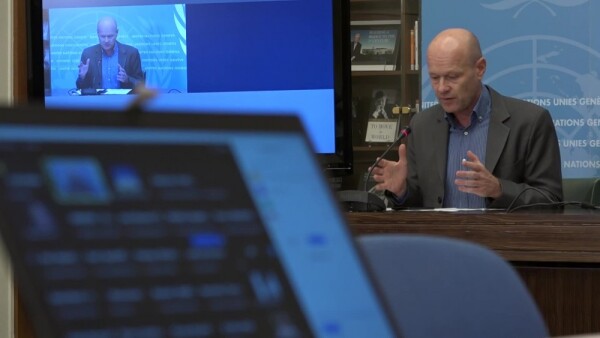
- Wide shot of panel.
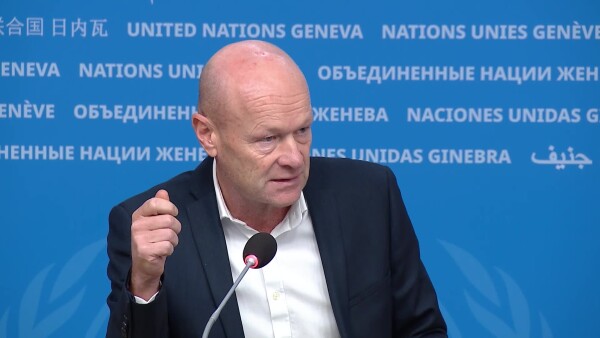
- SOUNDBITE: (ENGLISH) Jens Laerke, OCHA spokesperson: “War and hunger could consume Sudan if those fighting in this conflict do not put the people of Sudan above their pursuit of power and resources. From the capital, Khartoum and Darfur, the war has gone viral and is now spreading to Kordofan.”
- Laptop screen with speaker in background
- SOUNDBITE: (ENGLISH), Jens Laerke, OCHA spokesperson: “In south Kordofan’s capital, Kadugli, food stocks have been fully depleted and clashes and road blockages prevent aid workers from reaching the hungry. In West Kordofan’s capital, El Fula, humanitarian offices have been ransacked and supplies looted. We are also extremely worried about the safety of civilians in Al Jazeera state as the conflict moves closer to that area, which is the breadbasket of Sudan.”
- Side view of attendees at briefing.
- SOUNDBITE: (ENGLISH) Jens Laerke, OCHA spokesperson: “Hundreds of thousands of children are severely malnourished and at imminent risk of death if left untreated. Millions more will have their education replaced by the devastating traumas of war, becoming a lost generation.”
- Screen with speakers, and attendees in foreground.
- SOUNDBITE: (ENGLISH) James Elder , UNICEF Spokesperson: “As the rainy season comes, it's ironically, access to clean water. We're going to keep seeing spikes in child deaths that are all utterly avoidable. I think it was in May two or three months ago that we spoke of all these factors combined risk becoming a death sentence for children, particularly those most vulnerable.”
- Screen with speakers, and attendee in foreground.
- SOUNDBITE: (ENGLISH) Tarik Jašarević, WHO spokesperson: “There are reports of dengue, measles, acute watery diarrhoea, but also of severe acute malnutrition. So just give you some numbers. There were like 2199 suspected measles cases, with 30 deaths, 300 acute watery diarrhoea and seven deaths. Malaria cases as well. But again, reporting is not easy, so all these are just underestimates.”
- Close of camera, speaker in background.
- SOUNDBITE: (ENGLISH), Jens Laerke, OCHA spokesperson: “The fighting has internally displaced more than 3.6 million people, while nearly one million have fled across the borders. A protracted conflict in Sudan could tip the entire region into a humanitarian catastrophe.”
- Side shot of camera
- SOUNDBITE: (ENGLISH) Jens Laerke, OCHA spokesperson: “This conflict is not getting, one, the international attention that it deserves and secondly, those fighting the conflict are not adhering in any shape or form to international humanitarian law, and the civilians are the victims of this.”
- Close of attendees typing.
- SOUNDBITE: (ENGLISH) Jens Laerke, OCHA spokesperson: “We have a very large humanitarian appeal which needs to be resourced for us to actually procure what we need to bring to people and get the operation going and hopefully expanding. But that appeal is 26 per cent funded. That is completely unacceptable.”
- Side view of speaker
- SOUNDBITE: (ENGLISH) Jens Laerke, OCHA spokesperson: “We have a crisis here that has blown up in Sudan, which for those of us who have followed Sudan for many, many years, was at a promising point in the history. And it has just skydived into this catastrophe.”
- Side view of attendees at briefing, panellists in background.
- Side view of attendees at briefing
- Mid shot of attendees typing.
Similar Stories
1
1
1
Edited News | OCHA , UNICEF , WFP
Aid agencies warned on Friday of the fast-developing humanitarian emergency inside Taiz City in Yemen, which has been encircled by de facto Houthi forces fighting government troops along the country’s west coast.

2
17
1
2
Edited News , Press Conferences , Images | OCHA , WMO
Two UN agencies teamed up on Wednesday to issue an appeal for immediate assistance to help communities already being impacted by the strongest El Niño on record.
3
16
2
2
Edited News , B-roll , Conferences , Images | UNITED NATIONS , UNOG
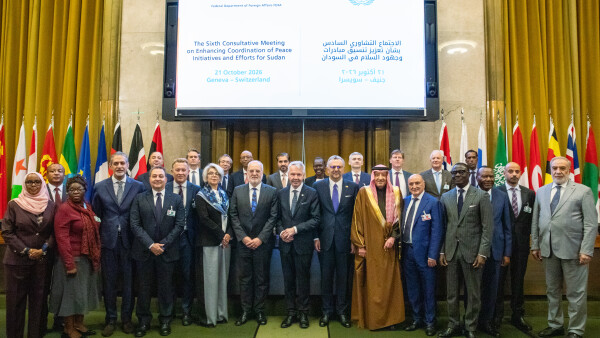
Sixth Consultative Meeting on Enhancing Coordination of Peace Initiatives and Efforts for Sudan

1
1
1
Edited News | UNICEF , WHO , UNHCR
Yemen war continues to force families from homes amid hunger and disease
More than 250,000 people have now fled renewed fighting in Yemen, the UN said on Tuesday, citing particular concern for those sheltering in the southwestern city of Taiz and the wider governorate, where access is “essentially blocked”.

1
1
1
Edited News | UNICEF
A little over one year since a ceasefire agreement was announced between Hamas fighters and Israel, more than 340 children have been reported killed and hundreds more injured, the UN Children’s Fund, UNICEF, said on Friday.

1
1
1
Edited News | UNICEF , IFRC
Six weeks after Nepal’s deadly flooding disaster, communities are still struggling to rebuild their lives, but they will need sustained help as global warming increases the risk of another Himalayan catastrophe, the UN Children’s Fund (UNICEF) said on Friday.

1
1
1
Edited News | WHO
In suspected Russia plague death, testing and monitoring underway – WHO
The death of a lab worker in Russia’s Siberia region has sparked concerns about plague being the cause, the UN World Health Organization (WHO) said on Tuesday, adding that it was following the situation closely.

1
1
Edited News | OHCHR , UNOG
UN Human Rights Chief Volker Türk on Friday provided and oral update to the 63rd session of the Human rights Council on Ukraine.

1
1
1
Edited News | OHCHR , UNOG
UN Human Rights Chief Volker Türk on Friday provided and oral update to the 63rd session of the Human rights Council on the human rights situation in Haiti.

1
1
1
Edited News | WHO
Repeated delays in bringing lifesaving medicines, prosthetics and more from Israel into Gaza risk having devastating consequences on Palestinians who urgently need them in the wartorn enclave, the UN World Health Organization (WHO) said on Friday. “A truck full of non-priority supplies or the right supplies arriving too late, doesn't save lives. That's the question that actually matters," said Dr Reinhilde Van De Weerdt, WHO Representative in the OPT.

1
1
1
Edited News | WHO
DRC: Early access to care and oxygen decisive for Ebola patients’ survival – WHO
In the Democratic Republic of the Congo (DRC), health workers fighting the country’s largest-ever Ebola outbreak are struggling to overcome critical challenges to patient care, the UN World Health Organization (WHO) warned on Tuesday.

1
1
1
Edited News | OCHA , UN
Civilians in Iran are continuing to feel the consequences of months of conflict and military escalation, the UN’s top official in the country has said, as loss of life, damage to civilian infrastructure and mounting economic pressures leave many facing continued uncertainty.