

The United Nations Office at Geneva
Multimedia Newsroom
UN weather agency warns that July likely warmest on record
As wildfires raged across Southern Europe and North Africa, top UN and partner agency climate scientists said on Thursday that it was virtually certain that July 2023 will be the warmest on record.
“We can say that the first three weeks of July have been the warmest three-week period ever observed in our record,” said Carlo Buontempo, Director of Copernicus Climate Change Service at the European Centre for Medium-Range Weather Forecasts (ECMWF). “If we look at the top 21 hottest day in terms of the global mean temperature, they have all occurred this month.”
Echoing that warning in New York, UN Secretary-General António Guterres said that “short of a mini-Ice Age” in coming days, July 2023 would likely “shatter records across the board”.
The UN chief added that the consequences were as clear as they were tragic: “children swept away by monsoon rains, families running from the flames (and) workers collapsing in scorching heat.”
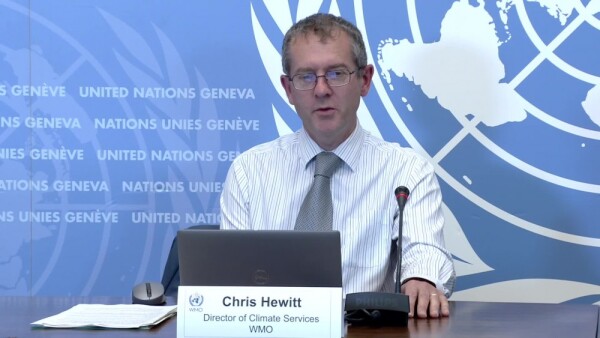
In Geneva, Chris Hewitt, Director of Climate Services at the World Meteorological Organization (WMO) described conditions this month as “remarkable and unprecedented” and urged action on climate shock adaption.
At the same time, Copernicus’s Mr. Buontempo said that the July anomaly was “so large with respect to other record-breaking months in our record that we are virtually certain that the month, the month as a whole will become the warmest July on record, the warmest month on record”.
From a historical perspective, July’s likely record conditions have been driven by concentrations of greenhouse gases in the atmosphere which continue to increase, explained Mr. Hewitt. “The three main greenhouse gases - carbon dioxide, methane and nitrous oxide - have all reached record observed highs,” he said, adding that there was “an almost certain likelihood” that one of the next five years will be the warmest on record.
Equally concerning is the clear indication that there is now a 66 per cent chance that global average temperatures will “temporarily” exceed 1.5C above pre-industrial levels “for at least one of the five years”, Mr. Hewitt continued.
Turning from the impact of rising global temperatures on land to the sea, the climate scientists warned that ocean temperatures are also at their highest-ever recorded levels for this time of year. This trend has been apparent since the end of April.
Citing “a clear and dramatic warming decade on decade” since the 1970s, WMO’s Mr. Hewitt noted that 2015 to 2022 saw the eight warmest years on record, based on a 173-year dataset. This was despite the fact that the La Niña sea-cooling phenomenon prevailed towards the end of that period in the Pacific region, which reined in global average temperatures slightly, he explained.
“But now the La Niña has ended” - to be replaced by the sea-warming El Niño effect - waters have begun to heat up in the tropical Pacific, bringing the “almost certain likelihood that one of the next five years will be the warmest on record”, the WMO scientist continued.
“It’s not looking at the moment like the warmth will abate. And so, if this carries on with the El Niño conditions growing in the Pacific, we could anticipate it being a very warm year, if not a record year. But we'll have to wait and see.”
Underscoring the need for countries to adapt to searing heatwaves, Mr. Hewitt explained that this was necessary “to take care of vulnerable societies or whatever it might be...So, yes, there's a need to adapt to increases in temperature and then as you asked in the question, there are other extremes as well, so, extremes of flooding, droughts, windstorms.”
Echoing that message, Mr. Buontempo warned that “in all likelihood, we have never experienced a world so hot in modern history.”
ends
STORY: WMO - ‘Warmest’ July On Record
TRT: 2 min 02s
SOURCE: UNTV CH
RESTRICTIONS: NONE
LANGUAGE: ENGLISH / NATS
ASPECT RATIO: 16:9
DATELINE: 27 July 2023 GENEVA, SWITZERLAND
SHOTLIST
- Exterior wide shot, Palais des Nations flag alley, nations’ flags flying, a cloudy day.
- Wide shot, podium with speakers in Press briefing room, Palais des Nations.
- SOUNDBITE (English) — Carlo Buontempo, Director of Copernicus Climate Change Service at the European Centre for Medium-Range Weather Forecasts (ECMWF) via Zoom: “We can say that the first three weeks of July have been the warmest three-weeks period ever observed in our record. And digging a bit deeper into that information, if we look at the top 21 hottest days in terms of the global mean temperature, they have all occurred this month.”
- Cutaway
- SOUNDBITE (English) — Carlo Buontempo, Director of Copernicus Climate Change Service at the European Centre for Medium-Range Weather Forecasts (ECMWF) via Zoom: “This anomaly is so large with respect to other record-breaking months in our record that we are virtually certain that the month - the month as a whole - will become the warmest July on record, the warmest month on record.”
- Cutaway
- SOUNDBITE (English) — Chris Hewitt, Director of Climate Services, WMO: “So this long-term warming, it's being driven by concentrations of greenhouse gases in the atmosphere which continue to increase. And the three main greenhouse gases - carbon dioxide, methane and nitrous oxide - have all reached record observed highs.”
- Cutaway
- SOUNDBITE (English) — Chris Hewitt, Director of Climate Services, WMO: “So an almost certain likelihood that one of the next five years will be the warmest on record and a 66 per cent chance – and more likely than not - of temporarily exceeding the 1.5C above pre-industrial for at least one of the five years.”
- Cutaway
- SOUNDBITE (English) — Chris Hewitt, Director of Climate Services, WMO: “It's not looking at the moment like the warmth will abate. So, if this carries on with the El Niño conditions growing in the Pacific, we could anticipate it being a very warm year, if not a record year. But we'll have to wait and see.”
- Cutaway
- SOUNDBITE (English) — Chris Hewitt, Director of Climate Services, WMO: “We would need to adapt to those heatwaves to take care of vulnerable societies or whatever it might be, the environment. So, yes, there's a need to adapt to increases in temperature and then as you asked in the question, there are other extremes as well, so, extremes of flooding, droughts, windstorms.”
- Cutaway.
- SOUNDBITE (English) — Carlo Buontempo, Director of Copernicus Climate Change Service at the European Centre for Medium-Range Weather Forecasts (ECMWF) via Zoom: “In all likelihood, we have never experienced a world so hot in modern history.”
Similar Stories

1
1
1
Edited News | OCHA , UNICEF , WFP
Aid agencies warned on Friday of the fast-developing humanitarian emergency inside Taiz City in Yemen, which has been encircled by de facto Houthi forces fighting government troops along the country’s west coast.

2
17
1
2
Edited News , Press Conferences , Images | OCHA , WMO
Two UN agencies teamed up on Wednesday to issue an appeal for immediate assistance to help communities already being impacted by the strongest El Niño on record.

3
16
2
2
Edited News , B-roll , Conferences , Images | UNITED NATIONS , UNOG
Sixth Consultative Meeting on Enhancing Coordination of Peace Initiatives and Efforts for Sudan

1
1
1
Edited News | UNICEF , WHO , UNHCR
Yemen war continues to force families from homes amid hunger and disease
More than 250,000 people have now fled renewed fighting in Yemen, the UN said on Tuesday, citing particular concern for those sheltering in the southwestern city of Taiz and the wider governorate, where access is “essentially blocked”.

1
1
1
Edited News | UNICEF
A little over one year since a ceasefire agreement was announced between Hamas fighters and Israel, more than 340 children have been reported killed and hundreds more injured, the UN Children’s Fund, UNICEF, said on Friday.

1
1
1
Edited News | UNICEF , IFRC
Six weeks after Nepal’s deadly flooding disaster, communities are still struggling to rebuild their lives, but they will need sustained help as global warming increases the risk of another Himalayan catastrophe, the UN Children’s Fund (UNICEF) said on Friday.

1
1
1
Edited News | WHO
In suspected Russia plague death, testing and monitoring underway – WHO
The death of a lab worker in Russia’s Siberia region has sparked concerns about plague being the cause, the UN World Health Organization (WHO) said on Tuesday, adding that it was following the situation closely.

1
1
Edited News | OHCHR , UNOG
UN Human Rights Chief Volker Türk on Friday provided and oral update to the 63rd session of the Human rights Council on Ukraine.

1
1
1
Edited News | OHCHR , UNOG
UN Human Rights Chief Volker Türk on Friday provided and oral update to the 63rd session of the Human rights Council on the human rights situation in Haiti.

1
1
1
Edited News | WHO
Repeated delays in bringing lifesaving medicines, prosthetics and more from Israel into Gaza risk having devastating consequences on Palestinians who urgently need them in the wartorn enclave, the UN World Health Organization (WHO) said on Friday. “A truck full of non-priority supplies or the right supplies arriving too late, doesn't save lives. That's the question that actually matters," said Dr Reinhilde Van De Weerdt, WHO Representative in the OPT.

1
1
1
Edited News | WHO
DRC: Early access to care and oxygen decisive for Ebola patients’ survival – WHO
In the Democratic Republic of the Congo (DRC), health workers fighting the country’s largest-ever Ebola outbreak are struggling to overcome critical challenges to patient care, the UN World Health Organization (WHO) warned on Tuesday.

1
1
1
Edited News | OCHA , UN
Civilians in Iran are continuing to feel the consequences of months of conflict and military escalation, the UN’s top official in the country has said, as loss of life, damage to civilian infrastructure and mounting economic pressures leave many facing continued uncertainty.