

The United Nations Office at Geneva
Multimedia Newsroom
Spike in dengue fever cases due to global warming, warns WHO
Global warming that is marked by higher average temperatures, precipitation and longer periods of drought could prompt a record number of dengue fever infections worldwide, the World Health Organization (WHO) warned on Friday.
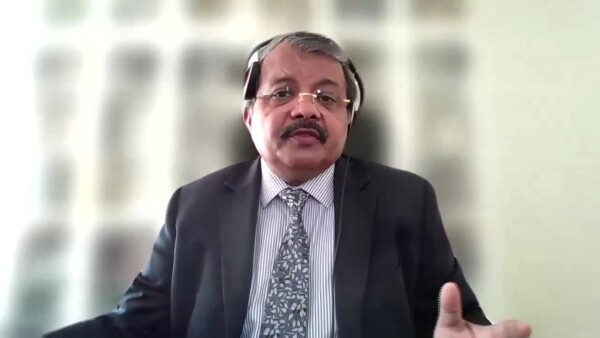
“About half of the world's population is at risk of dengue, and dengue affects approximately 129 countries,” said Dr Raman Velayudhan, WHO’s Head of the Global Programme on control of Neglected Tropical Diseases. “We estimate that about 100 to 400 million cases are reported every year. This is basically an estimate and the American region alone, for example, has reported about 2.8 million cases and 101,280 deaths.”
Dengue, also called breakbone fever, is the most common viral infection that spreads from mosquitoes to people. Most people with dengue do not have symptoms and recover in one to two weeks. But some people develop severe dengue and need hospital care.
“In some cases, especially when you get the infection for the second time, which we call a secondary infection, this can lead to severe dengue and it can be fatal too,” explained Dr. Velayudhan, briefing journalists at the United Nations in Geneva.
Dengue is spread by the Aedes species of mosquito. The disease is more common in tropical and subtropical climates. Its incidence has grown dramatically worldwide in recent decades, Dr. Velayudhan explained.
“In 2000, we had about half a million cases and today in 2022 we recorded over 4.2 million cases, which really shows an eight-fold increase. And, this can be much higher as we get more and more accurate figures.”
Asia represents around 70 per cent of the global disease burden and the future outlook is bleak, according to the WHO expert. In Europe, the Aedes mosquito is established and dengue and chikungunya infections have been reported for more than a decade.
“European countries are also on alert because Europe had recorded an Aedes transmission of either dengue or chikungunya since 2010,” said Dr. Velayudhan. “We have had more outbreaks since then and it is estimated that the mosquito is present in about 22 European countries.”
Numerous factors in addition to climate change have driven the spread of dengue fever, such as the increased movement of people and goods, urbanization and pressure on water and sanitation.
“The mosquito manages to survive even when there is water scarcity,” said the WHO expert. “So, both during a flood situation as well as a drought situation, dengue can increase. The virus and the vector multiply faster at a higher temperature. This is a well-known fact.”
Dengue fever does not have a specific treatment and there is no direct drug intervention available. Usually, the disease is treated with medicines to treat fever and pain.
A dengue test takes two to three days to receive a reliable result.
Several new tools are under development that provide greater hope in preventing and controlling dengue, such as better diagnostics. A few antivirals are undergoing clinical trials.
“Two or three of these candidates are going through Phase Two trials and will move on to Phase Three, which is very promising,” Dr. Velayudhan said. “There is also one dengue vaccine in the market, which has got certain limitations, and two other candidates are actually in the pipeline and are under review.”
The UN health agency stresses that prevention is key. Because the mosquito bites during the day, it is important that people protect themselves at home, in schools and at work by spraying repellent around buildings.
Other protective measures include mosquito coils and sleeping under nets.
-ends-
- Exterior medium shot: UN Palais with flags
- Wide shot: moderator behind podium and attendees at the press conference, screens with speakers on both sides of the podium
- SOUNDBITE (English) – Dr Raman Velayudhan, WHO Unit Head Global Program on control of Neglected Tropical Diseases coordinating dengue and arbovirus initiative: “About half of the world's population is at risk of dengue, and dengue affects approximately 129 countries. We estimate that about 100 to 400 million cases are reported every year. This is basically an estimate. And the American region alone, for example, has reported about 2.8 million cases and 101’280 deaths.”
- Wide shot: moderator behind podium and attendees at the press conference, screen with speakers on the side
- SOUNDBITE (English) – Dr Raman Velayudhan, WHO Unit Head Global Program on control of Neglected Tropical Diseases coordinating dengue and arbovirus initiative: “In some cases, especially when you get the infection for the second time, which we call a secondary infection, this can lead to severe dengue and it can be fatal too.”
- Medium shot: attendees in the foreground, screen with speakers in the background
- SOUNDBITE (English) – Dr Raman Velayudhan, WHO Unit Head Global Program on control of Neglected Tropical Diseases coordinating dengue and arbovirus initiative: “In 2000 we had about half a million cases and today in 2022 we recorded over 4.2 million cases, which really shows an eight fold increase. And actually this can be much higher as we get more and more accurate figures.”
- Medium shot: moderator behind podium and attendee at the press conference, screen with speakers on the side
- SOUNDBITE (English) – Dr Raman Velayudhan, WHO Unit Head Global Program on control of Neglected Tropical Diseases coordinating dengue and arbovirus initiative: “The European countries are also on alert because Europe had recorded an Aedes transmission of either dengue or chikungunya since 2010. We have had more outbreaks since then and it is estimated that the mosquito is present in about 22 European countries.”
- Medium shot: moderator behind podium at the press conference
- SOUNDBITE (English) – Dr Raman Velayudhan, WHO Unit Head Global Program on control of Neglected Tropical Diseases coordinating dengue and arbovirus initiative: “Also the high precipitation, increased temperature and even the mosquito manages to survive even when there is water scarcity. So both during a flood situation as well as a drought situation, dengue can increase. The virus and the vector multiplies faster at a higher temperature. This is a well-known fact.”
- Medium shot: attendee in the foreground, screen with speakers in the background
- SOUNDBITE (English) – Dr Raman Velayudhan, WHO Unit Head Global Program on control of Neglected Tropical Diseases coordinating dengue and arbovirus initiative: “There are very few antiviral research working on, and actually two or three of these candidates are going through phase 2 trials and will move on to phase 3, which is very promising. There is also one dengue vaccine in the market, which has got certain limitations, and two other candidates are actually in the pipeline and are under review.”
- Close shot: attendee taking a picture of the press conference
- Close shot: attendee typing
- Medium shot: moderator
Similar Stories

1
1
1
Edited News | OCHA , UNICEF , WFP
Aid agencies warned on Friday of the fast-developing humanitarian emergency inside Taiz City in Yemen, which has been encircled by de facto Houthi forces fighting government troops along the country’s west coast.

2
17
1
2
Edited News , Press Conferences , Images | OCHA , WMO
Two UN agencies teamed up on Wednesday to issue an appeal for immediate assistance to help communities already being impacted by the strongest El Niño on record.

3
16
2
2
Edited News , B-roll , Conferences , Images | UNITED NATIONS , UNOG
Sixth Consultative Meeting on Enhancing Coordination of Peace Initiatives and Efforts for Sudan

1
1
1
Edited News | UNICEF , WHO , UNHCR
Yemen war continues to force families from homes amid hunger and disease
More than 250,000 people have now fled renewed fighting in Yemen, the UN said on Tuesday, citing particular concern for those sheltering in the southwestern city of Taiz and the wider governorate, where access is “essentially blocked”.

1
1
1
Edited News | UNICEF
A little over one year since a ceasefire agreement was announced between Hamas fighters and Israel, more than 340 children have been reported killed and hundreds more injured, the UN Children’s Fund, UNICEF, said on Friday.

1
1
1
Edited News | UNICEF , IFRC
Six weeks after Nepal’s deadly flooding disaster, communities are still struggling to rebuild their lives, but they will need sustained help as global warming increases the risk of another Himalayan catastrophe, the UN Children’s Fund (UNICEF) said on Friday.

1
1
1
Edited News | WHO
In suspected Russia plague death, testing and monitoring underway – WHO
The death of a lab worker in Russia’s Siberia region has sparked concerns about plague being the cause, the UN World Health Organization (WHO) said on Tuesday, adding that it was following the situation closely.

1
1
Edited News | OHCHR , UNOG
UN Human Rights Chief Volker Türk on Friday provided and oral update to the 63rd session of the Human rights Council on Ukraine.

1
1
1
Edited News | OHCHR , UNOG
UN Human Rights Chief Volker Türk on Friday provided and oral update to the 63rd session of the Human rights Council on the human rights situation in Haiti.

1
1
1
Edited News | WHO
Repeated delays in bringing lifesaving medicines, prosthetics and more from Israel into Gaza risk having devastating consequences on Palestinians who urgently need them in the wartorn enclave, the UN World Health Organization (WHO) said on Friday. “A truck full of non-priority supplies or the right supplies arriving too late, doesn't save lives. That's the question that actually matters," said Dr Reinhilde Van De Weerdt, WHO Representative in the OPT.

1
1
1
Edited News | WHO
DRC: Early access to care and oxygen decisive for Ebola patients’ survival – WHO
In the Democratic Republic of the Congo (DRC), health workers fighting the country’s largest-ever Ebola outbreak are struggling to overcome critical challenges to patient care, the UN World Health Organization (WHO) warned on Tuesday.

1
1
1
Edited News | OCHA , UN
Civilians in Iran are continuing to feel the consequences of months of conflict and military escalation, the UN’s top official in the country has said, as loss of life, damage to civilian infrastructure and mounting economic pressures leave many facing continued uncertainty.