

The United Nations Office at Geneva
Multimedia Newsroom
Chad-Sudanese border: WFP boosts support for refugees uprooted by conflict
UN humanitarians in Chad expressed concern on Tuesday at surging numbers of people fleeing conflict in Sudan and confirmed that that they have scaled up the Organization’s response to help the wounded and malnourished.
In the last week alone, some 20,000 people fled from Sudan’s Darfur region to Adré, a small Chadian town near the border. Many refugees arrived injured and with harrowing stories of violence they have endured in Sudan.
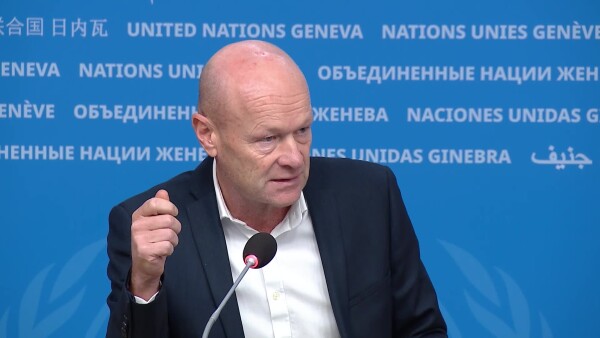
“Some 276,000 people now may have already crossed the border, hosted by Chad where we already have many food insecurities, with already some 600,000 refugees pre-war that were already almost impossible to assist” owing to a lack of funding, said Pierre Honnorat, WFP’s Country Director in Chad.
There are high rates of malnutrition among children crossing from Darfur into Chad. WFP estimates suggest that about 10 per cent of children are malnourished and need to be admitted to health centres in Adré quickly, putting significant pressure on already limited health facilities.
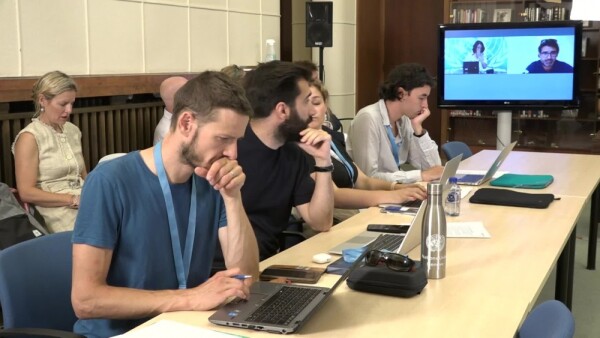
“On malnutrition, yes, children are dying. Children are dying”, said Mr. Honnorat as he briefed journalists on Zoom from Zabout refugee camp in Chad’s Goz Beida. “I don’t have the exact figure but, every week children are dying at the nutrition centers. This is a reality.”
The UN agency said that its relief efforts along the Chad-Sudan border have become increasingly challenged due to a lack of resources. Since the start of the conflict in April, WFP has so far delivered food and nutrition assistance to nearly 152,000 new arrivals and to the host communities on the Chad-Sudan border.
“I’ve rarely seen such an important crisis with so little funding”, said the WFP country director. “I was also at the border, on the bridge, what’s left as a bridge. It’s a constant flow and the ones that are coming now are in much worse situations than those who arrived in the first days.”
Many of the people arriving in Chad from Sudan’s Darfurs are seriously wounded amid reports that fleeing civilians have been deliberated targeted with an increasing ethnic dimension to the violence.
So far, WFP has constructed six temporary health units, including two being used as a makeshift hospital and for medical logistics, and four as transit points for new refugees crossing into Chad.
“We can see that they have suffered, many lost family members and you don’t even dare asking them, ‘Where are the men?’ You know, the answer from the mothers is often that they were killed. So you see many women, many children, it’s just unbelievable,” said Mr. Honnorat.
As WFP mobilizes all available resources to support refugees arriving in Chad, it is also essential that WFP can safely deliver food assistance to civilians in the camps.
“Children are laughing, playing, you can feel they have found peace, relief”, reported Mr. Honnorat. “This is, I think, the first thing they get is really peace when they are there. So those camps are extremely calm, it’s amazing. There is not much noise. Some have their animals. Then, when you get closer to the families, you see the distress in people, you see they are in need, you see they have nothing.”
Since fighting began on 15 April between the Sudanese military and the paramilitary Rapid Support Forces after months of rising tension over the country’s political future and plans to integrate the RSF into the national army, large numbers of civilians have been forced to flee, including people who were already internally displaced because of previous conflicts in Sudan and refugees from other countries who had sought safety in Sudan.
In addition to new internal displacement, over 600,000 people, including Sudanese refugees and refugees of other nationalities hosted by Sudan have fled Sudan to neighbouring countries or returned home in adverse circumstances – notably to Chad, South Sudan, the Central African Republic, Egypt and Ethiopia.
-ends-
Similar Stories
1
1
1
Edited News | OCHA , UNICEF , WFP
Aid agencies warned on Friday of the fast-developing humanitarian emergency inside Taiz City in Yemen, which has been encircled by de facto Houthi forces fighting government troops along the country’s west coast.

2
17
1
2
Edited News , Press Conferences , Images | OCHA , WMO
Two UN agencies teamed up on Wednesday to issue an appeal for immediate assistance to help communities already being impacted by the strongest El Niño on record.

3
16
2
2
Edited News , B-roll , Conferences , Images | UNITED NATIONS , UNOG
Sixth Consultative Meeting on Enhancing Coordination of Peace Initiatives and Efforts for Sudan

1
1
1
Edited News | UNICEF , WHO , UNHCR
Yemen war continues to force families from homes amid hunger and disease
More than 250,000 people have now fled renewed fighting in Yemen, the UN said on Tuesday, citing particular concern for those sheltering in the southwestern city of Taiz and the wider governorate, where access is “essentially blocked”.

1
1
1
Edited News | UNICEF
A little over one year since a ceasefire agreement was announced between Hamas fighters and Israel, more than 340 children have been reported killed and hundreds more injured, the UN Children’s Fund, UNICEF, said on Friday.

1
1
1
Edited News | UNICEF , IFRC
Six weeks after Nepal’s deadly flooding disaster, communities are still struggling to rebuild their lives, but they will need sustained help as global warming increases the risk of another Himalayan catastrophe, the UN Children’s Fund (UNICEF) said on Friday.

1
1
1
Edited News | WHO
In suspected Russia plague death, testing and monitoring underway – WHO
The death of a lab worker in Russia’s Siberia region has sparked concerns about plague being the cause, the UN World Health Organization (WHO) said on Tuesday, adding that it was following the situation closely.

1
1
Edited News | OHCHR , UNOG
UN Human Rights Chief Volker Türk on Friday provided and oral update to the 63rd session of the Human rights Council on Ukraine.

1
1
1
Edited News | OHCHR , UNOG
UN Human Rights Chief Volker Türk on Friday provided and oral update to the 63rd session of the Human rights Council on the human rights situation in Haiti.

1
1
1
Edited News | WHO
Repeated delays in bringing lifesaving medicines, prosthetics and more from Israel into Gaza risk having devastating consequences on Palestinians who urgently need them in the wartorn enclave, the UN World Health Organization (WHO) said on Friday. “A truck full of non-priority supplies or the right supplies arriving too late, doesn't save lives. That's the question that actually matters," said Dr Reinhilde Van De Weerdt, WHO Representative in the OPT.

1
1
1
Edited News | WHO
DRC: Early access to care and oxygen decisive for Ebola patients’ survival – WHO
In the Democratic Republic of the Congo (DRC), health workers fighting the country’s largest-ever Ebola outbreak are struggling to overcome critical challenges to patient care, the UN World Health Organization (WHO) warned on Tuesday.

1
1
1
Edited News | OCHA , UN
Civilians in Iran are continuing to feel the consequences of months of conflict and military escalation, the UN’s top official in the country has said, as loss of life, damage to civilian infrastructure and mounting economic pressures leave many facing continued uncertainty.