

The United Nations Office at Geneva
Multimedia Newsroom
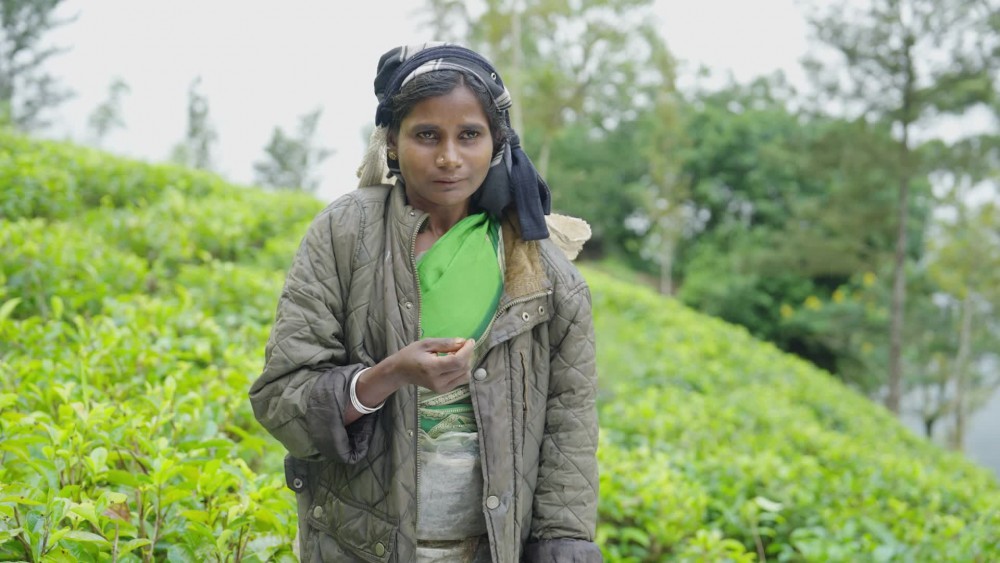
Sri Lanka: cost-of-living crunch threatens to sink millions already facing hard choices
Amid a looming food-security crisis linked to Sri Lanka’s cost-of-living crunch, the country’s most vulnerable breadwinners wonder how much longer they can cope, as the Government battles the nation’s worst economic crisis since independence in 1948.
Long before the country’s first-ever international debt default in May 2022 and Russia’s invasion of Ukraine, which added to the country’s problems, tea estate labourer Nagamma had already cut back on meals, as global trade froze during the coronavirus pandemic.
Her precarious situation in Sri Lanka’s central highlands hasn’t changed, but it’s not for want of trying.
“We work even when it rains and while the leeches suck our blood,” she says, peering out from her worker’s bungalow at the 100-acre plantation where she started work aged 14. “We can't afford to buy chicken, fish or any other meat. We only eat vegetables and leaves. It is difficult for us to even send our children to school and even provide them proper meals. We are going through a very hard time.”
Wearing a worn plastic sheet wrapped around her tiny waist, barista-style, and an oversize quilt jacket that’s more of a sponge than a barrier to the rain, the 38-year-old mother-of-four heads out into the plantation to start her eight-hour shift.
At best, Nagamma can hope to earn $3 per day as a tea-plucker, assuming that she meets her daily quota of between 16 and 20 kilogrammes of leaves – the equivalent of two full sacks. But spiralling prices mean that she can buy less than half the amount of rice and flour that she used to, making it harder than ever to feed the 10 relatives who share her cramped cottage.
“Nutritious food like vegetables, fruits, protein-rich diets simply are simply out of reach, we need to act now to ensure that this situation doesn't further deteriorate,” says Rushini Perrera, Head of Resilience, Emergency Preparedness, Response and Social Protection at the UN World Food Programme. “The latest surveys indicated that this is escalating further, with households not consuming adequate diets across the nation.”
In addition to the chronic lack of nutritious food, fuel and medicines continue to be in worryingly short supply. UN agencies and partners responded in June to the Government’s request for international assistance with an appeal that has helped the humanitarian community reach more than one million of Sri Lanka’s most vulnerable people with cash, food, school meals, medicine, protection and livelihood support and aims to raise a total of US $149.7 million to reach 3.4 million people in need.
As Sri Lankans turn on the TV news to watch President Ranil Wickremesinghe pledging publicly that “no-one would be allowed to starve” in next year’s looming food security crisis, relief teams have also expressed deep concern about the knock-on impacts of food, fuel and medicines shortages on the next generation of Sri Lankans.
“We have 215,000 women that’ll be giving birth between June and December 2022. This is a large portion of women that need support for medicines and care,” explains Kunle Adeniyi, UN Population Fund (UNFPA) Country Representative in Sri Lanka.
Pointing to “severe difficulties” in sustaining vital mother-and-baby outreach activities to remote communities because of the fuel crisis earlier this year, Mr. Adeniyi warns that many drugs have been out of stock “since the challenges began” in March 2022.
Just as worrying are the indications that families are “deprioritizing” health because they cannot also get to health facilities, either because of high fuel costs, or because they are working to earn enough money to eat.
“(Vulnerable Sri Lankans) need to be able to access the health facilities to ensure that we do not reverse the excellent gains we have made in maternal health in Sri Lanka,” Mr. Adeniyi insists. “Women’s lives do not stay on hold.”
That urgent need for action rings true in the capital Colombo, too, where months of fuel and electricity shortages prompted mass public demonstrations and deadly fuel riots, that led then-President Gotabaya Rajapaksa to flee the country on 13 July and resign from office. He returned to the island in early September.
Today, many Sri Lankans share their frustration at the scale of the country’s problems and their impact on daily life - not least owners of the country’s three-wheeler taxis. The Government has just doubled the weekly fuel quota for taxi drivers from five to 10 litres; for drivers like Kumar in Colombo, it’s a positive development that can’t come too soon.
“The economy collapsed a lot,” he explains, before pointing to the lack of Western tourists which many link to the Easter Sunday terror attacks in 2019. “It's not like back in the day, people don't hire us, prices have increased so they can't afford to go with us anymore. We can't decrease our prices either, petrol prices are so high, and we have our own children to look after, we have to buy them books and things.”
Back at the tea estate in Ramboda, an occasional group of Western tourists arrives to tour the factory and learn about how the drink is made.
The seven-stage production process – a noisy and aromatic combination of drying, mulching, rolling, grinding and grading – has changed little in the 100 years since the factory opened. Vast volumes of hot air needed to dry the leaves blast out from a hulking wood-fired furnace; it’s one of several decades-old forged metal machines that are kept running by know-how that’s handed down from father to son.
Snapshots and travelogs of the lush tropical forest grounds that surround the old factory abound on visitors’ social media accounts. But the daily reality is far from idyllic for Nagamma and hundreds of thousands of hill country tea plantation workers like her, many of whom trace their ancestry back to migrant labourers who came from India between 1837 and 1939, to work on Sri Lanka’s coffee, tea, and rubber plantations.
Watching Nagamma hard at work - barefoot on a steep hillside - any preconceptions that tea-plucking is a gentle activity quickly dissolve.
With a fast, powerful plunging movement of her arms, she wrenches free handfuls of fresh shoots from the waist-high tea bushes, before shoving them into the large sack on her back. Weeds and broken branches must be identified and discarded, and workers have to be careful as they negotiate the estate’s narrow paths in their flipflops, particularly when they turn to mud in the rains, which have come early this year.
One of the problems with working when it’s wet, Nagamma explains, is that the sharp leaves often draw blood on fingers softened by the rain and repeated tea-plucking.
There’s no shortage of challenges for Nagamma’s employer too, the privately-owned Blue Field tea estate, which has been forced it to reduce its workforce drastically, down to 150.
In better days, it employed 250 workers, but that was before a nationwide ban on chemical fertilisers, pesticides and other agricultural essentials came into force in March 2021, causing a massive drop in production - and profits.
Despite the government’s U-turn on the ban, the damage was done, and Sri Lanka’s farming sector has struggled to recover fully. That’s in large part because galloping inflation pushed the price of fertilizer and seeds out of the reach of many, which in turn led to smaller harvests, but also because of a chronic lack of investment in modern machinery.
At the height of the crisis, vegetable growers like Thusita had to find 45,000 rupees for a 50-kilogramme sack of fertilizer, he remembers. Today, the price has fallen back to 25,0000 rupees, but that is still around 17 times higher than in better times, the bare-footed farmer says, as he incorporates handfuls of the precious pink pellets into the heavy soil at his plot, with the help of a simple hoe.
September was a particularly difficult month for the 100-year-old tea factory, explains customer relations officer Abdull Bary Mursheed, who ascribes disastrous production levels - from 2.5 tonnes to just one tonne per day – to chronic fuel shortages, a lack of fertilizer and long power cuts.
“It’s a huge difference,” Mr. Abdull Bary says, worried for the factory’s future, given that the younger generation know they can earn twice as much outside the Nuwara Eliya region, including on construction sites.
“Most of the employees…are looking for outside jobs. And the future, I don’t know; the thing is, we cannot find employees here.”
ends
STORY: Hard Choices: Sri Lanka – WFP, UNFPA
TRT: 3 mins 55s
SOURCE: UNTV CH
RESTRICTIONS: NONE
LANGUAGE: SINHALA/TAMIL/ENGLISH/NATS
ASPECT RATIO: 16:9
DATELINE: 11 November 2022 COLOMBO, RAMBODA, NUWARA ELIYA, SRI LANKA
SHOTLIST
- Wide, panning, a cluster of low dwellings with tin roofs set in a small clearing with thick tropical forest and tea bushes on all sides at the Blue Field tea estate in Ramboda.
- Medium-wide, travelling, tea-pluckers Nagamma and daughter Sibeda filmed from behind as they walk through the plantation where they work in central Sri Lanka; they are wearing headbands attached to large empty sacks on their backs for the day’s harvest.
- SOUNDBITE (TAMIL/ENGLISH) Tea-plucker Nagamma: “We work even when it rains and while the leeches suck our blood. We can't afford to buy chicken, fish or any other meat. We only eat vegetables and leaves. It is difficult for us to even send our children to schools and even provide them proper meals. We are going through a very hard time.”
- Medium, Nagamma and Sibeda wrap plastic sheeting around their waists to protect against the rains, which have come early this year.
- SOUNDBITE (ENGLISH) Rushini Perrera, UN World Food Programme (WFP): “Nutritious food like vegetables, fruits, protein-rich diets simply are simply out of reach. We need to act now to ensure that this situation doesn't further deteriorate.”
- Medium, farmer hoeing pink fertilizer grains into the soil, barefoot.
- SOUNDBITE (ENGLISH) Rushini Perrera, UN World Food Programme (WFP): “The latest surveys indicated that this is escalating further, with households not consuming adequate diets across the nation.”
- Close, Nagamma’s husband Haidrooze uses a fork to stir a small bowl of food on a non-functioning gas stove at home.
- SOUNDBITE (SINHALA/ENGLISH) Tuk-tuk driver Kumar: “Problems have increased, it's not like back in the day, people don't hire us, prices have increased so they can't afford to go with us anymore. We can't decrease our prices either, petrol prices are so high, and we have our own children to look after, we have to buy them books and things. We can't afford even the tuition fees of our children.”
- Medium-wide, a line of vehicles queuing at a petrol station in Colombo.
- SOUNDBITE (ENGLISH): Kunle Adeniyi, UN Population Fund (UNFPA) Representative in Sri Lanka: “At the onset of the crisis, we had severe difficulties; one in access, because of the severe fuel shortages that you know came with the economic crisis. It was really difficult to reach out to people.”
- Medium, mother-and-baby clinic waiting room in Nuwara Eliya, those waiting are all masked.
- SOUNDBITE (ENGLISH): Kunle Adeniyi, UN Population Fund (UNFPA) Representative in Sri Lanka: “We know that many drugs that could and have been out of stock since the challenges began in March 2022. We know that populations are deprioritizing health because they cannot also get to health facilities.”
- Wide, panning, a man stands with a walking cane in the middle of the road bordered by low cottages in the tea estate.
- SOUNDBITE (ENGLISH): Abdull Bary Mursheed, Tea estate customer relations: “Per day we can produce around 2.5 tonnes but last month we produced per week around one tonne per day. So, it's a huge difference because of the fuel problem and the shortage of fertilizer and the long term of power cuts.”
- Medium-wide, a factory worker uses a shovel to mix shredded tea in a pile on the factory floor.
- Wide, construction worker wearing hard hat and flip-flops climbs down scaffolding, Colombo.
- SOUNDBITE (ENGLISH): Abdull Bary Mursheed, Tea estate customer relations: “I am worried about the factory’s future, because the employees, you know, they are old employees you know, but most of the employees, they are looking for outside jobs. And the future, I don’t know; the thing is, we cannot find employees here.”
- Medium, Nagamma at work grabbing handfuls of tea leaves and stuffing them into the sack on her back and moving on to the next bush.
- Wide, tracking, rear view, tea-pluckers walking in flip-flops through the rain with full sacks on their backs.
- Medium-wide, Nagamma lifts her bag onto the scales for weighing at the factory and opens her logbook.
- Medium-wide, drenched tea-pluckers with makeshift plastic hoods or scarves giggle in the factory at weighing-in time.
- Medium-close, counterweight in focus, tea-plucker to rear loads sack onto scales.
- Medium, Nagamma hands over money at the counter of a small store.
- Medium, factory worker shovels black tea into large and noisy sifting machine.
- Medium, factory worker stokes huge woodburner with branch.
- Medium-wide, mother-and-baby clinic waiting room in Nuwara Eliya.
- Medium, an empty shop in Colombo, its door handles are chained shut.
- Close, Nagamma’s husband Haidrooze picks a leech from his bleeding foot and shows it moving across his fingers.
Similar Stories

1
1
1
Edited News | UNICEF
A little over one year since a ceasefire agreement was announced between Hamas fighters and Israel, more than 340 children have been reported killed and hundreds more injured, the UN Children’s Fund, UNICEF, said on Friday.

1
1
1
Edited News | UNICEF , IFRC
Six weeks after Nepal’s deadly flooding disaster, communities are still struggling to rebuild their lives, but they will need sustained help as global warming increases the risk of another Himalayan catastrophe, the UN Children’s Fund (UNICEF) said on Friday.

1
1
1
Edited News | WHO
In suspected Russia plague death, testing and monitoring underway – WHO
The death of a lab worker in Russia’s Siberia region has sparked concerns about plague being the cause, the UN World Health Organization (WHO) said on Tuesday, adding that it was following the situation closely.

1
1
Edited News | OHCHR , UNOG
UN Human Rights Chief Volker Türk on Friday provided and oral update to the 63rd session of the Human rights Council on Ukraine.

1
1
1
Edited News | OHCHR , UNOG
UN Human Rights Chief Volker Türk on Friday provided and oral update to the 63rd session of the Human rights Council on the human rights situation in Haiti.

1
1
1
Edited News | WHO
Repeated delays in bringing lifesaving medicines, prosthetics and more from Israel into Gaza risk having devastating consequences on Palestinians who urgently need them in the wartorn enclave, the UN World Health Organization (WHO) said on Friday. “A truck full of non-priority supplies or the right supplies arriving too late, doesn't save lives. That's the question that actually matters," said Dr Reinhilde Van De Weerdt, WHO Representative in the OPT.

1
1
1
Edited News | WHO
DRC: Early access to care and oxygen decisive for Ebola patients’ survival – WHO
In the Democratic Republic of the Congo (DRC), health workers fighting the country’s largest-ever Ebola outbreak are struggling to overcome critical challenges to patient care, the UN World Health Organization (WHO) warned on Tuesday.

1
1
1
Edited News | OCHA , UN
Civilians in Iran are continuing to feel the consequences of months of conflict and military escalation, the UN’s top official in the country has said, as loss of life, damage to civilian infrastructure and mounting economic pressures leave many facing continued uncertainty.
1
1
1
Edited News | WHO , UNICEF
Aid agencies in Yemen highlighted the growing hunger emergency sparked by renewed fighting between Houthi opposition forces and Government troops, after mobile health clinics reported that hundreds of children displaced by the violence are suffering from the most deadly form of malnutrition.
1
1
1
Edited News | UNHCR
Displacement on the rise in Yemen as fighting continues - UNHCR
As hostilities worsen in Yemen, more people have been fleeing their homes, further intensifying the humanitarian crisis within the region, the UN Refugee Agency (UNHCR) warned on Tuesday.
1
1
1
Edited News | IOM , OHCHR , UNFPA , UNOG , UNHCR , WHO
Yemen’s humanitarian crisis growing by the hour amid spike in displacement
Yemenis displaced by renewed fighting have described fleeing for their lives amid shelling and gunfire, aid agencies reported on Friday, while highlighting the dramatic increase in humanitarian needs in the country and in Djibouti, where thousands have sought shelter.
1
1
1
Edited News | OHCHR , UNOG
The UN Human Rights Office issued on Friday a report documenting a shocking pattern of sexual violence amid Russia’s full-scale armed attack on Ukraine.