

The United Nations Office at Geneva
Multimedia Newsroom
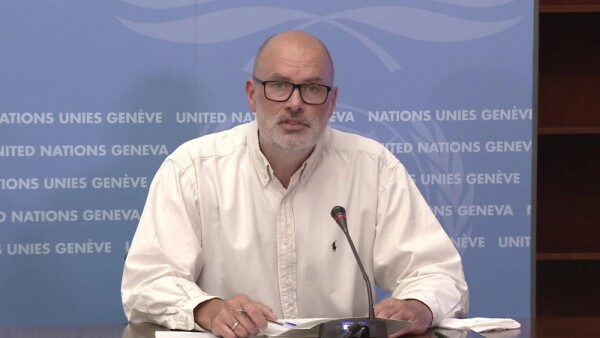
Speaker: Matt Saltmarsh, UNHCR spokesperson
STORY: DRC Death Toll of Displaced - UNHCR
TRT: 1’47”
SOURCE: UNTV CH
RESTRICTIONS: NONE
LANGUAGE: ENGLISH/NATS
ASPECT RATIO: 16:9
DATELINE: Friday 22 July 2022, GENEVA, SWITZERLAND
UN Refugee agency alarmed by growing violence and displacement in eastern DR Congo
As conflict grows in the eastern Democratic Republic of the Congo (DRC), the accumulating death toll and suffering of displaced civilians in brutal attacks is raising serious concerns for the UN Refugee agency, UNHCR, who appealed for fresh funds to meet "soaring needs" in the country.
“This month, simultaneous attacks by armed groups in Ituri Province have left 11 people dead and 250 homes looted and burned. Between February and June this year, UNHCR and partners recorded over 800 deaths from firearm attacks and machete raids on local communities in Ituri,” reported UNHCR spokesperson Matthew Saltmarsh at a press briefing this Friday in Geneva.
According to the UNHCR, at least 715 of the victims had been sheltering in internal displacement sites or were killed as they returned home.
In June alone, 97 people were killed in attacks that included abductions, looting, and burning of homes, UNHCR says. More than twenty thousand people have been driven from their homes by such raids, which are also fueling acute food insecurity in the eastern Ituri province, as agricultural development in this fertile region has been stymied by long-standing intercommunal clashes. In North Kivu province, a settlement for internally displaced people was torn apart last month by armed men.
“In recent weeks, fighting between the Congolese Army and the M23 group in North Kivu Province has displaced more than 160,000 people across Rutshuru and Nyiragongo territories. The redeployment of government troops to this conflict has created power vacuums and a fragile security environment in both Ituri and North Kivu,” noted the UNHCR spokesperson.
Strings of coordinated attacks by multiple militia groups are terrorizing communities in the region. The March 23 Movement, known as M23, was defeated by Congo’s army and special MONUSCO forces in 2013. But these rebel forces began to reemerge in November 2021.
“The lack of security compounds the existing challenge of intercommunal strife, the lack of infrastructure and an absence of institutions in the region. It also fuels intensified cycles of violence, generating further instability and undermining peace and development efforts,” said Mr. Saltmarsh.
"Soaring needs" of newly displaced people in an endemic conflict
The humanitarian situation in the east of the country remains extremely fluid as a result of endemic conflicts between communities and between non-state armed groups and security forces, as well as ongoing social and economic challenges and extreme weather events.
“UNHCR’s operation in DRC has received just 19 per cent of the US$225 million required to respond to the increasing needs of refugee and displaced people with urgent and life-saving support,” said Matthew Saltmarsh. That was the budget based on the estimated needs at the beginning of the year. Additional resources are now required to match the soaring needs of newly displaced populations.
UNHCR urged all parties to immediately stop violence, and to respect international humanitarian and human rights law to protect civilians and humanitarian workers. With more than 5.6 million people displaced, the DRC has the largest number of internally displaced people on the African continent.
Ends
- Medium shot, UN Geneva flag alley.
- Wide shot, press room with panel of speakers.
- SOUNDBITE (ENGLISH): Matthew Saltmarsh, UNHCR spokesperson: “This month, simultaneous attacks by armed groups in Ituri Province have left 11 people dead and 250 homes looted and burned. Between February and June this year, UNHCR and partners recorded over 800 deaths from firearm attacks and machete raids on local communities in Ituri.”
- Medium shot, lateral, journalists.
- SOUNDBITE (ENGLISH): Matthew Saltmarsh, UNHCR spokesperson: “In recent weeks, fighting between the Congolese Army and the M23 group in North Kivu Province has displaced more than 160,000 people across Rutshuru and Nyiragongo territories. The redeployment of government troops to this conflict has created power vacuums and a fragile security environment in both Ituri and North Kivu.”
- Close shot of UN staff.
- SOUNDBITE (ENGLISH): Matthew Saltmarsh, UNHCR spokesperson: ““lack security compounds the existing challenge of intercommunal strife, the lack of infrastructure and an absence of institutions in the region. It also fuels intensified cycles of violence, generating further instability and undermining peace and development efforts”.
- Medium shot of journalists in the press room
- SOUNDBITE (ENGLISH): Matthew Saltmarsh, UNHCR spokesperson: ““UNHCR’s operation in DRC has received just 19 per cent of the US$225 million required to respond to the increasing needs of refugee and displaced people with urgent and life-saving support.”
- Various shots of press room, journalists and UN staff listening.
Similar Stories
1
1
1
Edited News | OCHA , UNICEF , WFP
Aid agencies warned on Friday of the fast-developing humanitarian emergency inside Taiz City in Yemen, which has been encircled by de facto Houthi forces fighting government troops along the country’s west coast.

2
17
1
2
Edited News , Press Conferences , Images | OCHA , WMO
Two UN agencies teamed up on Wednesday to issue an appeal for immediate assistance to help communities already being impacted by the strongest El Niño on record.
3
16
2
2
Edited News , B-roll , Conferences , Images | UNITED NATIONS , UNOG
Sixth Consultative Meeting on Enhancing Coordination of Peace Initiatives and Efforts for Sudan

1
1
1
Edited News | UNICEF , WHO , UNHCR
Yemen war continues to force families from homes amid hunger and disease
More than 250,000 people have now fled renewed fighting in Yemen, the UN said on Tuesday, citing particular concern for those sheltering in the southwestern city of Taiz and the wider governorate, where access is “essentially blocked”.

1
1
1
Edited News | UNICEF
A little over one year since a ceasefire agreement was announced between Hamas fighters and Israel, more than 340 children have been reported killed and hundreds more injured, the UN Children’s Fund, UNICEF, said on Friday.

1
1
1
Edited News | UNICEF , IFRC
Six weeks after Nepal’s deadly flooding disaster, communities are still struggling to rebuild their lives, but they will need sustained help as global warming increases the risk of another Himalayan catastrophe, the UN Children’s Fund (UNICEF) said on Friday.

1
1
1
Edited News | WHO
In suspected Russia plague death, testing and monitoring underway – WHO
The death of a lab worker in Russia’s Siberia region has sparked concerns about plague being the cause, the UN World Health Organization (WHO) said on Tuesday, adding that it was following the situation closely.

1
1
Edited News | OHCHR , UNOG
UN Human Rights Chief Volker Türk on Friday provided and oral update to the 63rd session of the Human rights Council on Ukraine.

1
1
1
Edited News | OHCHR , UNOG
UN Human Rights Chief Volker Türk on Friday provided and oral update to the 63rd session of the Human rights Council on the human rights situation in Haiti.

1
1
1
Edited News | WHO
Repeated delays in bringing lifesaving medicines, prosthetics and more from Israel into Gaza risk having devastating consequences on Palestinians who urgently need them in the wartorn enclave, the UN World Health Organization (WHO) said on Friday. “A truck full of non-priority supplies or the right supplies arriving too late, doesn't save lives. That's the question that actually matters," said Dr Reinhilde Van De Weerdt, WHO Representative in the OPT.

1
1
1
Edited News | WHO
DRC: Early access to care and oxygen decisive for Ebola patients’ survival – WHO
In the Democratic Republic of the Congo (DRC), health workers fighting the country’s largest-ever Ebola outbreak are struggling to overcome critical challenges to patient care, the UN World Health Organization (WHO) warned on Tuesday.

1
1
1
Edited News | OCHA , UN
Civilians in Iran are continuing to feel the consequences of months of conflict and military escalation, the UN’s top official in the country has said, as loss of life, damage to civilian infrastructure and mounting economic pressures leave many facing continued uncertainty.