

The United Nations Office at Geneva
Multimedia Newsroom
STORY: Congolese Refugees Repatriation from Angola - UNHCR
TRT: 1’50”
SOURCE: UNTV CH
RESTRICTIONS: NONE
LANGUAGE: ENGLISH/NATS
ASPECT RATIO: 16:9
DATELINE: 19 July 2022, GENEVA, SWITZERLAND
Voluntary Repatriation of Refugees to DR Congo Resumes
After a two-year hiatus, the voluntary repatriation of refugees from Angola to their home Democratic Republic of Congo (DRC) has started again. It had been on hold since 2020 when the COVID-19 pandemic led to the closure of the border between the two countries.
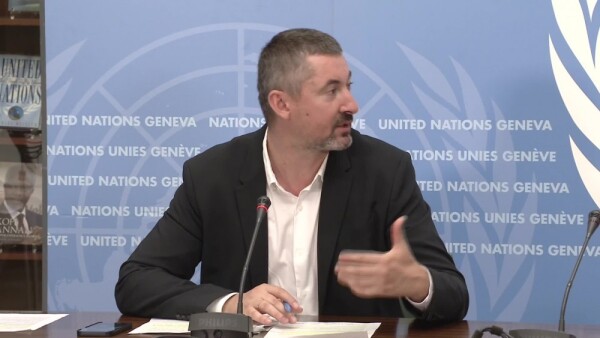
"The first convoy of 88 Congolese refugees departed from the Lôvua settlement in northern Angola this morning towards the border with the Democratic Republic of the Congo (DRC). The convoy is expected to arrive in the DRC tomorrow,” announced Boris Cheshirkov, the spokesperson for the UN Refugee Agency (UNHCR), at a media briefing this morning in Geneva.
The Lôvua camp in Angola hosts some 7,000 refugees. Many have not seen their family since fleeing political and ethnic violence in the DRC’s Kasai region in 2017. More than 35,000 people crossed the border to find safety in Angola at the time.
Despite the endemic insecurity and intensification of the armed conflict in eastern DRC, which has caused 5.9 million people to become internally displaced, Mr. Cheshirkov was reassuring regarding the situation in other parts of the country: “Although conflict continues in eastern DRC, improvements in security in the west have re-opened the possibility for Congolese to return to their country in dignity and safety”.
Upon arrival in the DRC, repatriated Congolese refugees receive cash assistance to help cover basic needs such as personal hygiene, household items and initial assistance for rent. Additional support is also provided to help integrate the resttled populations: for example, for getting documentation and helping children go back to school. At the same time, “UNHCR will always continue to advocate for the full support in essential services to be provided by the government, by the authorities, to those going back, especially when it comes to insecurity, so they are able to rebuild their lives”, insisted the UN Refugee Agency’s spokesperson.
Only two per cent of the world’s refugees were able to return home last year
Already, over 600 Congolese refugees have expressed willingness to go back home. More are likely to show interest with the resumption of the repatriation efforts.
UNHCR assists some 57,000 refugees and asylum seekers in Angola, mostly in urban areas. “This year, the operation has received US$10.3 million of the US$29.8 million it needs, leaving a significant gap in addressing the basic needs of the refugees and asylum seekers. And UNHCR in DRC has received just 19 per cent of the US$225 million required to respond to the growing needs of displaced people in the DRC.”
Globally, last year, nearly 430,000 people were able to return home in safety and dignity, a 71 per cent increase on the previous year. Nearly two-thirds of refugee returns were to South Sudan. That number represents just two per cent of the world’s refugees.
Ends
- Medium shot, UN Geneva flag alley.
- Medium shot, panel of speakers, side shot.
- SOUNDBITE (ENGLISH): Boris Cheshirkov, UNHCR spokesperson: “the first convoy of 88 Congolese refugees departed from the Lôvua settlement in northern Angola this morning towards the border with the Democratic Republic of the Congo (DRC). The convoy is expected to arrive in the DRC tomorrow.”
- Medium shot, lateral, journalists.
- SOUNDBITE (ENGLISH): Boris Cheshirkov, UNHCR spokesperson: “Although conflict continues in eastern DRC, improvements in security in the west have re-opened the possibility for Congolese to return to their country in dignity and safety”.
- Wide shot of press room, podium and journalists.
- SOUNDBITE (ENGLISH): Boris Cheshirkov, UNHCR spokesperson: “UNHCR will always continue to advocate for the full support in essential services to be provided by the government, by the authorities to those going back, especially when it comes to insecurity, so they are able to rebuild their lives.”
- Wide shot of press room
- SOUNDBITE (ENGLISH): Boris Cheshirkov, UNHCR spokesperson: “This year, the operation (in Angola) has received US$10.3 million of the US$29.8 million it needs. This is leaving a significant gap in addressing the basic needs of the refugees and asylum seekers. And UNHCR in DRC has received just 19 per cent of the US$225 million it requires in the country to respond to the growing needs of those displaced on its territory.”
- Various medium shots of journalists and UN staff listening.
Similar Stories
1
1
1
Edited News | OCHA , UNICEF , WFP
Aid agencies warned on Friday of the fast-developing humanitarian emergency inside Taiz City in Yemen, which has been encircled by de facto Houthi forces fighting government troops along the country’s west coast.

2
17
1
2
Edited News , Press Conferences , Images | OCHA , WMO
Two UN agencies teamed up on Wednesday to issue an appeal for immediate assistance to help communities already being impacted by the strongest El Niño on record.

3
16
2
2
Edited News , B-roll , Conferences , Images | UNITED NATIONS , UNOG
Sixth Consultative Meeting on Enhancing Coordination of Peace Initiatives and Efforts for Sudan

1
1
1
Edited News | UNICEF , WHO , UNHCR
Yemen war continues to force families from homes amid hunger and disease
More than 250,000 people have now fled renewed fighting in Yemen, the UN said on Tuesday, citing particular concern for those sheltering in the southwestern city of Taiz and the wider governorate, where access is “essentially blocked”.

1
1
1
Edited News | UNICEF
A little over one year since a ceasefire agreement was announced between Hamas fighters and Israel, more than 340 children have been reported killed and hundreds more injured, the UN Children’s Fund, UNICEF, said on Friday.

1
1
1
Edited News | UNICEF , IFRC
Six weeks after Nepal’s deadly flooding disaster, communities are still struggling to rebuild their lives, but they will need sustained help as global warming increases the risk of another Himalayan catastrophe, the UN Children’s Fund (UNICEF) said on Friday.

1
1
1
Edited News | WHO
In suspected Russia plague death, testing and monitoring underway – WHO
The death of a lab worker in Russia’s Siberia region has sparked concerns about plague being the cause, the UN World Health Organization (WHO) said on Tuesday, adding that it was following the situation closely.

1
1
Edited News | OHCHR , UNOG
UN Human Rights Chief Volker Türk on Friday provided and oral update to the 63rd session of the Human rights Council on Ukraine.

1
1
1
Edited News | OHCHR , UNOG
UN Human Rights Chief Volker Türk on Friday provided and oral update to the 63rd session of the Human rights Council on the human rights situation in Haiti.

1
1
1
Edited News | WHO
Repeated delays in bringing lifesaving medicines, prosthetics and more from Israel into Gaza risk having devastating consequences on Palestinians who urgently need them in the wartorn enclave, the UN World Health Organization (WHO) said on Friday. “A truck full of non-priority supplies or the right supplies arriving too late, doesn't save lives. That's the question that actually matters," said Dr Reinhilde Van De Weerdt, WHO Representative in the OPT.

1
1
1
Edited News | WHO
DRC: Early access to care and oxygen decisive for Ebola patients’ survival – WHO
In the Democratic Republic of the Congo (DRC), health workers fighting the country’s largest-ever Ebola outbreak are struggling to overcome critical challenges to patient care, the UN World Health Organization (WHO) warned on Tuesday.

1
1
1
Edited News | OCHA , UN
Civilians in Iran are continuing to feel the consequences of months of conflict and military escalation, the UN’s top official in the country has said, as loss of life, damage to civilian infrastructure and mounting economic pressures leave many facing continued uncertainty.