

The United Nations Office at Geneva
Multimedia Newsroom
A staggering average of 71 verified grave violations are committed daily against children by parties to conflict in more than 30 conflict situations across Africa, the Middle East, Asia, and Latin America. This is one of the key findings of a new report entitled “25 years of children and armed conflict: Taking action to protect children in war” that UNICEF launched today.
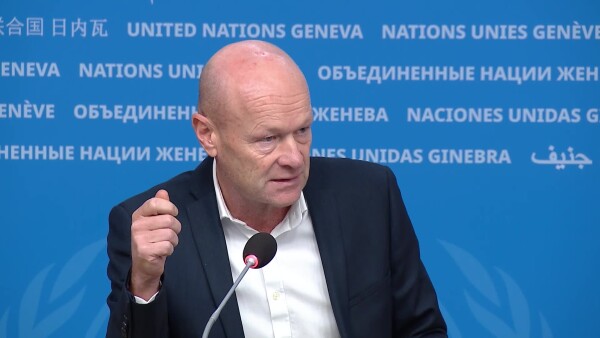
Speaking at a news briefing at the United Nations in Geneva, Tasha Gill, UNICEF’s Senior Advisor on Child Protection in Emergencies, said that “between 2005 and 2020, the United Nations verified over a quarter of a million grave violations against children committed by parties to conflict in more than 30 conflict situations across Africa, the Middle East, Asia, and Latin America.” Ms. Gill concluded that “this is a staggering average of 71 grave violations against children daily”.
The report analyses 16 years of data on grave rights violations committed against children in conflict situations, from 2005 to 2020, to show the impact of armed conflict on children across the world.
UNICEF’s Ms. Gill emphasized that “between 2016 and 2020, 82 per cent of all verified child casualties occurred in only five situations: Afghanistan, Israel and the State of Palestine, Syria, Yemen, and Somalia”.
The report examines how engagement with parties to conflict – state and non-State actors alike – enables ending and preventing child rights grave violations.
According to Tasha Gill, “our analysis shows that despite decades of advocacy with parties to conflict and those who influence them —as well as enhanced monitoring, reporting and documenting grave rights violations—children continue to bear the brunt of war. Every day, girls and boys living in areas under conflict experience and endure unspeakable horrors that no one should experience”.
During the period from 2005 to 2020, UNICEF found that more than 104,000 children were verified as killed or maimed, more than 93,000 children verified as recruited and used by parties to conflict and at least 25,700 were verified as abducted by parties to conflict.
“To give just some sense of the magnitude of the problem: in one decade alone - from 2010 to 2020, there was an increase of 185% of verified grave child rights violations committed against children in conflict situations,” said UNICEF’s Senior Advisor on Child Protection in Emergencies.
She added that “it is also important to note that many children experience more than one violation, increasing their vulnerability. For example, abduction is often combined with or leads to other violations, like recruitment and use and sexual violence”.
The effort of UNICEF staff, other UN and partner organizations to collect and verify information on grave violations to better understand and respond to the needs of children, has received positive results. Since 2000, at least 170,000 children have been released from armed forces, many having survived multiple violations, including abduction or sexual violence.
“While we are complaining or criticizing all members of wars parties to conflict for not upholding their obligations under International Humanitarian Law and International Human Rights Law, we also belief that the international community at large can do more to protect children in conflict”, said Ms. Gill. “These numbers are staggering that I have presented today, and they are the result of an in-depth analysis of 16 years of data”.
-ends-
- Exterior shot, wide shot Palais des Nations on a sunny day
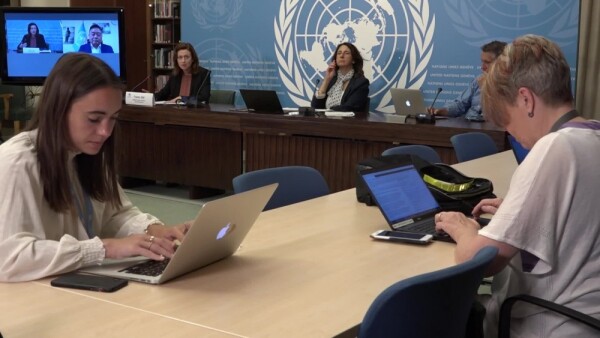
- Wide shot, press briefing room
- SOUNDBITE (English) - Tasha Gill, UNICEF’s Senior Advisor, Child Protection in Emergencies: “Between 2005 and 2020, the United Nations verified over a quarter of a million grave violations against children committed by parties to conflict. In more than 30 conflict situations across Africa, the Middle East, Asia, and Latin America. This is a staggering average of 71 grave violations against children daily”.
- Medium shot, journalists taking notes in the room
- SOUNDBITE (English) - Tasha Gill, UNICEF’s Senior Advisor, Child Protection in Emergencies: “Between 2016 and 2020, 82 per cent of all verified child casualties occurred in only five situations: Afghanistan, Israel and the State of Palestine, Syria, Yemen, and Somalia”.
- Close up, journalists listening
- SOUNDBITE (English) - Tasha Gill, UNICEF’s Senior Advisor, Child Protection in Emergencies: “Our analysis shows that despite decades of advocacy with parties to conflict and those who influence them —as well as enhanced monitoring, reporting and documenting grave rights violations—children continue to bear the brunt of war. Every day, girls and boys living in areas under conflict experience and endure unspeakable horrors that no one should experience”.
- Close up, hands taking notes
- SOUNDBITE (English) - Tasha Gill, UNICEF’s Senior Advisor, Child Protection in Emergencies: “To give just some sense of the magnitude of the problem: in one decade alone - from 2010 to 2020, there was an increase of 185% of verified grave child rights violations committed against children in conflict situations”.
- Two shot, journalists listening
- SOUNDBITE (English) - Tasha Gill, UNICEF’s Senior Advisor, Child Protection in Emergencies: “It is also important to note that many children experience more than one violation, increasing their vulnerability. For example, abduction is often combined with or leads to other violations, like recruitment and use and sexual violence”.
- Close up, hands typing on laptop keyboard
- SOUNDBITE (English) - Tasha Gill, UNICEF’s Senior Advisor, Child Protection in Emergencies: “While we are complaining or criticizing all members of wars parties to conflict for not upholding their obligations under International Humanitarian Law and International Human Rights Law, we also belief that the international community at large can do more to protect children in conflict. These numbers are staggering that I have presented today, and they are the result of an in-depth analysis of 16 years of data”.
- Medium shot, journalists and podium with speakers
- Medium shot, spokespersons listening
- Medium shot, journalists listening with camera in forefront
Similar Stories
1
1
1
Edited News | OCHA , UNICEF , WFP
Aid agencies warned on Friday of the fast-developing humanitarian emergency inside Taiz City in Yemen, which has been encircled by de facto Houthi forces fighting government troops along the country’s west coast.

2
17
1
2
Edited News , Press Conferences , Images | OCHA , WMO
Two UN agencies teamed up on Wednesday to issue an appeal for immediate assistance to help communities already being impacted by the strongest El Niño on record.

3
16
2
2
Edited News , B-roll , Conferences , Images | UNITED NATIONS , UNOG
Sixth Consultative Meeting on Enhancing Coordination of Peace Initiatives and Efforts for Sudan

1
1
1
Edited News | UNICEF , WHO , UNHCR
Yemen war continues to force families from homes amid hunger and disease
More than 250,000 people have now fled renewed fighting in Yemen, the UN said on Tuesday, citing particular concern for those sheltering in the southwestern city of Taiz and the wider governorate, where access is “essentially blocked”.

1
1
1
Edited News | UNICEF
A little over one year since a ceasefire agreement was announced between Hamas fighters and Israel, more than 340 children have been reported killed and hundreds more injured, the UN Children’s Fund, UNICEF, said on Friday.

1
1
1
Edited News | UNICEF , IFRC
Six weeks after Nepal’s deadly flooding disaster, communities are still struggling to rebuild their lives, but they will need sustained help as global warming increases the risk of another Himalayan catastrophe, the UN Children’s Fund (UNICEF) said on Friday.

1
1
1
Edited News | WHO
In suspected Russia plague death, testing and monitoring underway – WHO
The death of a lab worker in Russia’s Siberia region has sparked concerns about plague being the cause, the UN World Health Organization (WHO) said on Tuesday, adding that it was following the situation closely.

1
1
Edited News | OHCHR , UNOG
UN Human Rights Chief Volker Türk on Friday provided and oral update to the 63rd session of the Human rights Council on Ukraine.

1
1
1
Edited News | OHCHR , UNOG
UN Human Rights Chief Volker Türk on Friday provided and oral update to the 63rd session of the Human rights Council on the human rights situation in Haiti.

1
1
1
Edited News | WHO
Repeated delays in bringing lifesaving medicines, prosthetics and more from Israel into Gaza risk having devastating consequences on Palestinians who urgently need them in the wartorn enclave, the UN World Health Organization (WHO) said on Friday. “A truck full of non-priority supplies or the right supplies arriving too late, doesn't save lives. That's the question that actually matters," said Dr Reinhilde Van De Weerdt, WHO Representative in the OPT.

1
1
1
Edited News | WHO
DRC: Early access to care and oxygen decisive for Ebola patients’ survival – WHO
In the Democratic Republic of the Congo (DRC), health workers fighting the country’s largest-ever Ebola outbreak are struggling to overcome critical challenges to patient care, the UN World Health Organization (WHO) warned on Tuesday.

1
1
1
Edited News | OCHA , UN
Civilians in Iran are continuing to feel the consequences of months of conflict and military escalation, the UN’s top official in the country has said, as loss of life, damage to civilian infrastructure and mounting economic pressures leave many facing continued uncertainty.