

The United Nations Office at Geneva
Multimedia Newsroom
Edited News | UNICEF , UNHCR , OCHA , WHO , UNITED NATIONS
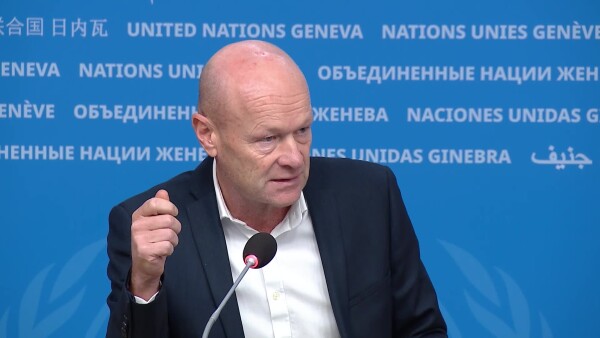
Bi-weekly press briefing: Ukraine Crisis Update UNICEF - OCHA - WHO - UNHCR 04 March 2022
Bi-weekly press briefing: Ukraine Crisis Update UNICEF
Ukraine crisis: unprecedented outflow of traumatised humanity, say UN teams
UN humanitarians on Friday described as "unprecedented" the continuing outflow of children and families fleeing “relentless shelling” from the Russian military action in Ukraine, while also welcoming as-yet unconfirmed assurances of safe passage for relief teams seeking to provide urgently needed assistance.
Because of the escalation, “500,000 children have been forced to flee their homes in just seven days; this is unprecedented in scale and speed,” said James Elder, spokesperson for the UN Children’s Fund, speaking via Zoom from Lviv in western Ukraine.
“As fighting continues of course last night, thousands of children spent another night in freezing and terrifying - terrified - in bunkers under siege. Children must, must, have peace.”
The psychological toll that the barrage of shelling and sirens has had on countless families fleeing the country is clear among those arriving at the country’s borders, said Joung-ah Ghedini-Williams from the UN Refugee Agency, UNHCR.
“When we spoke to some of the families leaving, it was …extremely clear the level of fear and trauma,” said Ms. Ghedini-Williams, speaking from Moldova’s border with Ukraine, where there was a queue of cars “as far as the eye could see”.
“One family that I spoke to, it was a mother with her three children in the car and their two dogs. They were all very shaken up. The youngest child, she was a young girl of I would guess around eight or nine, was visibly shaken.”
Deeper within Ukraine, “where many cities have faced relentless shelling”, according to UN humanitarian coordinating office OCHA, the UN World Health Organization (WHO) explained that it was ramping up aid as quickly as possible for desperate health teams. “Yesterday, we also received the first cargo shipment of trauma supplies, surgical supplies and emergency health supplies and medicines,” said Dr Flavio Salio, Emergency Medical Team Network Leader.
Speaking via Zoom from the Poland-Ukraine border, he said that the first WHO cargo shipment with critical emergency supplies had just arrived in Warsaw and was now moving towards the border before crossing soon into Ukraine.
Dr Salio added that the WHO was also considering medical evacuations of civilians, but that safe access was paramount.
“I think at this stage safe access will be very critical, both in terms of assets as well as teams that are very willing to provide the needed medical support for the medical care,” he told journalists in Geneva.
Amid “staggering” numbers of displaced people, UNICEF underscored that humanitarian needs across the country were “multiplying by the hour”.
“UNICEF’s first convoy of trucks will arrive here later today, at the latest tomorrow,” said spokesperson Mr. Elder, speaking from Lviv. “It’ll bring emergency supplies, water, sanitation kits, midwifery kits, mothers are having babies in bunkers. We’ve sent oxygen cylinders to Kiev and have safe tents on borders. But as long as conflict continues, demand will continue to outstrip supply.”
Hundreds of thousands of people are without safe drinking water because of damage to water system infrastructure and many have been cut off from access to other essential services like healthcare, Mr. Elder warned, noting that “tens of thousands of children” remain in child-care institutions, and many are disabled.
On the need to guarantee safe passage for humanitarians, OCHA spokesperson Jens Laerke said that the UN’s Emergency Relief Coordinator, Martin Griffiths, had welcomed reports that the two sides had “agreed to facilitate safe passage”. But he noted that as yet there had been no official confirmation from the sides in writing.
ends
STORY: Ukraine Update – UNICEF, UNHCR, WHO, OCHA
TRT: 2 mins 47s
SOURCE: UNTV CH
RESTRICTIONS: NONE
LANGUAGE: ENGLISH
ASPECT RATIO: 16:9
DATELINE: 4 March 2022 GENEVA, SWITZERLAND
SHOTLIST
- Exterior wide shot, UN flag alley UN Geneva.
- Wide shot, Press room, UN Geneva.
- SOUNDBITE (English): James Elder, spokesperson, UNICEF, via Zoom from Lviv, Ukraine: “500,000 children have been forced to flee their homes in just seven days. This is unprecedented in scale and speed.”
- Medium shot, participants checking laptop and mobile phone.
- SOUNDBITE (English): James Elder, spokesperson, UNICEF, via Zoom from Lviv, Ukraine: “As fighting continues of course last night, thousands of children spent another night in freezing and terrifying - terrified - in bunkers under siege. Children must, must, have peace.”
- Medium-wide shot, podium speakers, external speakers on TV screen to side.
- SOUNDBITE (English): James Elder, spokesperson, UNICEF, via Zoom from Lviv, Ukraine: “UNICEF’s first convoy of trucks will arrive here later today, at the latest tomorrow, it’ll bring emergency supplies, water, sanitation kits, midwifery kits, mothers are having babies in bunkers. We’ve sent oxygen cylinders to Kiev and have safe tents on borders. But as long as conflict continues, demand will continue to outstrip supply.”
- Wide shot, Press room, participants seated.
- SOUNDBITE (English): Joung-ah Ghedini-Williams, UNHCR, via Zoom Palanca at the Moldova/Ukraine border: “And when we spoke to some of the families leaving, it was – it was - extremely clear the level of fear and trauma; one family that I spoke to, it was a mother with her three children in the car and their two dogs. They were all very shaken up. The youngest child, she was a young girl of I would guess around eight or nine, was visibly shaken.”
- Wide shot, Press room, participants seated.
- SOUNDBITE (English): Dr Flavio SALIO, Emergency Medical Team Network Leader, WHO, via Zoom, at Poland-Ukraine border: “Yesterday we also received the first cargo shipment of trauma supplies, surgical supplies and emergency health supplies and medicines that will be then - the cargo’s going to be moving towards the border and then across, further.”
- Medium shot, Press room, participants and podium speakers.
- SOUNDBITE: (English): Dr Flavio SALIO, Emergency Medical Team Network Leader, WHO, via Zoom, at Poland-Ukraine border: “We are looking to the possibility of the medical evacuations of civilians and that component, it needs to be looked at very carefully. I think at this stage safe access will be very critical, both in terms of assets as well as teams that are very willing to provide the needed medical support for the medical care.”
- Medium shot, Press room, participants.
- SOUNDBITE (English): Jens Laerke, spokesperson, OCHA: “We welcome the reports that the two sides have agreed to facilitate safe passage. Just a moment ago when I was with the Emergency Relief Coordinator, we did not have in writing an official confirmation from the sides.”
- Medium shot, Press room, podium speakers.
- Medium shot, video journalist filming.
- Medium shot: participant writing notes, external participants shown on TV screen to rear.

Similar Stories
1
1
1
Edited News | OCHA , UNICEF , WFP
Aid agencies warned on Friday of the fast-developing humanitarian emergency inside Taiz City in Yemen, which has been encircled by de facto Houthi forces fighting government troops along the country’s west coast.

2
17
1
2
Edited News , Press Conferences , Images | OCHA , WMO
Two UN agencies teamed up on Wednesday to issue an appeal for immediate assistance to help communities already being impacted by the strongest El Niño on record.

3
16
2
2
Edited News , B-roll , Conferences , Images | UNITED NATIONS , UNOG
Sixth Consultative Meeting on Enhancing Coordination of Peace Initiatives and Efforts for Sudan

1
1
1
Edited News | UNICEF , WHO , UNHCR
Yemen war continues to force families from homes amid hunger and disease
More than 250,000 people have now fled renewed fighting in Yemen, the UN said on Tuesday, citing particular concern for those sheltering in the southwestern city of Taiz and the wider governorate, where access is “essentially blocked”.

1
1
1
Edited News | UNICEF
A little over one year since a ceasefire agreement was announced between Hamas fighters and Israel, more than 340 children have been reported killed and hundreds more injured, the UN Children’s Fund, UNICEF, said on Friday.

1
1
1
Edited News | UNICEF , IFRC
Six weeks after Nepal’s deadly flooding disaster, communities are still struggling to rebuild their lives, but they will need sustained help as global warming increases the risk of another Himalayan catastrophe, the UN Children’s Fund (UNICEF) said on Friday.

1
1
1
Edited News | WHO
In suspected Russia plague death, testing and monitoring underway – WHO
The death of a lab worker in Russia’s Siberia region has sparked concerns about plague being the cause, the UN World Health Organization (WHO) said on Tuesday, adding that it was following the situation closely.

1
1
Edited News | OHCHR , UNOG
UN Human Rights Chief Volker Türk on Friday provided and oral update to the 63rd session of the Human rights Council on Ukraine.

1
1
1
Edited News | OHCHR , UNOG
UN Human Rights Chief Volker Türk on Friday provided and oral update to the 63rd session of the Human rights Council on the human rights situation in Haiti.

1
1
1
Edited News | WHO
Repeated delays in bringing lifesaving medicines, prosthetics and more from Israel into Gaza risk having devastating consequences on Palestinians who urgently need them in the wartorn enclave, the UN World Health Organization (WHO) said on Friday. “A truck full of non-priority supplies or the right supplies arriving too late, doesn't save lives. That's the question that actually matters," said Dr Reinhilde Van De Weerdt, WHO Representative in the OPT.

1
1
1
Edited News | WHO
DRC: Early access to care and oxygen decisive for Ebola patients’ survival – WHO
In the Democratic Republic of the Congo (DRC), health workers fighting the country’s largest-ever Ebola outbreak are struggling to overcome critical challenges to patient care, the UN World Health Organization (WHO) warned on Tuesday.

1
1
1
Edited News | OCHA , UN
Civilians in Iran are continuing to feel the consequences of months of conflict and military escalation, the UN’s top official in the country has said, as loss of life, damage to civilian infrastructure and mounting economic pressures leave many facing continued uncertainty.