

The United Nations Office at Geneva
Multimedia Newsroom
Edited News | OCHA , OHCHR , UNICEF
Fermeture des principaux points de passage de Rafah à Gaza - OCHA, UNICEF, HCDH 07 mai 2024
HISTOIRE
L'aide à Gaza étouffée par la fermeture des principaux points de passage frontaliers du sud
En pleine incertitude quant à un cessez-le-feu à Gaza et à une escalade de l'opération militaire dans la ville méridionale de Rafah, les agences d'aide de l'ONU ont exprimé mardi de profondes inquiétudes quant à la fermeture des deux principaux points d'accès à la bande de Gaza, alors que les familles sont effrayées et « tiennent psychologiquement et physiquement par un fil ».
Gaza est « étouffée » par l'absence d'aide, a averti Jens Laerke, orateur pour le bureau de la coordination des affaires humanitaires de l'ONU, OCHA. « Nous n'avons actuellement aucune présence physique au point de passage de Rafah, car notre accès à cette zone à des fins de coordination a été refusé par le COGAT, a-t-il déclaré aux journalistes à Genève, faisant référence à l'agence israélienne qui supervise les affaires civiles palestiniennes. « Actuellement, les deux principales artères pour acheminer l'aide à Gaza sont actuellement étouffées. »
Les humanitaires de l'ONU estiment que l'enclave ne dispose que d'une réserve de carburant d'une journée. «Si aucun carburant n'arrive pendant une période prolongée, ce serait un moyen très efficace de mettre l'opération humanitaire dans sa tombe, » a insisté l'orateur de l'OCHA.
L'armée israélienne a pris le contrôle pendant la nuit du côté palestinien du point de passage de Rafah, une entrée vitale pour l'aide humanitaire à la bande de Gaza depuis la frontière égyptienne. L'incursion intervient après que le Hamas a déclaré avoir accepté une proposition de cessez-le-feu à Gaza par le Qatar et l'Égypte, mais Israël a déclaré qu'il continuerait les pourparlers tout en poursuivant les opérations militaires à Rafah.
La fermeture de la frontière est un coup dur pour les efforts visant à maintenir le flux de nourriture, de médicaments et de fournitures de base pour maintenir les Gazaouis en vie. Le Programme alimentaire mondial a averti que la partie nord de la bande de Gaza connaît déjà une « famine totale ».
Un avertissement repris par James Elder, de l'UNICEF, qui a interrogé « comment les agences d'aide pourraient éviter la famine dans toute la bande de Gaza si les frontières restent fermées pendant une période prolongée. »
Avec la population de Rafah augmentant de cinq fois, passant de 250 000 à 1,4 million de personnes, les conditions de santé physique et mentale des civils se sont rapidement détériorées au cours des sept derniers mois de guerre.
« La capacité de résilience des familles a été brisée », a expliqué M. Elder, orateur de l'UNICEF. Ils tiennent, psychologiquement et physiquement, par un fil. Je ne me souviens pas d'avoir rencontré une seule famille à Rafah - et j'en ai rencontré des dizaines -, qui n'avait pas perdu une maison ou un être cher. »
Le Secrétaire général de l'ONU, Antonio Guterres, a mis en garde contre une invasion terrestre israélienne de Rafah, affirmant que ce serait une « catastrophe humaine » et a réitéré son appel aux deux parties pour obtenir un accord de cessez-le-feu « essentiel » maintenant.
Les civils palestiniens sous ordre d'évacuation de l'est de Rafah par les Forces de défense israéliennes ont décrit leur peur et leur désespoir. Plus d'un million de Palestiniens ont fui vers la ville depuis d'autres parties de Gaza depuis le 7 octobre 2023.
« Ils doivent avoir accès à l'aide où qu'ils aillent, » a insisté Jens Laerke. « Ce n'est pas le cas, en particulier à Al Mawassi, le principal problème est qu'il n'y a pas d'infrastructure. Ce qui sous-tend une opération humanitaire, c'est l'accès à l'électricité, l'accès à l'eau et aux systèmes d'assainissement, au système d'égouts, etc. Cela n'existe pas, » a-t-il ajouté.
Le bureau des droits de l'homme de l'ONU a averti qu'Israël a des obligations strictes en vertu du droit humanitaire international pour assurer la sécurité et l'accès de la population aux soins médicaux, à une alimentation adéquate, à une eau potable et à des installations sanitaires. « Le non-respect de ces obligations peut équivaloir à un déplacement forcé, ce qui est un crime de guerre, » a déclaré Ravina Shamdasani, oratrice de l'OHCHR.
Fin
Histoire : « Gaza : Israël ferme les frontières clés de Rafah - OCHA » - 07 mai 2024
Orateurs, porte-paroles des agences :
· Jens Laerke, OCHA
· James Elder, UNICEF
· Ravina Shamdasani, OHCHR
· Margaret Harris, WHO
TRT: 02’06”
SOURCE: UNTV CH
LANGUAGE: ENGLISH
ASPECT RATIO: 16:9
DATELINE: 07 mai 2024 - GENÈVE, SUISSE
Conférence de presse de Genève
LISTE DES PLANS
- Plan moyen extérieur : allée du drapeau des Nations Unies
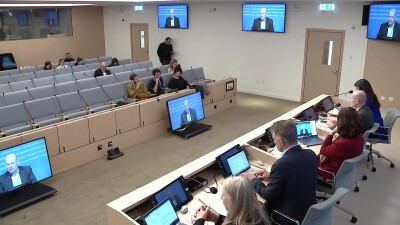
- Plan large de la salle de conférence de presse avec des journalistes
3. DÉCLARATION (anglais) Jens Laerke, porte-parole de l'OCHA : « Nous n'avons actuellement aucune présence physique au passage de Rafah, car notre accès à cette zone à des fins de coordination a été refusé par le CogAT. Cela signifie actuellement que les deux principales voies d'accès à l'aide à Gaza sont actuellement bloquées. »
- Plan large du podium de la salle de presse avec les orateurs
- DÉCLARATION (anglais) Jens Laerke, porte-parole de l'OCHA : «Si aucun carburant n'arrive pendant une période prolongée, ce serait un moyen très efficace de mettre l'opération humanitaire dans sa tombe. »”
- Plan moyen : journalistes dans la salle de conférence de presse
- DÉCLARATION (anglais) James Elder, porte-parole de l'UNICEF : « Il est difficile de voir comment, si cela ferme pendant une période prolongée, les agences d'aide pourraient éviter la famine dans toute la bande de Gaza. »
- Plan de coupe
- DÉCLARATION (anglais) James Elder, porte-parole de l'UNICEF : « La capacité de résilience des familles a été anéantie. Les familles tiennent, psychologiquement et physiquement, par un fil. Je ne me souviens pas avoir rencontré une seule famille - et j'en ai rencontré beaucoup - une seule famille à Rafah qui n'ait pas perdu un foyer ou un être cher. »
- Plan moyen de la caméra et de la régie de la salle de presse
- DÉCLARATION (anglais) Jens Laerke, porte-parole de l'OCHA : « Ils doivent avoir accès à l'aide où qu'ils aillent. Ce n'est pas le cas, en particulier à Al Mawassi, le principal problème est qu'il n'y a pas d'infrastructures. Ce qui sous-tend une opération humanitaire, c'est l'accès à l'électricité, à l'eau et aux systèmes d'assainissement, au système d'égouts et ainsi de suite, ce n'est pas là, ce n'est tout simplement pas là. »
- Plan de coupe : journaliste prenant des notes
- DÉCLARATION (anglais) Ravina Shamdasani, porte-parole de l'OHCHR : «Israël a des obligations strictes en vertu du droit international humanitaire pour garantir la sécurité et l'accès de ces individus aux soins médicaux, à une alimentation adéquate, à de l'eau potable, à l'assainissement. Le non-respect de ces obligations peut constituer un déplacement forcé, ce qui est un crime de guerre. »
- Plans variés de la salle de presse
Similar Stories

1
1
1
Edited News | OCHA , UNICEF , WFP
Aid agencies warned on Friday of the fast-developing humanitarian emergency inside Taiz City in Yemen, which has been encircled by de facto Houthi forces fighting government troops along the country’s west coast.

2
17
1
2
Edited News , Press Conferences , Images | OCHA , WMO
Two UN agencies teamed up on Wednesday to issue an appeal for immediate assistance to help communities already being impacted by the strongest El Niño on record.

3
16
2
2
Edited News , B-roll , Conferences , Images | UNITED NATIONS , UNOG
Sixth Consultative Meeting on Enhancing Coordination of Peace Initiatives and Efforts for Sudan

1
1
1
Edited News | UNICEF , WHO , UNHCR
Yemen war continues to force families from homes amid hunger and disease
More than 250,000 people have now fled renewed fighting in Yemen, the UN said on Tuesday, citing particular concern for those sheltering in the southwestern city of Taiz and the wider governorate, where access is “essentially blocked”.

1
1
1
Edited News | UNICEF
A little over one year since a ceasefire agreement was announced between Hamas fighters and Israel, more than 340 children have been reported killed and hundreds more injured, the UN Children’s Fund, UNICEF, said on Friday.

1
1
1
Edited News | UNICEF , IFRC
Six weeks after Nepal’s deadly flooding disaster, communities are still struggling to rebuild their lives, but they will need sustained help as global warming increases the risk of another Himalayan catastrophe, the UN Children’s Fund (UNICEF) said on Friday.

1
1
1
Edited News | WHO
In suspected Russia plague death, testing and monitoring underway – WHO
The death of a lab worker in Russia’s Siberia region has sparked concerns about plague being the cause, the UN World Health Organization (WHO) said on Tuesday, adding that it was following the situation closely.

1
1
Edited News | OHCHR , UNOG
UN Human Rights Chief Volker Türk on Friday provided and oral update to the 63rd session of the Human rights Council on Ukraine.

1
1
1
Edited News | OHCHR , UNOG
UN Human Rights Chief Volker Türk on Friday provided and oral update to the 63rd session of the Human rights Council on the human rights situation in Haiti.

1
1
1
Edited News | WHO
Repeated delays in bringing lifesaving medicines, prosthetics and more from Israel into Gaza risk having devastating consequences on Palestinians who urgently need them in the wartorn enclave, the UN World Health Organization (WHO) said on Friday. “A truck full of non-priority supplies or the right supplies arriving too late, doesn't save lives. That's the question that actually matters," said Dr Reinhilde Van De Weerdt, WHO Representative in the OPT.

1
1
1
Edited News | WHO
DRC: Early access to care and oxygen decisive for Ebola patients’ survival – WHO
In the Democratic Republic of the Congo (DRC), health workers fighting the country’s largest-ever Ebola outbreak are struggling to overcome critical challenges to patient care, the UN World Health Organization (WHO) warned on Tuesday.

1
1
1
Edited News | OCHA , UN
Civilians in Iran are continuing to feel the consequences of months of conflict and military escalation, the UN’s top official in the country has said, as loss of life, damage to civilian infrastructure and mounting economic pressures leave many facing continued uncertainty.