

The United Nations Office at Geneva
Multimedia Newsroom
Edited News , Press Conferences | OCHA , UNITED NATIONS
OCHA Presser: Humanitarian Situation In Nigeria
“Looming catastrophic food insecurity in Nigeria could eventually result in a famine”, warns UN Country Office
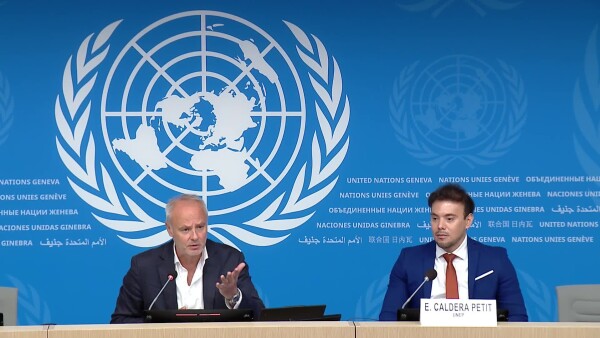
The UN Country Representative in Nigeria, Edward Kallon, warned today that the country is currently at a crossroad to a critical food insecurity which could result in famine should appropriate action not be taken now while asking urgently the international community for USD 250 million to avert the worse.
Speaking to reporters at a briefing at the United Nations in Geneva, Edward Kallon, United Nations Resident and Humanitarian Coordinator for Nigeria, said that “we are here on a very somber mission, a somber mission in the sense that we are seeing Nigeria at a cross-road to critical food insecure situation and a looming catastrophic food insecurity that could eventually result in a famine, if appropriate actions are not taken now”.
Mr. Kallon added that “we need critically USD 250 million dollars to respond to the acute food insecurity needs of 4,4 million people of which some 705, 000 are at a critical threshold of death if nothing is done now”.
Based on a latest study by the World Food Programme (WFP), the UN Food and Agriculture Organisation (FAO) and partners, an estimated 4,4 million people are urgently in need of humanitarian assistance in north-east Nigeria, Borno, Adamawa and Yobe states. One of the biggest challenges is getting access to the people in need.
“There are still well over 800, 000 people in inaccessible areas that we cannot access as international humanitarian partners although some of those areas are reachable by the government itself”, reports Mr. Kallon. “So, indeed, we can see the need for a division of responsibility in those areas. What’s critical to the response is going to be the need for freedom of movement of people to come from those enclaves to areas where we can have access to”.
According to Edward Kallon, the malnutrition rates are very worrisome as they have further increased since October 2020 till today.
The socio-economic impact of Covid-19 led to a destruction of livelihoods. The country is extremely worried about the new virus variants of the pandemic and the work of the humanitarian workers has been restricted due to Covid-19.
“This situation has even deteriorated further as a result of 1) limited access, constraints imposed by Covid-19 and also the lack of resources. My call on the international community is to come to our aid now to make sure that we avert a famine”.
The ongoing security concerns resulted in a further displacement of the population, according to Mr. Kallon. “As we are witnessing now as a result of banditry, criminality, and elements of terrorism, we are also seeing high levels of displacement in north-west Nigeria where an estimated 1,4 million people also need immediate humanitarian assistance. And, also in north-central Nigeria where over 1 million people also need assistance”.
The top UN official for Nigeria emphasizes that the response mechanisms are in place and colleagues are working closely with government to gain access in hard to reach areas.
“Security remains a major concern in our operation and at best the security situation in the operation areas remain fluid, volatile and unpredictable”, said Mr. Kallon. “Access remains a concern to us, but we are also very hopeful and working collectively to ensure that the response is localized, and we are using local support to make sure that affected population are reached”.
Edward Kallon reminded that in a similar situation in 2017 a famine was averted through the help of the international community.
-ends-
SHOTLIST
- Exterior wide shot, Palais des Nations flag alley, nations’ flags flying, a sunny day.
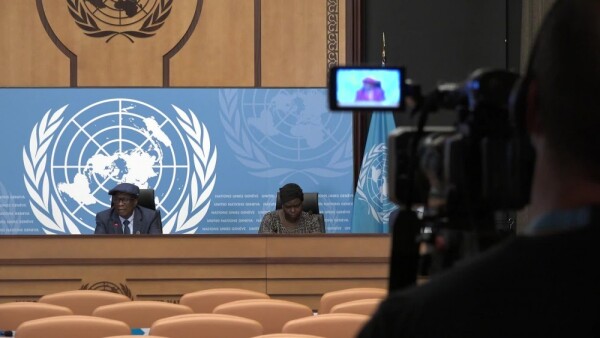
- Wide shot, press briefing at the UN in Geneva
- SOUNDBITE (English) – Edward Kallon, United Nations Resident and Humanitarian Coordinator for Nigeria: “We are here on a very somber mission, a somber mission in the sense that we are seeing Nigeria at a cross-road to critical food insecure situation and a looming catastrophic food insecurity that could eventually result in a famine, if appropriate actions are not taken now”.
- Medium shot, journalist in press briefing room watching screen
- SOUNDBITE (English) - Edward Kallon, United Nations Resident and Humanitarian Coordinator for Nigeria: “We need critically 250 million dollars to respond to the acute food insecurity needs of 4,4 million people of which some 705, 000 are at a critical threshold of death if nothing is done now”.
- Medium shot, podium with speakers
- SOUNDBITE (English) - Edward Kallon, United Nations Resident and Humanitarian Coordinator for Nigeria: “There are still well over 800, 000 people in inaccessible areas that we cannot access as international humanitarian partners although some of those areas are reachable by the government itself. So, indeed, we can see the need for a division of responsibility in those areas. What’s critical to the response is going to be the need for freedom of movement of people to come from those enclaves to areas where we can have access to”.
- Close up, screen with zoom platform
- SOUNDBITE (English) - Edward Kallon, United Nations Resident and Humanitarian Coordinator for Nigeria: “This situation has even deteriorated further as a result of 1) limited access, constraints imposed by Covid-19 and also the lack of resources. My call on the international community is to come to our aid now to make sure that we avert a famine”.
- Medium shot, podium with speakers
- SOUNDBITE (English) - Edward Kallon, United Nations Resident and Humanitarian Coordinator for Nigeria: “As we are witnessing now as a result of banditry, criminality, and elements of terrorism, we are also seeing high levels of displacement in north-west Nigeria where an estimated 1,4 million people also need immediate humanitarian assistance. And, also in north-central Nigeria where over 1 million people also need assistance”.
- Close up, camera view finder
- SOUNDBITE (English) - Edward Kallon, United Nations Resident and Humanitarian Coordinator for Nigeria: “Security remains a major concern in our operation and at best the security situation in the operation areas remain fluid, volatile and unpredictable. Access remains a concern to us, but we are also very hopeful and working collectively to ensure that the response is localized, and we are using local support to make sure that affected population are reached”.
- Medium shot, journalist
- Wide shot, podium with speakers
- Medium shot, Edward Kallon speaking from podium
Similar Stories

1
1
1
Statements , Press Conferences | OHCHR
1
1
1
Press Conferences | UNHCR , UNICEF , IFRC , OHCHR , UN WOMEN , IOM , OCHA , WHO
UNHCR – ExCom Meeting, UNICEF – Nepal Recovery, IFRC – Flash Floods, WHO – Mental Health, IOM – South Sudan Floods, OCHA – DRC Humanitarian aid, UNHCR – Sahel Displacement, UNICEF – Yemen Update, IOM – Gaza Shelter, UN Women – Gaza Women, OHCHR – Arrests and detentions of Syrians by Israeli force
2
1
2
Press Conferences | UNCTAD
Presentation of the Trade and Developement Report 2026
Embargoed until 9 October 2026 at 11 a.m. (Geneva Time)
UNCTAD: UNCTAD’s flagship report finds that governments increasingly use industrial, trade, financial and technology policies to pursue economic and national security objectives. Market access and the ability to move into higher-value activities now depend more heavily on technology, finance and geopolitics.
1
1
1
Press Conferences | UPU
Release of the State of the Postal Sector Report 2026

1
1
1
Edited News | WHO
In suspected Russia plague death, testing and monitoring underway – WHO
The death of a lab worker in Russia’s Siberia region has sparked concerns about plague being the cause, the UN World Health Organization (WHO) said on Tuesday, adding that it was following the situation closely.
1
1
1
Press Conferences | IOM , ITU , UNECE , UNICEF , WHO , WMO
UNICEF: Ebola, DRC - children orphans or separating them from parents and caregivers; IOM: Humanitarian needs in Djibouti amid arrivals from Yemen and increased migrant movements; WHO: Darfur, scale of health needs far exceeds available resources; WMO co-sponsored Global Heat Forum, Bangkok, monthly Global Seasonal Climate Update; UNECE: UN Forum of Mayors; ITU Plenipotentiary Conference 2026; WHO: child and adolescent obesity guidelines and new global roadmap to tackle pregnancy hypertension, a leading cause of maternal mortality

1
1
Edited News | OHCHR , UNOG
UN Human Rights Chief Volker Türk on Friday provided and oral update to the 63rd session of the Human rights Council on Ukraine.

1
1
1
Edited News | OHCHR , UNOG
UN Human Rights Chief Volker Türk on Friday provided and oral update to the 63rd session of the Human rights Council on the human rights situation in Haiti.

1
1
1
Edited News | WHO
Repeated delays in bringing lifesaving medicines, prosthetics and more from Israel into Gaza risk having devastating consequences on Palestinians who urgently need them in the wartorn enclave, the UN World Health Organization (WHO) said on Friday. “A truck full of non-priority supplies or the right supplies arriving too late, doesn't save lives. That's the question that actually matters," said Dr Reinhilde Van De Weerdt, WHO Representative in the OPT.
1
1
1
Press Conferences | OCHA , UN WOMEN , UNHCR , WFP , WHO , WTO , UNEP
OCHA – $160M CERF allocation to 12 underfunded crises; UNHCR – 5.8M refugee children remain out of school amid funding cuts; UN Women – Middle East escalation and food security among women/girls; WHO – Gaza supplies and overall situation; WFP – Yemen food insecurity and impact on global hunger ; UNEP - First International Conference of the Global Framework on Chemicals in Geneva | 16-20 November 2026

1
1
1
Edited News | WHO
DRC: Early access to care and oxygen decisive for Ebola patients’ survival – WHO
In the Democratic Republic of the Congo (DRC), health workers fighting the country’s largest-ever Ebola outbreak are struggling to overcome critical challenges to patient care, the UN World Health Organization (WHO) warned on Tuesday.