

The United Nations Office at Geneva
Multimedia Newsroom
STORY: UNFPA State of World Population 2021
TRT: 02 min 24s
SOURCE: UNTV CH
RESTRICTIONS: NONE
LANGUAGE: ENGLISH / NATS
ASPECT RATIO: 16:9
DATELINE: 14 APRIL 2021 GENEVA, SWITZERLAND
STORYLINE
“Nearly half of all women are denied their bodily autonomy”, says UNFPA’s latest report on the “State of World Population”
All around the world, women and girls are not in control over their bodies and their lives, states the 2021 flagship report “State of World Population” launched today by the United Nations Population Fund (UNFPA). This year’s report “My Body is My Own – Claiming the right to Autonomy and Self-Determination” documents that nearly half of women in 57 developing countries don’t have the right to make their own decisions about their bodies.
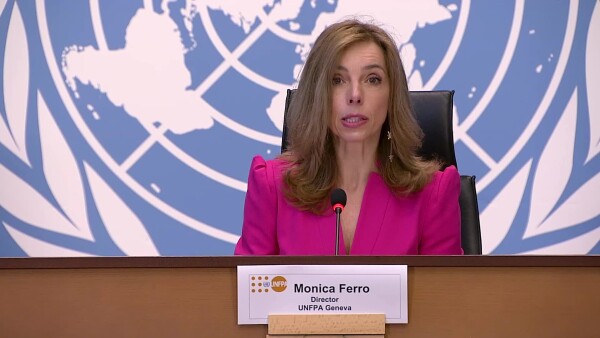
“ ‘My Body is My Own’ is the first UN report focused on bodily autonomy: the power and agency to make choices about your body, without fear of violence or having someone else decide for you”, said Monica Ferro, Director of the UNFPA Geneva Office at the launch of the report at the United Nations in Geneva.
Through this groundbreaking report, UNFPA is measuring both women’s power to make their own decisions about their bodies and the extent to which countries’ laws support or interfere with a woman’s right to make these decisions. The data show a strong link between decision-making power and higher levels of education.
“Our new State of World Population report shows, that in countries where we have data, nearly half of women lack the power to make their own decisions about whether to have sex with their partner, about whether to use contraception, about whether to see a doctor”, said Ms Ferro. “Often these decisions are made or influenced by others, whether partners, families, societies or even the governments.”
According to the report, only 55 per cent of women are fully empowered to make choices over health care, contraception and the ability to say yes or no to sex, and only 75 per cent of countries legally ensure full, equal access to contraception.
UNFPA’s Geneva representative reported that “for many people, but especially women and girls, life is fraught with violations to their bodily autonomy and integrity. We see this when a lack of contraceptive choices leads to unplanned pregnancy. We see this in the terrible bargain made to exchange unwanted sex for a home and food. We see this in the life-derailing practices such as female genital mutilation and child marriage.”
The report shows how efforts to address abuses can lead to further violations of bodily autonomy. For example, to prosecute a case of rape, a criminal justice system might require a survivor to undergo an invasive so-called virginity test. Real solutions, the report finds, must take into account the needs and experiences of those affected.
“The right to bodily autonomy is violated when a husband or partner forces a woman to have an abortion or impregnates her against her will. Bodily autonomy is also violated by practices like so-called “corrective rape”, so-called “honour killings” and so-called “virginity tests” and the list goes on and on.”
UNFPA’s latest report also documents many other ways how the bodily autonomy of women, men, girls and boys is violated: Twenty countries or territories have “marry-your-rapist” laws, where a man can escape criminal prosecution if he marries the woman or girl he has raped.
Forty-three countries have no legislation addressing the issue of marital rape (rape by a spouse) and more than 30 countries restrict women’s right to move around outside the home. Girls and boys with disabilities are nearly three times more likely to be subjected to sexual violence, with girls at the greatest risk.
UNFPA’s Geneva Director stressed the impact of the COVID-19 pandemic on women. “Now with the COVID-19 pandemic, which has further diminished women’s autonomy by increasing sexual violence, new barriers to healthcare, unplanned pregnancies and job losses and education losses.”
This lack of bodily autonomy has massive implications beyond the profound harms to individual women and girls: potentially depressing economic productivity, undercutting skills, and resulting in extra costs to health care and judicial systems.
“We must look beyond obligations, we must look to opportunities”, said Ms Ferro. “A woman who has control over her body is more likely to be empowered in other spheres of her life. She gains not only in terms of autonomy, but also through advances in health and education, in common safety. She is more likely to thrive and so is her family.”
SHOTLIST OF THE EDITED STORY
- Exterior wide shot, Palais des Nations building, a car passing, a sunny day.
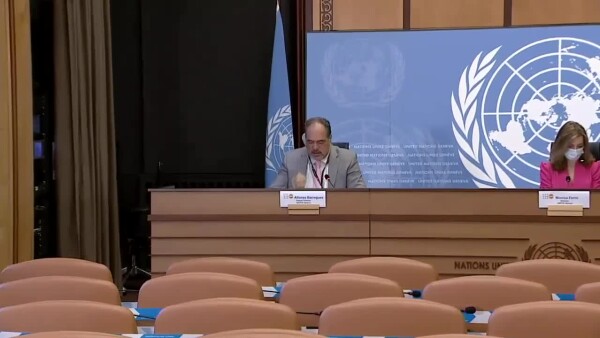
- Wide medium shot, podium with speakers in a near-empty Room XIV in line with COVID-19 distancing measures, Palais des Nations.
- SOUNDBITE (English) — Monica Ferro, Director, UNFPA Geneva Office: “My Body is My Own is the first UN report focused on bodily autonomy: the power and agency to make choices about your body, without fear of violence or having someone else decide for you.”
- Medium shot, podium with speakers, side shot, Room XIV, Palais des Nations.
- SOUNDBITE (English) — Monica Ferro, Director, UNFPA Geneva Office: “Our new State of World Population report shows, that in countries where we have data, nearly half of women lack the power to make their own decisions about whether to have sex with their partner, about whether to use contraception, about whether to see a doctor. Often these decisions are made or influenced by others, whether partners, families, societies or even the governments.”
- Medium shot, laptop screen in foreground and podium with speakers to rear, Palais des Nations.
- SOUNDBITE (English) — Monica Ferro, Director, UNFPA Geneva Office: “For many people, but especially women and girls, life is fraught with violations to their bodily autonomy and integrity. We see this when a lack of contraceptive choices leads to unplanned pregnancy. We see this in the terrible bargain made to exchange unwanted sex for a home and food. We see this in the life-derailing practices such as female genital mutilation and child marriage.”
- Medium shot, TV broadcasting in foreground and podium with speakers to rear, Palais des Nations.
- SOUNDBITE (English) — Monica Ferro, Director, UNFPA Geneva Office: “The right to bodily autonomy is violated when a husband or partner forces a woman to have an abortion or impregnates her against her will. Bodily autonomy is also violated by practices like so-called “corrective rape”, so-called “honour killings” and so-called “virginity tests” and the list goes on and on.”
- Medium shot, podium with speakers, side shot, Room XIV, Palais des Nations.
- SOUNDBITE (English) — Monica Ferro, Director, UNFPA Geneva Office: “Now with the COVID-19 pandemic, which has further diminished women’s autonomy by increasing sexual violence, new barriers to healthcare, unplanned pregnancies and job losses and education losses.”
- Medium shot, podium with speakers from behind, Room XIV, Palais des Nations.
- SOUNDBITE (English) — Monica Ferro, Director, UNFPA Geneva Office: “We must look beyond obligations. We must look to opportunities. A woman who has control over her body is more likely to be empowered in other spheres of her life. She gains not only in terms of autonomy, but also through advances in health and education, in common safety. She is more likely to thrive and so is her family.”
- Wide shot, podium with speakers in a near-empty Room XIV, Palais des Nations.
Similar Stories
1
1
1
Edited News | OCHA , UNICEF , WFP
Aid agencies warned on Friday of the fast-developing humanitarian emergency inside Taiz City in Yemen, which has been encircled by de facto Houthi forces fighting government troops along the country’s west coast.

2
17
1
2
Edited News , Press Conferences , Images | OCHA , WMO
Two UN agencies teamed up on Wednesday to issue an appeal for immediate assistance to help communities already being impacted by the strongest El Niño on record.
3
16
2
2
Edited News , B-roll , Conferences , Images | UNITED NATIONS , UNOG
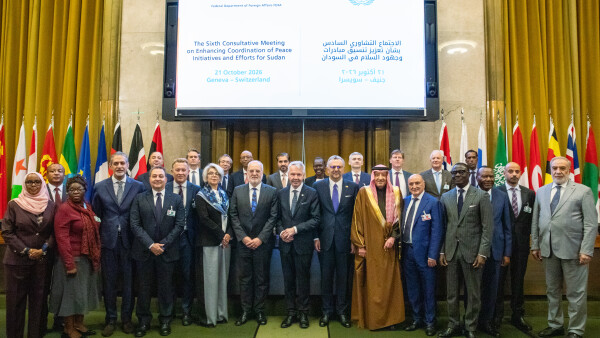
Sixth Consultative Meeting on Enhancing Coordination of Peace Initiatives and Efforts for Sudan

1
1
1
Edited News | UNICEF , WHO , UNHCR
Yemen war continues to force families from homes amid hunger and disease
More than 250,000 people have now fled renewed fighting in Yemen, the UN said on Tuesday, citing particular concern for those sheltering in the southwestern city of Taiz and the wider governorate, where access is “essentially blocked”.

1
1
1
Edited News | UNICEF
A little over one year since a ceasefire agreement was announced between Hamas fighters and Israel, more than 340 children have been reported killed and hundreds more injured, the UN Children’s Fund, UNICEF, said on Friday.

1
1
1
Edited News | UNICEF , IFRC
Six weeks after Nepal’s deadly flooding disaster, communities are still struggling to rebuild their lives, but they will need sustained help as global warming increases the risk of another Himalayan catastrophe, the UN Children’s Fund (UNICEF) said on Friday.

1
1
1
Edited News | WHO
In suspected Russia plague death, testing and monitoring underway – WHO
The death of a lab worker in Russia’s Siberia region has sparked concerns about plague being the cause, the UN World Health Organization (WHO) said on Tuesday, adding that it was following the situation closely.

1
1
Edited News | OHCHR , UNOG
UN Human Rights Chief Volker Türk on Friday provided and oral update to the 63rd session of the Human rights Council on Ukraine.

1
1
1
Edited News | OHCHR , UNOG
UN Human Rights Chief Volker Türk on Friday provided and oral update to the 63rd session of the Human rights Council on the human rights situation in Haiti.

1
1
1
Edited News | WHO
Repeated delays in bringing lifesaving medicines, prosthetics and more from Israel into Gaza risk having devastating consequences on Palestinians who urgently need them in the wartorn enclave, the UN World Health Organization (WHO) said on Friday. “A truck full of non-priority supplies or the right supplies arriving too late, doesn't save lives. That's the question that actually matters," said Dr Reinhilde Van De Weerdt, WHO Representative in the OPT.

1
1
1
Edited News | WHO
DRC: Early access to care and oxygen decisive for Ebola patients’ survival – WHO
In the Democratic Republic of the Congo (DRC), health workers fighting the country’s largest-ever Ebola outbreak are struggling to overcome critical challenges to patient care, the UN World Health Organization (WHO) warned on Tuesday.

1
1
1
Edited News | OCHA , UN
Civilians in Iran are continuing to feel the consequences of months of conflict and military escalation, the UN’s top official in the country has said, as loss of life, damage to civilian infrastructure and mounting economic pressures leave many facing continued uncertainty.