

The United Nations Office at Geneva
Multimedia Newsroom
Press Conferences , Edited News | HRC
HRC - Press conference: Independent International Commission of Inquiry on Ukraine
Russia’s deportations of Ukrainian children amount to crimes against humanity: independent UN rights probe
Scores of Ukrainian children are still missing after being deported far and wide across Russia and occupied territories while their families continue to search for them, human rights investigators said on Thursday.
Members of the Commission of Inquiry on Ukraine, an independent probe into Russia’s full-scale invasion which presented its latest report to the Human Rights Council in Geneva, said that they have verified the deportation and transfer of 1,205 children from Russian-occupied areas in Ukraine to Russia or to other occupied areas in Ukraine.
“Based on new evidence, the Commission has now concluded that the Russian authorities committed two types of crimes against humanity: deportation and forcible transfer of children, as well as their enforced disappearance,” said the commission’s chair, Erik Møse.
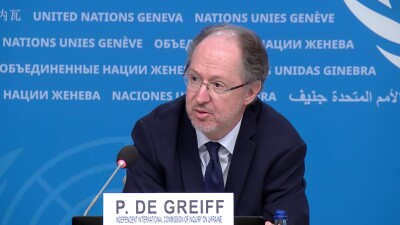
Commissioner Pablo de Greiff told reporters that the investigators are “aware of many other cases” and that the Russian authorities “claimed that these relocations were humanitarian evacuations for safety reasons”.
“But the Commission found that four years later, 80 per cent of the children from the documented cases have not been returned,” Mr. de Greiff said.
“This contravenes international humanitarian law, under which evacuations can only be temporary for compelling reasons of health, medical treatment or safety.”
The Commission’s report says that many parents and legal guardians remain unaware of the children’s fate and whereabouts.
Instead of establishing mechanisms to facilitate their return, Russian authorities “arranged for the children's long-term placement with families or institutions in 21 regions of the Russian Federation and in occupied areas of Ukraine”, Mr. de Greiff said, following a “carefully organized plan” and “pursuant to a policy conceived and executed under the leadership at the highest level of the Russian Federation state apparatus”.
In March 2023, the UN-backed International Criminal Court (ICC) issued an arrest warrant for Russian President Vladimir Putin in connection with alleged war crimes concerning the deportation and “illegal transfer” of children from occupied Ukraine.
Asked about engagement with the Russian authorities on the matter, Mr. de Greiff stressed that the Commission had submitted to them “39 written requests for information about different issues, including the issue of children…and we have never received a reply”.
He also highlighted evidence from some of the 20 per cent of children who returned, pointing to several types of mistreatment, including children not receiving sufficient medical care or food.
In one case, the family in which a teenager was placed was “willing to call the police… because this adolescent kid expressed the desire to return to Ukraine and to his family”.
Another case ended in the suicide of a young adolescent, he said.
Turning to the treatment of troops within the Russian armed forces, commissioner Vrinda Grover said that the investigators interviewed 85 soldiers who had deserted and that “most of them testified about extreme violence and coercion arbitrarily ordered or practised by the commanders against their own men.”
“Soldiers described being treated like cannon fodder,” Ms. Grover said. “They reported the practice to shoot soldiers, carry out mock executions, severe beatings, tying them to trees or [placing them] in pits.”
“Their testimonies speak of a total disregard for human life and dignity,” she concluded.
Mr. de Greiff added that the findings point to “treatment that took place with the knowledge, sometimes with the order and in fact sometimes with the participation of commanders” and not isolated incidents.
The probe also investigated the issue of foreign nationals recruited to fight with the Russian armed forces and found that recruits came from 17 countries around the globe.
Ms. Grover said that “many were deceived and lured from abroad to the Russian Federation” with the false promise of civilian jobs.
“They were coerced into signing contracts written in Russian language, which they did not understand, and then sent to the frontlines,” she said.
In its latest report, the Commission of Inquiry also documented rights violations among those mobilized for the Ukrainian armed forces, from irregular administrative detention to lack of access to legal representation, as well as instances of violence against conscientious objectors.
The Independent International Commission of Inquiry on Ukraine was first established by the Human Rights Council in March 2022 to “investigate all alleged violations and abuses of human rights, violations of international humanitarian law and related crimes in the context of the aggression against Ukraine by the Russian Federation”, following Russia’s full-scale invasion of its neighbour on 24 February that year. Commissioners are not UN staff, nor paid for their work.
-Ends-
STORY Ukrainian children deportations – Commission of Inquiry on Ukraine
TRT: 4:11”
SOURCE: UNTV CH
RESTRICTIONS: NONE
LANGUAGE: ENGLISH/NATS
ASPECT RATIO: 16:9
DATELINE: 12 MARCH 2026 GENEVA, SWITZERLAND
1. Exterior wide shot: Palais des Nations, Flag Alley.
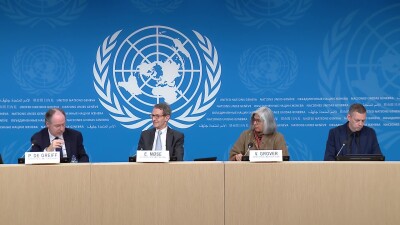
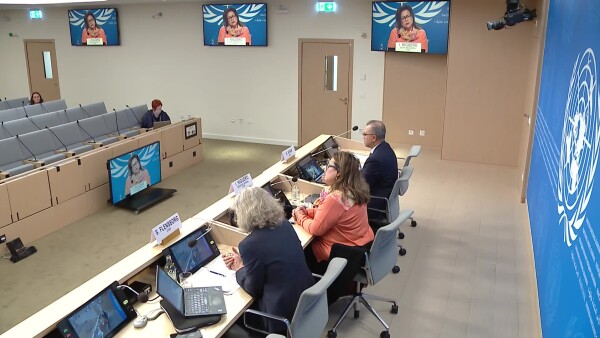
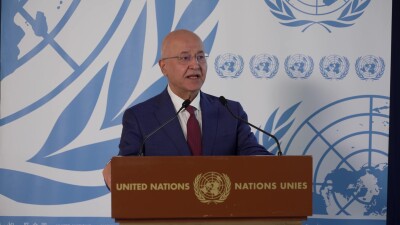
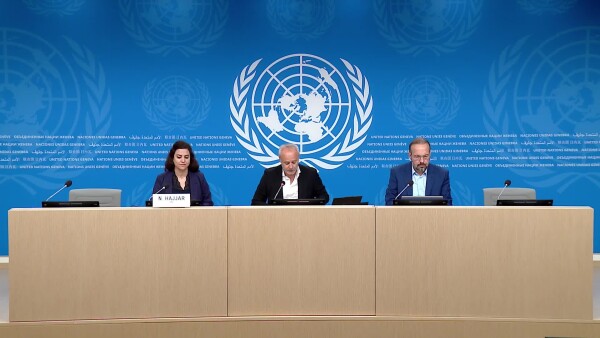
2. Medium reverse shot: Speakers at the podium of the press conference; speaker on screens; journalists in the Press room.
3. SOUNDBITE (English) – Erik Møse, chair of the Independent International Commission of Inquiry on Ukraine: “Based on new evidence, the Commission has now concluded that the Russian authorities committed two types of crimes against humanity: deportation and forcible transfer of children, as well as their enforced disappearance.”
4. Wide shot: Speakers at the podium of the press conference.
5. SOUNDBITE (English) – Pablo de Greiff, member, Independent International Commission of Inquiry on Ukraine: “The Commission has so far verified the deportation and transfer of 1,205 children from Russian-occupied areas in Ukraine to the Russian Federation or to other occupied areas in Ukraine. The Commission is, of course, aware of many other cases. The Russian authorities claimed that these relocations were humanitarian evacuations for safety reasons.”
6. Medium shot: Journalist in the Press room; speaker on screens.
7. SOUNDBITE (English) – Pablo de Greiff, member, Independent International Commission of Inquiry on Ukraine: “Four years later, 80 per cent of the children from the documented cases have not been returned. This contravenes international humanitarian law, under which evacuations can only be temporary for compelling reasons of health, medical treatment or safety.”
8. Medium shot: Journalists in the Press room.
9. SOUNDBITE (English) – Pablo de Greiff, member, Independent International Commission of Inquiry on Ukraine: “Russian authorities following a carefully organized plan and pursuant to a policy conceived and executed under the leadership at the highest level of the Russian Federation state apparatus, have arranged for the children's long term placement with families or institutions in 21 regions of the Russian Federation and in occupied areas of Ukraine.”
10. Medium reverse shot: Speakers at the podium of the press conference; speaker on screens; journalists in the Press room.
11. SOUNDBITE (English) – Pablo de Greiff, member, Independent International Commission of Inquiry on Ukraine: “We have one case in which the family, in which an adolescent was placed, was willing to call the authorities, the police authorities, because this adolescent kid expressed the desire to return to Ukraine and to his family. Another tragic case of a similar nature, but which ended in the suicide of this young adolescent.”
12. Medium reverse shot: Speakers at the podium of the press conference; speaker on screens; journalists in the Press room.
13. SOUNDBITE (English) – Vrinda Grover, member, Independent International Commission of Inquiry on Ukraine: “The Commission interviewed 85 soldiers who had deserted. Most of them testified about extreme violence and coercion arbitrarily ordered or practiced by the commanders against their own men.”
14. Medium reverse shot: Speakers at the podium of the press conference; speaker on screens; journalists in the Press room.
15. SOUNDBITE (English) – Vrinda Grover, member, Independent International Commission of Inquiry on Ukraine: “Soldiers described being treated like cannon fodder. They reported the practice to shoot soldiers, carry out mock executions, severe beatings, tying them to trees or placed in pits. Their testimonies speak of a total disregard for human life and dignity.”
16. Medium reverse shot: Speakers at the podium of the press conference; speaker on screens; journalists in the Press room.
17. SOUNDBITE (English) – Vrinda Grover, member, Independent International Commission of Inquiry on Ukraine: “Turning to the issue of foreign nationals recruited to fight with the Russian armed forces, the Commission found that these recruits come from 17 globally dispersed countries. As mentioned by the Chair, many were deceived and lured from abroad to the Russian Federation with the false promise of work. They were coerced into signing contracts written in Russian language, which they did not understand, and then sent to the front lines.”
18. Various shots of journalists in the Press room.
Similar Stories
1
1
1
Press Conferences | CITES
Wildlife trade and conservation policy discussions at the 81st meeting of the CITES Standing Committee (SC81)

1
1
1
Edited News | UNICEF , WHO , UNHCR
Yemen war continues to force families from homes amid hunger and disease
More than 250,000 people have now fled renewed fighting in Yemen, the UN said on Tuesday, citing particular concern for those sheltering in the southwestern city of Taiz and the wider governorate, where access is “essentially blocked”.
1
1
1
Press Conferences | UNHCR , UNCTAD , WMO , OCHA , UNICEF , WHO
UNHCR Hungary’s 1956 Refugee Crisis: 70 Years On, UNCTAD World Investment Forum 2026, Doha, WMO Greenhouse Gas Bulletin and Climate Update for COP31, OCHA Afghanistan: Malnutrition, Girls’ Education and Recovery, UNICEF Yemen: Child Malnutrition and Unsafe Water in Taiz, WHO Inequalities in Noncommunicable Diseases and Risk Factors
1
1
1
Press Conferences | UNHCR
End of UNHCR's 77th Annual Executive Committee (ExCom) meeting week

1
1
1
Edited News | UNICEF
A little over one year since a ceasefire agreement was announced between Hamas fighters and Israel, more than 340 children have been reported killed and hundreds more injured, the UN Children’s Fund, UNICEF, said on Friday.
1
1
1
Press Conferences | UNICEF , IOM , UNHCR
UN Special Assistant to the Personal Envoy Office (SUDAN): Peace Initiatives and Efforts in Sudan; UNICEF: Dire situation of children in Gaza; IOM: Damaged Homes and Energy Attacks Risk Displacing Ukrainians for this winter; UNHCR: update on EXCOM week

1
1
1
Press Conferences | IOM , UNDRR
UN stresses importance of household preparedness for disaster risk reduction.

1
1
1
Edited News | UNICEF , IFRC
Six weeks after Nepal’s deadly flooding disaster, communities are still struggling to rebuild their lives, but they will need sustained help as global warming increases the risk of another Himalayan catastrophe, the UN Children’s Fund (UNICEF) said on Friday.
1
1
1
Statements , Press Conferences | OHCHR
1
1
1
Press Conferences | UNHCR , UNICEF , IFRC , OHCHR , UN WOMEN , IOM , OCHA , WHO
UNHCR – ExCom Meeting, UNICEF – Nepal Recovery, IFRC – Flash Floods, WHO – Mental Health, IOM – South Sudan Floods, OCHA – DRC Humanitarian aid, UNHCR – Sahel Displacement, UNICEF – Yemen Update, IOM – Gaza Shelter, UN Women – Gaza Women, OHCHR – Arrests and detentions of Syrians by Israeli force
2
1
2
Press Conferences | UNCTAD
Presentation of the Trade and Developement Report 2026
Embargoed until 9 October 2026 at 11 a.m. (Geneva Time)
UNCTAD: UNCTAD’s flagship report finds that governments increasingly use industrial, trade, financial and technology policies to pursue economic and national security objectives. Market access and the ability to move into higher-value activities now depend more heavily on technology, finance and geopolitics.
1
1
1
Press Conferences | UPU
Release of the State of the Postal Sector Report 2026