

The United Nations Office at Geneva
Multimedia Newsroom
Edited News | UNHCR , UNITED NATIONS
UNOG Bi-weekly press briefing: Syrian Refugees UNHCR 16JUN2020
Syrian refugees resort to ever more desperate measures to resist pandemic impact
The COVID-19 crisis has put another 200,000 Syrian refugees in need of emergency assistance in the last three months alone, UN humanitarians said on Tuesday, in an appeal for funding to confront new challenges posed by the health emergency.
Now well into its 10th year, the Syrian conflict has created more than 5.5 million refugees seeking shelter in Egypt, Iraq, Jordan, Lebanon and Turkey.
“The number of vulnerable refugees who lack the basic resources to survive in exile has dramatically surged as a result of the public health emergency,” said UNHCR spokesperson Andrej Mahecic. “The refugee-hosting communities in countries in Syria’s neighbourhood experience similar hardships. Many refugees have lost what were already meagre incomes, forcing them to cut down on the most basic needs, including food and medication.”
Since pandemic lockdown measures were implemented in these countries, Mr. Mahecic explained that UNHCR has seen “in addition to the families that have already been identified as vulnerable, another 200,000 refugees just in this period of three months who because of the impact needed emergency assistance”.
Clear signs of distress among vulnerable individuals who have lost their jobs include coping measures “that would allow them to somehow make ends meet”, he added. “We have evidence of people trying to skip meals in order to spread out the food so it can last longer, they may skip taking medication, anything that is considered right now something where they can cut costs.”
Citing the urgent need for additional support to sustain humanitarian initiatives, Mr Mahecic explained that in Jordan, only 17,000 out of 49,000 newly identified vulnerable families received help, “as UNHCR is lacking the funds to extend its programmes”.
Prior to the pandemic, the majority of Syrian refugees in the region were living
below the poverty line, according to the UN agency, while a recent survey in Jordan showed that only 35 per cent of refugees said they had a secure job to return to after the lifting of COVID-19 restrictions.
More than six million internally displaced Syrians and other vulnerable groups remain inside Syria, according to UNHCR.
Before the onset of the virus, the agency’s $5.5 billion Syria Refugee Response and Resilience Plan 2020 appeal was only 20 per cent funded across the region. It is now updating its requirements to cope with additional needs and has appealed for strong international support to countries sheltering those in need.
“Host communities have shown great solidarity, but they have also suffered loss of livelihoods as a result the COVID-19 pandemic,” said Mr Mahecic, adding that nine in 10 Syrian refugees in the region live in towns or villages and not in camps.
Beyond the immediate emergency, the UNHCR spokesperson highlighted the need to ensure that refugees were included in countries’ national public health responses to COVID-19, in addition to other basis services, including education.
“It is a very important point that the refugees, internally displaced, stateless people are included in the national public health responses,” he said. “Only if everybody’s being looked after and everybody’s safe, we can all be safe.”
- Wide shot: exterior, flag alley, Palais des Nations, United Nations Geneva.
- SOUNDBITE (EN) – Andrej Mahecic, spokesperson, UN Refugee Agency (UNHCR): “The number of vulnerable refugees who lack the basic resources to survive in exile has dramatically surged as a result of the public health emergency. The refugee-hosting communities in countries in Syria’s neighbourhood experience similar hardships. Many refugees have lost what were already meagre incomes, forcing them to cut down on the most basic needs, that includes food and medicine.”
- Wide shot: ‘Broken chair’ memorial in the Place des Nations, Geneva, with UN Geneva in background.
- SOUNDBITE (EN) – Andrej Mahecic, spokesperson, UN Refugee Agency (UNHCR): “We have now also seen in addition to the families that have already been identified as vulnerable, another 200,000 refugees just in this period of three months who, because of the impact needed emergency assistance.”
- Wide shot: UN flag fluttering in the wind, UN Geneva.
- SOUNDBITE (EN) – Andrej Mahecic, spokesperson, UN Refugee Agency (UNHCR): “People resort to the measures that would allow them to somehow make ends meet. We have evidence of people trying to skip meals in order to spread out the food so it can last longer, they may skip taking medication, anything that is considered right now something where they can cut costs.”
- Medium shot: UN Geneva Palais des Nations, flag alley, UN flag.
- SOUNDBITE (EN) – Andrej Mahecic, spokesperson, UN Refugee Agency (UNHCR): “In Jordan for example, only 17,000 out of 49,000 newly identified vulnerable families received emergency cash support, as UNHCR is lacking the funds to extend its programmes.”
- Wide shot: elevated view of UN Geneva main entrance, with UN Palais des Nations complex below and mountains behind.
- SOUNDBITE (EN) – Andrej Mahecic, spokesperson, UN Refugee Agency (UNHCR): “It is a very important point that the refugees, internally displaced, stateless people are included in the national public health responses. Only if everybody’s being looked after and everybody’s safe, we can all be safe.”
- Medium shot: anti-war sculpture, Place des Nations, Geneva, with UN Geneva to rear.
- Medium-wide shot: UN Geneva flag alley.
- Medium shot: UN flag in UN Geneva flag alley, elevated view.
- Wide shot: UN Geneva flag alley.
Similar Stories
1
1
1
Edited News | OCHA , UNICEF , WFP
Aid agencies warned on Friday of the fast-developing humanitarian emergency inside Taiz City in Yemen, which has been encircled by de facto Houthi forces fighting government troops along the country’s west coast.

2
17
1
2
Edited News , Press Conferences , Images | OCHA , WMO
Two UN agencies teamed up on Wednesday to issue an appeal for immediate assistance to help communities already being impacted by the strongest El Niño on record.
3
16
2
2
Edited News , B-roll , Conferences , Images | UNITED NATIONS , UNOG
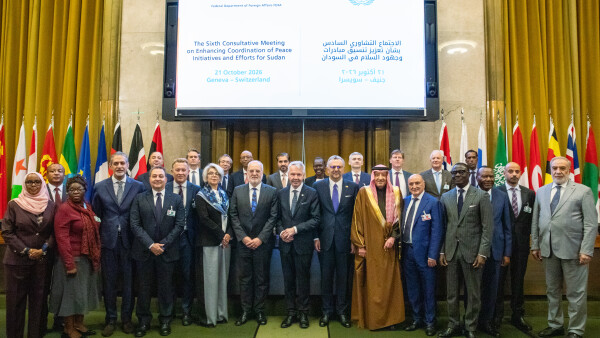
Sixth Consultative Meeting on Enhancing Coordination of Peace Initiatives and Efforts for Sudan

1
1
1
Edited News | UNICEF , WHO , UNHCR
Yemen war continues to force families from homes amid hunger and disease
More than 250,000 people have now fled renewed fighting in Yemen, the UN said on Tuesday, citing particular concern for those sheltering in the southwestern city of Taiz and the wider governorate, where access is “essentially blocked”.

1
1
1
Edited News | UNICEF
A little over one year since a ceasefire agreement was announced between Hamas fighters and Israel, more than 340 children have been reported killed and hundreds more injured, the UN Children’s Fund, UNICEF, said on Friday.

1
1
1
Edited News | UNICEF , IFRC
Six weeks after Nepal’s deadly flooding disaster, communities are still struggling to rebuild their lives, but they will need sustained help as global warming increases the risk of another Himalayan catastrophe, the UN Children’s Fund (UNICEF) said on Friday.

1
1
1
Edited News | WHO
In suspected Russia plague death, testing and monitoring underway – WHO
The death of a lab worker in Russia’s Siberia region has sparked concerns about plague being the cause, the UN World Health Organization (WHO) said on Tuesday, adding that it was following the situation closely.

1
1
Edited News | OHCHR , UNOG
UN Human Rights Chief Volker Türk on Friday provided and oral update to the 63rd session of the Human rights Council on Ukraine.

1
1
1
Edited News | OHCHR , UNOG
UN Human Rights Chief Volker Türk on Friday provided and oral update to the 63rd session of the Human rights Council on the human rights situation in Haiti.

1
1
1
Edited News | WHO
Repeated delays in bringing lifesaving medicines, prosthetics and more from Israel into Gaza risk having devastating consequences on Palestinians who urgently need them in the wartorn enclave, the UN World Health Organization (WHO) said on Friday. “A truck full of non-priority supplies or the right supplies arriving too late, doesn't save lives. That's the question that actually matters," said Dr Reinhilde Van De Weerdt, WHO Representative in the OPT.

1
1
1
Edited News | WHO
DRC: Early access to care and oxygen decisive for Ebola patients’ survival – WHO
In the Democratic Republic of the Congo (DRC), health workers fighting the country’s largest-ever Ebola outbreak are struggling to overcome critical challenges to patient care, the UN World Health Organization (WHO) warned on Tuesday.

1
1
1
Edited News | OCHA , UN
Civilians in Iran are continuing to feel the consequences of months of conflict and military escalation, the UN’s top official in the country has said, as loss of life, damage to civilian infrastructure and mounting economic pressures leave many facing continued uncertainty.