

The United Nations Office at Geneva
Multimedia Newsroom
Edited News , Press Conferences | UNHCR , OCHA
OCHA and UNHCR - Press Conference: Ukraine Response Plans Launch - 15 January 2024
STORYLINE
The UN and humanitarian partners launched on Monday a combined US$ 4.2 billion appeal to donors to bring aid to some 10.8 million people in the war-affected communities in Ukraine but also to Ukrainian refugees and their host communities in the region throughout 2024.
A recent wave of attacks underscores the devastating civilian cost of the war, while a bitter winter is ratcheting up the urgent need for life-saving humanitarian aid.
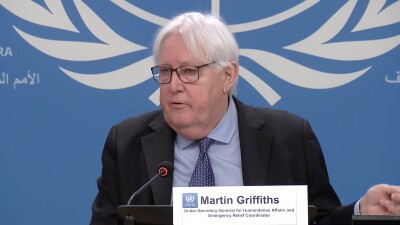
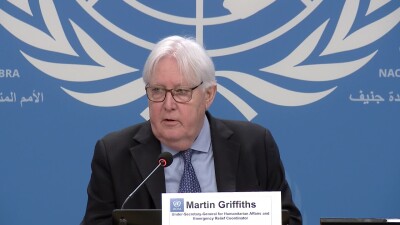
“14.6 million people, 40 per cent of the population in Ukraine, will need humanitarian aid”, said Martin Griffiths, the UN top aid Coordinator when briefing journalist at the UN in Geneva. “4 million people are internally displaced. That's in addition to those who are externally displaced.”
The UN Humanitarian Affairs and Emergency Relief Coordinator added that “it's been as bad as it could be this last month […] and that's really been quite shocking. The number of attacks, the broad range across the whole of the country from Russia has been absolutely unrelenting.”
The UN Office for the Coordination of Humanitarian Affairs (OCHA) coordinates the response inside Ukraine. This Humanitarian Needs and Response Plan requests $3.1 billion for 2024 and targets 8.5 million people.
According to Mr. Griffiths, “3.3 million people [are] living in the middle of war zones, of daily bombardment, of uncertainty about where the day will end. And that's really a shockingly high number even these days.”
The current humanitarian situation is likely to further deteriorate this year if hostilities persist and attacks targeting energy and other critical infrastructure increase during the ongoing winter, said OCHA.
“In Donetsk and Kharkiv regions, families live in damaged houses with no piped water, gas or electricity in the freezing cold,” said Mr. Griffiths. “Constant bombardments forced older people to spend their days in basements. Children terrified, traumatized, still have lived for the last three years under these circumstances, trapped indoors and many, many, many, many of them with no schooling.”
UNHCR, the UN Refugee Agency, coordinates the Regional Refugee Response Plan (RRP), which requests $1.1 billion and targets 2.3 million refugees and host communities this year.
The full scale invasion of Ukraine in February 2022 sparked the largest refugee crisis in Europe since the Second World War.
Filippo Grandi, UN High Commissioner for Refugees said that “the total displacement, […] is about 10 million people. If you add the almost 4 million estimated to be displaced inside Ukraine and the over 6 million, these are estimated to be refugees worldwide.”
He added that “of the people outside, especially those in Europe that are just over 5 million. So the bulk, some people do go back and forth, but the return has not been in very huge numbers. IOM (International Organization of Migration) estimates about 900,000 people have returned. This is an estimate because it's very, very difficult to count because of the pendulum movement.”
Ukrainian refugees in neighbouring countries also need increased and sustained support, said UNHCR. Despite efforts for inclusion, only half of school-age refugee children are enrolled in schools in host countries, while a quarter of refugees in need struggle to access health care.
According to Mr. Grandi, “the number of refugees in working age who are employed Ukrainians, depending on the country, ranges from 40 to 60 per cent. So, there's an extra push to be made in terms of inclusion.”
Despite extreme access challenges, especially to areas occupied by the Russian Federation, aid workers reached nearly 11 million people in Ukraine in 2023, with the support of the international donor community. Humanitarian organizations made every effort to increase assistance in the front-line communities.
-ends-
STORY: Ukraine Humanitarian and refugee plan 2024
TRT: 2 min 55s
SOURCE: UNTV CH
RESTRICTIONS: NONE
LANGUAGE: ENGLISH / NATS
ASPECT RATIO: 16:9
DATELINE: 15 January 2024 GENEVA, SWITZERLAND
- Exterior medium shot: UN flag alley, UN Geneva with snow
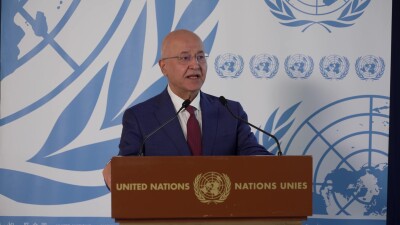
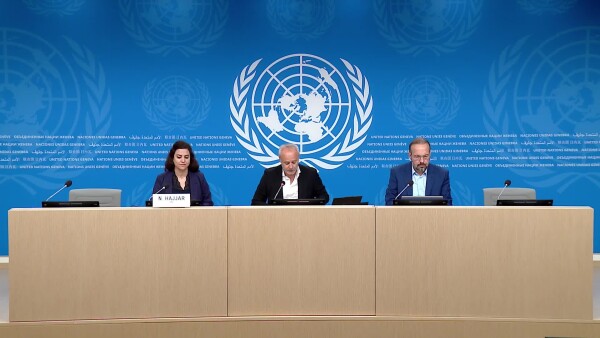
- Wide shot: speakers at the press conference
- SOUNDBITE (English) – Martin Griffiths, UN Humanitarian Affairs and Emergency Relief Coordinator: “14.6 million people, 40 per cent of the population in Ukraine, will need humanitarian aid. 4 million people are internally displaced. That's in addition to those who are externally displaced.”
- Medium shot, speakers at the podium with journalists in press room
- SOUNDBITE (English) – Martin Griffiths, UN Humanitarian Affairs and Emergency Relief Coordinator: “It's been as bad as it could be this last month, hasn’t it? And that's really been quite shocking. The number of attacks, the broad range across the whole of the country from Russia has been absolutely unrelenting.”
- Medium shot: Journalists in press room
- SOUNDBITE (English) – Martin Griffiths, UN Humanitarian Affairs and Emergency Relief Coordinator: “3.3 million people living in the middle of war zones, of daily bombardment, of uncertainty about where the day will end. And that's really a shockingly high number even these days.”
- Wide shot: Journalists in press room
- SOUNDBITE (English) – Martin Griffiths, UN Humanitarian Affairs and Emergency Relief Coordinator: “In Donetsk and Kharkiv regions, families live in damaged houses with no piped water, gas or electricity in the freezing cold. Constant bombardments forced older people to spend their days in basements, children terrified, traumatized, still have lived for the last three years under these circumstances, trapped indoors and many, many, many, many of them with no schooling.”
- Medium shot, speakers at the podium with journalists in press room
- SOUNDBITE (English) – Filippo Grandi, UN High Commissioner for Refugees: “The total displacement today, I'll focus on that, is about 10 million people. If you add the almost 4 million estimated to be displaced inside Ukraine and the over 6 million, these are estimated to be refugees worldwide.”
- Close up, journalist listening
- SOUNDBITE (English) – Filippo Grandi, UN High Commissioner for Refugees: “Of the people outside, especially those in Europe that are just over 5 million, so the bulk, some people do go back and forth. But the return has not been in very huge numbers. IOM (International Organization of Migration) estimates about 900,000 people have returned. This is an estimate because it's very, very difficult to count because of the pendulum movement.”
- Wide shot: Journalists in press room
- SOUNDBITE (English) – Filippo Grandi, UN High Commissioner for Refugees: “The number of refugees in working age who are employed – Ukrainians- depending on the country, ranges from 40 to 60 per cent. So, there's an extra push to be made in terms of inclusion.”
- Close up: Journalist taking photos
- Close up: Journalist listening
- Wide shot: camerawoman filming and technicians in control room
- Close up: OCHA spokesperson listening
- Medium shot: Journalists in press room
Similar Stories
1
1
1
Edited News | OCHA , UNICEF , WFP
Aid agencies warned on Friday of the fast-developing humanitarian emergency inside Taiz City in Yemen, which has been encircled by de facto Houthi forces fighting government troops along the country’s west coast.
1
1
1
Press Conferences | UN WOMEN , WFP , WHO
UN WOMEN: Sudan Women and girls one year after the fall of El Fasher; increasing drone attacks across the country; WFP: DRC - Ebola spreads to eighth DRC province as WFP delivers food, builds treatment centres and keeps supplies moving; WHO - Update on Ebola (Bundibugyo Virus Disease)
1
12
1
1
Press Conferences , Images | UNOG
Closing Press Conference following the Sixth Consultative Meeting on Enhancing Coordination of Peace Initiatives and Efforts in Sudan

2
17
1
2
Edited News , Press Conferences , Images | OCHA , WMO
Two UN agencies teamed up on Wednesday to issue an appeal for immediate assistance to help communities already being impacted by the strongest El Niño on record.
3
16
2
2
Edited News , B-roll , Conferences , Images | UNITED NATIONS , UNOG
Sixth Consultative Meeting on Enhancing Coordination of Peace Initiatives and Efforts for Sudan
1
1
1
Press Conferences | CITES
Wildlife trade and conservation policy discussions at the 81st meeting of the CITES Standing Committee (SC81)

1
1
1
Edited News | UNICEF , WHO , UNHCR
Yemen war continues to force families from homes amid hunger and disease
More than 250,000 people have now fled renewed fighting in Yemen, the UN said on Tuesday, citing particular concern for those sheltering in the southwestern city of Taiz and the wider governorate, where access is “essentially blocked”.
1
1
1
Press Conferences | UNHCR , UNCTAD , WMO , OCHA , UNICEF , WHO
UNHCR Hungary’s 1956 Refugee Crisis: 70 Years On, UNCTAD World Investment Forum 2026, Doha, WMO Greenhouse Gas Bulletin and Climate Update for COP31, OCHA Afghanistan: Malnutrition, Girls’ Education and Recovery, UNICEF Yemen: Child Malnutrition and Unsafe Water in Taiz, WHO Inequalities in Noncommunicable Diseases and Risk Factors
1
1
1
Press Conferences | UNHCR
End of UNHCR's 77th Annual Executive Committee (ExCom) meeting week

1
1
1
Edited News | UNICEF
A little over one year since a ceasefire agreement was announced between Hamas fighters and Israel, more than 340 children have been reported killed and hundreds more injured, the UN Children’s Fund, UNICEF, said on Friday.
1
1
1
Press Conferences | UNICEF , IOM , UNHCR
UN Special Assistant to the Personal Envoy Office (SUDAN): Peace Initiatives and Efforts in Sudan; UNICEF: Dire situation of children in Gaza; IOM: Damaged Homes and Energy Attacks Risk Displacing Ukrainians for this winter; UNHCR: update on EXCOM week

1
1
1
Press Conferences | IOM , UNDRR
UN stresses importance of household preparedness for disaster risk reduction.