

The United Nations Office at Geneva
Multimedia Newsroom
Press Conferences | The Global Fund , ICRC , UNICEF , WFP , OCHA , WHO
UN Geneva Press Briefing - 18 November 2025
UN INFORMATION SERVICE GENEVA PRESS BRIEFING
18 November
Humanitarian situation in the Kivu province, Democratic Republic of the Congo
Patrick Youssef, Africa Regional Director at the International Committee of the Red Cross (ICRC), who had just returned from Goma, stated that while some commerce had resumed in Goma, the situation in North and South Kivu remained extremely difficult, and people found it challenging to cope with the economic situation and sustain their livelihoods. At the same time, there was a protection crisis, including hostilities away from Goma leading to continuous medical needs. The crisis response was still very much underfunded, and the humanitarian community in the Democratic Republic of the Congo was feeling the global finance crunch. Sexual violence increased as a protection concern, while civilians continued to pay the heaviest price, including in detention and IDP camps, said Mr. Youssef. Over 70 percent of weapon-wounded people between January and September 2025 had been civilians, according to ICRC study and statistics. At least 22,800 people in the last nine months had requested psychological aid – those were only the ones who had come forward to ask for support.
Mr. Youssef stressed that the ICRC called on the parties to respect international humanitarian law, to which they had committed in writing. However, those frameworks remained largely hypothetical and had to be applied in practice. Hospitals, as an example, needed medicine and supplies, but they were often hard to reach due to the hostilities. ICRC reiterated its call for access to be facilitated to water, sanitation, and health care. Once finances were there and better access secured, the ICRC would be ready to play an even larger role in eastern DRC. The weapon-bearers had to truly respect the dignity of each individual. While the ICRC saluted efforts to put the conflict to rest, it continued to witness terrible incidents and violations of human dignity on the ground.
Humanitarian situation in Sudan
Patrick Youssef, Africa Regional Director at the International Committee of the Red Cross (ICRC), said that the ICRC had been working to put a spotlight on El Fasher for months. Its team had been in the surrounding of the city from the beginning of the month, supporting tens of thousands of people. Some 75,000 people in the area would soon be given cash assistance. An ICRC surgical team was now deployed to help the MSF center. ICRC teams were scattered in the areas around El Fasher, as internally displaced persons were moving in different directions. ICRC needed not only access to El Fasher, but also proper conditions to speak to the population and assess their needs. The surge was up and running, but the solution was to get into El Fasher and protect and assist civilians in the best way possible. The Sudanese Red Crescent Society had been doing impressive work and had lost 28 volunteers since the beginning of the conflict. An all-Sudan approach was necessary, stressed Mr. Youssef, reminding that the parties to conflict had committed to respecting international humanitarian law. The ICRC saluted efforts to break the vicious cycle of war. There was hope that the word peace could be immediately connected to the respect of civilians, which would help them become agents of positive change.
Responding to questions, Mr. Youssef said that he was concerned about what might happen with Kordofan next. Every city that changed hands between one side and the other had experienced retaliations and arrests of the civilian population. Preventing further violence was on the top of the ICRC’s agenda. ICRC did not right now have much visibility from inside El Fasher, and every day without access to the city was wasted. ICRC was thus constantly asking for access to El Fasher to sustain a long presence and engage with the population. Without a ceasefire it was impossible to get proper, safe, unhindered access. It was impossible to know how many people were still left in the city and the exact scope of their needs. Information coming from Tawila said that it was a secure area, and Mr. Youssef did not expect that it would turn into another frontline. Systematic attacks against infrastructure, reminded Mr. Youssef, had left as much as 70 percent of medical facilities in Sudan nonoperational. He said that the best way to support people in need was through cash assistance. Jens Laerke, for the Office for the Coordination of Humanitarian Affairs (OCHA), also emphasized that it was not known at the moment how many people remained in El Fasher; access to the city was thus of key importance.
2026 Global Hunger Outlook
Jean-Martin Bauer, Director of World Food Programme (WFP) Food Security and Nutrition Analysis Service, speaking from Rome, said that the world was facing a global hunger crisis with inadequate resources to respond. According to WFP’s 2026 Global Outlook, a staggering 318 million people would face crisis levels of hunger or worse next year - more than double the figure recorded in 2019. However, declines in global humanitarian funding, with two concurrent famines in 2025 (Gaza and Sudan) were forcing WFP to prioritize food assistance to roughly one-third of those in need. In 2026, the agency aims to reach 110 million of the most vulnerable at an estimated cost of USD 13 billion, but current funding forecasts indicated WFP might only receive close to half that goal. WFP would use all available tools to identify efficiencies. WFP had the teams and deep-field expertise to make sure every dollar donated achieves the maximum impact through effective and efficient programmes.
Rolando Gómez, for the UN Information Service, said that at a Security Council meeting on food insecurity the previous day, United Nations Deputy Secretary-General Amina Mohammed had stated that war and hunger were intertwined. The world’s total military expenditure over the past decade, estimated at USD 21.9 trillion, yet ending hunger by 2030 costs much less – USD 93 billion per year.
An estimated 14 million people were expected to move from Integrated Food Security Phase Classification IPC3 to IPC4 in 2026 due to the funding cuts, said Mr. Bauer responding to a question. Some 40 million people were already in category IPC4, he added. To avoid this, WFP would need USD 13 billion in 2026, to help some 110 million people around the world. WFP was looking at all possible donors, was choosing whom to prioritize, and it had reviewed down its appeal for 2026, compared to 2025 (when it stood at USD 16.9 billion for 123 million people). In 2026, the WFP was hoping to be able to support about one third of all people who would need nutritional assistance.
Situation in Gaza
Rolando Gómez, for the United Nations Information Service (UNIS), referred to the note to correspondents sent by the Secretary-Generals’ Spokesman on the adoption of the resolution on Gaza by the Security Council is an important step in the consolidation of the ceasefire, which the Secretary-General encouraged all parties to abide by. It was now essential to translate the diplomatic momentum into concrete and urgently needed steps on the ground.
Ricardo Pires, for the United Nations Children’s Fund (UNICEF), stated that the situation of children and families in Gaza remained catastrophic and the weather creating additional difficulties for the internally displaced people living in makeshift shelters. There were heartbreaking stories of families feeling completely lost after their tents had been carried away by floods. Because of the current division of the Gaza Strip, with Israeli Forces occupying more than 50 percent of the territory, many of the areas where Palestinians were forced to go run along the coast and were also the most flood prone. Children were sleeping in tents without dry, warm clothing, and winter was becoming very dangerous – it could lead to hypothermia and various illnesses. UNICEF and partners had reached over 7,000 families over the past 72 hours and had stocks to support a similar number of families in the coming days. Since the ceasefire and up to 17 November, UNICEF had brought 5,000 family tents, 237,000 tarpaulins, 500,000 blankets, 45,000 mattresses, and 122,000 sets of winter clothes into Gaza. More resources, predictable access and unobstructed humanitarian pipeline were all needed. UNCIEF was optimistic that a peace plan would improve the situation, but the situation for children on the ground remained dire.
Answering questions from the media, Mr. Pires, for UNICEF, said that it was difficult to assess the exact number of people affected by the floods. Not every family in Gaza lived in tents, but those people also needed blankets, warm clothing, and medicine, in case their children got sick due to cold temperatures. The ceasefire did make a difference, but still the amount of aid getting in was not sufficient to address the massive needs accumulated over the two years of destruction. UNICEF tents were waterproof, but even the best-quality waterproof tents might not be able to withstand severe weather conditions over the years. Tarpaulins were not necessarily waterproof, said Mr. Pires. He explained that UNICEF was not bringing into Gaza construction materials; it was bringing in parts necessary for repairing water and sanitation supplies. More humanitarian corridors needed to open, more trucks needed to get in, more continuous, constant access was needed across the Gaza Strip, he stressed. Humanitarian assistance was needed, and it was needed at scale, stressed Mr. Gómez, for UNIS.
There were thus far no reports of children dying of hypothermia, said Mr. Pires in a response to another question. The children of Gaza, however, were much less prepared to handle any extreme weather conditions, having lived through two years of conflict, deprivation, and repeated displacement. Jens Laerke, for the Office for the Coordination of Humanitarian Affairs (OCHA), said that the decision by the Security Council, while clearly welcome, now needed to be implemented on the ground. Any new framework should put children at the center of it, added Mr. Pires. Children represented over half of the population in Gaza.
Since the start of the conflict, there had been a surge of severe acute malnutrition. In the first ten months of 2025, 36,243 children had been admitted to stabilization centres for the treatment of severe acute malnutrition, said Tarik Jašarević, for the World Health Organization (WHO).
Global Fund’s Eighth Replenishment Summit
Ann Vaessen, for the Global Fund to Fight AIDS, Tuberculosis and Malaria, informed that the Global Fund’s Eighth Replenishment Summit would be co-hosted by the United Kingdom and South Africa on 21 November, in Johannesburg, in the margins of the G20 Summit. The objective was to bring together heads of state, civil society, communities, partners, and the private sector to secure the investments needed to expand life-saving health programs in over 120 countries, mainly in Africa and Asia, from 2026 to 2028. This was a pivotal moment to accelerate the fight to end AIDS, TB, and malaria, and to strengthen resilient health systems. It was also a test of global solidarity, at a time when health budgets were shrinking, and fragile gains were at risk.
Ms. Vaessen provided an overview of progress made and existing challenges. TB deaths were declining again for the first time since the COVID-19 pandemic. AI-powered diagnostics were helping detect cases faster and more accurately, even in remote settings, saving more lives. Regarding HIV, prevention tools were advancing, especially with Lenacapavir, a long-acting injectable given twice a year, which could transform prevention, especially for young women and girls by removing the daily burden of pills. Thanks to the Global Fund’s access agreement, this breakthrough could become a lifeline in low- and middle-income countries soon. Finally, malaria was facing a perfect storm of climate shocks, conflict, and rising drug resistance, but with funding and innovation, next-generation mosquito nets and vaccines could be scaled up. A new therapy, announced just this week, offered fresh hope against drug-resistant strains and could be the most significant
It was possible to attend the Summit virtually, and interested journalists should reach out to Ms. Vassen.
Announcements
Rolando Gómez, for the United Nations Information Service, reminded that the previous night a statement had been shared on the appointment of Alexander De Croo as the next Administrator of the United Nations Development Programme (UNDP).
On 25 November at 2 pm, Winnie Byanyima, Executive Director of UNAIDS, would hold a press conference on World AIDS Day 2025: Overcoming disruption, transforming the AIDS response.
The Committee against Torture was beginning this morning the review of the report of Bahrain.
The Committee on the Elimination of Racial Discrimination would begin this afternoon the review of the report of Maldives.
UN Department of Economic and Social Affairs (DESA) would release today its World Urbanization Prospects 2025: Summary of Results. Live transmission would be provided at UNTV from 6:45 pm Geneva time.
The Young Activists Summit would be held at the Assembly Hall on 20 November from 10 am to 12 noon.
Finally, 19 November was the World Toilet Day, a stark reminder that 3.4 billion people still lived without safely managed sanitation services
***
TOPICS
- DRC – overview of the humanitarian situation in the Kivu and impact on neighboring countries
- Sudan: Update on the humanitarian situation
Similar Stories
1
1
1
Press Conferences | OCHA , UN WOMEN , UNHCR , WFP , WHO , WTO , UNEP
OCHA – $160M CERF allocation to 12 underfunded crises; UNHCR – 5.8M refugee children remain out of school amid funding cuts; UN Women – Middle East escalation and food security among women/girls; WHO – Gaza supplies and overall situation; WFP – Yemen food insecurity and impact on global hunger ; UNEP - First International Conference of the Global Framework on Chemicals in Geneva | 16-20 November 2026
1
1
1
Press Conferences | UNHCR , WHO
Yemen's health system nears collapse amid conflict, causing rising casualties and medicine shortages.
1
1
1
Press Conferences | HRC
Update by the Expert Mechanism to Advance Racial Justice and Equality in Law Enforcement
1
1
1
Press Conferences | WIPO , WHO , UNICEF , UNHCR , IOM , WFP , FAO
WIPO Global Innovation Index 2026 launch and press conference, WHO Composition of influenza vaccines for the 2027 Southern Hemisphere flu season, UNICEF Yemen hunger and malnutrition; UNHCR Sudan displacement into Chad; IOM Ebola and population movements in DRC; WFP emergency food assistance in Nepal; and FAO food loss and waste.
2
1
2
Press Conferences | UNCTAD
Gaza reconstruction needs reach $71.5 billion as Palestinian economy and public finances face severe strain. Latest UNCTAD report documents the loss of decades of development gains, economic collapse in Gaza and tightening economic constraints in the West Bank.
The report identifies three immediate priorities: transferring withheld Palestinian revenues, safeguarding the banking system and aligning reconstruction support with the documented scale of damage and economic losses.
1
1
1
Press Conferences | HRC
Press conference on the situation of human rights in Nicaragua by the UN Group of Human Rights Experts
1
1
1
Press Conferences | ITU , UNHCR , WHO , WMO
YEMEN - UNHCR: Escalating conflict in Yemen could fuel more displacement, refugee movement
CLIMATE - WHO / WMO: Health and Climate impact of El Niño
1
1
1
Press Conferences | HRC , OHCHR
Mariana Katzarova discusses human rights in Russia as a UN Special Rapporteur.
1
1
1
Press Conferences | IOM , OHCHR , UN WOMEN , UNFPA , UNHCR , UNOPS , WHO
UN Geneva briefing: Yemen crisis worsens, urgent aid needed across multiple sectors.
1
1
1
Press Conferences | HRC
Press conference on the latest report of the Independent International Fact-Finding Mission on the Bolivarian Republic of Venezuela to the UN Human Rights Council
1
1
1
Press Conferences | OHCHR
Victims Still Waiting: A Global Briefing on Transitional Justice Around the World
2
1
2
Edited News , Press Conferences | WMO
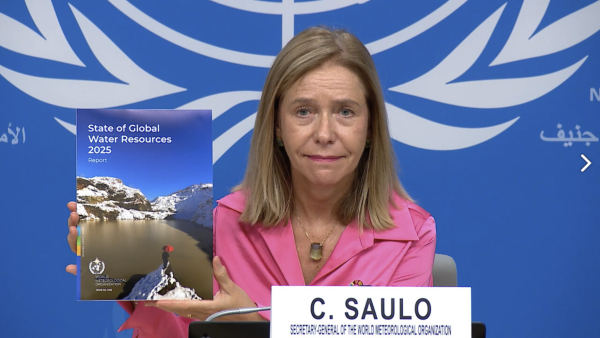
As world’s water reserves change, countries must prepare for a new reality: WMO
New data showing that rivers were at their lowest level for decades last year provides further evidence that the climate crisis is real and countries must act immediately to protect themselves from the increasing threat to communities and livelihoods, the UN World Meteorological Organization (WMO) said on Thursday.
The key findings from WMO’s State of Global Water Resources 2025 report covering the hydrological cycle and extreme events in the five-year period to last year:
- 2025 was one of driest years for river discharge in 35 years
- Past seven years have seen abnorfmal river flows
- Water storage on Earth’s land surface has decreased in past decade
- Widespread glacier loss across all regions for fourth consecutive year
- Asia and Africa are regions most affected by water-related disasters
- Water data availability has improved, but gaps remain in hard-hit areas
Highlighting the long-term decline in the Earth’s freshwater storage and glacier melt, WMO Secretary-General Celeste Saulo explained that the planet’s water reserves used to act as a planetary “savings account” that absorbed the occasional dry season, avoiding a water crisis. “One of the central stories of the 2025 report is what is happening to that savings account? And the simple answer is that we are depleting it,” she told journalists in Geneva.
Groundwater reserves are equally stretched and have been in decline since 2014, WMO’s report states, with nearly two-thirds of monitored wells worldwide showing levels lower than the historical norm and indicating a shift “further toward deficit…not recovery”.
“At the same time, we are seeing more water-related disasters,” Ms. Saulo said, while also stressing that the currently strengthening El Niño “will increase the risk of drought in some areas, and flooding in others”.
Glaciers disappearing
In 2025, for the fourth consecutive year, every major glaciated region on Earth lost ice mass, leading to short-term hazards including floods and long-term water insecurity, according to WMO.
Responding to a question about whether the changing global water cycle might have contributed to the deadly Nepal-China flooding disaster, Ms. Saulo explained that melting ice and rock was just one factor in the chain of events that ultimately sent a massive and deadly wall of water and debris downstream on 26 August, killing at least 1,367 people.
“You asked if it could happen again? Absolutely; the problem in this region is that there’s 63,700 glaciers at the last count,” she told a Press Conference in Geneva. “Even if you’re looking with remote sensing with satellites at these glaciers, you might see some faults, you might see some slight shifting, that does not mean necessarily catastrophic collapse. So, in order to plan for this, it’s very, very difficult. But the international community is looking very hard at ways in which we can bring people together to solve some of these monitoring issues.”
Data indicates that glaciers shrank between 2023 and 2025 with cumulative losses of 1,400 gigatonnes of water – or about one third of annual fresh water needs.
Every major glacier region on Earth lost ice for the fourth consecutive year.
“All 19 glacier regions around the globe lost ice; in Central Asia, Iceland, the Russian Arctic and western Canada and the United States, it was among the three worst years on record,” said Wayne Jenkinson, WMO’s Director of Hydrology and Cryosphere.
Some regions with smaller glaciers such as Central Europe, the Caucasus, the western Canada and the United States may already have reached “peak water”, Mr. Jenkinson warned.
“After this point, the glacier gives less meltwater each year simply because there is less ice left to melt. That matters for every community downstream that relies on water during hot, dry summers,” he explained.
Narelle van der Wel, WMO’s Head of Cryosphere Monitoring, Predictions and Services, stressed that while some further glacier loss is unavoidable, the eventual scale of the decline is not predetermined.
“Some glacier loss is inevitable, but total loss of glaciers is not yet inevitable,” she said, pointing to emissions reductions as central to limiting future losses.
Preparing for moving baselines
The report does not attribute every observed change to climate change alone. WMO says pressure on water resources and natural variability also contribute.
Mr. Jenkinson said governments need to prepare for “moving baselines” as historical patterns become less reliable.
“The situation 30 years ago is not where we are today,” he said. Countries, he added, need to prepare “for those changes that have really already arrived”.
ends