

The United Nations Office at Geneva
Multimedia Newsroom
Edited News , Press Conferences | OCHA , UNITED NATIONS , UNOG
Gaza update - Martin Griffiths- UN Emergency Relief chief
Gaza crisis: UN relief chief unveils 10-point plan ‘to rein in the carnage’
In response to the humanitarian crisis in Gaza amid the latest escalation with Israel, the UN’s top emergency relief official unveiled a 10-point plan on Wednesday “to rein in the carnage” there.
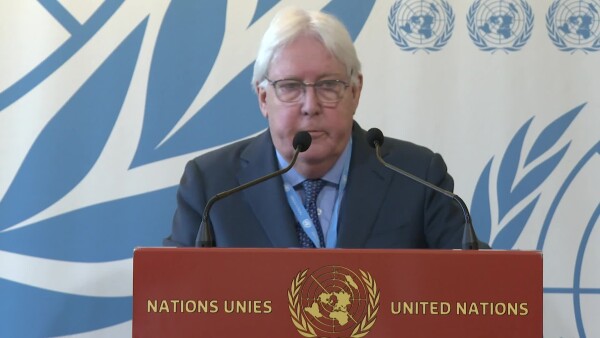
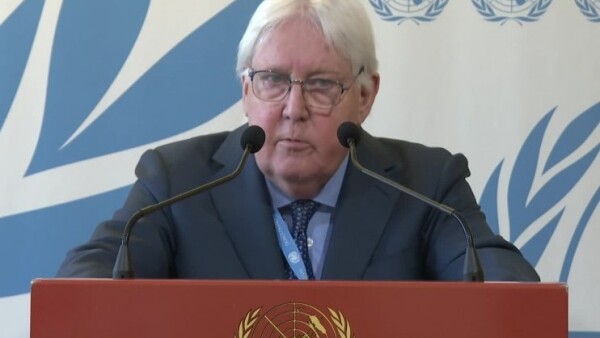
Martin Griffiths told journalists at UN Geneva that the initiative focused on a major expansion of aid into the wartorn enclave, along with a new call for humanitarian ceasefires and the release of hostages taken during Hamas’s 7 October terror attacks on Israel.
“Silence the guns, stop the fighting to allow the people to move safely, do it for as long as possible. Allow them to move safely on their own…Not hindered and not pushed.”
In a call to the warring parties and all those able to exert influence on them to heed the UN initiative, Mr. Griffiths underscored the need to ensure a safe and “continuous flow of aid convoys” into Gaza.
The initiative from veteran aid chief Martin Griffiths, head of the UN aid coordination office OCHA, comes more than five weeks since Hamas militants killed 1,200 people in Israel and took around 240 hostages.
“Release of the hostages is not part of a humanitarian plan”, he said. “It's an obligation on all those involved...I have always spoken publicly about the fact that these hostages need to be released unconditionally.”
The full-scale Israeli siege and assault that followed has levelled thousands of buildings in Gaza and reportedly claimed more than 11,000 civilian lives, according the Ministry of Health there.
Additional crossing points should be opened into the enclave, over and above Rafah from Egypt, according to the 10-point plan, and private sector suppliers should be included in this plan too.
“More crossing points, including that Kerem Shalom, which used to carry more than 60 per cent of the truckloads going through before this conflict, this recent outburst of conflict started”, emphasized Mr. Griffiths. “So please, Kerem Shalom, please, Israel, give us that for our crossing point.”
Access to fuel, a key requirement for all aid to flow, should also be made possible “in sufficient quantities” to deliver basic services, and the UN and partners should be allowed to expand the number of shelters available to all those forced from their homes in northern Gaza by the Israeli military’s evacuation order.
“Fuel is the driver of so many aspects of the humanitarian response,” underscored Mr. Griffiths. “It's the driver of desalination. It's the driver of electricity. It's the driver of effective hospitals. It's the driver of trucks that will go from Rafah on entry to the distribution points.”
On behalf of the humanitarian community that Mr. Griffiths represents, he urged all the parties, all those who have influence over them, and the broader international community to do everything in their power to support and implement the humanitarian plan.
“I haven't witnessed in my many, many decades of dealing with war an occasion on which so much attention is being paid to the requirements of international humanitarian law, otherwise called the rules of war,” said the top UN relief coordinator. “One of them is to allow people to go where they decide to go. They will decide where they're safe. They will decide when they want to move. And not move. And the same goes for us that we need safety to deliver aid to wherever those people go.”
Additional funding for the humanitarian response is also required, Mr. Griffiths pointed out, noting that it now amounts to $1.2 billion. UN and partner aid distribution hubs should also be permitted and civilians should be allowed “to move to safer areas and to voluntarily return to their residences”, he said.
-ends-
STORY: Gaza update - Martin Griffiths- UN emergency relief chief
TRT: 2:34”
SOURCE: UNTV CH
LANGUAGE: ENGLISH
ASPECT RATIO: 16:9
DATELINE: 15 November 2023 - GENEVA, SWITZERLAND
SHOTLIST
- Exterior medium shot: UN building with UN flag, UN Geneva.
- Wide shot, Martin Griffiths steps up on the podium, UN Geneva
- SOUNDBITE (ENGLISH) – Martin Griffiths, UN emergency relief chief: “Silence the guns stop the fighting to allow the people to move safely. Do it for as long as possible. Allow them to move safely on their own. Not hindered and not pushed and silenced those guns long enough to give the people of Gaza a breather from the terrible, terrible things that have been put on the this these last few weeks.”
- Cutaway: Close up, journalists listening, UN Geneva
- SOUNDBITE (ENGLISH) Martin Griffiths, UN emergency relief chief: “Fuel is the driver of so many aspects of the humanitarian response. It's the driver of desalination. It's the driver of electricity. It's the driver of effective hospitals. It's the driver of trucks that will go from Rafah on entry to the distribution points.”
- Cutaway: Medium shot, podium, Martin Griffiths and cameras, UN Geneva
- SOUNDBITE (ENGLISH) - Martin Griffiths, UN emergency relief chief: “More crossing points, including that Kerem Shalom, which used to carry more than 60% of the truckloads going through before this conflict, this recent outburst of conflict started. So please, Kerem Shalom, please, Israel, give us that for our crossing point.”
- Cutaway: Close up, camera filming, UN Geneva
- SOUNDBITE (ENGLISH) – Martin Griffiths, UN emergency relief chief: “The release of the hostages is not part of a humanitarian plan. It's an obligation on all those involved. I am one of those who had the misfortune or privilege, depending on how you look at it, of seeing some of those videos of what happened on that day of October the seventh. And I have always spoken publicly about the fact that these hostages need to be released unconditionally.”
- Cutaway: Close up, photograph, UN Geneva
- SOUNDBITE (ENGLISH) – Martin Griffiths, UN emergency relief chief: “I haven't witnessed in my many, many decades of dealing with war an occasion on which so much attention is being paid to the requirements of international humanitarian law. Otherwise called the rules of war. One of them is to allow people to go where they decide to go. They will decide where they're safe. They will decide when they want to move. And not move. And the same goes for us that we need safety to deliver aid to wherever those people go.”
- Cutaway: Medium shot, Martin Griffiths leaves, UN Geneva
Similar Stories

1
1
1
Edited News | UNICEF , IFRC
Six weeks after Nepal’s deadly flooding disaster, communities are still struggling to rebuild their lives, but they will need sustained help as global warming increases the risk of another Himalayan catastrophe, the UN Children’s Fund (UNICEF) said on Friday.

1
1
1
Statements , Press Conferences | OHCHR

1
1
1
Press Conferences | UNHCR , UNICEF , IFRC , OHCHR , UN WOMEN , IOM , OCHA , WHO
UNHCR – ExCom Meeting, UNICEF – Nepal Recovery, IFRC – Flash Floods, WHO – Mental Health, IOM – South Sudan Floods, OCHA – DRC Humanitarian aid, UNHCR – Sahel Displacement, UNICEF – Yemen Update, IOM – Gaza Shelter, UN Women – Gaza Women, OHCHR – Arrests and detentions of Syrians by Israeli force

2
1
2
Press Conferences | UNCTAD
Presentation of the Trade and Developement Report 2026
Embargoed until 9 October 2026 at 11 a.m. (Geneva Time)
UNCTAD: UNCTAD’s flagship report finds that governments increasingly use industrial, trade, financial and technology policies to pursue economic and national security objectives. Market access and the ability to move into higher-value activities now depend more heavily on technology, finance and geopolitics.

1
1
1
Press Conferences | UPU
Release of the State of the Postal Sector Report 2026

1
1
1
Edited News | WHO
In suspected Russia plague death, testing and monitoring underway – WHO
The death of a lab worker in Russia’s Siberia region has sparked concerns about plague being the cause, the UN World Health Organization (WHO) said on Tuesday, adding that it was following the situation closely.
1
1
1
Press Conferences | IOM , ITU , UNECE , UNICEF , WHO , WMO
UNICEF: Ebola, DRC - children orphans or separating them from parents and caregivers; IOM: Humanitarian needs in Djibouti amid arrivals from Yemen and increased migrant movements; WHO: Darfur, scale of health needs far exceeds available resources; WMO co-sponsored Global Heat Forum, Bangkok, monthly Global Seasonal Climate Update; UNECE: UN Forum of Mayors; ITU Plenipotentiary Conference 2026; WHO: child and adolescent obesity guidelines and new global roadmap to tackle pregnancy hypertension, a leading cause of maternal mortality

1
1
Edited News | OHCHR , UNOG
UN Human Rights Chief Volker Türk on Friday provided and oral update to the 63rd session of the Human rights Council on Ukraine.

1
1
1
Edited News | OHCHR , UNOG
UN Human Rights Chief Volker Türk on Friday provided and oral update to the 63rd session of the Human rights Council on the human rights situation in Haiti.

1
1
1
Edited News | WHO
Repeated delays in bringing lifesaving medicines, prosthetics and more from Israel into Gaza risk having devastating consequences on Palestinians who urgently need them in the wartorn enclave, the UN World Health Organization (WHO) said on Friday. “A truck full of non-priority supplies or the right supplies arriving too late, doesn't save lives. That's the question that actually matters," said Dr Reinhilde Van De Weerdt, WHO Representative in the OPT.
1
1
1
Press Conferences | OCHA , UN WOMEN , UNHCR , WFP , WHO , WTO , UNEP
OCHA – $160M CERF allocation to 12 underfunded crises; UNHCR – 5.8M refugee children remain out of school amid funding cuts; UN Women – Middle East escalation and food security among women/girls; WHO – Gaza supplies and overall situation; WFP – Yemen food insecurity and impact on global hunger ; UNEP - First International Conference of the Global Framework on Chemicals in Geneva | 16-20 November 2026

1
1
1
Edited News | WHO
DRC: Early access to care and oxygen decisive for Ebola patients’ survival – WHO
In the Democratic Republic of the Congo (DRC), health workers fighting the country’s largest-ever Ebola outbreak are struggling to overcome critical challenges to patient care, the UN World Health Organization (WHO) warned on Tuesday.