

The United Nations Office at Geneva
Multimedia Newsroom
COVID-19 makes universal digital access and cooperation essential: ITU
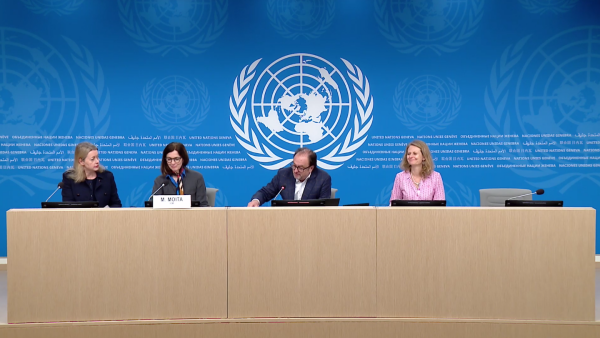
As the COVID-19 pandemic reshapes the way in which we work, keep in touch, go to school and shop for essentials – across the world – it has never been more important to bridge the digital divide for the 3.6 billion people who remain off-line. This according to top experts from the International Telecommunications Union (ITU), who outlined the implications of the new coronavirus pandemic during a digital briefing to correspondents accredited to the UN in Geneva.
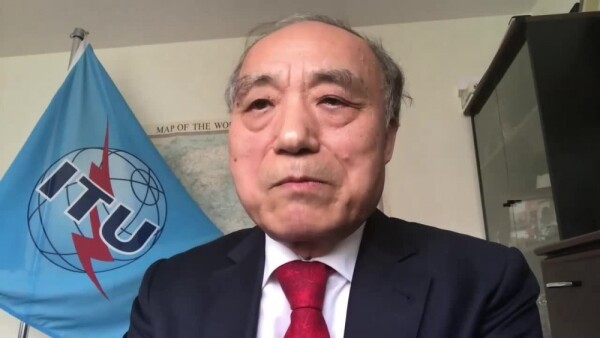
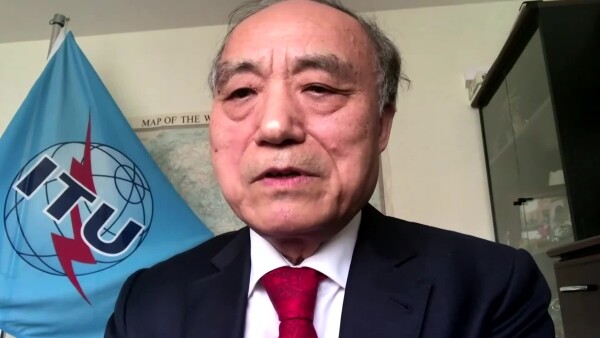
“Digital new society already came into our life, but we never imagined that we could be forced to stay at home and to use the digital worlds to connect ourselves and make our business continue. So that is something absolutely new,” said the ITU Secretary-General Houlin Zhao, who said that we should all be grateful for work being put in behind the scenes of the pandemic by workers in Information and Communications Technologies (ICT). Workers of the ICT sector were described by another ITU official as “unsung heroes” of the pandemic.
“We should also recognize that ICT services and ICT networks are not so easy to manage, because nobody could imagine, that under such circumstances that traffic could to some extent triple,” Mr. Zhao said, referencing the massive surge for videoconferencing and mobile telephony traffic that the health crisis has engendered.
One important challenge has been the massive shift in the need for broadband away from urban office buildings, toward the suburban and rural where people are now telecommuting from their homes.
“Additional spectrum has been identified,”said Mario Maniewicz, Director of the ITU Radiocommunication Bureau, adding that such resources can be used by countries “for new technologies that can help provide coverage at affordable prices to underserved communities. These technologies are both satellite and terrestrial, and can cover large areas, and they promise to enable affordable broadband access in rural and remote areas.”
Mr. Maniewicz added that now that spectrum has been allocated governments must make use of these existing allocations to enable the telecommunications providers to do their job of servicing this “universal need” for broadband access.
The call for universal access to broadband has never been more keenly felt, said Doreen Bogdan-Martin, Director of the Telecommunication Development Bureau of the International Telecommunication Union: “ There’s a lot of talk about defining the new normal in the post-Covid world and for me ‘new normal’ needs to include broadband access for all.”
With 1.5 billion children currently out of school, Ms. Bogdan-Martin pointed to the desperate need for digital partnership such the initiative ITU is currently undertaking with UNICEF, known as the GIGA initiative, to ensure that schooling everywhere can be provided through online platforms. At the same time, she said, the ITU saw a need to accelerate the provision of global online child protection guidelines, which are now expected to be issued in the next two weeks.
A worrying development has been the massive spike in cyber-crime that has accompanied the shift to digital in the COVID-19 crisis.
“The COVID-19 crisis has also resulted in a huge surge of online criminal activity. Bad actors have been exploiting fear and uncertainty, and my own cyber-security team has set up an online repository to really help countries be able to protect their network, businesses and of course their users. And then linked to this is of course the risks for children,” said Ms. Bogdan-Martin. One telecoms company, Vodaphone, was cited as having reported 300-fold rise in phishing attacks through its systems since the pandemic started.
For all the dangers that current scenario presents, and for basic challenges such as the unavailability of electric power the ITU officials remained optimistic about the opportunities that are afforded by the present crisis to leverage new-found political to deliver connectivity for all.
In addition to expanding access globally, the ITU has been studying different technologies that have been submitted to it for contact-tracing during the pandemic, although Dr Reinhard Scholl, the Deputy Director of the organization’s Telecommunication Standardization Bureau, said that the world would have to wait for the “dust to settle” before recommendations could be made as to which works best.
The ITU’s top official, Mr. Zhao, said that as the world contemplates the post-COVID future, the global development of 5G networks would be absolutely essential to deliver such services as remote surgery and autonomous driving. Plans for 5G would have to be included in national development strategies, he said.
- Wide shot: exterior, United Nations Geneva, main entrance with UN flag and building in background- FILE
- SOUNDBITE (EN) Houlin Zhao, ITU Secretary-General: “Digital new society already came into our life, but we never imagined that we could be forced to stay at home and to use the digital worlds to connect ourselves and make our business continue. So that is something absolutely new.”
- Medium shot: UN Geneva and UN flag alley behind gates at UN Geneva, filmed from the Place des Nations. A motorcyclist passes from left to right – FILE
- SOUNDBITE (EN) Houlin Zhao, ITU Secretary-General: “We should also recognize that ICT services and ICT networks are not so easy to manage, because nobody could imagine, that under such circumstances that traffic could to some extent triple,”
- Medium shot: flag alley, UN Geneva- FILE
- SOUNDBITE (EN) Mario Maniewicz, Director, Radiocommunication Bureau (ITU): ““Additional spectrum has been identified,”said adding that such resources can be used by countries “for new technologies that can help provide coverage at affordable prices to underserved communities. These technologies are both satellite and terrestrial, and can cover large areas, and they promise to enable affordable broadband access in rural and remote areas.”
- Medium shot: UN Geneva flag alley-FILE
- SOUNDBITE (EN) Doreen Bogdan-Martin, Director of the Telecommunication Development Bureau (ITU): “ There’s a lot of talk about defining the new normal in the post-Covid world and for me ‘new normal’ needs to include broadband access for all.”
- Wide shot, UN flag alley, UN Geneva – FILE
- SOUNDBITE (EN) Doreen Bogdan-Martin, Director of the Telecommunication Development Bureau (ITU): “The COVID-19 crisis has also resulted in a huge surge of online criminal activity.”
- Wide shot, UN flag alley, UN Geneva – FILE
- SOUNDBITE (EN) Doreen Bogdan-Martin, Director of the Telecommunication Development Bureau (ITU): “Bad actors have been exploiting fear and uncertainty, and my own cyber-security team has set up an online repository to really help countries be able to protect their network, businesses and of course their users. And then linked to this is of course the risks for children,”
- Medium shot, UN flag flying at UN Geneva.
Similar Stories

1
1
1
Edited News | OCHA , UNICEF , WFP
Aid agencies warned on Friday of the fast-developing humanitarian emergency inside Taiz City in Yemen, which has been encircled by de facto Houthi forces fighting government troops along the country’s west coast.
1
1
1
Press Conferences | UN WOMEN , WFP , WHO
UN WOMEN: Sudan Women and girls one year after the fall of El Fasher; increasing drone attacks across the country; WFP: DRC - Ebola spreads to eighth DRC province as WFP delivers food, builds treatment centres and keeps supplies moving; WHO - Update on Ebola (Bundibugyo Virus Disease)
1
12
1
1
Press Conferences , Images | UNOG
Closing Press Conference following the Sixth Consultative Meeting on Enhancing Coordination of Peace Initiatives and Efforts in Sudan

2
17
1
2
Edited News , Press Conferences , Images | OCHA , WMO
Two UN agencies teamed up on Wednesday to issue an appeal for immediate assistance to help communities already being impacted by the strongest El Niño on record.

3
16
2
2
Edited News , B-roll , Conferences , Images | UNITED NATIONS , UNOG
Sixth Consultative Meeting on Enhancing Coordination of Peace Initiatives and Efforts for Sudan
1
1
1
Press Conferences | CITES
Wildlife trade and conservation policy discussions at the 81st meeting of the CITES Standing Committee (SC81)

1
1
1
Edited News | UNICEF , WHO , UNHCR
Yemen war continues to force families from homes amid hunger and disease
More than 250,000 people have now fled renewed fighting in Yemen, the UN said on Tuesday, citing particular concern for those sheltering in the southwestern city of Taiz and the wider governorate, where access is “essentially blocked”.
1
1
1
Press Conferences | UNHCR , UNCTAD , WMO , OCHA , UNICEF , WHO
UNHCR Hungary’s 1956 Refugee Crisis: 70 Years On, UNCTAD World Investment Forum 2026, Doha, WMO Greenhouse Gas Bulletin and Climate Update for COP31, OCHA Afghanistan: Malnutrition, Girls’ Education and Recovery, UNICEF Yemen: Child Malnutrition and Unsafe Water in Taiz, WHO Inequalities in Noncommunicable Diseases and Risk Factors
1
1
1
Press Conferences | UNHCR
End of UNHCR's 77th Annual Executive Committee (ExCom) meeting week

1
1
1
Edited News | UNICEF
A little over one year since a ceasefire agreement was announced between Hamas fighters and Israel, more than 340 children have been reported killed and hundreds more injured, the UN Children’s Fund, UNICEF, said on Friday.
1
1
1
Press Conferences | UNICEF , IOM , UNHCR
UN Special Assistant to the Personal Envoy Office (SUDAN): Peace Initiatives and Efforts in Sudan; UNICEF: Dire situation of children in Gaza; IOM: Damaged Homes and Energy Attacks Risk Displacing Ukrainians for this winter; UNHCR: update on EXCOM week
1
1
1
Press Conferences | IOM , UNDRR
UN stresses importance of household preparedness for disaster risk reduction.