

The United Nations Office at Geneva
Multimedia Newsroom
Sudan: One of largest protection crises, says UN refugee agency
The displacement crisis prompted by ongoing conflict in Sudan continues unabated with nearly six million people forced out of their homes and women and children making up nearly nine in 10 of those uprooted, the UN Refugee agency (UNHCR) said on Wednesday.
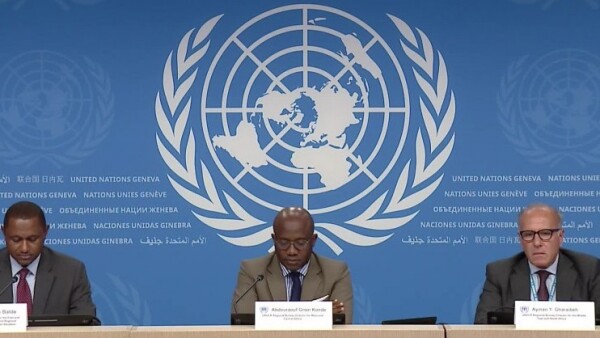
“This is one of the largest protection crises that we are faced with today,” said Mamadou Dian Balde, UNHCR’s Regional Bureau Director for the East and Horn of Africa and Great Lakes. “Inside Sudan itself there are a lot of people in urban settings that are affected equally and who do not have the resources to leave.”
In a related development, the UN Human Rights Council on Wednesday voted to set up a high-level probe “to investigate and establish the facts, circumstances and root causes of all alleged human rights violations” in Sudan.
In accordance with the resolution, the Independent International Fact-Finding Mission for Sudan is mandated to investigate violations of international humanitarian law, including those committed against refugees, and related crimes caused by the ongoing conflict.
In an appeal for a cessation of hostilities, the UNHCR official urged Sudan’s opposing militaries “to have a peace process that will help our brothers and sisters who have been obliged to flee their countries to go back to their countries”.
As a result of the conflict that erupted in mid-April between the Sudanese Armed Forces (SAF) and the Rapid Support Forces (RSF) and other armed groups in mid-April, the UN agency described how families had faced harrowing journeys and become separated while on the move, amid increasing reports of gender-based violence. Malnourishment among children is now described as a major crisis, along with disease outbreaks.
“I have seen and I have witnessed the level of human rights violations that have happened within Sudan so that what we hear from people who have crossed the borders is really heartbreaking and that’s the protection crisis that we are faced with and it has been ongoing for the past six months,” said UNHCR’s Mr. Balde.
The regional ramifications of the Sudanese emergency are deep, particularly in neighbouring Chad and the Central African Republic (CAR). Both nations are grappling with the influx of refugees fleeing the devastating conflict in Sudan, bringing with them stories of despair, loss, and continued vulnerability.
“In my long career as a humanitarian worker what I have seen in Chad with this new emergency with such a rapid and vast displacement of people is the first time,” said Abdouraouf Gnon Konde, UNHCR’s Regional Bureau Director for West and Central Africa.
According to Mr. Konde, there are over 420,000 new refugees in Chad and near 19,000 in CAR. To put this in perspective, “Chad has hosted more refugees in these mere five months than it has in the past 20 years becoming now undeniably the epicentre of this crisis”.
“In Chad we estimate probably that by the end of the year we will reach unfortunately the number of 600,000 Sudanese refugees who will have just arrived following what’s happening in Sudan,” added Mr. Konde.
The UNHCR official described a recent visit to Chad where testimonies from refugee victims of gender-based violence had been “particularly chilling”, involving sexual assault, rape and forced prostitution.
In response to the emergency in Chad, UNHCR has relocated 42 per cent of refugees away from high-risk border areas, with a focus on protecting the high percentage of vulnerable women and children.
Egypt continues to be the primary host country of Sudanese refugees, with hundreds arriving daily, said Ayman Gharaibeh, UNHCR Regional Bureau Director for the Middle East and North Africa. “We have received over 300,000 Sudanese since the crisis erupted,” he said. “For those who don’t know: in Egypt already pre-crisis there are six million Sudanese. Egypt has been really the safety zone throughout the decades of Sudan turbulent years. A place of safety, for some people almost home.”
-ends-
STORY: Sudan: Displacement update - UNHCR
TRT: 2 min 45s
SOURCE: UNTV CH
RESTRICTIONS: NONE
LANGUAGE: ENGLISH / NATS
ASPECT RATIO: 16:9
DATELINE: 11 October 2023 GENEVA, SWITZERLAND
- Exterior medium shot: UN flag alley, UN Geneva
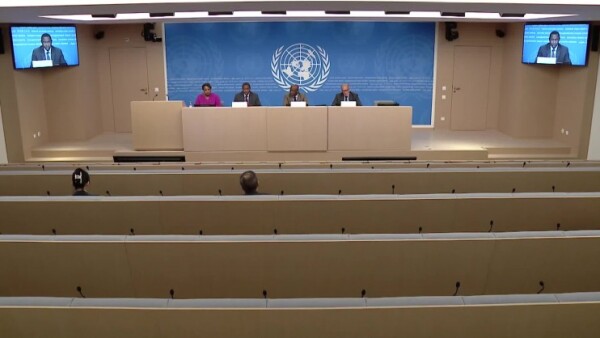
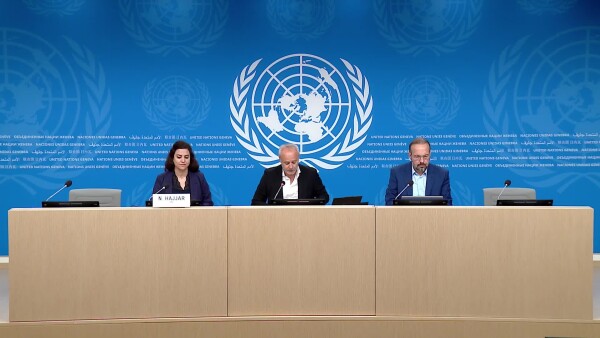
- Wide shot: speakers at the press conference
- SOUNDBITE (English) – Mamadou Dian Balde, UNHCR Regional Bureau Director for the East and Horn of Africa and Great Lakes, and Regional Refugee Coordinator for the Sudan Situation: “This is one of the largest protection crises that we are faced with today. Nearly six month and nearly 6 million people are affected who are leaving. And I would say inside Sudan itself there are a lot of people in urban settings that are affected equally and who do not have the resources to leave.”
- Close up, UNHCR spokesperson taking a photo
- SOUNDBITE (English) – Mamadou Dian Balde, UNHCR Regional Bureau Director for the East and Horn of Africa and Great Lakes, and Regional Refugee Coordinator for the Sudan Situation: “I have seen and I have witnessed the level of human rights violations that have happened within Sudan so that what we hear from people who have crossed the borders is really heartbreaking and that’s the protection crisis that we are faced with and it has been ongoing for the past six months.”
- Wide shot: speakers and attendees at the press conference, screens with speaker
- SOUNDBITE (English) – Abdouraouf Gnon Konde, UNHCR Regional Bureau Director for West and Central Africa: “In my long career as a humanitarian worker what I have seen in Chad with this new emergency with such a rapid and vast displacement of people is the first time.”
- Wide shot, camera operators in control room
- SOUNDBITE (English) – Abdouraouf Gnon Konde, UNHCR Regional Bureau Director for West and Central Africa: “In Chad we estimate probably that by the end of the year we will reach unfortunately the number of 600,000 Sudanese refugees who will have just arrived following what’s happening in Sudan.”
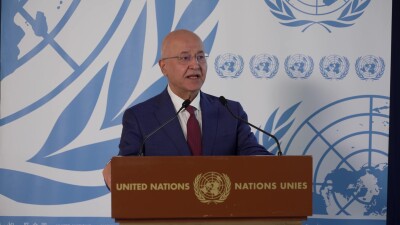
- Medium shot: speaker at the press conference on podium filmed from behind
- SOUNDBITE (English) – Ayman Y. Gharaibeh, UNHCR Regional Bureau Director for the Middle East and North Africa: “ We have received over 300,000 Sudanese since the crisis erupted. For those who don’t know: in Egypt already pre-crisis there is 6 million Sudanese. Egypt has been really the safety zone throughout the decades of Sudan turbulent years. A place of safety, for some people almost home.”
- Medium shot: attendees at the press conference
- SOUNDBITE (English) – Mamadou Dian Balde, UNHCR Regional Bureau Director for the East and Horn of Africa and Great Lakes, and Regional Refugee Coordinator for the Sudan Situation: “We need this to end, we need to have a cessation of hostilities, we need to have a peace process that will help our brothers and sisters who have been obliged to flee their countries to go back to their countries”.
- Medium shot: speakers at the podium
- Medium shot: operator in control room
- Wide shot, attendees in press room
Similar Stories
1
1
1
Edited News | OCHA , UNICEF , WFP
Aid agencies warned on Friday of the fast-developing humanitarian emergency inside Taiz City in Yemen, which has been encircled by de facto Houthi forces fighting government troops along the country’s west coast.
1
1
1
Press Conferences | UN WOMEN , WFP , WHO
UN WOMEN: Sudan Women and girls one year after the fall of El Fasher; increasing drone attacks across the country; WFP: DRC - Ebola spreads to eighth DRC province as WFP delivers food, builds treatment centres and keeps supplies moving; WHO - Update on Ebola (Bundibugyo Virus Disease)
1
12
1
1
Press Conferences , Images | UNOG
Closing Press Conference following the Sixth Consultative Meeting on Enhancing Coordination of Peace Initiatives and Efforts in Sudan

2
17
1
2
Edited News , Press Conferences , Images | OCHA , WMO
Two UN agencies teamed up on Wednesday to issue an appeal for immediate assistance to help communities already being impacted by the strongest El Niño on record.
3
16
2
2
Edited News , B-roll , Conferences , Images | UNITED NATIONS , UNOG
Sixth Consultative Meeting on Enhancing Coordination of Peace Initiatives and Efforts for Sudan
1
1
1
Press Conferences | CITES
Wildlife trade and conservation policy discussions at the 81st meeting of the CITES Standing Committee (SC81)

1
1
1
Edited News | UNICEF , WHO , UNHCR
Yemen war continues to force families from homes amid hunger and disease
More than 250,000 people have now fled renewed fighting in Yemen, the UN said on Tuesday, citing particular concern for those sheltering in the southwestern city of Taiz and the wider governorate, where access is “essentially blocked”.
1
1
1
Press Conferences | UNHCR , UNCTAD , WMO , OCHA , UNICEF , WHO
UNHCR Hungary’s 1956 Refugee Crisis: 70 Years On, UNCTAD World Investment Forum 2026, Doha, WMO Greenhouse Gas Bulletin and Climate Update for COP31, OCHA Afghanistan: Malnutrition, Girls’ Education and Recovery, UNICEF Yemen: Child Malnutrition and Unsafe Water in Taiz, WHO Inequalities in Noncommunicable Diseases and Risk Factors
1
1
1
Press Conferences | UNHCR
End of UNHCR's 77th Annual Executive Committee (ExCom) meeting week

1
1
1
Edited News | UNICEF
A little over one year since a ceasefire agreement was announced between Hamas fighters and Israel, more than 340 children have been reported killed and hundreds more injured, the UN Children’s Fund, UNICEF, said on Friday.
1
1
1
Press Conferences | UNICEF , IOM , UNHCR
UN Special Assistant to the Personal Envoy Office (SUDAN): Peace Initiatives and Efforts in Sudan; UNICEF: Dire situation of children in Gaza; IOM: Damaged Homes and Energy Attacks Risk Displacing Ukrainians for this winter; UNHCR: update on EXCOM week

1
1
1
Press Conferences | IOM , UNDRR
UN stresses importance of household preparedness for disaster risk reduction.