

The United Nations Office at Geneva
Multimedia Newsroom
Edited News , Press Conferences | HRC
HRC Press conference: International Commission of Human Rights Experts on Ethiopia - 18 September 2023
Ethiopia: War crimes and crimes against humanity continue unabated, says top rights probe
War crimes and crimes against humanity are still being committed in Ethiopia despite the signing of an agreement to cease hostilities 10 months ago, the International Commission of Human Rights Experts on Ethiopia warned on Monday.
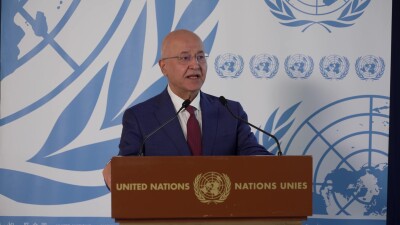
“It is hard to overstate the gravity of the violence which is taking place in Ethiopia since November 2020,” said Mohamed Chande Othman, Chair, at a press conference in Geneva. “We have documented mass killings, rape, starvation, destruction of schools and medical facilities, forced displacement and mass arbitrary detention amounting to both war crimes and crimes against humanity”, he said, presenting the finding of the panel’s second report.
Mr. Othman added that “we also documented the continued forced exposure of Tigrayans from western Tigray with tens of thousands of women, men and children unable to return to their homes.”
In a 21-page report to be presented to the Human Rights Council on Thursday 21 September, the Commissioners documented wide-ranging atrocities perpetrated by all parties to the conflict since 3 November 2020.
The report confirmed that Eritrean troops and Amhara militia members have continued to commit grave violations in Tigray, including the systematic rape and sexual violence of women and girls, in violation of the Ethiopian Government’s commitments on human rights and territorial integrity.
“We reaffirmed our findings from our first report which was only able to look at a small number of incidences by looking at a far greater number of incidence and we reaffirm findings of significant violations of international human rights law, humanitarian law and international criminal law, some of which amount to war crimes and crimes against humanity,” said Steven Ratner, Commissioner.
“Entire families have been killed, relatives forced to watch horrific crimes against their loved ones, while whole communities have been displaced or expelled from their homes, many too fearful to return, others unable to,” the report notes. “Trauma, both individual and collective, is likely to persist for generations.”
The Commission uncovered allegations concerning Government forces of arrest, detention, and torture of civilians in Oromia and has received numerous credible reports of violations against Amhara civilians since the announcement of a state of emergency in August 2023.
“Clearly, we have seen a deterioration in the situation in Ethiopia since our oral update to the Council in March of this year, including the spreading of violence in the Amhara region and the Oromia”, said Mr. Ratner. “The ongoing violations are extraordinarily serious, and we have credible allegations of just how grave they are. They include the forced displacements and the sexual and gender-based violence.”
Especially concerning is the ongoing nature of some crimes, in particular the worst sexual violence involving Eritrean forces in Tigray.
For Commissioner Radhika Coomaraswamy who spoke to victims of sexual abuse and exploitation, “this was as bad as it gets, it’s extreme, it included gang rape, it included cruelty of the worst kind, but I must admit that the worst of this was perpetrated by Eritrean forces in Tigray. Though, of course, the Ethiopian forces were also responsible.”
She added that “there was also sexual violence in Amhara perpetrated by Tigrayan forces which were also quite terrible. So, sexual violence as a crime in this war is something of great significance and it has to be looked into and accountability has to be had.”
The report notes that the Government of Ethiopia has failed to effectively prevent or investigate violations and has instead initiated a flawed transitional justice consultation process where victims remain overlooked.
“The need for a credible, inclusive, and meaningful process of justice, truth, reconciliation and healing has never been more urgent,” said the Commission’s Chair. “Ethiopia’s current transitional justice consultations are not that processed. Our engagement with hundreds of victims, survivors and their families, there is a really big deep mistrust in the ability and willingness of Ethiopian institutions.”
The Commission’s report warned about the continued presence of most of the indicators and triggers contained in the UN Framework of Analysis for Atrocity Crimes. It highlighted the risk of further large-scale atrocity crimes, expressing deep concern that many of the hallmarked risk factors of future atrocity crimes remain present in Ethiopia.
The Commission of Human Rights Experts on Ethiopia was established by the Human Rights Council in December 2021, to conduct thorough and impartial investigations into allegations of violations and abuses of international human rights law and violations of international humanitarian law and international refugee law in Ethiopia committed since 3 November 2020 by all parties to the conflict, including the possible gender dimensions of such violations and abuses.
-ends-
STORY: Report: Human Rights Experts on Ethiopia - HRC
DURATION (TRT): 3:24"
SOURCE: UNTV CH
LANGUAGE: ENGLISH/NATS
ASPECT RATIO: 16/9
DATELINE: 18 September 2023, GENEVA SWITZERLAND
FORMAT: HYBRID PRESS BRIEFING
- Exterior medium shot: UN flag alley, UN Geneva
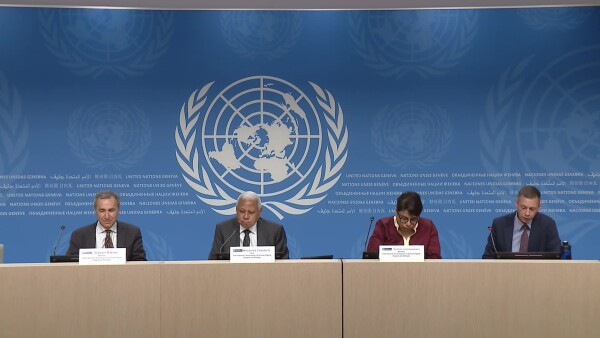
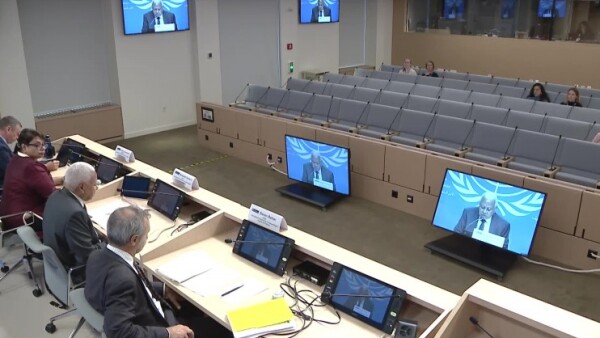
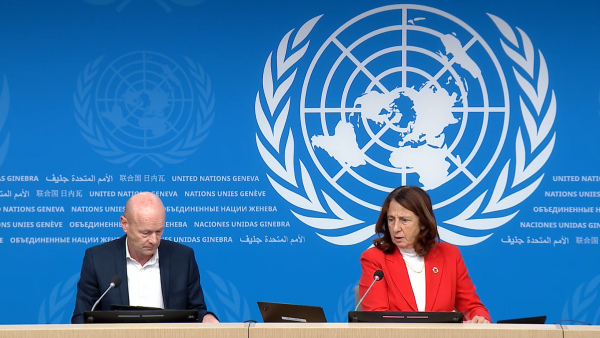
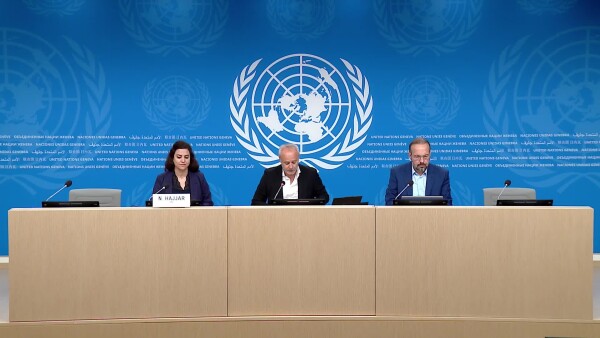
- Wide shot: speakers and attendees at the press conference, screens with speaker
- SOUNDBITE (English) – Mohamed Chande Othman, Chair of the International Commission of Human Rights Experts on Ethiopia: “It is hard to overstate the gravity of the violence which is taking place in Ethiopia since November 2020. We have documented mass killings, rape, starvation, destruction of schools and medical facilities, forced displacement and mass arbitrary detention amounting to both war crimes and crimes against humanity.”
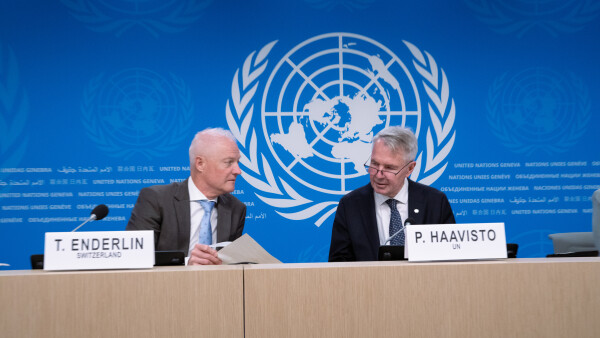
- Medium shot: speakers at the press conference
- SOUNDBITE (English) – Mohamed Chande Othman, Chair of the International Commission of Human Rights Experts on Ethiopia: “We also documented the continued forced exposure of Tigrayans from western Tigray with tens of thousands of women, men and children unable to return to their homes.”
- Wide shot: attendees, photographer, cameramen/women and sound engineers at the press conference, screens with speaker
- SOUNDBITE (English) – Steven Ratner, Member of the Commission: “We reaffirmed our findings from our first report which was only able to look at a small number of incidences by looking at a far greater number of incidence and we reaffirm findings of significant violations of international human rights law, humanitarian law and international criminal law, some of which amount to war crimes and crimes against humanity.”
- Close shot: attendees at the press conference
- SOUNDBITE (English) – Steven Ratner, Member of the Commission: “Clearly, we have seen a deterioration in the situation in Ethiopia since our oral update to the Council in March of this year, including the spreading of violence in the Amhara region and the Oromia. The ongoing violations are extraordinarily serious, and we have credible allegations of just how grave they are. They include the forced displacements and the sexual and gender-based violence.”
- Wide shot: attendees, photographer, cameramen/women and sound engineers at the press conference, screens with speaker
- SOUNDBITE (English) – Radhika Coomaraswamy, Member of the Commission: “This was as bad as it gets, it’s extreme, it included gang rape, it included cruelty of the worst kind, but I must admit that the worst of this was perpetrated by Eritrean forces in Tigray. Though, of course, the Ethiopian forces were also responsible.”
- Close shot: attendee at the press conference
- SOUNDBITE (English) – Radhika Coomaraswamy, Member of the Commission: “There was also sexual violence in Amhara perpetrated by Tigrayan forces which were also quite terrible. So, sexual violence as a crime in this war is something of great significance and it has to be looked into and accountability has to be had.”
- Wide shot: speakers and attendees at the press conference, screens with speaker
- SOUNDBITE (English) – Mohamed Chande Othman, Chair of the International Commission of Human Rights Experts on Ethiopia: “The need for a credible, inclusive, and meaningful process of justice, truth, reconciliation and healing has never been more urgent. Ethiopia’s current transitional justice consultations are not that processed. Our engagement with hundreds of victims, survivors and their families, there is a really big deep mistrust in the ability and willingness of Ethiopian institutions.”
- Close shot: attendee at the press conference
- Wide shot: attendees, cameramen/women and sound engineers at the press conference, screens with speaker
- Medium shot: attendees and photographer at the press conference
Similar Stories
1
1
1
Press Conferences | WMO , UNHCR , WHO , ILO
WMO: Greenhouse Gas Bulletin; UNHCR: As attacks intensify UNHCR urges support for war ravaged Ukrainians; WHO: Clinical trials in DRC: vaccines and beyond; ILO: New global and regional estimates on domestic work, informality and working conditions
1
1
1
Edited News | OCHA , UNICEF , WFP
Aid agencies warned on Friday of the fast-developing humanitarian emergency inside Taiz City in Yemen, which has been encircled by de facto Houthi forces fighting government troops along the country’s west coast.
1
1
1
Press Conferences | UN WOMEN , WFP , WHO
UN WOMEN: Sudan Women and girls one year after the fall of El Fasher; increasing drone attacks across the country; WFP: DRC - Ebola spreads to eighth DRC province as WFP delivers food, builds treatment centres and keeps supplies moving; WHO - Update on Ebola (Bundibugyo Virus Disease)
1
12
1
1
Press Conferences , Images | UNOG
Closing Press Conference following the Sixth Consultative Meeting on Enhancing Coordination of Peace Initiatives and Efforts in Sudan

2
17
1
2
Edited News , Press Conferences , Images | OCHA , WMO
Two UN agencies teamed up on Wednesday to issue an appeal for immediate assistance to help communities already being impacted by the strongest El Niño on record.

3
16
2
2
Edited News , B-roll , Conferences , Images | UNITED NATIONS , UNOG
Sixth Consultative Meeting on Enhancing Coordination of Peace Initiatives and Efforts for Sudan
1
1
1
Press Conferences | CITES
Wildlife trade and conservation policy discussions at the 81st meeting of the CITES Standing Committee (SC81)

1
1
1
Edited News | UNICEF , WHO , UNHCR
Yemen war continues to force families from homes amid hunger and disease
More than 250,000 people have now fled renewed fighting in Yemen, the UN said on Tuesday, citing particular concern for those sheltering in the southwestern city of Taiz and the wider governorate, where access is “essentially blocked”.
1
1
1
Press Conferences | UNHCR , UNCTAD , WMO , OCHA , UNICEF , WHO
UNHCR Hungary’s 1956 Refugee Crisis: 70 Years On, UNCTAD World Investment Forum 2026, Doha, WMO Greenhouse Gas Bulletin and Climate Update for COP31, OCHA Afghanistan: Malnutrition, Girls’ Education and Recovery, UNICEF Yemen: Child Malnutrition and Unsafe Water in Taiz, WHO Inequalities in Noncommunicable Diseases and Risk Factors
1
1
1
Press Conferences | UNHCR
End of UNHCR's 77th Annual Executive Committee (ExCom) meeting week

1
1
1
Edited News | UNICEF
A little over one year since a ceasefire agreement was announced between Hamas fighters and Israel, more than 340 children have been reported killed and hundreds more injured, the UN Children’s Fund, UNICEF, said on Friday.
1
1
1
Press Conferences | UNICEF , IOM , UNHCR
UN Special Assistant to the Personal Envoy Office (SUDAN): Peace Initiatives and Efforts in Sudan; UNICEF: Dire situation of children in Gaza; IOM: Damaged Homes and Energy Attacks Risk Displacing Ukrainians for this winter; UNHCR: update on EXCOM week