

The United Nations Office at Geneva
Multimedia Newsroom
12 August 2025
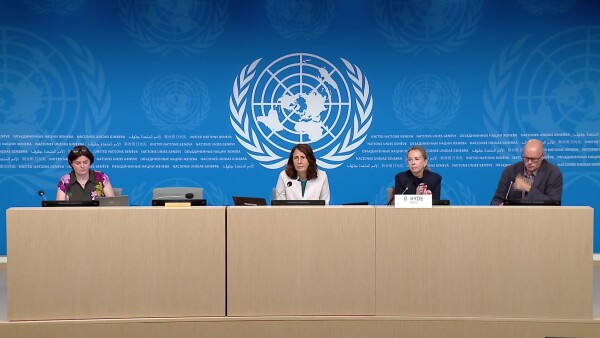
Update on the Health Situation in Gaza
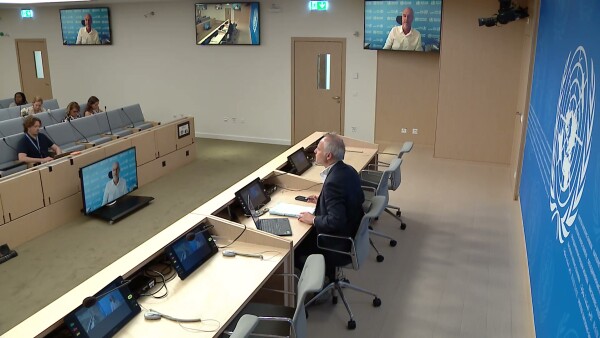
Dr. Rik Peeperkorn, Representative in the Occupied Palestinian Territory, World Health Organization (WHO), said the overall health situation remained catastrophic across the Gaza Strip. Currently, only 50 per cent of hospitals and 38 per cent of primary health care centres were functional, and there had been a stark reduction in medical points.
Bed occupancy in Ministry of Health hospitals had exceeded capacity, reaching close to 250 per cent at Shifa Hospital, 210 per cent at Rantissi, 180 per cent at Nasser, and 300 per cent at Ahli Hospital. There were also critical shortages in medication and consumables, with 52 per cent of medicines and 68 per cent of consumables at zero-stock.
Hospitals were particularly overwhelmed by injuries coming from food distribution areas, which were also driving persistent shortages of blood and plasma. The number of casualties among people trying to access food supplies had increased to 1,655 fatalities and more than 11,800 injuries since 27 May 2025.
WHO’s Gaza City warehouse now sat in an evacuation zone. Dr. Peeperkorn said the destruction that wiped out its main southern warehouse must not happen again. As a result of the new Gaza City displacement orders, one primary health care centre and one medical point were now within the displacement area, while three hospitals, one field hospital, one ambulance centre, six primary health care centres and two medical points were within 1,000 meters of the displacement area.
Hunger and malnutrition continued to ravage Gaza. As of 5 August, 147 people had died from the effect of malnutrition in 2025. This included 98 adults and 49 children, 39 of whom were less than five years old. Nearly 12,000 children under five years in Gaza were identified to be suffering from acute malnutrition in July, the highest monthly figure recorded to date, according to the Nutrition Cluster. These comprised around 2,500 children who suffered from severe acute malnutrition, of whom 40 were hospitalised at stabilisation centres.
Between July and 7 August, a total of 452 suspected meningitis cases were reported across the Gaza Strip, the highest number recorded since the beginning of the escalation. Isolation measures had been implemented, including the separation of the external department at Al Khair Hospital from the Nasser Medical Complex and the establishment of isolation tents at Al Aqsa Hospital to safely manage suspected cases.
During June and until 7 August, 76 suspected Guillain-Barré Syndrome (GBS) cases were reported across the Gaza Strip. The surge in cases was partly because of improved acute flaccid paralysis (AFP) surveillance, which was being implemented in Gaza by the Ministry of Health with support from WHO and partners. GBS was a postinfection syndrome that came following a respiratory or gastrointestinal bacterial or viral infection.
This situation highlighted the exacerbation of risk factors and the necessity to mitigate them. Water, sanitation and hygiene (WASH) infrastructure had collapsed; there was overcrowding in shelters, malnutrition and compromised immunity, and restricted access to healthcare and testing capacities. WHO continued to work closely on strengthening surveillance and addressing the gaps related to laboratory and diagnostic capacity as well as treatment. Two first line treatments, intravenous immune globulin (IVIG) and plasma exchange (PLEX), were at zero stock, as were anti-inflammatories. Their delivery needed to be urgently expedited. WHO hoped to bring in a small quantity next week, but approval was needed to bring these supplies in.
Complex entry requirements and the arbitrary denial of international medical teams was impacting the availability of health care in Gaza, leading to more preventable deaths. Since 18 March 2025, denial rates had risen by nearly 50 per cent, with 102 critical international health professionals, including surgeons and other specialised medical staff, barred from entry.
Since June, WHO had brought in 80 trucks with medical supplies, However, entry processes remained difficult and ever changing. Staff members’ inspection activities at border points had been delayed by restrictions. Many items, such as assistive devices, intensive care unit beds, freezers, cold chain medicines, anaesthesia machines, had been denied entry. Some 282 pallets of supplies had entered via Ben Gurion Airport, but the clearance process was far too slow. Multiple crossings needed to be opened to allow the delivery of humanitarian supplies.
Since 18 March 2025, 10 medical evacuation missions had taken place, involving 414 patients, including 305 children, and 747 companions. More than 7,000 patients had been evacuated since October 2023, including more than 5,000 children. More countries needed to step forward to accept patients, and referral pathways to the West Bank, including East Jerusalem, needed to be restored.
In response to questions, Dr. Peeperkorn said that when there was a temporary ceasefire, the United Nations and partners had brought in between 400 to 600 trucks of aid supplies per day. This made a large difference. Markets needed to be flooded with food, and prices needed to go down - this would reduce mass casualty incidents and looting. However, this was not happening on the level that was needed, and delivery arrangements were too slow and cumbersome. Many of the items that needed to be brought in were still being denied.
To carry on humanitarian operations and keep hospitals running, 50 trucks of fuel needed to come in daily, but there was currently less than 20 coming in. WHO was constantly negotiating regarding the delivery of supplies but was unable to bring in enough. In the context of a potential incursion in Gaza, WHO wanted to stock up hospitals and build its own reserves but was currently not able to do so sufficiently. It was calling for access to deliver all the essential medicines that were needed in Gaza.
Rolando Gómez, Chief of the Press and External Relations Section at the United Nations Information Service (UNIS) in Geneva, said that a statement from the United Nations Secretary-General António Guterres was issued late on Friday on the announcement from the Israeli Government on its decision to take control of Gaza City. The United Nations Office for the Coordination of Humanitarian Affairs (OCHA) had also issued an update on the humanitarian response in Gaza.
Plastics Pollution Treaty Discussions
Tarik Jašarević for the World Health Organization (WHO) said WHO Director-General Dr Tedros had expressed in a media briefing on 7 August 2025 the importance of an agreement on plastics. Studies had been carried out by WHO on the effect of plastics on human health.
Rolando Gómez, of UNIS Geneva, said talks on a plastics pollution treaty were continuing this week in Geneva, with plans to conclude this Thursday. UNIS would continue to inform journalists about progress in discussions and plans for press conferences.
Today, Tuesday, 12 August at 1 p.m., the European Union delegation for the second part of the fifth session of the Intergovernmental Negotiating Committee to develop an international legally binding instrument on plastic pollution (INC-5.2) would hold a press stakeout at the stakeout position behind room XX, at which Magnus Heunick, Danish Minister for the Environment, and Jessika Roswall, European Commissioner for Environment, would speak.
One Year Anniversary of the Declaration of Mpox as a Public Health Emergency of International Concern
Tarik Jašarević for the World Health Organization (WHO) said WHO had marked the one-year anniversary of the declaration of mpox as a public health emergency of international concern. There was currently a mixed picture in terms of trends in cases, with declines in cases in some countries but increases in others. In 2025, 79 countries had reported mpox cases, and the worst affected countries were the Democratic Republic of the Congo, Uganda and Sierra Leone. More figures were available on the WHO website. The WHO Emergency Committee had convened in June and determined that mpox continued to be a public health emergency of international concern.
Announcements
Rolando Gómez, Chief of the Press and External Relations Section at the United Nations Information Service (UNIS) in Geneva, said the Committee on the Rights of Persons with Disabilities (33rd session, 11-26 August) was reviewing today the report of the Democratic People’s Republic of Korea. Tomorrow afternoon and Thursday afternoon (14 August, and to be confirmed, Friday from 3 to 4 p.m.), the Committee would review, under article 11 of the Convention (related to “Situations of risk and humanitarian emergencies”), the situation of persons with disabilities in the Occupied Palestinian Territory. Other countries to be reviewed during this session were Kiribati, Maldives, and Finland.
The United Nations Secretary-General António Guterres issued a statement yesterday expressing condolences regarding the passing of the Colombian presidential candidate Senator Miguel Uribe Turbay. The Secretary-General reiterated his call for the 7 June attack on the Senator to be fully investigated and for those responsible to be brought to justice.
Today was International Youth Day, an important occasion to celebrate the determination, creativity, and leadership of young people everywhere. This year, the theme of the day was “Local Youth Action for the SDGs and Beyond”. The Secretary-General had issued a message for the day.
***
Similar Stories
1
1
1
Press Conferences | CITES
Wildlife trade and conservation policy discussions at the 81st meeting of the CITES Standing Committee (SC81)
1
1
1
Press Conferences | UNHCR , UNCTAD , WMO , OCHA , UNICEF , WHO
UNHCR Hungary’s 1956 Refugee Crisis: 70 Years On, UNCTAD World Investment Forum 2026, Doha, WMO Greenhouse Gas Bulletin and Climate Update for COP31, OCHA Afghanistan: Malnutrition, Girls’ Education and Recovery, UNICEF Yemen: Child Malnutrition and Unsafe Water in Taiz, WHO Inequalities in Noncommunicable Diseases and Risk Factors
1
1
1
Press Conferences | UNHCR
End of UNHCR's 77th Annual Executive Committee (ExCom) meeting week
1
1
1
Press Conferences | UNICEF , IOM , UNHCR
UN Special Assistant to the Personal Envoy Office (SUDAN): Peace Initiatives and Efforts in Sudan; UNICEF: Dire situation of children in Gaza; IOM: Damaged Homes and Energy Attacks Risk Displacing Ukrainians for this winter; UNHCR: update on EXCOM week
1
1
1
Press Conferences | IOM , UNDRR
UN stresses importance of household preparedness for disaster risk reduction.
1
1
1
Statements , Press Conferences | OHCHR
1
1
1
Press Conferences | UNHCR , UNICEF , IFRC , OHCHR , UN WOMEN , IOM , OCHA , WHO
UNHCR – ExCom Meeting, UNICEF – Nepal Recovery, IFRC – Flash Floods, WHO – Mental Health, IOM – South Sudan Floods, OCHA – DRC Humanitarian aid, UNHCR – Sahel Displacement, UNICEF – Yemen Update, IOM – Gaza Shelter, UN Women – Gaza Women, OHCHR – Arrests and detentions of Syrians by Israeli force
2
1
2
Press Conferences | UNCTAD
Presentation of the Trade and Developement Report 2026
Embargoed until 9 October 2026 at 11 a.m. (Geneva Time)
UNCTAD: UNCTAD’s flagship report finds that governments increasingly use industrial, trade, financial and technology policies to pursue economic and national security objectives. Market access and the ability to move into higher-value activities now depend more heavily on technology, finance and geopolitics.
1
1
1
Press Conferences | UPU
Release of the State of the Postal Sector Report 2026
1
1
1
Press Conferences | IOM , ITU , UNECE , UNICEF , WHO , WMO
UNICEF: Ebola, DRC - children orphans or separating them from parents and caregivers; IOM: Humanitarian needs in Djibouti amid arrivals from Yemen and increased migrant movements; WHO: Darfur, scale of health needs far exceeds available resources; WMO co-sponsored Global Heat Forum, Bangkok, monthly Global Seasonal Climate Update; UNECE: UN Forum of Mayors; ITU Plenipotentiary Conference 2026; WHO: child and adolescent obesity guidelines and new global roadmap to tackle pregnancy hypertension, a leading cause of maternal mortality
1
1
1
Press Conferences | OCHA , UN WOMEN , UNHCR , WFP , WHO , WTO , UNEP
OCHA – $160M CERF allocation to 12 underfunded crises; UNHCR – 5.8M refugee children remain out of school amid funding cuts; UN Women – Middle East escalation and food security among women/girls; WHO – Gaza supplies and overall situation; WFP – Yemen food insecurity and impact on global hunger ; UNEP - First International Conference of the Global Framework on Chemicals in Geneva | 16-20 November 2026
1
1
1
Press Conferences | UNHCR , WHO
Yemen's health system nears collapse amid conflict, causing rising casualties and medicine shortages.