

The United Nations Office at Geneva
Multimedia Newsroom
UN GENEVA PRESS BRIEFING
15 August 2025
Secretary-General appoints 12 new advisers to UN emergency fund CERF
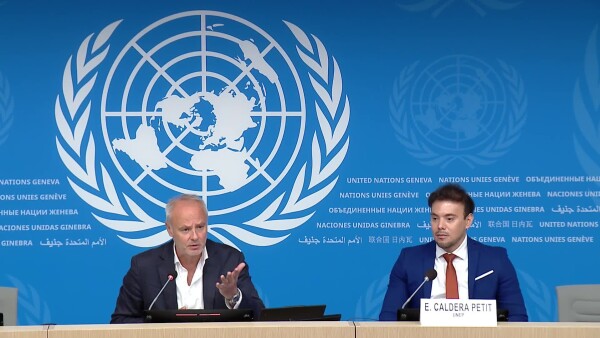
Jens Laerke, for the United Nations Office for the Coordination of Humanitarian Affairs (OCHA), said over the past 19 years the United Nations Emergency Fund (CERF) had channeled nine billion dollars to people in need in over 110 countries and territories, to provide them with lifesaving assistance. In the first half of 2025, the CERF had released 214 million dollars to help those in 24 countries. This was made possible through contributions from 143 Member States, observers and donors. The CERF Advisory Group was responsible for providing expertise and advice to the Secretary-General on the use of CERF money, executed through the Emergency Relief Coordinator. The Advisory Group had 23 members all over the world, serving three-year terms. Today, there were 12 new appointments of advisors for the next three years, from countries including Azerbaijan, Denmark, Niger and Qatar, among others. Thanking the outgoing members and welcoming the new appointees, Tom Fletcher, the United Nations Under-Secretary-General for Humanitarian Affairs and Emergency Relief Coordinator, emphasized that “with humanitarian needs outpacing humanitarian resources, the CERF was more than crucial than ever”.
Update on the global Cholera situation
Kathryn Alberti, Technical Officer in the World Health Organization (WHO) Cholera Team, said the global cholera situation continued to deteriorate driven by conflict and poverty. More than 390,000 cases and more than 4,300 deaths were reported across 31 countries. These figures reflected a collective failure; cholera was preventable and easily treatable but continued to claim lives. Areas of particular concern were Sudan, Chad, the Democratic Republic of the Congo and Yemen, where conflict was fueling cholera. One year after the start of the outbreak in Sudan, cholera had reached every State. This year there had been 50,000 cases and over 1,000 deaths reported. While cases had plateaued in some areas, they were rising in the Darfur region and neighboring Chad. In North Darfur, refugees had quadrupled the population, straining water and sanitation systems. People had only three liters of water daily for cooking, washing and drinking. In Chad, in areas bordering Sudan, more than 500 cases had been reported and 30 deaths, with the first case only reported one month ago. Nearly one-third of deaths occurred in the community not in treatment facilities, indicating a lack of access to treatment.
WHO had stepped up its response in the Darfur region and neighboring Chad as the rainy season set in. Working alongside partners, WHO had established taskforces, deployed rapid response teams for surveillance and stockpiled essential cholera supplies. There were 17 cholera treatment centers with approximately a 700-bed capacity to treat patients in Darfur alone. The Organization had strengthened surveillance and trained healthcare staff on cholera care, among other activities. However, violence and bureaucracy were blocking access with large parts of Darfur remaining inaccessible. World cholera vaccine production had reached record highs with an average monthly production of 4.6 million, but this had been outpaced by record demand. Since the start of the year, the International Coordinating Group on Vaccine Provision had received 40 requests from 12 countries, which was triple the demand from last year. More than 85 per cent of allocated doses this year were for countries facing a humanitarian crisis, with Sudan allocated one-third of those doses. The Democratic Republic of the Congo, South Sudan and Yemen had also seen high levels of cases and deaths. These cases were driven by conflict which forced people to flee into crowded areas, where hygiene and sanitation resources were stretched, compounded by gaps in human resources and funding. WHO urged the Government and the international community to mobilise additional funding, to support rapid deployment of vaccines and supplies, ensure safe access to aid workers, and strengthen surveillance in water hygiene and sanitation. No one should die because they did not have access to safe water.
Responding to a question from the media on whether the trend in infectious diseases today was impacted by human factors or environmental causes, Tarik Jašarević, for the World Health Organization (WHO), said cholera was a disease which occurred when there was no access to clean water; a map of cholera was often a map of poverty and conflict. It was linked to climate change, and as humans continued to encroach further on the animal world, there would be further spillover of diseases. The adoption of the Pandemic Treaty at the World Health Assembly would help countries be more prepared when facing outbreaks of infectious diseases, enabling them to find solutions, treatments and vaccines and share this information in a way which benefitted everyone.
Announcements
Rolando Gómez for the United Nations Information Service (UNIS), said whenever there was reaction from the Secretary-General on the Plastics Pollution treaty talks this would be shared with the media. As the next step, the Intergovernmental Negotiating Committee had agreed to resume negotiations at the third part of its fifth session - INC 5.3 - at a future date to be announced. The talks would continue, and the United Nations Environment Programme (UNEP) would keep colleagues abreast of any developments.
Mr. Gómez also said that a statement had been shared with the media last night on Israeli settlement plans in the West Bank.
He also noted that an important report had been shared with the media yesterday, from the Office of the Secretary General on Conflict-Related Sexual Violence.
The Committee on the rights of persons with disabilities (33rd session, 11-26 August) would begin the conclusion of its dialogue on the situation of persons with disabilities in the Occupied Palestine Territory at 3 p.m. It would begin the review of the report of Kiribati next Monday morning.
Finally, Mr. Gómez reminded the media that Tuesday August 19 was World Humanitarian Day, and a message from the Secretary-General had been shared to commemorate this important occasion. World Humanitarian Day marked the anniversary of the attack on the United Nations Offices at the Canal Hotel in Baghdad, where 22 UN colleagues lost their lives. A ceremony would be held at 4 p.m on Tuesday August 19 outside Rooms 19 and 20. The media were invited to attend and there would be many speakers including the Director-General of the United Nations Office at Geneva.
***
ANNOUNCEMENTS
- OCHA - Jens Laerke: Secretary-General appoints 12 new advisers to UN emergency fund CERF (OCHA)
TOPICS
- WHO - Tarik Jašarević with Kathryn Alberti, Technical Officer, WHO Cholera Team: Update on global Cholera situation
Similar Stories
2
17
1
2
Edited News , Press Conferences | OCHA , WMO
Two UN agencies teamed up on Wednesday to issue an appeal for immediate assistance to help communities already being impacted by the strongest El Niño on record.
1
1
1
Press Conferences | CITES
Wildlife trade and conservation policy discussions at the 81st meeting of the CITES Standing Committee (SC81)
1
1
1
Press Conferences | UNHCR , UNCTAD , WMO , OCHA , UNICEF , WHO
UNHCR Hungary’s 1956 Refugee Crisis: 70 Years On, UNCTAD World Investment Forum 2026, Doha, WMO Greenhouse Gas Bulletin and Climate Update for COP31, OCHA Afghanistan: Malnutrition, Girls’ Education and Recovery, UNICEF Yemen: Child Malnutrition and Unsafe Water in Taiz, WHO Inequalities in Noncommunicable Diseases and Risk Factors
1
1
1
Press Conferences | UNHCR
End of UNHCR's 77th Annual Executive Committee (ExCom) meeting week
1
1
1
Press Conferences | UNICEF , IOM , UNHCR
UN Special Assistant to the Personal Envoy Office (SUDAN): Peace Initiatives and Efforts in Sudan; UNICEF: Dire situation of children in Gaza; IOM: Damaged Homes and Energy Attacks Risk Displacing Ukrainians for this winter; UNHCR: update on EXCOM week
1
1
1
Press Conferences | IOM , UNDRR
UN stresses importance of household preparedness for disaster risk reduction.
1
1
1
Statements , Press Conferences | OHCHR
1
1
1
Press Conferences | UNHCR , UNICEF , IFRC , OHCHR , UN WOMEN , IOM , OCHA , WHO
UNHCR – ExCom Meeting, UNICEF – Nepal Recovery, IFRC – Flash Floods, WHO – Mental Health, IOM – South Sudan Floods, OCHA – DRC Humanitarian aid, UNHCR – Sahel Displacement, UNICEF – Yemen Update, IOM – Gaza Shelter, UN Women – Gaza Women, OHCHR – Arrests and detentions of Syrians by Israeli force
2
1
2
Press Conferences | UNCTAD
Presentation of the Trade and Developement Report 2026
Embargoed until 9 October 2026 at 11 a.m. (Geneva Time)
UNCTAD: UNCTAD’s flagship report finds that governments increasingly use industrial, trade, financial and technology policies to pursue economic and national security objectives. Market access and the ability to move into higher-value activities now depend more heavily on technology, finance and geopolitics.
1
1
1
Press Conferences | UPU
Release of the State of the Postal Sector Report 2026
1
1
1
Press Conferences | IOM , ITU , UNECE , UNICEF , WHO , WMO
UNICEF: Ebola, DRC - children orphans or separating them from parents and caregivers; IOM: Humanitarian needs in Djibouti amid arrivals from Yemen and increased migrant movements; WHO: Darfur, scale of health needs far exceeds available resources; WMO co-sponsored Global Heat Forum, Bangkok, monthly Global Seasonal Climate Update; UNECE: UN Forum of Mayors; ITU Plenipotentiary Conference 2026; WHO: child and adolescent obesity guidelines and new global roadmap to tackle pregnancy hypertension, a leading cause of maternal mortality
1
1
1
Press Conferences | OCHA , UN WOMEN , UNHCR , WFP , WHO , WTO , UNEP
OCHA – $160M CERF allocation to 12 underfunded crises; UNHCR – 5.8M refugee children remain out of school amid funding cuts; UN Women – Middle East escalation and food security among women/girls; WHO – Gaza supplies and overall situation; WFP – Yemen food insecurity and impact on global hunger ; UNEP - First International Conference of the Global Framework on Chemicals in Geneva | 16-20 November 2026