

The United Nations Office at Geneva
Multimedia Newsroom
UN INFORMATION SERVICE GENEVA PRESS BRIEFING
02 December 2025
AI widening inequalities between countries
Philip Schellekens, Chief Economist for the Asia-Pacific Regional Bureau of the United Nations Development Programme (UNDP), speaking from Bangkok, said that today a new flagship report, The Next Great Divergence: Why AI May Widen Inequality Between Countries had been launched in Bangkok. The world was risking repeating the great divergence of the 19th century, with the analysis showing that AI could be a great diverger, widening the gap among nations, unless corrections were made. The message of the new report was global, stressed Mr. Schellekens. Asia-Pacific was the most unequal region in the world, and only a few economies accounted for the vast majority of AI innovation and patents. Less than one in five people in the Asia-Pacific region, for example, could use a simple spreadsheet. Across the region, women were up to less 40 percent less likely than men to own a smartphone. The gains of AI would arrive much faster to countries better equipped to harness them, and their productivity gains could go up by as much as five percent per year. Poorer countries were less likely to benefit from the wide-ranged use of AI, while disruptions would be real due to automation, warned Mr. Schellekens.
Mr Schellekens further explained that AI data centres were on the path to double or triple their water and electricity use by 2030. The capability and vulnerability gaps were the drivers behind greater divisions among countries. Dropping in technology did not resolve development issues, said Mr. Schellekens, giving an example of giving laptops to school children without training teachers adequately. Regional cooperation was important, as smaller economies could not build AI on their own, and this was the only way to ensure that smaller nations were not left out. Single templates for AI development ought not be used, as something that would work well in Singapore could not work as well in Papua New Guinea, for example. In conclusion, Mr. Schellekens stressed that AI was heralding a new era of inequality among countries. Divergence, a dominant feature throughout history, could be avoided in the AI era, if the rights steps were taken now.
Full report can be accessed here.
Responding to questions from the media, Mr. Schellekens stated that deployment of AI should be grounded on value-based principles. The report also examined the use of AI for military purposes; while AI was often seen as presenting an existential opportunity, there was a dark side to it, as AI could represent an existential threat to humanity, leading to mass casualties. He said that it was in everybody’s interest for developing countries to do well, noting that 80 percent of the middle class growth globally in the coming decades would come from the Asia-Pacific region. AI could bring efficiency gains, with middle classes increasing their incomes, but if the great divergence did indeed happen, the widening inequalities around the world would be unsustainable in the ever-more connected world. Richer countries could also learn from poorer countries when it came to innovation, noted Mr. Schellekens.
One hundred thousand newly displaced in Mozambique
Xavier Creach, United Nations Refugee Agency (UNHCR) Representative in Mozambique, connecting from Erati, said that 100,000 people had arrived to Erati in northern Mozambique in past two weeks alone, having faced several attacks from armed groups. Many homes had been burned, some civilians had been killed and even beheaded. Some 1.3 million people had been displaced in Mozambique since the beginning of the conflict in 2017, he reminded. With multiple simultaneous attacks in recent weeks, collective humanitarian efforts along with the government and private sector had provided only an inadequate response.
Many people were sleeping in the open, under the trees, and the rainy season was starting. Protection concerns were increasing, he warned. Many people did not have their documents with them, making their access to services more difficult. There were increasing numbers of cases of sexual abuse and gender-based violence. Children arrived exhausted, traumatized, and weakened after days of walking, some malnourished and with swollen feet. Many were unaccompanied or separated from their families, alone in unfamiliar surroundings, facing fear, uncertainty and risks. These were extremely vulnerable people, said Mr. Creach, and some of them had made a difficult decision to return to unsafe areas from which they had originally fled. Displaced people needed protection, and there was a need for stronger international support now, stressed Mr. Creach.
More details can be found here.
Answering questions, Mr. Creach explained that 287,000 internally displaced people had been formally registered in recent months, but a number of them who had not been registered and were still hiding. Some 200 to 300 people had returned to their places of origin this morning, not because it was safe, but because they lacked adequate assistance.
Asia floods
Clare Nullis, for the World Meteorological Organization (WMO), provided an overview of what had been happening in parts of Asia, where devastating rainfall had caused catastrophic flooding. Hundreds of people had been killed and many more displaced. National meteorological services were working around the clock to provide forecasts, early warnings and inform governments’ decision making. WMO’s coordination mechanism provided expert advice to the humanitarian sector. Indonesia, the Philippines, Thailand, Viet Nam, and Sri Lanka were among the countries most affected, a combination of monsoon-related rainfall and tropical typhoon activity. Floods were consistently among top hazards in the region, and rising temperatures increased the likelihood of more massive rainfall. This disaster put an emphasis once again on the need to further strengthen regional forecast mechanisms and expanding copying capacities. More data sharing was necessary, stressed Ms. Nullis. The Asia-Pacific region was facing the record typhoon activity in the world. No single institution or country could tackle the challenges of tropical cyclones or climate change alone.
Ms. Nullis said that in Sumatra, Indonesia, according to national authorities, there had been over 600 fatalities and over 460 missing people, with over 1.5 million people affected. Viet Nam had now been relentlessly battered for weeks and was bracing for even more rainfall today, said Ms. Nullis. Exceptional rains had flooded historical and tourist sites, causing massive damages. In Viet Nam, some locations had exceeded 1,000 millimetres rainfall, a huge figure. In late October, one meteorological station in Hue City, in Central Viet Nam, had recorded a new national 24-hour rainfall record of 1,739.6 mm, which could turn out to be the second-largest rainfall ever recorded for Northern Hemisphere and Asia. Some 98 deaths and 10 missing had been recorded in Viet Nam. The Philippines, which was recovering from the previous typhoons, was now dealing with another one, while in Sri Lanka nearly one million people were affected and more than 400 reported dead or missing after Cyclonic Storm Ditwah unleashed record flooding and landslides across the island. Sri Lanka had declared a national disaster as it had not experienced such a heavy situation in years.
Ricardo Pires, for the United Nations Children’s Fund (UNICEF), said that over 275,000 children had been impacted by cyclone Ditwah, which had caused severe flooding and landslides after striking the East Coast on 28 November. With many areas still unreachable, the true number might be even higher. UNICEF expressed deep concern over the destruction of homes, vital services, and the rising risks of disease, malnutrition, and emotional trauma. UNICEF was working with the Government and partners to provide clean water, nutrition supplies, psychosocial support, and emergency education kits, while urging additional funding to reach the most vulnerable families in hardest-hit areas. The needs far outweighed available resources, he said. Additional funding and sustained support were urgently required to reach the most affected children now and in the coming weeks.
Replying to questions, Ms. Nullis, for WMO, said that national and regional meteorological services had forecast the ongoing events, but the volume of rainfall was more difficult to predict in advance. There were big gaps in warning and forecasting capacity across the region, and WMO was co-leading the “Early Warnings for All” initiative, which aimed to make sure everyone was covered by early warnings. In the case of Viet Nam, the rainfall had been absolutely relentless, and even if you had an early warning, infrastructures may not have been in place to withstand such mass rainfalls.
On 4 December, Ms. Nullis informed, WMO would issue its El Nino/La Nina update, which would be shared on 3 December under embargo. WMO would also issue its State of the Climate report for the Arab Region.
Announcements
David Hirsch, for the International Telecommunication Union (ITU), informed that ITUs First Inter-regional Information Session for World Radiocommunication Conference 2027 would be held at ITU HQ in Geneva from 3 to 5 December. Using information from the ITU-R responsible groups on the ongoing preparatory studies for WRC‑27, as well as on up-to-date information regarding the Bureau and regional preparations for CPM27-2, RA-27 and WRC-27, round tables would provide the stakeholders with the opportunity to exchange views and gain a deeper insight on the most challenging WRC‑27 items and issues. The event would be opened to reporters, and public webcast would also be available.
Alessandra Vellucci, for the United Nations Information Service, informed that today at 1 pm in Hall XIV, there would be a stakeout by Izumi Nakamitsu, UN High Representative for Disarmament, on the occasion of the 22nd Meeting of the States Parties to the Convention on the Prohibition of the Use, Stockpiling, Production and Transfer of Anti-Personnel Mines and on Their Destruction, which was currently underway in Geneva.
On 3 December at 11 am, the United Nations Mine Action Service (UNMAS) would hold a press conference on the subject of protecting people from mines and other explosive ordnance in complex settings. Speakers would be Nick Pond, Chief of Mine Action Section in the United Nations Assistance Mission in Afghanistan; Sediq Rashid, UNMAS Chief of Mine Action Programme in Sudan; Edwin Faigmane, UNMAS Chief of the Mine Action Programme in Nigeria; and Julius Van Der Walt, UNMAS Chief of the Mine Action Programme in the Occupied Palestinian Territory.
On 5 December at 9:30 am, the Committee on the Elimination of Racial Discrimination would hold a press conference to announce its findings on Burundi, Guatemala, Maldives, New Zealand, Sweden, and Tunisia. Before that, CERD would hold on 4 December a full-day celebration of the 60th anniversary of the Convention, adopted on 21 December 1965.
On 10 December at 10:30 am, UN High Commissioner for Human Rights Volker Türk would give his end-of-the-year press conference [NB: contrary to what was announced at the briefing, this press conference would take place on Wednesday, 10 December at 10:30 a.m.]
The Committee on the Protection of the Rights of all Migrant Workers and Members of Their Families was beginning this morning its review of the report of Indonesia and would conclude this afternoon its review of the report of Mauritania.
Finally, Ms. Vellucci informed that, in celebration of the International Day of Persons with Disabilities and the Human Rights Day, a series of events titled “Inclusion for Life: Understanding Neurodiversity at Every Age” would be held at the Palais des Nations:
- 8 December, 12:30 to 1:30 pm: Online Webinar on Alzheimer’s, with UNOG’s Medical Service
- 9 December, 5 to 6:30 pm: Movie projection: “The Colours of Autism” Room XIV – Cinema, Building A, Palais des Nations, in partnership with OCHA
- 10 December, 10 am to 12:30 pm: Children’s Visit to the Human Rights Council, Room V, Building A, Palais des Nations, in partnership with the Permanent Missions of Mexico, Finland and New-Zealand, and WIPO.
***
ANNOUNCEMENTS
ITU David Hirsch
· ITUs First Inter-regional Information Session for World Radiocommunication Conference 2027
TOPICS
UNDP Philip Schellekens, Chief Economist for UNDP Asia Pacific Regional Bureau (from Bangkok)
· The Next Great Divergence: Why AI May Widen Inequality Between Countries.
UNHCR Eujin Byun with Xavier Creach, UNHCR’s Representative in Mozambique (from Nampula)
· Nearly 100,000 displaced in recent weeks as violence spreads across northern Mozambique
WMO Clare Nullis
· Asia floods
Similar Stories
1
1
1
Statements , Press Conferences | OHCHR
1
1
1
Press Conferences | UNHCR , UNICEF , IFRC , OHCHR , UN WOMEN , IOM , OCHA , WHO
UNHCR – ExCom Meeting, UNICEF – Nepal Recovery, IFRC – Flash Floods, WHO – Mental Health, IOM – South Sudan Floods, OCHA – DRC Humanitarian aid, UNHCR – Sahel Displacement, UNICEF – Yemen Update, IOM – Gaza Shelter, UN Women – Gaza Women, OHCHR – Arrests and detentions of Syrians by Israeli force
2
1
2
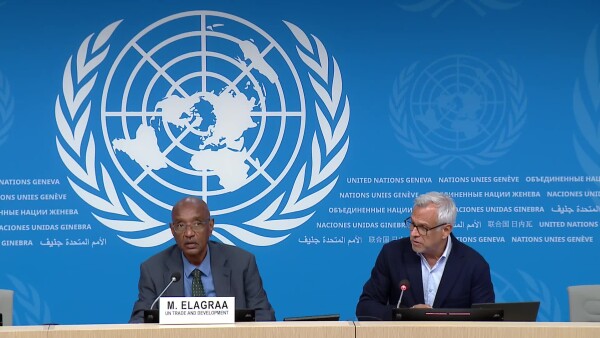
Press Conferences | UNCTAD
Presentation of the Trade and Developement Report 2026
Embargoed until 9 October 2026 at 11 a.m. (Geneva Time)
UNCTAD: UNCTAD’s flagship report finds that governments increasingly use industrial, trade, financial and technology policies to pursue economic and national security objectives. Market access and the ability to move into higher-value activities now depend more heavily on technology, finance and geopolitics.
1
1
1
Press Conferences | UPU
Release of the State of the Postal Sector Report 2026
1
1
1
Press Conferences | IOM , ITU , UNECE , UNICEF , WHO , WMO
UNICEF: Ebola, DRC - children orphans or separating them from parents and caregivers; IOM: Humanitarian needs in Djibouti amid arrivals from Yemen and increased migrant movements; WHO: Darfur, scale of health needs far exceeds available resources; WMO co-sponsored Global Heat Forum, Bangkok, monthly Global Seasonal Climate Update; UNECE: UN Forum of Mayors; ITU Plenipotentiary Conference 2026; WHO: child and adolescent obesity guidelines and new global roadmap to tackle pregnancy hypertension, a leading cause of maternal mortality
1
1
1
Press Conferences | OCHA , UN WOMEN , UNHCR , WFP , WHO , WTO , UNEP
OCHA – $160M CERF allocation to 12 underfunded crises; UNHCR – 5.8M refugee children remain out of school amid funding cuts; UN Women – Middle East escalation and food security among women/girls; WHO – Gaza supplies and overall situation; WFP – Yemen food insecurity and impact on global hunger ; UNEP - First International Conference of the Global Framework on Chemicals in Geneva | 16-20 November 2026
1
1
1
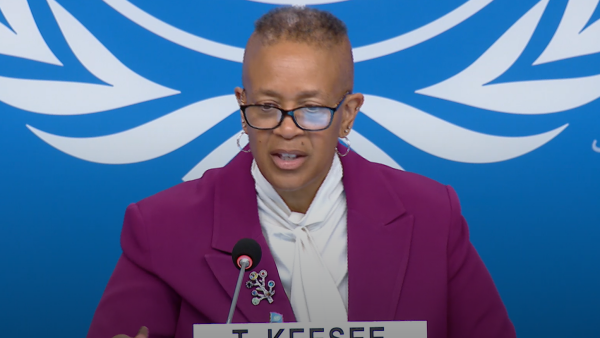
Press Conferences | UNHCR , WHO
Yemen's health system nears collapse amid conflict, causing rising casualties and medicine shortages.
1
1
1
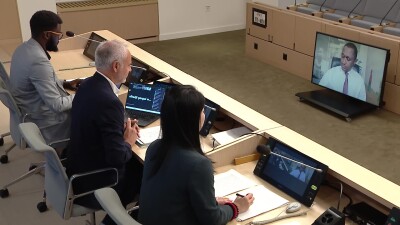
Press Conferences | HRC
Update by the Expert Mechanism to Advance Racial Justice and Equality in Law Enforcement
1
1
1
Press Conferences | WIPO , WHO , UNICEF , UNHCR , IOM , WFP , FAO
WIPO Global Innovation Index 2026 launch and press conference, WHO Composition of influenza vaccines for the 2027 Southern Hemisphere flu season, UNICEF Yemen hunger and malnutrition; UNHCR Sudan displacement into Chad; IOM Ebola and population movements in DRC; WFP emergency food assistance in Nepal; and FAO food loss and waste.
2
1
2
Press Conferences | UNCTAD
Gaza reconstruction needs reach $71.5 billion as Palestinian economy and public finances face severe strain. Latest UNCTAD report documents the loss of decades of development gains, economic collapse in Gaza and tightening economic constraints in the West Bank.
The report identifies three immediate priorities: transferring withheld Palestinian revenues, safeguarding the banking system and aligning reconstruction support with the documented scale of damage and economic losses.
1
1
1
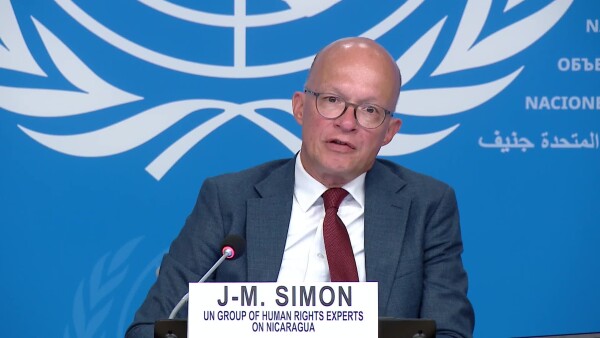
Press Conferences | HRC
Press conference on the situation of human rights in Nicaragua by the UN Group of Human Rights Experts
1
1
1
Press Conferences | ITU , UNHCR , WHO , WMO
YEMEN - UNHCR: Escalating conflict in Yemen could fuel more displacement, refugee movement
CLIMATE - WHO / WMO: Health and Climate impact of El Niño