

The United Nations Office at Geneva
Multimedia Newsroom
Press Conferences | UNESCO , OCHA , UNICEF , IFRC , FAO , OHCHR , IPU
UN Geneva Press Briefing - 05 December 2025
UN GENEVA PRESS BRIEFING
5 December 2025
Worsening humanitarian situation as violence drives new displacement during the rainy season
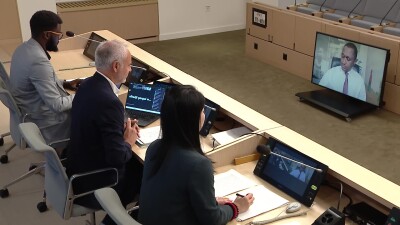
Paola Emerson, Head of Office, for the United Nations Office for the Coordination of Humanitarian Affairs (OCHA) Mozambique, speaking from Maputo, said attacks were continuing in Nampula forcing people to continue to move away from their homes to seek safety. So far, 107,000 people had been displaced in recent weeks, amounting to 330,000 in the last four months. These areas had been affected by three cyclones this year, with the majority of the displaced, 67 percent, being children. Many families were staying in open spaces or schools. The Government was the first responder, and humanitarians were trying to do the best they could with available stocks. So far, around 40 percent of the required food had been received, as well as voucher assistance, but this was woefully inadequate, and in some instances, the lack of sufficient support was forcing returns. Some donors had stepped up and the recent release announcement of six million by the Emergency Relief Coordinator was appreciated. However, due to the magnitude of the crises, much more was needed. OCHA were appealing for additional financial contributions to support the latest wave of displacement.
Responding to questions, Ms. Emerson said between 2024 and 2025 the number of violent incidents affecting civilians had increased, and there was a worrying geographic extension of the conflict, with armed groups entering Nampula and remaining there.
Responding to an additional question, Ms. Emerson said people were fleeing because their villages were destroyed or due to fear of attack. Food, health, water and sanitation, shelter and protection were being reported as the most urgent needs.
Ricardo Pires, for the United Nations Children’s Fund (UNICEF), said out of the 100,000 people displaced in Mozambique, two thirds of them were children. UNICEF were hearing reports of violations committed against them which was extremely concerning.
Situation of people in Southeast Asia impacted by the recent climatic shocks, floods and hurricanes
Alessandra Vellucci, Director of the United Nations Information Service in Geneva, recalled the statement of the United Nations Secretary-General who was deeply saddened by the tragic loss of life caused by severe flooding and landslides across Sri Lanka, Indonesia, Thailand and Malaysia. The United Nations was mobilized to support relief and response efforts in these countries
Ricardo Pires, for the United Nations Children’s Fund (UNICEF), said in recent months, children in Indonesia, Viet Nam, Thailand, the Philippines, and Malaysia had endured months of destructive typhoons, floods, and storms that had repeatedly disrupted their daily lives. Many were waking up in evacuation shelters, drinking unsafe water, watching their parents rebuild damaged homes, and missing school for weeks at a time. Since late November, more than 4.1 million children had their education interrupted due to climate-related disasters. Viet Nam had seen the largest impact, with three million students forced out of class. In the Philippines, 919,000 children were unable to attend school because of flooding and strong winds. Indonesia had over 180,700 students currently out of school and more than 2,000 education facilities damaged. Thailand reported nearly 90,500 children affected, while over 5,000 students in Malaysia had seen their schooling disrupted since the monsoon season began. Many children had experienced multiple school closures this year. This mirrored a global trend: in 2024, at least 242 million students in 85 countries had their education disrupted by extreme climate events. Children’s challenges extended beyond schooling with disease risk heightened, a lack of safe water and nutrition supply shortages across the region.
UNICEF emphasised that children in East Asia and the Pacific were on the frontline of the global climate crisis, facing more frequent, intense, and less predictable extreme weather. While UNICEF continued to provide emergency support, through clean water, health and nutrition services, and cash assistance, a humanitarian response alone was insufficient. Long-term investment in climate adaptation, resilient water and school infrastructure, stronger health systems, and early warning mechanisms was critical. Without urgent action to address and prevent climate-driven disasters, millions of children would continue to face repeated crises that eroded their chances for a stable future.
John Entwistle, the International Federation of the Red Cross (IFRC)’s head of country cluster delegation for South Asia, speaking from Sri Lanka, said in the past week South Asia had faced a devastating series of floods, bringing unprecedented rainfall flooding and landslides in Sri Lanka. More than 1.5 million people had been affected with hundreds of lives and thousands displaced, with entire communities submerged and critical infrastructure damaged. From the first hour, the Sri Lanka Red Cross mobilized more than 3,500 volunteers immediately, providing first aid and distributing household items, supported by the IFRC. Even with roads and bridges damaged, local red cross branches were delivering supplies to affected communities. To scale up the response, the IFRC had launched an appeal for five million CHF for Sri Lanka, alongside an allocation of 1 million from the emergency fund, enabling health, psychosocial support and cash assistance from the most vulnerable.
Mr. Entwsitle said he had sat with families who had lost everything and met parents and children living in schools and in makeshift shelters on the side of the road. He had also seen extraordinary kindness of strangers including donations arriving at the Sri Lankan headquarters. Beyond Sri Lanka, floods had affected 3 million people in Indonesia and work was being done to deliver medical supplies. Across Asia, support was being coordinated, ensuring no one was left behind. Urgent funding, continued coordination with government and agencies, overcoming access challenges, and long-term resilience were needed. Donors, partners and governments were urged to step forward and support the emergency appeal for Sri Lanka and the region.
FAO Global Emergency and Resilience Appeal
Nourou Macki Tall, Senior Liaison Officer for the Food and Agricultural Organization (FAO),
said that on the third of December during the 179th Council, FAO launched its first global appeal for emergencies and resilience, a unified and coherent framework to address food insecurity across 54 countries for 2026. The goal was to support 100 million people, requiring 2.5 billion dollars, for life saving emergency livelihood support, resilience and early recovery, and global and technical systems that allowed delivery in fragile contexts. The appeal presented a unified plan based on updated country-level emergency and resilience strategies, focused on protecting and restoring local food production. Acting early within key agricultural windows was emphasized, to prevent greater losses later in the year. For the first time, it brought the full emergency and resilience portfolio together, prioritizing areas where the organisation was strongest and helping farmers regain their livelihoods and reduce dependence on humanitarian assistance. Delivery would rely on partnerships with governments, non-governmental organizations, civil society, and global networks. Overall, the appeal was a commitment to delivering aid more effectively, coherently, and urgently.
Record number of human rights violations against Members of Parliament
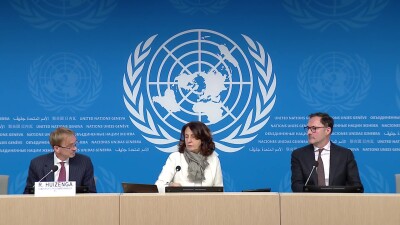
Rogier Huizenga, Inter-Parliamentary Union (IPU)’s Human Rights Programme Manager, said a report on violations committed against parliamentarians for 2025 had been produced by the IPU Committee on Parliamentarians, a mechanism created to protect members of parliaments (MPs) when their rights were being violated. 2025 had been an unprecedented year, with over 1,000 cases of violations concerning 58 countries in all regions; nearly a third of the countries in the world. There was a disproportionate increase in cases against women parliamentarians: six-fold in the last ten years, compared to three-fold against men during the same period. In 2025, 83 percent of the cases involved members of the opposition being targeted, showing that those most at risk were those who were vocal and criticised the authority. Several high-profile cases were being monitored, including the case of Palestinian Marwan Baghouti, as well as many cases in Bangladesh following the change in Government last year. More positively, during the year the Committee had managed to obtain good results in several countries including Malaysia, Thailand and Zimbabwe, among others. For example, the IPU carried out a mission in Iraq in 2023 about the situation of an MP in detention for over ten years; following the mission, the MP was released earlier this year.
Responding to questions, Mr. Huizenga said the most serious situations in Latin American concerned Venezuela and Colombia. In Nicaragua, there were two situations of human rights violations against members of parliament which were very serious. Answering a question on how the Committee worked, he explained that a complaint needed to be submitted by the parliamentarians, a family member or members of their parliament. This enabled the Committee to investigate these cases and work with the authorities about them.
Responding to additional questions, Mr. Huizenga said IPU had released a map showing that there were politically motivated proceedings taking place against MPs. If members of parliament had committed crimes they should be held into account, but they should also benefit from fair trial guarantees. Venezuela, Thailand, Cambodia, and Zimbabwe were among the countries with the highest number of cases of alleged violations against members of parliament. There were also many cases being examined in Türkiye and a human rights visit to the country would be launched next week to raise these concerns with the authorities.
To an additional question, Mr. Huizenga said it was difficult to give an overview of the state of freedom of expression in Europe. The situation of members of parliament in Türkiye were the most concerning, with over 100 cases of members of the parliamentary opposition facing all kinds of alleged political intimidation and hindered in exercising their mandates.
Thomas Fitzsimons, for the Inter-Parliamentary Union (IPU), said early next year a global report would be published on intimidation against members of parliament, with a deep dive into five countries.
In response to another question, Mr. Huizenga said the IPU Committee was following several cases of Palestinian members of parliament.
Responding to another question, Mr. Huizenga said the report in February would focus on intimidation of members of parliament by members of the public. Today the Committee was looking at State-sponsored violence. It was clear the number of cases had risen over the years, with numbers for Asia showing an increase in concerning situations.
Answering another question, Mr. Huizenga said the IPU followed by the standards provided by the United Nations to evaluate if a human rights violation had taken place. Women were catching up in reporting to the Committee on Parliamentarians, whereby men had previously had easier access to these mechanisms. Women were now finding their way to report to the Committee.
Mr. Huizenga said the Committee was comprised of ten members of parliament from all around the world, with the President being a French senator and the Vice-President, a Mongolian MP. They were elected by the full IPU membership for five years under a non-renewable term. Irrespective of political leanings, they were all committed to human rights. The study on the intimidation of members of parliament by members of the public to be published in February looked at five country situations over the last five years, asking people to report on the levels of intimidation faced throughout their career. The report of the Committee which was presented to the press today, covered from 1 January till 31 December 2025.
Mr. Huizenga said there were no specific statistics on online attacks. This was an area where the Committee was treading very carefully. The report being released in February would look at this issue specifically.
Syria: Situation one year since government change
Thameen Al-Kheetan, for the Office of the High Commissioner for Human Rights (OHCHR), said in a few days, Syria would mark one year since the fall of the Assad regime. The interim authorities had begun taking positive steps toward addressing past violations, including creating national commissions on transitional justice and missing persons, investigating violence in coastal areas and Suweida, and starting trials of alleged perpetrators. However, these measures were only initial steps, and serious abuses persisted. Reports continued of summary executions, arbitrary killings, abductions, sexual violence, arbitrary detentions, looting, destruction of homes, forced evictions, property confiscation, and restrictions on free expression and peaceful assembly. Hundreds had been killed since the fall of the former regime, with the violence affecting various communities, including Alawites, Druze, Christians and Bedouins, and fuelled by rising hate speech.
Multiple actors were implicated, including security forces of the interim authorities, affiliated groups, remnants of the former government, local armed groups and unidentified individuals.
The rapid integration of former armed groups into new security forces without proper human-rights vetting heightened the risk of further violations. The United Nations High Commissioner for Human Rights called for thorough, independent investigations, accountability for all perpetrators, and efforts to address root causes of abuses. The Office would continue to support inclusive transitional justice and rule-of-law efforts in Syria.
The full statement is available here
Responding to questions, Mr. Al-Kheetan said for many years under the Assad regime, OHCHR were not able to access Syrian territory and were working remotely to document violations. Since the change in Government, the Office had been able to establish a presence and now had eight staff members in Damascus. Access in Syria was still difficult due to the volatile security situation in certain places.
Responding to another question, Mr. Al-Kheetan said OHCHR was working on documenting patterns of summary executions, abductions and killings. The situation in the country was still volatile and there could be violence based on religion. This was why it was crucial for Syria to embark on a genuine process of transitional justice which should include truth, justice, reparations and guarantees of non-recurrence for everyone in Syria. There had been a period where violence was on the rise in different areas, particularly in March and July. The Office continued to receive reports on violations and clashes of armed groups. The authorities were deploying efforts to control the situation, and trials had started in Aleppo for the alleged perpetrators of the violence in the coastal region. It was hoped Syrians would see a day where their country was safe and secure.
Matthew Saltmarsh, for the United Nations High Commissioner for Refugees (UNHCR), said a press release would be sent today to mark one year after the fall of the Assad regime, providing the latest number of returns to Syria. While this was a crucial opportunity for the international community to support Syria, huge challenges remained in the country including over 16 million people requiring humanitarian support.
Tanzania protests
Seif Magango, for the Office of the High Commissioner for Human Rights (OHCHR), speaking from Nairobi, said that ahead of planned protests on Tanzania’s Independence Day on 9 December, the United Nations reminded authorities of their obligation to respect freedoms of expression, peaceful assembly and association, urging security forces to plan operations that would allow the exercise of these rights. Since the 29 October general elections, hundreds had reportedly been killed and over 2,000 detained in the aftermath of protests. The Government had intensified crackdowns, including a nationwide ban on Independence Day protests, which the United Nations urged to be lifted. Security forces were reminded to avoid using force against non-violent assemblies and to apply any necessary force only as a last resort in line with international law.
Five weeks after the October elections, authorities had not yet provided transparent information on the number of deaths, circumstances, or enforced disappearances, further eroding public trust. The United Nations called for the immediate and unconditional release of all arbitrarily detained individuals. While the Government had initiated an investigation into post-election violence, it had to meet international standards of independence, impartiality, transparency, and thoroughness, ensuring protection against reprisals or intimidation for those involved.
The full statement is available here.
Responding to questions from the media, Mr. Magango said the Office was aware of the Instagram accounts suspended by Meta, but had not been in contact with Meta about these specific cases. Meta should be reminded that all restrictions of access to the public sphere needed to be dictated by adherence to human rights.
International Volunteer Day
Alessandra Vellucci, Director of the United Nations Information Service in Geneva, reminded everyone that today was International Volunteer Day. The Secretary-General had issued a message emphasizing how volunteering offered a powerful way to forge connections and foster our shared humanity, and paid gratitude to the more than 14,000 people who had served through the United Nations Volunteers program. This week also marked the launch of the International Volunteer Year 2026. The Secretary-General urged everyone, everywhere to volunteer for the cause that mattered to them in these times of crisis and uncertainty.
Tommaso Della Longa for the International Federation of the Red Cross (IFRC), said
International Volunteer Day was a moment to honour the more than 17 million Red Cross and Red Crescent volunteers who made the world a safer place every day. This year the theme was “Local, Everywhere”, highlighting the unique network volunteers coming from the community they served, backed by global coordination and solidarity. Volunteering without the desire for personal gain remained one of the fundamental principles of the Red Cross. Mr. Della Longa thanked all the Red Cross and Red Crescent volunteers around the world for their unwavering commitment. He also highlighted the 25 red cross volunteers killed this year, and paid tribute to those who had lost their lives.
Announcements
Alessandra Vellucci, Director of the United Nations Information Service in Geneva, said on Wednesday, 10 December at 10:30 a.m., the United Nations High Commissioner for Human Rights Volker Türk, would hold his end-of-the-year press conference.
Additionally, the Director-General of the United Nations Office at Geneva Tatiana Valovaya would speak before the Tuesday press briefing on 16 December at 10 a.m.
The Committee on the Elimination of Racial Discrimination would close its 116th session this afternoon at 3 p.m. and issue its concluding observations.
The Committee on the Protection of the Rights of All Migrant Workers and Members of their Families would review the report of Honduras next Monday.
Finally, Ms. Vellucci said 9 December would be the end-of-the-year bazar, organized by the United Nations Women’s Guild, with all proceeds going to support women and children around the world.
***
- UNICEF - Ricardo Pires: Situation of children in South East Asia impacted by the recent climatic shocks, floods and hurricanes
- FAO - KiJung Min with Nourou Macki Tall, Senior Liaison Officer: FAO Global Emergency and Resilience Appeal
- OHCHR
- Thameen Al-Kheetan: Syria: Situation one year since government change
- Seif Magango (From Nairobi): Tanzania protests
- IPU Thomas Fitzsimons with Rogier Huizenga, IPU Human Rights Programme Manager: Record number of human rights violations against MPs
Similar Stories
1
1
1
Press Conferences | UNHCR
End of UNHCR's 77th Annual Executive Committee (ExCom) meeting week
1
1
1
Press Conferences | UNICEF , IOM , UNHCR
UN Special Assistant to the Personal Envoy Office (SUDAN): Peace Initiatives and Efforts in Sudan; UNICEF: Dire situation of children in Gaza; IOM: Damaged Homes and Energy Attacks Risk Displacing Ukrainians for this winter; UNHCR: update on EXCOM week
1
1
1
Press Conferences | IOM , UNDRR
UN stresses importance of household preparedness for disaster risk reduction.
1
1
1
Statements , Press Conferences | OHCHR
1
1
1
Press Conferences | UNHCR , UNICEF , IFRC , OHCHR , UN WOMEN , IOM , OCHA , WHO
UNHCR – ExCom Meeting, UNICEF – Nepal Recovery, IFRC – Flash Floods, WHO – Mental Health, IOM – South Sudan Floods, OCHA – DRC Humanitarian aid, UNHCR – Sahel Displacement, UNICEF – Yemen Update, IOM – Gaza Shelter, UN Women – Gaza Women, OHCHR – Arrests and detentions of Syrians by Israeli force
2
1
2
Press Conferences | UNCTAD
Presentation of the Trade and Developement Report 2026
Embargoed until 9 October 2026 at 11 a.m. (Geneva Time)
UNCTAD: UNCTAD’s flagship report finds that governments increasingly use industrial, trade, financial and technology policies to pursue economic and national security objectives. Market access and the ability to move into higher-value activities now depend more heavily on technology, finance and geopolitics.
1
1
1
Press Conferences | UPU
Release of the State of the Postal Sector Report 2026
1
1
1
Press Conferences | IOM , ITU , UNECE , UNICEF , WHO , WMO
UNICEF: Ebola, DRC - children orphans or separating them from parents and caregivers; IOM: Humanitarian needs in Djibouti amid arrivals from Yemen and increased migrant movements; WHO: Darfur, scale of health needs far exceeds available resources; WMO co-sponsored Global Heat Forum, Bangkok, monthly Global Seasonal Climate Update; UNECE: UN Forum of Mayors; ITU Plenipotentiary Conference 2026; WHO: child and adolescent obesity guidelines and new global roadmap to tackle pregnancy hypertension, a leading cause of maternal mortality
1
1
1
Press Conferences | OCHA , UN WOMEN , UNHCR , WFP , WHO , WTO , UNEP
OCHA – $160M CERF allocation to 12 underfunded crises; UNHCR – 5.8M refugee children remain out of school amid funding cuts; UN Women – Middle East escalation and food security among women/girls; WHO – Gaza supplies and overall situation; WFP – Yemen food insecurity and impact on global hunger ; UNEP - First International Conference of the Global Framework on Chemicals in Geneva | 16-20 November 2026
1
1
1
Press Conferences | UNHCR , WHO
Yemen's health system nears collapse amid conflict, causing rising casualties and medicine shortages.
1
1
1
Press Conferences | HRC
Update by the Expert Mechanism to Advance Racial Justice and Equality in Law Enforcement
1
1
1
Press Conferences | WIPO , WHO , UNICEF , UNHCR , IOM , WFP , FAO
WIPO Global Innovation Index 2026 launch and press conference, WHO Composition of influenza vaccines for the 2027 Southern Hemisphere flu season, UNICEF Yemen hunger and malnutrition; UNHCR Sudan displacement into Chad; IOM Ebola and population movements in DRC; WFP emergency food assistance in Nepal; and FAO food loss and waste.