

The United Nations Office at Geneva
Multimedia Newsroom
Displacement from Sudan conflict exceeds 4 million: UNHCR
The UN Refugee Agency, (UNHCR) warned on Tuesday that health conditions in Sudan are
rapidly deteriorating due to the forcible displacement of over four million people.
Refugee camps, as well as border entry points and transit centres in neighbouring countries are
experiencing worsening conditions due to the arrival of people who have been forced to flee.
“The situation is untenable,” UNHCR spokesperson, William Spindler told a briefing in Geneva.
“Needs far outweigh what is humanly possible to deliver with available resources.”
According to Mr. Spindler over 144,000 newly displaced refugees from Khartoum arrived in all
10 refugee camps in White Nile state since the conflict started.
But “a lack of essential medicines, staff and supplies is severely hampering health and nutrition
services there”. Across borders, “the situation is equally grim”. The health and nutrition status of
those arriving from Sudan “has deteriorated sharply since the conflict started in April and
continues to worsen,” he added.
The World Health Organization (WHO) has also reported chronic shortages in health staff, as
well as attacks on personnel which have significantly compromised the quality of health care
across the country.
Echoing Mr. Spindler’s concerns, WHO spokesperson Christian Lindmeier condemned an
attack on Médecins Sans Frontières (MSF) staff on 20 July in Khartoum; “Attacks on health care
are a gross violation of international humanitarian law and the right to health. They must stop.”
According to Mr. Lindmeier, WHO has verified 53 attacks on healthcare officials, resulting in 11
deaths and 38 injuries, between 15 April and 31 July.
The UNHCR has found that since the start of the conflict, nearly 700,000 refugees and asylum-
seekers fled to neighbouring countries, and 195,000 South Sudanese were forced to return to
South Sudan. Giving more detail on the numbers, Mr. Spindler pointed out that over three
million people have been internally displaced, including more than 187,000 refugees already
residing there. The UNHCR spokesperson warned that with many families on the move for
weeks with very little food or medicine, there have been “rising malnutrition rates, disease
outbreaks and related deaths…”. In addition, “severe cholera and malaria cases are expected in
the coming months due to flooding from the continuing rains and inadequate sanitation
facilities”.
According to the UNHCR, underfunding is severely hampering the response in South Sudan.
The UN agency has reported 57 deaths among children from measles and malnutrition in Renk.
The majority of the children were under five years old, and of these, 15 died in the last week.
Similarly, the UNHCR reported that in Chad only 17 mobile clinics are operational across 15
locations at the border sites and refugee camps where people are arriving. Over 2,400 wounded
refugees and returnees have arrived, requiring urgent medical attention, with approximately 130
casualties admitted daily in June. The Organization has called for more desperately needed
funds to support the provision of health care and other life-saving aid. Of the 566 million US
dollars required to provide assistance in countries neighbouring Sudan, just 29 per cent has
been received. The inter-agency response inside Sudan is only 24 per cent funded, UNHCR
warned.
ends
STORY: SUDAN DISPLACEMENT
TRT: 03:03”
SOURCE: UNTV CH
RESTRICTIONS: NONE
LANGUAGE: ENGLISH /NATS
ASPECT RATIO: 16:9
DATELINE: 08 AUGUST 2023, GENEVA, SWITZERLAND
SHOTLIST
1. Exterior wide shot, United Nations flag flying.
2. Wide shot, Assembly Hall briefing.
3. SOUNDBITE: (ENGLISH) William Spindler, UNHCR spokesperson:
“With more than four million people now forcibly displaced by the Sudan crisis, UNHCR, the UN Refugee Agency, is deeply worried about deteriorating health conditions across the country including in refugee camps as well as at border entry points and transit centres in neighbouring countries, where people forced to flee are arriving.”
4.Close of journalists at briefing.
5. SOUNDBITE: (ENGLISH) William Spindler, UNHCR spokesperson: “The situation inside Sudan, where UNHCR teams are present, is untenable as needs far outweigh what is humanly possible to deliver with available resources. In White Nile state, a lack of essential medicines, staff and supplies is severely hampering health and nutrition services in all 10 refugee camps, where over 144,000 newly displaced refugees from Khartoum have arrived since the conflict started.”
6.Mid side view of journalists at briefing.
7. SOUNDBITE: (ENGLISH) William Spindler, UNHCR spokesperson: “As many families have been on the move for weeks, with very little food or medicine, rising malnutrition rates, disease outbreaks and related deaths continue to be observed. In addition, severe cholera and malaria cases are expected in the coming months due to flooding from the continuing rains and inadequate sanitation facilities."
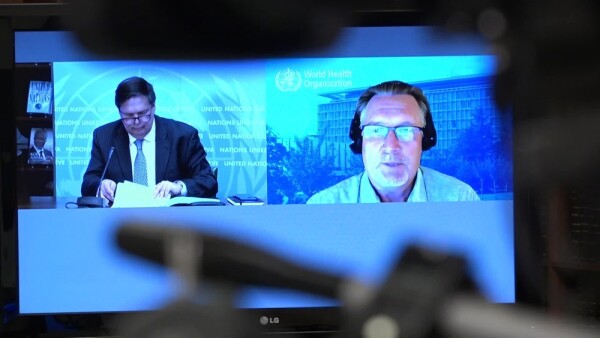
8. Screen showing UNHCR and WHO spokespersons.
9. SOUNDBITE: (ENGLISH) Christian Lindmeier, WHO spokesperson: “WHO condemns in the strongest terms the attack you may recall on MSF (Médecins Sans Frontières) staff on 20 July in Khartoum as they were carrying out their life-saving duties. Attacks on health care are a gross violation of international humanitarian law and the right to health. They must stop. Humanitarian workers need assurances of safety and security in order to continue delivering critical humanitarian and health response.”
10.Mid of attendee at briefing.
11. SOUNDBITE: (ENGLISH) Christian Lindmeier, WHO spokesperson: “Between 15 April and 31 July, 53 attacks on health care have been verified by WHO, resulting in 11 deaths and 38 injuries.”
12. Mid of UNHCR spokesperson on screen.
13. SOUNDBITE: (ENGLISH) William Spindler, UNHCR spokesperson: “Across borders, the situation is equally grim. The health and nutrition status of those arriving from Sudan has deteriorated sharply since the conflict started in April and continues to worsen.”
14. Wide of attendees at briefing.
15. SOUNDBITE: (ENGLISH) William Spindler, UNHCR spokesperson: “Within Sudan, over three million people have been internally displaced, including more than 187,000 refugees already residing in the country at the start of the crisis.”
16. Close of speaker at briefing.
17. Close of attendees typing.
18. Mid of attendees at briefing.
Similar Stories

1
1
1
Edited News | OCHA , UNICEF , WFP
Aid agencies warned on Friday of the fast-developing humanitarian emergency inside Taiz City in Yemen, which has been encircled by de facto Houthi forces fighting government troops along the country’s west coast.

2
17
1
2
Edited News , Press Conferences , Images | OCHA , WMO
Two UN agencies teamed up on Wednesday to issue an appeal for immediate assistance to help communities already being impacted by the strongest El Niño on record.

3
16
2
2
Edited News , B-roll , Conferences , Images | UNITED NATIONS , UNOG
Sixth Consultative Meeting on Enhancing Coordination of Peace Initiatives and Efforts for Sudan

1
1
1
Edited News | UNICEF , WHO , UNHCR
Yemen war continues to force families from homes amid hunger and disease
More than 250,000 people have now fled renewed fighting in Yemen, the UN said on Tuesday, citing particular concern for those sheltering in the southwestern city of Taiz and the wider governorate, where access is “essentially blocked”.

1
1
1
Edited News | UNICEF
A little over one year since a ceasefire agreement was announced between Hamas fighters and Israel, more than 340 children have been reported killed and hundreds more injured, the UN Children’s Fund, UNICEF, said on Friday.

1
1
1
Edited News | UNICEF , IFRC
Six weeks after Nepal’s deadly flooding disaster, communities are still struggling to rebuild their lives, but they will need sustained help as global warming increases the risk of another Himalayan catastrophe, the UN Children’s Fund (UNICEF) said on Friday.

1
1
1
Edited News | WHO
In suspected Russia plague death, testing and monitoring underway – WHO
The death of a lab worker in Russia’s Siberia region has sparked concerns about plague being the cause, the UN World Health Organization (WHO) said on Tuesday, adding that it was following the situation closely.

1
1
Edited News | OHCHR , UNOG
UN Human Rights Chief Volker Türk on Friday provided and oral update to the 63rd session of the Human rights Council on Ukraine.

1
1
1
Edited News | OHCHR , UNOG
UN Human Rights Chief Volker Türk on Friday provided and oral update to the 63rd session of the Human rights Council on the human rights situation in Haiti.

1
1
1
Edited News | WHO
Repeated delays in bringing lifesaving medicines, prosthetics and more from Israel into Gaza risk having devastating consequences on Palestinians who urgently need them in the wartorn enclave, the UN World Health Organization (WHO) said on Friday. “A truck full of non-priority supplies or the right supplies arriving too late, doesn't save lives. That's the question that actually matters," said Dr Reinhilde Van De Weerdt, WHO Representative in the OPT.

1
1
1
Edited News | WHO
DRC: Early access to care and oxygen decisive for Ebola patients’ survival – WHO
In the Democratic Republic of the Congo (DRC), health workers fighting the country’s largest-ever Ebola outbreak are struggling to overcome critical challenges to patient care, the UN World Health Organization (WHO) warned on Tuesday.

1
1
1
Edited News | OCHA , UN
Civilians in Iran are continuing to feel the consequences of months of conflict and military escalation, the UN’s top official in the country has said, as loss of life, damage to civilian infrastructure and mounting economic pressures leave many facing continued uncertainty.