

The United Nations Office at Geneva
Multimedia Newsroom
Edited News , Press Conferences | UNITED NATIONS
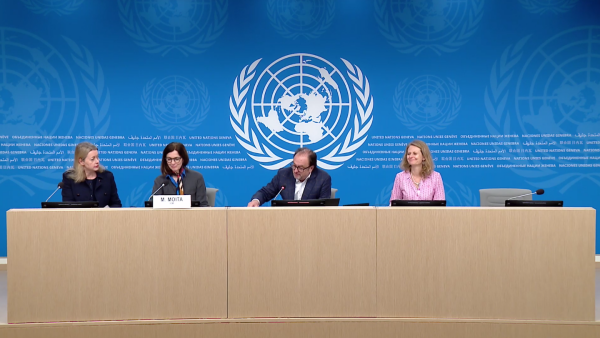
UNAIDS Press Conference on New Report 13 July 2023
Despite many challenges there is a path to end AIDS by 2030 if countries prove that there is a political and financial choice, said a new global report ‘The Path that ends AIDS’ launched on Thursday by the Joint United Nations Programme on HIV/AIDS (UNAIDS).
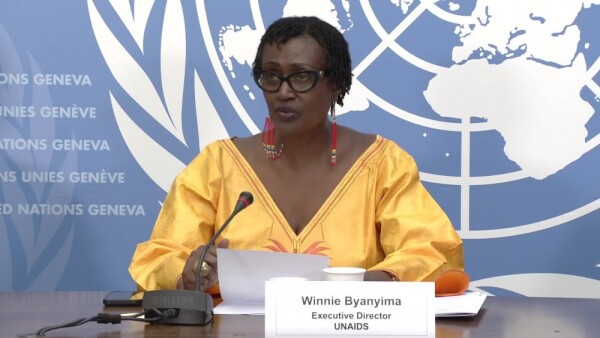
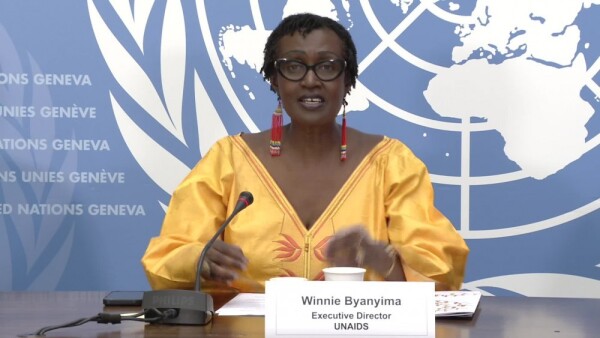
“The data in this report shows that ‘The Path that ends AIDS’ is not a mystery, but it is a choice. It is a political and a financial choice,” said Winnie Byanyima, Executive Director of UNAIDS when briefing reporters at the United Nations in Geneva.
‘The Path that Ends AIDS’ highlights that HIV responses succeed when they are anchored in strong political leadership. This means following the data, science, and evidence; tackling the inequalities holding back progress; enabling communities and civil society organizations in their vital role in the response; and ensuring sufficient and sustainable funding.
Progress has been strongest in the countries and regions that have the most financial investments, such as in eastern and southern Africa where new HIV infections have been reduced.
“Eastern and southern Africa is also the region where resources have been well deployed and we see that there, since 2010 to now, new infections have been reduced by 57 per cent” said the UNAIDS Executive Director. “It’s the region with the sharpest decline in new infections.”
Thanks to support for and investment in ending AIDS among children, 82 per cent of pregnant and breastfeeding women living with HIV globally were accessing antiretroviral treatment in 2022, up from 46 per cent in 2010. This has led to a 58 per cent reduction in new HIV infections among children from 2010 to 2022, the lowest number since the 1980’s.
“20.8 million people, or rather 20.8 million lives, have been saved through antiretroviral therapy since 2000. The number of people on treatment worldwide has risen four times since 2010, from 7.7 million to 29.8 million in 2022,” said Ms. Byanyima.
However, the report also sets out that ending AIDS will not come automatically. When leaders ignore, isolate and criminalize people living with or at risk of HIV, progress in the AIDS response is obstructed.
According to Ms. Byanyima, “in 2022, AIDS claimed a life every minute. It’s still a killer and sometimes the number one killer in some countries, such as Mozambique.” She added that “our data shows that treatment services are still missing 9.2 million people; we still have to find those and get them on treatment. 9.2 million people living with HIV are not on treatment and that includes 660’000 children,” said the UNAIDS Executive Director. “Every single week, 4,000 adolescent girls and young women were newly infected. 3,100 of those are from Sub-Saharan Africa. So, it’s a Sub-Saharan crisis.”
Almost one quarter of new HIV infections were in Asia and the Pacific where new infections are rising alarmingly in some countries.
Steep increases in new infections are continuing in eastern Europe and central Asia (a rise of almost 50 per cent since 2010) and in the Middle East and North Africa with an increase of 60 per cent since 2010. According to the report, these trends are due primarily to a lack of HIV prevention services for marginalized and key populations and the barriers posed by punitive laws and social discrimination.
In 2022, an estimated 39 million people globally were living with HIV and 630, 000 people died from AIDS-related illnesses
-ends-
- Exterior medium shot: UN Palais with flags
- Wide shot: speakers behind panel at the press conference
- SOUNDBITE (English) – Winnie Byanyima, Executive Director of UNAIDS: “The data in this report shows that ‘The Path that ends AIDS’ is not a mystery, but it is a choice. It is a political and a financial choice.”
- Medium shot: camerawoman in the foreground, moderator in the background
- SOUNDBITE (English) – Winnie Byanyima, Executive Director of UNAIDS: “Eastern and southern Africa is also the region where resources have been well deployed and we see that there, since 2010 to now, new infections have been reduced by 57 per cent. It’s the region with the sharpest decline in new infections.”
- Medium shot: attendees at the press conference
- SOUNDBITE (English) – Winnie Byanyima, Executive Director of UNAIDS: “20.8 million people, or rather 20.8 million lives, have been saved through antiretroviral therapy since 2000. The number of people on treatment worldwide has risen four times since 2010, from 7.7 million to 29.8 million in 2022.”
- Wide shot: speakers behind panel, attendees and moderator at the press conference
- SOUNDBITE (English) – Winnie Byanyima, Executive Director of UNAIDS: “In 2022, AIDS claimed a life every minute. It’s still a killer and sometimes the number one killer in some countries, such as Mozambique. Our data shows that treatment services are still missing 9.2 million people; we still have to find those and get them on treatment. 9.2 million people living with HIV are not on treatment and that includes 660’000 children.”
- Close shot: photographer at the press conference
- SOUNDBITE (English) – Winnie Byanyima, Executive Director of UNAIDS: “Every single week, 4,000 adolescent girls and young women were newly infected. 3,100 of those are from Sub-Saharan Africa. So, it’s a Sub-Saharan crisis.”
- Medium shot: speakers behind panel in the background, attendee in the foreground
- Close shot: attendees at the press conference
- Medium shot: attendees and cameraman at the press conference
Similar Stories

1
1
1
Edited News | OCHA , UNICEF , WFP
Aid agencies warned on Friday of the fast-developing humanitarian emergency inside Taiz City in Yemen, which has been encircled by de facto Houthi forces fighting government troops along the country’s west coast.
1
1
1
Press Conferences | UN WOMEN , WFP , WHO
UN WOMEN: Sudan Women and girls one year after the fall of El Fasher; increasing drone attacks across the country; WFP: DRC - Ebola spreads to eighth DRC province as WFP delivers food, builds treatment centres and keeps supplies moving; WHO - Update on Ebola (Bundibugyo Virus Disease)
1
12
1
1
Press Conferences , Images | UNOG
Closing Press Conference following the Sixth Consultative Meeting on Enhancing Coordination of Peace Initiatives and Efforts in Sudan

2
17
1
2
Edited News , Press Conferences , Images | OCHA , WMO
Two UN agencies teamed up on Wednesday to issue an appeal for immediate assistance to help communities already being impacted by the strongest El Niño on record.

3
16
2
2
Edited News , B-roll , Conferences , Images | UNITED NATIONS , UNOG
Sixth Consultative Meeting on Enhancing Coordination of Peace Initiatives and Efforts for Sudan
1
1
1
Press Conferences | CITES
Wildlife trade and conservation policy discussions at the 81st meeting of the CITES Standing Committee (SC81)

1
1
1
Edited News | UNICEF , WHO , UNHCR
Yemen war continues to force families from homes amid hunger and disease
More than 250,000 people have now fled renewed fighting in Yemen, the UN said on Tuesday, citing particular concern for those sheltering in the southwestern city of Taiz and the wider governorate, where access is “essentially blocked”.
1
1
1
Press Conferences | UNHCR , UNCTAD , WMO , OCHA , UNICEF , WHO
UNHCR Hungary’s 1956 Refugee Crisis: 70 Years On, UNCTAD World Investment Forum 2026, Doha, WMO Greenhouse Gas Bulletin and Climate Update for COP31, OCHA Afghanistan: Malnutrition, Girls’ Education and Recovery, UNICEF Yemen: Child Malnutrition and Unsafe Water in Taiz, WHO Inequalities in Noncommunicable Diseases and Risk Factors
1
1
1
Press Conferences | UNHCR
End of UNHCR's 77th Annual Executive Committee (ExCom) meeting week

1
1
1
Edited News | UNICEF
A little over one year since a ceasefire agreement was announced between Hamas fighters and Israel, more than 340 children have been reported killed and hundreds more injured, the UN Children’s Fund, UNICEF, said on Friday.
1
1
1
Press Conferences | UNICEF , IOM , UNHCR
UN Special Assistant to the Personal Envoy Office (SUDAN): Peace Initiatives and Efforts in Sudan; UNICEF: Dire situation of children in Gaza; IOM: Damaged Homes and Energy Attacks Risk Displacing Ukrainians for this winter; UNHCR: update on EXCOM week
1
1
1
Press Conferences | IOM , UNDRR
UN stresses importance of household preparedness for disaster risk reduction.