

The United Nations Office at Geneva
Multimedia Newsroom
Edited News , Press Conferences | OHCHR
HRC - Press Conference: Special Rapporteur on the right to health 22 June 2023
Human Rights Council report analyses impact of digital technology on the right to health
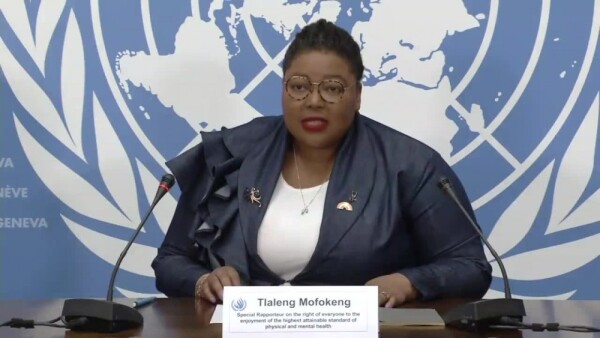
The use of digital technology in health should not impair the right to have personal health data treated with confidentiality, particularly where already vulnerable people are concerned, UN-appointed independent rights expert told the Human Rights Council on Thursday.
The Special Rapporteur on the right to health, Tlaleng Mofokeng, warned that technology enabled easy sharing of sensitive health data of adolescents, migrants and people whose sexual orientation or health status was subject to discrimination.
“Accessibility of information through digital tools should not impair the right to have personal health data treated with confidentiality,” insisted Ms. Mofokeng. “It was brought to my attention that on some occasions the sharing of sensitive data can be problematic and potentially dangerous in specific contexts where for example migrants, adolescents and certain sexual orientations or practices of healthcare procedures are criminalized, or health status could lead to stigmatization.”
Ms. Mofokeng highlighted the dangerous use of both State and non-State actors in the context of criminalized health services, such as contraception and abortion, where people who seek abortion and individuals who help them face risk of arrest or prosecution.
In her third report to the Human Rights Council, Ms Mofokeng analyzed the impact on the digital innovation on the right to health but also the impact of digital technology on privacy and data protection.
Digital innovation and technologies for health facilities have been used extensively to manage the health needs during the Covid-19 pandemic and can help access to broader health care.
“Telemedicine, telehealth and other digital forms of health care solutions offer great potential for scaling up in terms of physical accessibility and can improve the accessibility to mobile diagnostics, healthcare workers for screening and advice, and delivery of therapeutics for example,” noted the UN appointed independent rights expert.
Regarding economic accessibility, Ms. Mofokeng said that “types of remote health care can be less expensive than in-person health care and can lower the direct and indirect costs of clinic visits, travel or unpaid sick leave.”
But Ms. Mofokeng warned that technology allows easy sharing of sensitive health data which might be used in police surveillance and law enforcement, “which further creates vulnerable situations for certain groups, for example those with HIV, migrant populations and LGBTIQ+ (lesbian, gay, bisexual, trans and gender-diverse)”.
“Digital tools can perpetuate racism, sexism, ableism or discrimination based on sexual orientation or gender identity, among others in code, design and application”, the UN Special Rapporteur said. “I support the call for “design justice”, in which technology is designed through diverse and inclusive processes to meet diverse local needs.”
The expert called on all stakeholders to respect principles of non-discrimination, equality and privacy and to allow for transparency, accountability and recourse when rights are violated. She also told the Human Rights Council that human contact "remains important for primary care and concerns remain that the digital delivery of mental health services, for example, may be an inferior form of health care in comparison to in-person treatment”.
Special Rapporteurs and other independent experts appointed by the Human Rights Council serve in their individual capacity; they are not UN staff and do not receive payment for their work.
-ends-
- Medium shot, UN Palais with flags
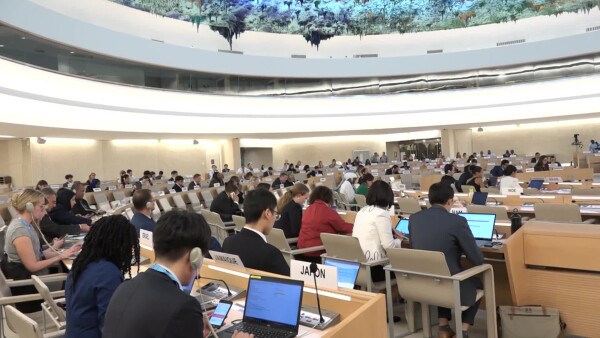
- Wide shot and pan down from ceiling of the UN Human Rights Room
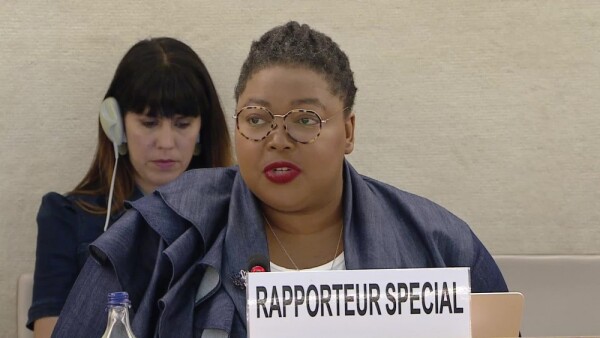
- SOUNDBITE (English) – Tlaleng Mofokeng, Special Rapporteur on the right of everyone to the enjoyment of the highest attainable standard of physical and mental health: “Digital tools have allowed for the analysis of large data sets for prediction, forecasting and therapeutics development. In addition, human contact remains important for primary care and concerns remain that the digital delivery of mental health services, for example, may be an inferior form of health care in comparison to in-person treatment.”
- Medium lateral shot, delegates in Human Rights Room with screen of Special Rapporteur Tlaleng Mofokeng
- SOUNDBITE (English) – Tlaleng Mofokeng, Special Rapporteur on the right of everyone to the enjoyment of the highest attainable standard of physical and mental health: “Telemedicine, telehealth and other digital forms of health care solutions offer great potential for scaling up in terms of physical accessibility and can improve the accessibility to mobile diagnostics, healthcare workers for screening and advice, and delivery of therapeutics for example. Regarding economic accessibility, types of remote health care can be less expensive than in-person health care and can lower the direct and indirect costs of clinic visits, travel or unpaid sick leave.”
- Medium shot, delegates from diverse member states
- SOUNDBITE (English) – Tlaleng Mofokeng, Special Rapporteur on the right of everyone to the enjoyment of the highest attainable standard of physical and mental health: “Digital tools can perpetuate racism, sexism, ableism or discrimination based on sexual orientation or gender identity, among others. This is happening in code, in design and application. And I support the call for design justice, in which technology is designed through diverse and inclusive processes to meet these diverse local needs.”
- Close shot, delegates from diverse member states
- SOUNDBITE (English) – Tlaleng Mofokeng, Special Rapporteur on the right of everyone to the enjoyment of the highest attainable standard of physical and mental health: “Accessibility of information through digital tools should not impair the right to have personal health data treated with confidentiality. It was brought to my attention that on some occasions the sharing of sensitive data can be problematic and potentially dangerous in specific contexts where for example migrants, adolescents and certain sexual orientations, or gender identities, or practices of healthcare procedures are criminalized, or health status could lead to stigmatization.”
- Medium shot, speakers at podium
- Medium shot, delegates from diverse member states
Similar Stories
1
1
1
Edited News | OCHA , UNICEF , WFP
Aid agencies warned on Friday of the fast-developing humanitarian emergency inside Taiz City in Yemen, which has been encircled by de facto Houthi forces fighting government troops along the country’s west coast.
1
1
1
Press Conferences | UN WOMEN , WFP , WHO
UN WOMEN: Sudan Women and girls one year after the fall of El Fasher; increasing drone attacks across the country; WFP: DRC - Ebola spreads to eighth DRC province as WFP delivers food, builds treatment centres and keeps supplies moving; WHO - Update on Ebola (Bundibugyo Virus Disease)
1
12
1
1
Press Conferences , Images | UNOG
Closing Press Conference following the Sixth Consultative Meeting on Enhancing Coordination of Peace Initiatives and Efforts in Sudan

2
17
1
2
Edited News , Press Conferences , Images | OCHA , WMO
Two UN agencies teamed up on Wednesday to issue an appeal for immediate assistance to help communities already being impacted by the strongest El Niño on record.

3
16
2
2
Edited News , B-roll , Conferences , Images | UNITED NATIONS , UNOG
Sixth Consultative Meeting on Enhancing Coordination of Peace Initiatives and Efforts for Sudan
1
1
1
Press Conferences | CITES
Wildlife trade and conservation policy discussions at the 81st meeting of the CITES Standing Committee (SC81)

1
1
1
Edited News | UNICEF , WHO , UNHCR
Yemen war continues to force families from homes amid hunger and disease
More than 250,000 people have now fled renewed fighting in Yemen, the UN said on Tuesday, citing particular concern for those sheltering in the southwestern city of Taiz and the wider governorate, where access is “essentially blocked”.
1
1
1
Press Conferences | UNHCR , UNCTAD , WMO , OCHA , UNICEF , WHO
UNHCR Hungary’s 1956 Refugee Crisis: 70 Years On, UNCTAD World Investment Forum 2026, Doha, WMO Greenhouse Gas Bulletin and Climate Update for COP31, OCHA Afghanistan: Malnutrition, Girls’ Education and Recovery, UNICEF Yemen: Child Malnutrition and Unsafe Water in Taiz, WHO Inequalities in Noncommunicable Diseases and Risk Factors
1
1
1
Press Conferences | UNHCR
End of UNHCR's 77th Annual Executive Committee (ExCom) meeting week

1
1
1
Edited News | UNICEF
A little over one year since a ceasefire agreement was announced between Hamas fighters and Israel, more than 340 children have been reported killed and hundreds more injured, the UN Children’s Fund, UNICEF, said on Friday.
1
1
1
Press Conferences | UNICEF , IOM , UNHCR
UN Special Assistant to the Personal Envoy Office (SUDAN): Peace Initiatives and Efforts in Sudan; UNICEF: Dire situation of children in Gaza; IOM: Damaged Homes and Energy Attacks Risk Displacing Ukrainians for this winter; UNHCR: update on EXCOM week

1
1
1
Press Conferences | IOM , UNDRR
UN stresses importance of household preparedness for disaster risk reduction.