

The United Nations Office at Geneva
Multimedia Newsroom
Edited News , Press Conferences | OHCHR
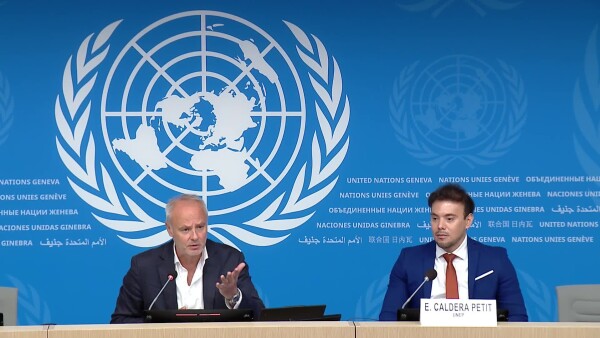
HRC - Press Conference: Special Rapporteur on the right to health 22 June 2023
Human Rights Council report analyses impact of digital technology on the right to health
The use of digital technology in health should not impair the right to have personal health data treated with confidentiality, particularly where already vulnerable people are concerned, UN-appointed independent rights expert told the Human Rights Council on Thursday.
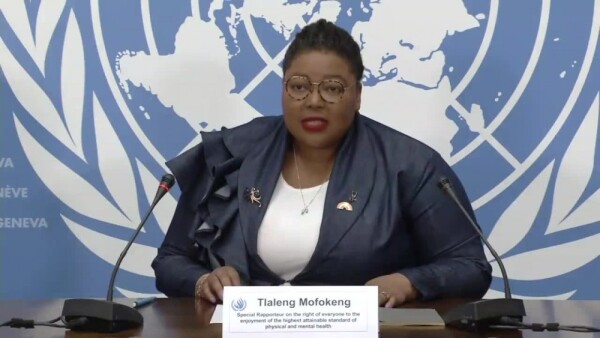
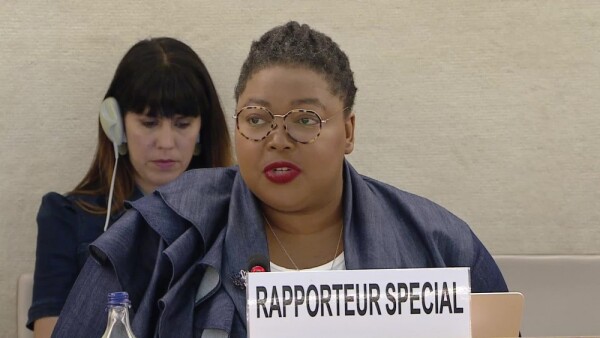
The Special Rapporteur on the right to health, Tlaleng Mofokeng, warned that technology enabled easy sharing of sensitive health data of adolescents, migrants and people whose sexual orientation or health status was subject to discrimination.
“Accessibility of information through digital tools should not impair the right to have personal health data treated with confidentiality,” insisted Ms. Mofokeng. “It was brought to my attention that on some occasions the sharing of sensitive data can be problematic and potentially dangerous in specific contexts where for example migrants, adolescents and certain sexual orientations or practices of healthcare procedures are criminalized, or health status could lead to stigmatization.”
Ms. Mofokeng highlighted the dangerous use of both State and non-State actors in the context of criminalized health services, such as contraception and abortion, where people who seek abortion and individuals who help them face risk of arrest or prosecution.
In her third report to the Human Rights Council, Ms Mofokeng analyzed the impact on the digital innovation on the right to health but also the impact of digital technology on privacy and data protection.
Digital innovation and technologies for health facilities have been used extensively to manage the health needs during the Covid-19 pandemic and can help access to broader health care.
“Telemedicine, telehealth and other digital forms of health care solutions offer great potential for scaling up in terms of physical accessibility and can improve the accessibility to mobile diagnostics, healthcare workers for screening and advice, and delivery of therapeutics for example,” noted the UN appointed independent rights expert.
Regarding economic accessibility, Ms. Mofokeng said that “types of remote health care can be less expensive than in-person health care and can lower the direct and indirect costs of clinic visits, travel or unpaid sick leave.”
But Ms. Mofokeng warned that technology allows easy sharing of sensitive health data which might be used in police surveillance and law enforcement, “which further creates vulnerable situations for certain groups, for example those with HIV, migrant populations and LGBTIQ+ (lesbian, gay, bisexual, trans and gender-diverse)”.
“Digital tools can perpetuate racism, sexism, ableism or discrimination based on sexual orientation or gender identity, among others in code, design and application”, the UN Special Rapporteur said. “I support the call for “design justice”, in which technology is designed through diverse and inclusive processes to meet diverse local needs.”
The expert called on all stakeholders to respect principles of non-discrimination, equality and privacy and to allow for transparency, accountability and recourse when rights are violated. She also told the Human Rights Council that human contact "remains important for primary care and concerns remain that the digital delivery of mental health services, for example, may be an inferior form of health care in comparison to in-person treatment”.
Special Rapporteurs and other independent experts appointed by the Human Rights Council serve in their individual capacity; they are not UN staff and do not receive payment for their work.
-ends-
- Medium shot, UN Palais with flags
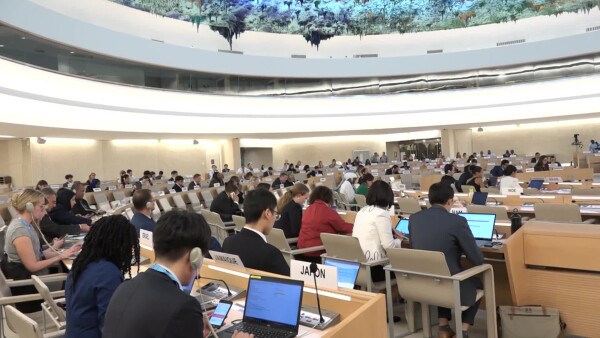
- Wide shot and pan down from ceiling of the UN Human Rights Room
- SOUNDBITE (English) – Tlaleng Mofokeng, Special Rapporteur on the right of everyone to the enjoyment of the highest attainable standard of physical and mental health: “Digital tools have allowed for the analysis of large data sets for prediction, forecasting and therapeutics development. In addition, human contact remains important for primary care and concerns remain that the digital delivery of mental health services, for example, may be an inferior form of health care in comparison to in-person treatment.”
- Medium lateral shot, delegates in Human Rights Room with screen of Special Rapporteur Tlaleng Mofokeng
- SOUNDBITE (English) – Tlaleng Mofokeng, Special Rapporteur on the right of everyone to the enjoyment of the highest attainable standard of physical and mental health: “Telemedicine, telehealth and other digital forms of health care solutions offer great potential for scaling up in terms of physical accessibility and can improve the accessibility to mobile diagnostics, healthcare workers for screening and advice, and delivery of therapeutics for example. Regarding economic accessibility, types of remote health care can be less expensive than in-person health care and can lower the direct and indirect costs of clinic visits, travel or unpaid sick leave.”
- Medium shot, delegates from diverse member states
- SOUNDBITE (English) – Tlaleng Mofokeng, Special Rapporteur on the right of everyone to the enjoyment of the highest attainable standard of physical and mental health: “Digital tools can perpetuate racism, sexism, ableism or discrimination based on sexual orientation or gender identity, among others. This is happening in code, in design and application. And I support the call for design justice, in which technology is designed through diverse and inclusive processes to meet these diverse local needs.”
- Close shot, delegates from diverse member states
- SOUNDBITE (English) – Tlaleng Mofokeng, Special Rapporteur on the right of everyone to the enjoyment of the highest attainable standard of physical and mental health: “Accessibility of information through digital tools should not impair the right to have personal health data treated with confidentiality. It was brought to my attention that on some occasions the sharing of sensitive data can be problematic and potentially dangerous in specific contexts where for example migrants, adolescents and certain sexual orientations, or gender identities, or practices of healthcare procedures are criminalized, or health status could lead to stigmatization.”
- Medium shot, speakers at podium
- Medium shot, delegates from diverse member states
Similar Stories

1
1
1
Edited News | UNICEF , IFRC
Six weeks after Nepal’s deadly flooding disaster, communities are still struggling to rebuild their lives, but they will need sustained help as global warming increases the risk of another Himalayan catastrophe, the UN Children’s Fund (UNICEF) said on Friday.
1
1
1
Statements , Press Conferences | OHCHR
1
1
1
Press Conferences | UNHCR , UNICEF , IFRC , OHCHR , UN WOMEN , IOM , OCHA , WHO
UNHCR – ExCom Meeting, UNICEF – Nepal Recovery, IFRC – Flash Floods, WHO – Mental Health, IOM – South Sudan Floods, OCHA – DRC Humanitarian aid, UNHCR – Sahel Displacement, UNICEF – Yemen Update, IOM – Gaza Shelter, UN Women – Gaza Women, OHCHR – Arrests and detentions of Syrians by Israeli force
2
1
2
Press Conferences | UNCTAD
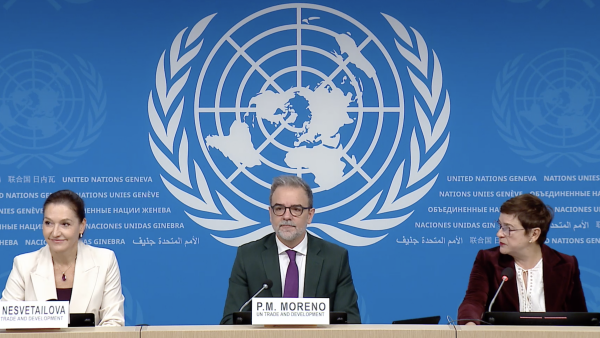
Presentation of the Trade and Developement Report 2026
Embargoed until 9 October 2026 at 11 a.m. (Geneva Time)
UNCTAD: UNCTAD’s flagship report finds that governments increasingly use industrial, trade, financial and technology policies to pursue economic and national security objectives. Market access and the ability to move into higher-value activities now depend more heavily on technology, finance and geopolitics.
1
1
1
Press Conferences | UPU
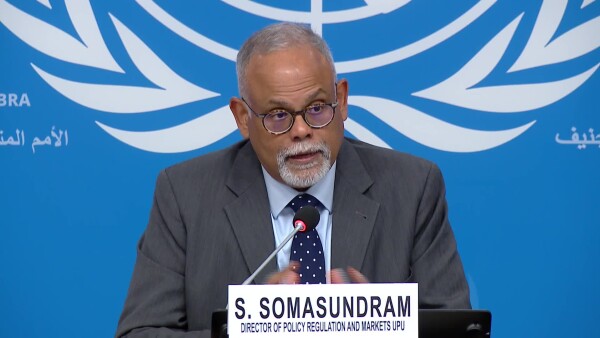
Release of the State of the Postal Sector Report 2026

1
1
1
Edited News | WHO
In suspected Russia plague death, testing and monitoring underway – WHO
The death of a lab worker in Russia’s Siberia region has sparked concerns about plague being the cause, the UN World Health Organization (WHO) said on Tuesday, adding that it was following the situation closely.
1
1
1
Press Conferences | IOM , ITU , UNECE , UNICEF , WHO , WMO
UNICEF: Ebola, DRC - children orphans or separating them from parents and caregivers; IOM: Humanitarian needs in Djibouti amid arrivals from Yemen and increased migrant movements; WHO: Darfur, scale of health needs far exceeds available resources; WMO co-sponsored Global Heat Forum, Bangkok, monthly Global Seasonal Climate Update; UNECE: UN Forum of Mayors; ITU Plenipotentiary Conference 2026; WHO: child and adolescent obesity guidelines and new global roadmap to tackle pregnancy hypertension, a leading cause of maternal mortality

1
1
Edited News | OHCHR , UNOG
UN Human Rights Chief Volker Türk on Friday provided and oral update to the 63rd session of the Human rights Council on Ukraine.

1
1
1
Edited News | OHCHR , UNOG
UN Human Rights Chief Volker Türk on Friday provided and oral update to the 63rd session of the Human rights Council on the human rights situation in Haiti.

1
1
1
Edited News | WHO
Repeated delays in bringing lifesaving medicines, prosthetics and more from Israel into Gaza risk having devastating consequences on Palestinians who urgently need them in the wartorn enclave, the UN World Health Organization (WHO) said on Friday. “A truck full of non-priority supplies or the right supplies arriving too late, doesn't save lives. That's the question that actually matters," said Dr Reinhilde Van De Weerdt, WHO Representative in the OPT.
1
1
1
Press Conferences | OCHA , UN WOMEN , UNHCR , WFP , WHO , WTO , UNEP
OCHA – $160M CERF allocation to 12 underfunded crises; UNHCR – 5.8M refugee children remain out of school amid funding cuts; UN Women – Middle East escalation and food security among women/girls; WHO – Gaza supplies and overall situation; WFP – Yemen food insecurity and impact on global hunger ; UNEP - First International Conference of the Global Framework on Chemicals in Geneva | 16-20 November 2026

1
1
1
Edited News | WHO
DRC: Early access to care and oxygen decisive for Ebola patients’ survival – WHO
In the Democratic Republic of the Congo (DRC), health workers fighting the country’s largest-ever Ebola outbreak are struggling to overcome critical challenges to patient care, the UN World Health Organization (WHO) warned on Tuesday.