

The United Nations Office at Geneva
Multimedia Newsroom
PRESS BRIEFING BY THE UNITED NATIONS INFORMATION SERVICE
31 January 2023
Announcements
Sarah Bel, for the United Nations Development Programme (UNDP), informed that on 6 February at 2:30 p.m., there would be a hybrid press conference to launch new UNDP report on violent extremism in Sub-Saharan Africa and Arab States - Journey to and from Extremism: Pathways to Recruitment and Disengagement. Speakers would be Achim Steiner, UNDP Administrator, and Nirina Kiplagat, main author and Regional Peacebuilding Advisor. The report, the most extensive research on this topic, with some 2,200 interviewees, would be under embargo until 7 February at 6 a.m.. One-on-one interviews with the authors could be organized. Ms. Bel explained that the reported focused on eight countries: Niger, Nigeria, Mali, Somalia, Sudan, Chad, Burkina Faso, and Cameroon, in which most incidents of violent extremism were taking place. The report concluded with policy recommendations for countries under threat. A key message was that the money going into prevention was a tiny fraction of overall sums spent to tackle the phenomenon.
Alessandra Vellucci, speaking on behalf of the Human Rights Council (HRC), said that the Universal Periodic Review (UPR) was currently reviewing the report of Japan, which was being webcast live. UPR would then review the report of Sri Lanka on 1 February.
Ms. Vellucci, for the United Nations Information Service (UNIS), stated that the Committee on the Rights of the Child would have a meeting with States Parties on 2 February at 3 p.m.. The Committee would then close its session the following day, 3 February, after at 5 p.m..
The Conference on Disarmament was holding this morning a public plenary meeting, still under the presidency of Egypt.
Ms. Vellucci reminded that 1 February would mark the second anniversary of the coup in Myanmar. On that occasion, the statement by the Spokesman of the Secretary-General had been shared with the media. UN Special Rapporteur for Myanmar Thomas Andrews would hold a press conference today at 8 pm Geneva time, which could be followed at webtv.un.org.
Finally, Ms. Vellucci informed about the Education Cannot Wait (ECW) High-Level Financing Conference event in Geneva on 16-17 February, which would be hosted by ECW and Switzerland and co-convened with Colombia, Germany, Niger, Norway, and South Sudan. A curtain-raised press conference was foreseen at the Palais des Nations. More information is available here.
Responding to questions, Tarik Jašarević, for the World Health Organization (WHO), said that the IHR Emergency Committee had advised the Director-General that COVID-19 still represented an emergency of international concern. The Director-General had concurred with this recommendation and urged countries to continue with a measured approach to address the pandemic. Numbers around the world had been on the rise again, stressed Mr. Jašarević.
Ms. Vellucci shared the sad news of the untimely passing of a dear UN Geneva colleague, Olga Cheremisina, at the age of 38. Ms. Cheremisina had worked at UNIS for several months and would be fondly remembered by all.
Similar Stories
1
1
1
Press Conferences | UN WOMEN , WFP , WHO
UN WOMEN: Sudan Women and girls one year after the fall of El Fasher; increasing drone attacks across the country; WFP: DRC - Ebola spreads to eighth DRC province as WFP delivers food, builds treatment centres and keeps supplies moving; WHO - Update on Ebola (Bundibugyo Virus Disease)
1
12
1
1
Press Conferences , Images | UNOG
Closing Press Conference following the Sixth Consultative Meeting on Enhancing Coordination of Peace Initiatives and Efforts in Sudan

2
17
1
2
Edited News , Press Conferences , Images | OCHA , WMO
Two UN agencies teamed up on Wednesday to issue an appeal for immediate assistance to help communities already being impacted by the strongest El Niño on record.
1
1
1
Press Conferences | CITES
Wildlife trade and conservation policy discussions at the 81st meeting of the CITES Standing Committee (SC81)
1
1
1
Press Conferences | UNHCR , UNCTAD , WMO , OCHA , UNICEF , WHO
UNHCR Hungary’s 1956 Refugee Crisis: 70 Years On, UNCTAD World Investment Forum 2026, Doha, WMO Greenhouse Gas Bulletin and Climate Update for COP31, OCHA Afghanistan: Malnutrition, Girls’ Education and Recovery, UNICEF Yemen: Child Malnutrition and Unsafe Water in Taiz, WHO Inequalities in Noncommunicable Diseases and Risk Factors

1
1
1
Press Conferences | UNHCR
End of UNHCR's 77th Annual Executive Committee (ExCom) meeting week

1
1
1
Press Conferences | UNICEF , IOM , UNHCR
UN Special Assistant to the Personal Envoy Office (SUDAN): Peace Initiatives and Efforts in Sudan; UNICEF: Dire situation of children in Gaza; IOM: Damaged Homes and Energy Attacks Risk Displacing Ukrainians for this winter; UNHCR: update on EXCOM week

1
1
1
Press Conferences | IOM , UNDRR
UN stresses importance of household preparedness for disaster risk reduction.

1
1
1
Statements , Press Conferences | OHCHR
1
1
1
Press Conferences | UNHCR , UNICEF , IFRC , OHCHR , UN WOMEN , IOM , OCHA , WHO
UNHCR – ExCom Meeting, UNICEF – Nepal Recovery, IFRC – Flash Floods, WHO – Mental Health, IOM – South Sudan Floods, OCHA – DRC Humanitarian aid, UNHCR – Sahel Displacement, UNICEF – Yemen Update, IOM – Gaza Shelter, UN Women – Gaza Women, OHCHR – Arrests and detentions of Syrians by Israeli force
2
1
2
Press Conferences | UNCTAD
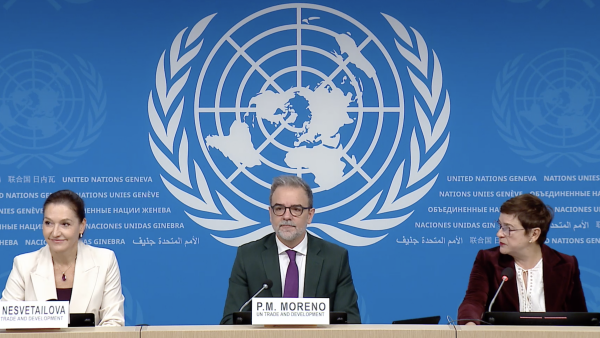
Presentation of the Trade and Developement Report 2026
Embargoed until 9 October 2026 at 11 a.m. (Geneva Time)
UNCTAD: UNCTAD’s flagship report finds that governments increasingly use industrial, trade, financial and technology policies to pursue economic and national security objectives. Market access and the ability to move into higher-value activities now depend more heavily on technology, finance and geopolitics.
1
1
1
Press Conferences | UPU
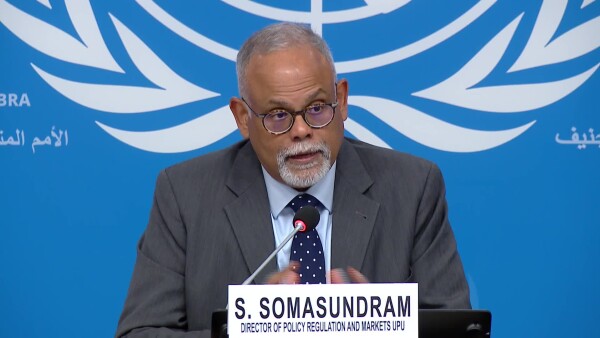
Release of the State of the Postal Sector Report 2026