

The United Nations Office at Geneva
Multimedia Newsroom
Northern Ethiopia facing likely devastating spike in preventable disease: WHO
The UN health agency WHO expressed serious concerns on Friday about a likely spike in a range of preventable diseases in Ethiopia’s northern regions - and in particular Tigray – caused by nearly two years of conflict and chronic aid access problems.
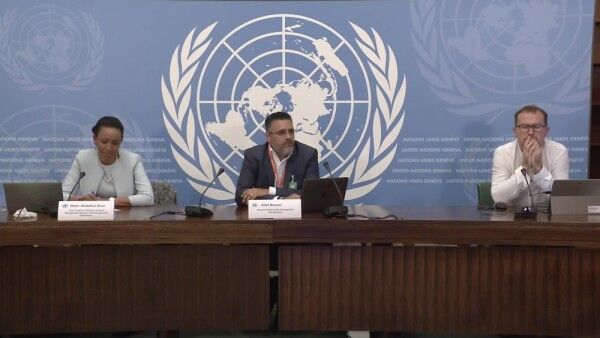
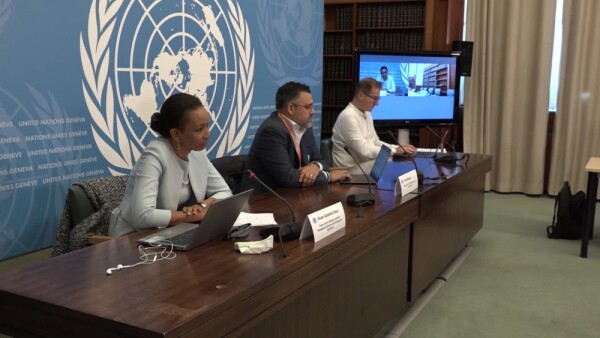
“There are 5.2 million people in need of humanitarian assistance in Tigray; that number includes 3.8 million people who are in need of health assistance and we need to reach these people,” said Ilham Abdelhai Nour, World Health Organization Team Lead for Ethiopia, Incident Management System and Emergencies Operations.
“We have access in Amhara and Afar, so we know more about the situation there and we were able to intervene and support,” Ms. Nour said, referring to the regions bordering Tigray. “However, we do not have access in Tigray; there is no air or road access in Tigray for the last six weeks.”
According to WHO, malaria infections have risen by a full 80 per cent in Tigray and by 40 per cent in Amhara compared to last year – although cases are decreasing in Afar.
But malaria is just one of the deadly threats facing millions of people affected by conflict and humanitarian agencies have issued repeated alerts on their behalf, since fighting between federal troops and separatists in Tigray erupted in November 2020.
WHO Director-General Tedros Adhanom Ghebreyesus – himself an ethnic Tigrayan - has echoed those concerns several times, including last week, when he warned that there was only a “very narrow window” to prevent genocide in his home region.
Despite the physical and telecommunications access barriers faced by aid teams working in Tigray, enough regular updates have emerged from the region – sometimes delivered by hand to WHO - to warrant Friday’s alert, the UN agency insisted.
Citing UN World Food Programme (WFP) data, WHO noted that in Amhara and Afar, 19 per cent and 14 per cent of mainly displaced children under five were now food insecure, while in Tigray, “a staggering” 89 per cent of the population is food insecure and nearly half are severely food insecure.
“Almost one in every three children under five in Tigray is malnourished,” said Altaf Musani, Director of the Health Emergencies Interventions, speaking in Geneva. “Severe acute malnutrition among children in the region is six per cent, 65 per cent of children have not received nutritional support in over a year.”
Highlighting the clear link between malnutrition and disease, Mr. Musani described how basic health services had been cut. Understanding the true scale of needs has also been complicated by the fact that only 30 per cent of health facilities in Tigray are still able to provide weekly situation reports to WHO.
“Immunisation services (are) a lifeline to children to keep them alive; those services have stopped,” Mr. Musani said. “We know that there are confirmed reports of stockouts, IV fluids, antibiotics other treatment medicines don’t exist in those facilities, we’ve had first-hand reports of that information.”
As peace talks between the combatants began this week in South Africa, Tigrayan communities urgently need guaranteed and safe access to provide lifesaving assistance, WHO insisted.
“Access was intermittent between March and August and during the humanitarian truce (in Afar, Amhara and Tigray) we were able to bring in, not a lot, but really a small quantity that covers really a small amount of the needs there, said Ms. Nour: “We were also able to support essential services in Tigray, support the measles campaign there, but we were unable to distribute supplies very quickly because of little cash and fuel. We were unable to undertake malaria prevention activities because of the same reasons; we were not able to extend the COVID-19 vaccination campaign beyond the capital Mekelle, so we have a huge issue of access there.”
ends
STORY: Health Alert Northern Ethiopia – WHOTRT: 3 min 01s
SOURCE: UNTV CH
RESTRICTIONS: NONE
LANGUAGE: ENGLISH/NATS
ASPECT RATIO: 16:9
DATELINE: 28 October 2022 GENEVA, SWITZERLAND
SHOTLIST
- Wide, UN Geneva flag alley.
- Wide, press room, photographer crouching to take photos, podium speakers, participants.
- SOUNDBITE (ENGLISH), Ilham Abdelhai Nour, Team Lead for Ethiopia, Incident Management System and Emergencies Operations: “There are 5.2 million people in need of humanitarian assistance in Tigray; that number includes 3.8 million people who are in need of health assistance and we need to reach these people.”
- Medium, journalist looking at speakers, photographer taking photos.
- SOUNDBITE (ENGLISH), Altaf Musani, Director of the Health Emergencies Interventions: “Almost one in every three children under five in Tigray is malnourished. Severe acute malnutrition among children in the region is six per cent, 65 per cent of children have not received nutritional support in over a year.”
- Medium-wide, podium speakers.
- SOUNDBITE (ENGLISH), Altaf Musani, Director of the Health Emergencies Interventions: “We’re very clear about the cycle of malnutrition and disease and the likelihood for that.”
- Medium, journalist typing on laptop.
- SOUNDBITE (ENGLISH), Altaf Musani, Director of the Health Emergencies Interventions: “Immunisation services is a lifeline to children to keep them alive; those services have stopped. We know that there are confirmed reports of stockouts, IV fluids, antibiotics other treatment medicines don’t exist in those facilities, we’ve had first hand reports of that information.”
- Wide, press room, participants.
- SOUNDBITE (ENGLISH), Ilham Abdelhai Nour, Team Lead for Ethiopia, Incident Management System and Emergencies Operations: “We have access in Amhara and Afar, so we know more about the situation there and we were able to intervene and support. However, we do not have access in Tigray; there is no air or road access in Tigray for the last six weeks.”
- Medium , participant working on laptop.
- SOUNDBITE (ENGLISH), Ilham Abdelhai Nour, Team Lead for Ethiopia, Incident Management System and Emergencies Operations: “Before that, the access was intermittent between March and August and during the humanitarian truce we were able to bring in, not a lot, but really a small quantity that covers really a small amount of the needs there.”
- Close, photographer lining up shot.
- SOUNDBITE (ENGLISH), Ilham Abdelhai Nour, Team Lead for Ethiopia, Incident Management System and Emergencies Operations: “We were also able to support essential services in Tigray, support the measles campaign there, but we were unable to distribute supplies very quickly because of little cash and fuel. We were unable to undertake malaria prevention activities because of the same reasons, we were not able to extend the COVID-19 vaccination campaign beyond the capital Mekelle, so we have a huge issue of access there.”
- Medium, participants.
- Wide, participants.
- Medium, speakers.
Similar Stories

1
1
1
Edited News | WHO
In suspected Russia plague death, testing and monitoring underway – WHO
The death of a lab worker in Russia’s Siberia region has sparked concerns about plague being the cause, the UN World Health Organization (WHO) said on Tuesday, adding that it was following the situation closely.
1
1
1
Press Conferences | IOM , ITU , UNECE , UNICEF , WHO , WMO
UNICEF: Ebola, DRC - children orphans or separating them from parents and caregivers; IOM: Humanitarian needs in Djibouti amid arrivals from Yemen and increased migrant movements; WHO: Darfur, scale of health needs far exceeds available resources; WMO co-sponsored Global Heat Forum, Bangkok, monthly Global Seasonal Climate Update; UNECE: UN Forum of Mayors; ITU Plenipotentiary Conference 2026; WHO: child and adolescent obesity guidelines and new global roadmap to tackle pregnancy hypertension, a leading cause of maternal mortality

1
1
Edited News | OHCHR , UNOG
UN Human Rights Chief Volker Türk on Friday provided and oral update to the 63rd session of the Human rights Council on Ukraine.

1
1
1
Edited News | OHCHR , UNOG
UN Human Rights Chief Volker Türk on Friday provided and oral update to the 63rd session of the Human rights Council on the human rights situation in Haiti.

1
1
1
Edited News | WHO
Repeated delays in bringing lifesaving medicines, prosthetics and more from Israel into Gaza risk having devastating consequences on Palestinians who urgently need them in the wartorn enclave, the UN World Health Organization (WHO) said on Friday. “A truck full of non-priority supplies or the right supplies arriving too late, doesn't save lives. That's the question that actually matters," said Dr Reinhilde Van De Weerdt, WHO Representative in the OPT.
1
1
1
Press Conferences | OCHA , UN WOMEN , UNHCR , WFP , WHO , WTO , UNEP
OCHA – $160M CERF allocation to 12 underfunded crises; UNHCR – 5.8M refugee children remain out of school amid funding cuts; UN Women – Middle East escalation and food security among women/girls; WHO – Gaza supplies and overall situation; WFP – Yemen food insecurity and impact on global hunger ; UNEP - First International Conference of the Global Framework on Chemicals in Geneva | 16-20 November 2026

1
1
1
Edited News | WHO
DRC: Early access to care and oxygen decisive for Ebola patients’ survival – WHO
In the Democratic Republic of the Congo (DRC), health workers fighting the country’s largest-ever Ebola outbreak are struggling to overcome critical challenges to patient care, the UN World Health Organization (WHO) warned on Tuesday.
1
1
1
Press Conferences | UNHCR , WHO
Yemen's health system nears collapse amid conflict, causing rising casualties and medicine shortages.

1
1
1
Edited News | OCHA , UN
Civilians in Iran are continuing to feel the consequences of months of conflict and military escalation, the UN’s top official in the country has said, as loss of life, damage to civilian infrastructure and mounting economic pressures leave many facing continued uncertainty.
1
1
1
Press Conferences | HRC
Update by the Expert Mechanism to Advance Racial Justice and Equality in Law Enforcement
1
1
1
Edited News | WHO , UNICEF
Aid agencies in Yemen highlighted the growing hunger emergency sparked by renewed fighting between Houthi opposition forces and Government troops, after mobile health clinics reported that hundreds of children displaced by the violence are suffering from the most deadly form of malnutrition.
1
1
1
Press Conferences | WIPO , WHO , UNICEF , UNHCR , IOM , WFP , FAO
WIPO Global Innovation Index 2026 launch and press conference, WHO Composition of influenza vaccines for the 2027 Southern Hemisphere flu season, UNICEF Yemen hunger and malnutrition; UNHCR Sudan displacement into Chad; IOM Ebola and population movements in DRC; WFP emergency food assistance in Nepal; and FAO food loss and waste.