

The United Nations Office at Geneva
Multimedia Newsroom
Secretary-General says UN needs to recognize failures and "be humble" in better responding to "the will of the people"
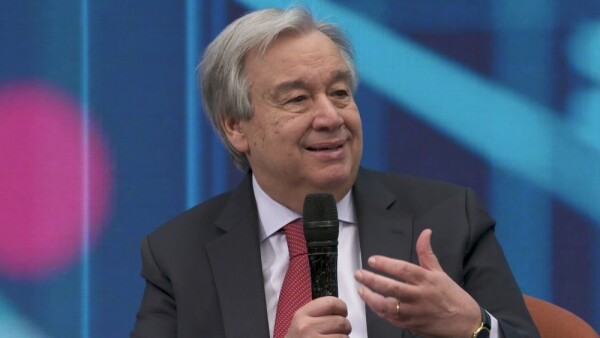
For an organization that is seen as all too ready to give advice, the United Nations welcomed a major role reversal today: young people from all over the world were gathered in Switzerland to voice their concerns, outline their vision for a better future, and give UN Secretary-General Antonio Guterres their advice on where to steer the world body.
“This globalization that has created so much wealth around the world has been leaving people behind, has been squeezing middle classes in different parts of the world and is creating also the feeling that it is not working for all, “ said the UN Secretary-General, before an audience of more than 600 people in an auditorium at the Graduate Institute of International and Development Studies in Geneva. “So the UN, in a situation like this, needs to ask itself: ‘are we doing what we should be doing? Are we responding to the anxieties and to the aspirations of the peoples of the world? Or do we need to change, do we need to adapt to this new world?’”
The heartfelt and sometimes blunt feedback to the UN leadership came as part of series of conversations that are being held for a campaign, UN75, that marks the 75th anniversary of the UN Charter in 1945, which aims to listen to people’s hopes and fears – as well as their expectations of the UN -- in a rapidly changing world.
“You need to make the UN more democratic and more participatory, and open it up to the public, and create something like ‘Everyone’s UN’,” said Martin Ostermaier, a young professional from Germany who currently works with the international Labour Organization (ILO) and was one of six panelists who were up on stage with the Secretary-General.
“This dialogue is a great first start, but it shouldn’t happen every 75 years. I should happen more often,” he added, drawing laughter from the audience.
“Open up decision-making, be bold, be unprecedented but also really give ownership to the people. “Because we can’t just hide in our ivory towers, and think people will trust us,” Marie Claire Graf told the Secretary-General. Ms. Graf, a Swiss student at the University of Zurich, is a Youth Parliamentarian active on issues related to the environment and sustainability.
The notion of opening the UN up to more democratic participation and processes, as well as to the inclusion of young and marginalized people and groups, including refugees, found a very loud echo among the participants.
“My advice would be not just to listen to us, but to listen to people who have small voices or who have no voice at all,” said Adiba Quasim, a young Yazidi survivor and refugee from Iraq who is currently studying in Switzerland. “I lost everything some years ago and because I have been facing death so many times, and because I have been trying everything to try to find a future for me and today in 2020 we see women getting raped, slavery and killing because of the identity, because of our religions, because of our colours --so what I want to see in 2045 is that people can live in peace, people can live really with dignity”.
“I would like to see a non-patriarchal world, because I believe that the patriarchy cuts all different (shout out from audience, laughs) … cuts across all instances, not just gender, it cuts across race, it cuts across social classes, etcetera. I’d like to see world that is non-racist world, as well, clearly,” said Jasmine Pokuaa Oduro, a dual citizen of Ghana and the UK, who later issued a very direct piece of advice to the UN for its use of stereotyped images on in income inequalities. “One thing that I’d like the UN to start to prioritize now, and I think they could start doing it from now, is to stop using black and brown children in their publications to represent poverty.”
Many who took the floor expressed their desire for transformative policies that would broaden opportunities both within and across societies. The need to address distortions and injustices brought about by severe disparities in wealth was a common thread running through the discussion – with a number of speakers speaking of the need to hold hyper-wealthy individuals and transnational corporations to greater account.
“I want to like to see that multinational corporations are held accountable for their actions,” said Jan Harvey Parfina, a student from the Philippines. “Especially if they already violating human rights, as well as degrading the environment.”
Equally pervasive was the concern about the future of the planet in the context of climate change.
“As we are facing the extinction of humanity, my advice is declare a planetary emergency -- right now,” Ms. Graf urged the Secretary-General. “We can’t solve this crisis with small fixed, we can’t just adjust somewhere, we cannot just put solar panels on the roof and thing that this is going to solve the climate crisis, but we have to go much bigger. “
Mr. Guterres summed up by conceding that that, as the United Nations, “we need have to be humble, to recognize our failures and to be able to understand that we need to give the voice to “we the peoples” that we are supposed to represent as the UN. This is an important thing to tell: We have a lot to change, in order to be able to respond. We have a lot to abandon we need to adapt, the business as usual or the arrogance of ‘we know everything’. We need to adapt, to be able to respond to the will of the people to be able to respond, and to be trusted by the people, which means giving the people a very strong influence in what we do. So that’s a very clear message I got from everybody here. “
In addition to broad aspirational goals and transformative policies, some speakers also made very concrete suggestions for areas in which the UN could concentrate in a more targeted way – on emerging technological threats, for example, and in investing in programmes that can foster youth leadership.
I’d like to see a global concerted effort to tackle the issue of fake news and the spread of misinformation. Because one of the most horrifying scenarios that I can imagine is a world where you cannot tell anymore what is real and what is false, and that’s becoming increasingly likely” said Marwan al Chazli, an engineering student from Egypt. “I would advise to focus on youth programmes that empower young people to become changemakers. Give young people the resource to do amazing things, and they will,” he said.
Capping off his two-day visit to Geneva, where the Secretary-General also participated in the opening of the high-level segment of the Human Rights Council, Mr. Guterres told the young people gathered at the Graduate Institute that the conversation represented a new beginning for the UN.
“This is the beginning of new dynamic of relationships between the UN and ‘We the Peoples’, and this relationship will be able hopefully to shape a new kind of multilateralism --a multilateralism that is inclusive, in which not only the governments, but also the civil society, the academia, and the local communities have the word and have an influence. And if we are able to do that, I think it will be a big change. There will be a lot of resistance - I count on you to overcome that resistance.”
One of the aims of the UN75 conversations, which will continue throughout the year and across the globe, is for the UN listen and learn from the opinions of citizens everywhere, at a time when public trust in institutions is in decline.
- Wide Shot, Auditorium, Maison de la Paix, Geneva
- Medium Shot, audience
- Medium Shot, audience
- Medium Shot, audience
- Medium Wide shot, students in audience
- Wide Shot, audience
- Close up, faces in audience
- SOUNDBITE UN Secretary-General Antonio Guterres, in English: “This globalization that has created so much wealth around the world has been leaving people behind, has been squeezing middle classes in different parts of the world and is creating also the feeling that it is not working for all. So the UN, in a situation like this, needs to ask itself, ‘Are we doing what we should be doing? Are we responding to the anxieties and to the aspirations of the peoples of the world? Or do we need to change, do we need to adapt to this new world?’”
- Wide Shot, audience
- SOUNDBITE Martin Ostermeier, a young professional from Germany, in English: “You need to make the UN more democratic and more participatory, and open it up to the public, and create something like ‘Everyone’s UN’. This dialogue is a great first start, but it shouldn’t happen every 75 years (laughter). It should happen more often.”
- SOUNDBITE Marie-Claire Graf, a Swiss student and youth leader at the University of Zurich, in English: “Open up decision-making, be bold, be unprecedented but also really give ownership to the people. Because we can’t just hide in our ivory towers and think people will trust us.”
- Medium wide shot, audience
- SOUNDBITE, Adiba Qasim, a young Yazidi survivor and refugee from Iraq who is currently studying in Switzerland, in English: “My advice would be not just to listen to us, but also to listen to people who have small voices or who have no voice at all. I lost everything some years ago and because I have been facing death so many times, and because I have been trying everything to try to change and to find a future for me and today in 2020 we see women getting raped, slavery and killing because of the identity, because of our religions, because of our colours – so that basically what I want to see in 2045 is that people can live in peace, people can live really in dignity.”
- Medium wide shot, audience
- SOUNDBITE Jasmine Pokuaa Oduro, a dual citizen of Ghana and the UK, head of the Student Association at the Graduate Institute in English: “I would like to see a non-patriarchal world, because I believe that the patriarchy cuts all different (shout out from audience, laughs) … cuts across all instances, not just gender, it cuts across race, it cuts across social classes, etcetera. I’d like to see world a non-racist world, as well - clearly. One thing that I’d like the UN to start to prioritize now, and I think they could start doing it from now, is to stop using black and brown children in their publications to represent poverty.”
- Close-up, audience member
- SOUNDBITE, Jan Harvey Parafina, a student from the Philippines, in English. “I want to like to see that multinational corporations be held accountable for their actions. Especially if they already violating human rights, as well as degrading the environment.”
- Medium shot, audience
- SOUNDBITE Marie-Claire Graf, a Swiss student and youth leader at the University of Zurich, in English: “As we are facing the extinction of humanity, my advice is declare a planetary emergency - right now. We can’t solve this crisis with small fixes, we can’t just adjust somewhere, we cannot just put solar panels on the roof and think that this is going to solve the climate crisis, but we have to go much bigger.”
- Medium shot, audience
- SOUNDBITE UN Secretary-General Antonio Guterres, in English: “We need to be humble, to recognize our failures and to be able to understand that we need to give the voice to ‘We the Peoples’ that we are supposed to represent as the UN. This is an important thing to tell: we have a lot to change, in order to be able to respond. We have a lot to abandon, we need to adapt, the business-as-usual or the arrogance of ‘we know everything’. We need to adapt, to be able to respond to the will of the people to be able to respond, and to be trusted by the people, which means giving the people a very strong influence in what we do. So that’s a very clear message I got from everybody here.”
- Close up, faces in audience
- SOUNDBITE, Marwan Al Chazli, an engineering student from Egypt, in English: “I’d like to see a global concerted effort to tackle the issue of fake news and the spread of misinformation. Because one of the most horrifying scenarios that I can imagine is a world where you cannot tell any more what is real and what is false, and that’s becoming increasingly likely. I would advise to focus on youth programmes that empower young people to become changemakers. Give young people the resource to do amazing things, and they will.”
- Medium wide shot, audience
- SOUNDBITE UN Secretary-General Antonio Guterres, in English: “This is the beginning of new dynamic of relationships between the UN and ‘We the Peoples’, and this relationship will be able hopefully to shape a new kind of multilateralism - a multilateralism that is inclusive, in which not only the governments, but also the civil society, the academia, and the local communities have the word and have an influence. And if we are able to do that, I think it will be a big change. There will be a lot of resistance - I count on you to overcome that resistance. Thank you all very much.”
- Wide shot of stage, applause from audience.
Similar Stories

1
1
1
Edited News | OCHA , UNICEF , WFP
Aid agencies warned on Friday of the fast-developing humanitarian emergency inside Taiz City in Yemen, which has been encircled by de facto Houthi forces fighting government troops along the country’s west coast.

2
17
1
2
Edited News , Press Conferences , Images | OCHA , WMO
Two UN agencies teamed up on Wednesday to issue an appeal for immediate assistance to help communities already being impacted by the strongest El Niño on record.

3
16
2
2
Edited News , B-roll , Conferences , Images | UNITED NATIONS , UNOG
Sixth Consultative Meeting on Enhancing Coordination of Peace Initiatives and Efforts for Sudan

1
1
1
Edited News | UNICEF , WHO , UNHCR
Yemen war continues to force families from homes amid hunger and disease
More than 250,000 people have now fled renewed fighting in Yemen, the UN said on Tuesday, citing particular concern for those sheltering in the southwestern city of Taiz and the wider governorate, where access is “essentially blocked”.

1
1
1
Edited News | UNICEF
A little over one year since a ceasefire agreement was announced between Hamas fighters and Israel, more than 340 children have been reported killed and hundreds more injured, the UN Children’s Fund, UNICEF, said on Friday.

1
1
1
Edited News | UNICEF , IFRC
Six weeks after Nepal’s deadly flooding disaster, communities are still struggling to rebuild their lives, but they will need sustained help as global warming increases the risk of another Himalayan catastrophe, the UN Children’s Fund (UNICEF) said on Friday.

1
1
1
Edited News | WHO
In suspected Russia plague death, testing and monitoring underway – WHO
The death of a lab worker in Russia’s Siberia region has sparked concerns about plague being the cause, the UN World Health Organization (WHO) said on Tuesday, adding that it was following the situation closely.

1
1
Edited News | OHCHR , UNOG
UN Human Rights Chief Volker Türk on Friday provided and oral update to the 63rd session of the Human rights Council on Ukraine.

1
1
1
Edited News | OHCHR , UNOG
UN Human Rights Chief Volker Türk on Friday provided and oral update to the 63rd session of the Human rights Council on the human rights situation in Haiti.

1
1
1
Edited News | WHO
Repeated delays in bringing lifesaving medicines, prosthetics and more from Israel into Gaza risk having devastating consequences on Palestinians who urgently need them in the wartorn enclave, the UN World Health Organization (WHO) said on Friday. “A truck full of non-priority supplies or the right supplies arriving too late, doesn't save lives. That's the question that actually matters," said Dr Reinhilde Van De Weerdt, WHO Representative in the OPT.

1
1
1
Edited News | WHO
DRC: Early access to care and oxygen decisive for Ebola patients’ survival – WHO
In the Democratic Republic of the Congo (DRC), health workers fighting the country’s largest-ever Ebola outbreak are struggling to overcome critical challenges to patient care, the UN World Health Organization (WHO) warned on Tuesday.

1
1
1
Edited News | OCHA , UN
Civilians in Iran are continuing to feel the consequences of months of conflict and military escalation, the UN’s top official in the country has said, as loss of life, damage to civilian infrastructure and mounting economic pressures leave many facing continued uncertainty.