

The United Nations Office at Geneva
Multimedia Newsroom
Edited News | UNHCR , UNICEF , WFP , WHO
Bi-Weekly Press Briefing: Pakistan Floods Update WHO - UNICEF - UNHCR - WFP
TRT: 2’26”
SOURCE: UNTV CH
LANGUAGE: ENGLISH / NATS
ASPECT RATIO: 16:9
DATELINE: 02 Sept. 2022
HYBRID PRESS BRIEFING
GENEVA, SWITZERLAND
Pakistan: dire need of humanitarian aid as a third of the country is underwater amid historic flooding
The scale of the humanitarian crisis in Pakistan is unprecedented, with a third of the country under water, UN humanitarians warned on Friday.
With more than 33 million people impacted, that represents 15 per cent of the total population in Pakistan, said Dr. Palitha MAHIPALA, World Health Organization (WHO) Representative in Pakistan.
Some “6.4 plus million people are in dire need of humanitarian aid”, he said, speaking from Islamabad to journalists in Geneva.
In the past few weeks, record monsoon rains dumped more than five times the 30-year average for rainfall in some provinces, killing more than 1,200 people and injuring over 6,000 since June. Nearly 400 children are among the fatalities.
With 1.1 million houses washed away and vital infrastructure destroyed such as schools, UNICEF’s Representative in Pakistan, Abdullah Fadil, explained that “18,000 schools have been destroyed and thousands of schools are now fully shuttered… So that means children who have lost education for two years are also losing learning opportunities now.”
Besides the massive disruption to the education system, health facilities have been heavily impacted too, leaving the most vulnerable at risk.
The timing couldn’t be worse, as aid agencies have warned of an uptick in waterborne and deadly diseases, such as diarrhoea, cholera, dengue, or malaria. “This country, which had a high level of stunting, already the same areas that are impacted, are the same areas that are now flooded,” said Mr. Fadil. “The anticipation list of waterborne diseases - diarrhoea, cholera, all the diseases you can imagine - will hit, and quite soon, so we need to be in place to respond to those as well.”
As rains continue and flooding likely worsens over the coming days, there is an urgent need to scale up disease surveillance, restore damaged health facilities, ensure sufficient medicines and health supplies to affected communities.
“Affected people have told our staff on the ground about their traumatic and scarring experiences as rain and floodwaters swept away their possessions in minutes,” said Matthew Saltmarsh, spokesperson for the UN Refugee Agency. “Those who could, rushed to safety on higher ground without being able to rescue their belongings. Shelter, clean drinking water and food are among the most urgently needed items in the aftermath of the flood.”
Torrential monsoon rainfall has caused the Indus River to overflow, submerging land for tens of kilometers wide, according to recent images from the European Space Agency. Crops and livestock have been lost having a significant impact on both livelihood and nutrition of afflicted communities.
“We have a major problem within the region and a particular global challenge in ensuring that the support that is going to be necessary to get agricultural production back up and running in Pakistan, to feed its own people, as well as being the continued source of supply of food for colleagues and brethren next door in Afghanistan,” alerted Chris Kaye, WFP’s Country Director for Pakistan.
Neighboring Afghanistan has also been hard-hit by the flooding which has come as the country struggles to recover from a series of natural disasters. Millions have found refuge in Pakistan over the last 40 years, noted Mr. Matthew Saltmarsh. “Pakistan and its people have hosted millions of Afghan refugees for over four decades, with some 1.3 million registered now in the country, as well of course as large numbers of undocumented Afghans in the country.”
Pakistan, which is already facing political and economic turmoil, has been thrown into the front line of the human-induced climate crisis. The South Asian country of 220 million people faced dramatic weather conditions this year, from record heatwaves to deadly floods.
"South Asia is one of the world's global climate crisis hotspots. People living in these hotspots are 15 times more likely to die from climate impacts," UN Secretary General António Guterres said on 30 August.
Pakistan is home to more glaciers than anywhere outside the polar areas. Global warming makes the country more vulnerable to sudden outbursts of melting glacier water, according to the Meteorological Department in Islamabad.
Ends
- Medium shot, UN Geneva flag alley.
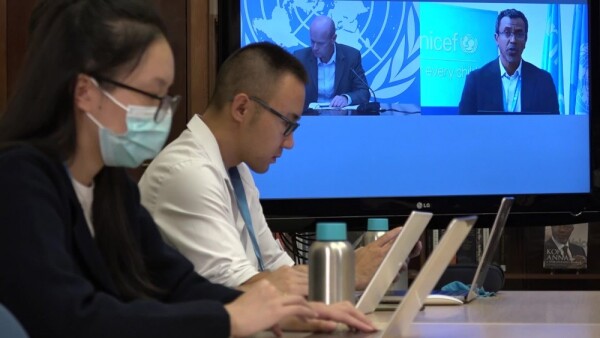
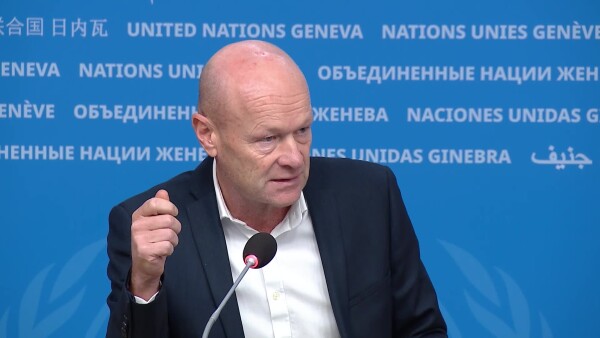
- Medium shot, press room with panel of speakers.
- SOUNDBITE (ENGLISH) Palitha MAHIPALA, WHO Representative in Pakistan: “Affected population is 33 million, 15 per cent of the total population in Pakistan. 6.4-plus million people are in dire need of humanitarian aid.”
- Medium shot, journalists taking notes.
- SOUNDBITE (ENGLISH) Abdullah Fadil, UNICEF Representative in Pakistan: “18,000 schools have been destroyed and thousands of schools are now fully shuttered. So that means children who have lost education for two years are also losing learning opportunities now.”
- Medium shot of participants.
- SOUNDBITE (ENGLISH) Abdullah Fadil, UNICEF Representative in Pakistan: “This country which had a higher level of stunting, already the same areas that are impacted, are the same areas that are now flooded. The anticipation list with waterborne diseases - diarrhea, cholera, all the diseases you can imagine - will hit, and quite soon, so we need to be in place to respond to those as well.”
- Medium shot, press room with journalists.
- SOUNDBITE (ENGLISH) Matthew Saltmarsh, Spokesperson for UNHCR: “Affected people have told our staff on the ground about their traumatic and scarring experiences as rain and floodwaters swept away their possessions in minutes. Those who could, rushed to safety on higher ground without being able to rescue their belongings. Shelter, clean drinking water and food are among the most urgently needed items in the aftermath of the flood.”
- Close up shot, journalists taking notes.
- SOUNDBITE (ENGLISH) Matthew Saltmarsh, Spokesperson for UNHCR: “Pakistan and its people have hosted millions of Afghan refugees for over four decades, with some 1.3 million registered now in the country, as well of course as large numbers of undocumented Afghans in the country.”
- Close up shot, TV camera viewfinder showing speaker.
- SOUNDBITE (ENGLISH) Chris Kaye, WFP Country Director for Pakistan: “We have a major problem within the region and a particular global challenge in ensuring that the wherewithal, the support that is going to be necessary to get agricultural production back up and running in Pakistan, to feed its own people, as well as being the continued source of supply of food for colleagues and brethren next door in Afghanistan.”
- Medium shot, journalists taking notes.
- Medium shot, journalists taking notes.
- Close up shot, journalists taking notes.
Similar Stories
1
1
1
Edited News | OCHA , UNICEF , WFP
Aid agencies warned on Friday of the fast-developing humanitarian emergency inside Taiz City in Yemen, which has been encircled by de facto Houthi forces fighting government troops along the country’s west coast.

2
17
1
2
Edited News , Press Conferences , Images | OCHA , WMO
Two UN agencies teamed up on Wednesday to issue an appeal for immediate assistance to help communities already being impacted by the strongest El Niño on record.

3
16
2
2
Edited News , B-roll , Conferences , Images | UNITED NATIONS , UNOG
Sixth Consultative Meeting on Enhancing Coordination of Peace Initiatives and Efforts for Sudan

1
1
1
Edited News | UNICEF , WHO , UNHCR
Yemen war continues to force families from homes amid hunger and disease
More than 250,000 people have now fled renewed fighting in Yemen, the UN said on Tuesday, citing particular concern for those sheltering in the southwestern city of Taiz and the wider governorate, where access is “essentially blocked”.

1
1
1
Edited News | UNICEF
A little over one year since a ceasefire agreement was announced between Hamas fighters and Israel, more than 340 children have been reported killed and hundreds more injured, the UN Children’s Fund, UNICEF, said on Friday.

1
1
1
Edited News | UNICEF , IFRC
Six weeks after Nepal’s deadly flooding disaster, communities are still struggling to rebuild their lives, but they will need sustained help as global warming increases the risk of another Himalayan catastrophe, the UN Children’s Fund (UNICEF) said on Friday.

1
1
1
Edited News | WHO
In suspected Russia plague death, testing and monitoring underway – WHO
The death of a lab worker in Russia’s Siberia region has sparked concerns about plague being the cause, the UN World Health Organization (WHO) said on Tuesday, adding that it was following the situation closely.

1
1
Edited News | OHCHR , UNOG
UN Human Rights Chief Volker Türk on Friday provided and oral update to the 63rd session of the Human rights Council on Ukraine.

1
1
1
Edited News | OHCHR , UNOG
UN Human Rights Chief Volker Türk on Friday provided and oral update to the 63rd session of the Human rights Council on the human rights situation in Haiti.

1
1
1
Edited News | WHO
Repeated delays in bringing lifesaving medicines, prosthetics and more from Israel into Gaza risk having devastating consequences on Palestinians who urgently need them in the wartorn enclave, the UN World Health Organization (WHO) said on Friday. “A truck full of non-priority supplies or the right supplies arriving too late, doesn't save lives. That's the question that actually matters," said Dr Reinhilde Van De Weerdt, WHO Representative in the OPT.

1
1
1
Edited News | WHO
DRC: Early access to care and oxygen decisive for Ebola patients’ survival – WHO
In the Democratic Republic of the Congo (DRC), health workers fighting the country’s largest-ever Ebola outbreak are struggling to overcome critical challenges to patient care, the UN World Health Organization (WHO) warned on Tuesday.

1
1
1
Edited News | OCHA , UN
Civilians in Iran are continuing to feel the consequences of months of conflict and military escalation, the UN’s top official in the country has said, as loss of life, damage to civilian infrastructure and mounting economic pressures leave many facing continued uncertainty.