

The United Nations Office at Geneva
Multimedia Newsroom
STORY: Heatwave Linked to Climate Change – WMO, WHO
TRT: 03’20”
SOURCE: UNTV CH
RESTRICTIONS: NONE
LANGUAGE: ENGLISH/NATS
ASPECT RATIO: 16:9
DATELINE: 19 July 2022, GENEVA, SWITZERLAND
WMO Warns of Frequent Heatwaves until the 2060s
Extreme heat in western Europe is causing devastating wildfires in France and Spain, unprecedented drought in Italy and Portugal, and brought to Great-Britain its highest-ever recorded temperature of 40 degrees Celsius today. With temperatures expected to remain above normal until the middle of next week, the World Metrological Organization (WMO) warned that heatwaves are and will occur more and more frequently. The pattern is linked to the observed warming of the planet that can be attributed to human activity, raising serious concerns for the planet’s future.
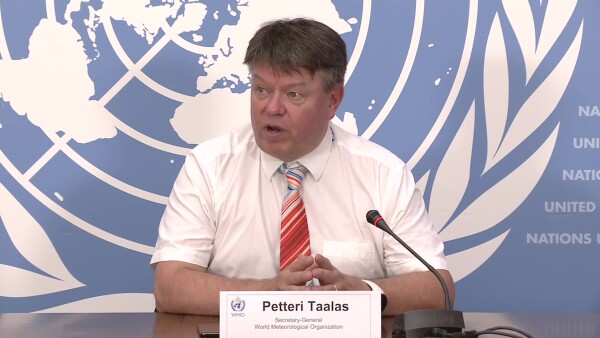
“We are expecting to see major impacts on agriculture. During the previous heatwaves in Europe, we lost big parts of harvest. And under the current situation -we are already having the global food crisis because of the war in Ukraine- this heatwave is going to have a further negative impact on agricultural activities” warned Petteri Taalas, Secretary-General of the WMO at a press conference today in Geneva.
In several countries, several sectors of the economies -including tourism- are suffering as a result.
“The negative trend in climate will continue at least until 2060s, independent of our success in climate mitigation”, Mr. Taalas added. “We have already lost the game concerning the melting of glaciers. We expect that the melting of glaciers will continue for the coming hundreds of years or even coming thousands of years anyhow. And also, sea level rise will continue for the same period”.
Mr. Taalas was wearing short sleeves and a red and blue tie which he chose to illustrate the warming trend he explained.
Air pollution and impact on health
The heatwave also acts as a lid, traps atmospheric pollutants, causing the degradation of air quality and adverse health consequences, particularly to vulnerable people. In the 2003 heatwave, only in Europe, 70 thousand people died.
“Climate change is affecting our health on many ways, not only by heatwaves which are having direct consequences in a number of diseases and conditions, but as well because it will be touching the pillars of our health alerted Maria Neira, Director Environment and Health at the WHO as she explained the access to food and water is at stake, as “we will not have good agriculture production and there will be water scarcity for sure”.
99% of the global population is breathing air that does not meet the health standards set by WHO, she said, with a great impact on people with respiratory and cardiovascular conditions.
“The best solution to this will be, again, being very ambitious on tackling the causes of this global warming. We have been alerting for a long time that climate change is affecting very much human health and therefore taking measures to reach the zero carbon and accelerating the transition to clean, renewable sources of energy.”
More deaths among the elderly and those with pre-existing health conditions are feared due to the ongoing heatwave, and the challenges for health services to face the increased demand.
Ends
- Medium shot, UN Geneva flag alley.
- Wide shot, panel of speakers.
- SOUNDBITE (ENGLISH) Petteri Taalas, Secretary-General, WMO: “Today, we have actually already broken the all-time high in UK. There was 39.1 degrees (Celsius) at 11:00am and we expect that the temperatures may go above 40 degrees (Celsius) today”.
- Medium lateral shot, journalists’ laptops and podium.
- SOUNDBITE (ENGLISH) Petteri Taalas, Secretary-General, WMO: “We are expecting to see also major impacts on agriculture. During the previous heatwaves in Europe, we lost big parts of harvest. And under the current situation we are already having the global food crisis because of the war in Ukraine, this heatwave is going to have a further negative impact on agricultural activities”.
- Medium shot of journalists and UN staff.
- SOUNDBITE (ENGLISH) Petteri Taalas, Secretary-General, WMO: “this kind of heat waves are becoming more and more frequent through the coming decades. The negative trend in climate will continue at least until 2060s, independent of our success in climate mitigation”.
- Close shot camera
- SOUNDBITE (ENGLISH) Petteri Taalas, Secretary-General, WMO: “we have already lost the game concerning the melting of glaciers. We expect that the melting of glaciers will continue for the coming hundreds of years or even coming thousands of years anyhow. And also, sea level rise will continue for the same period”.
- Medium shot of journalists.
- SOUNDBITE (ENGLISH) Petteri Taalas, Secretary-General, WMO: “I'm happy to wear this kind of ties at this kind of events, which is demonstrating what we have seen happening in the climate for the past 150 years. You can see that: in the past we had much more blue color, and more recently we have seen more red color which indicates that the heatwaves have become more frequent”.
- Wide shot of podium and journalists and UN staff listening.
- SOUNDBITE (ENGLISH) Maria Neira, Director Environment and Health, WHO: “Climate change is affecting our health on many, many ways, not only by heatwaves which are having direct consequences in a number of diseases and conditions that it is causing, but as well because it will be touching the pillars of our health: the access to food, we will not have good agriculture production, access to water, there will be water scarcity for sure.”
- Medium lateral shot of journalists
- SOUNDBITE (ENGLISH) Maria Neira, Director Environment and Health, WHO: “99% of the global population is breathing air that is not respecting the proposed standards by WHO, the air quality guidelines”.
- Medium lateral shot of TV Screen.
- SOUNDBITE (ENGLISH) Maria Neira, Director Environment and Health, WHO: “The best solution to this will be again being very ambitious on tackling the causes of this global warming. We have been alerting for a long time that climate change is affecting very much human health and therefore taking measures to reach the zero carbon and accelerating the transition to clean, renewable sources of energy.”
- Various shots of press room.
Similar Stories
1
1
1
Edited News | OCHA , UNICEF , WFP
Aid agencies warned on Friday of the fast-developing humanitarian emergency inside Taiz City in Yemen, which has been encircled by de facto Houthi forces fighting government troops along the country’s west coast.

2
17
1
2
Edited News , Press Conferences , Images | OCHA , WMO
Two UN agencies teamed up on Wednesday to issue an appeal for immediate assistance to help communities already being impacted by the strongest El Niño on record.
3
16
2
2
Edited News , B-roll , Conferences , Images | UNITED NATIONS , UNOG
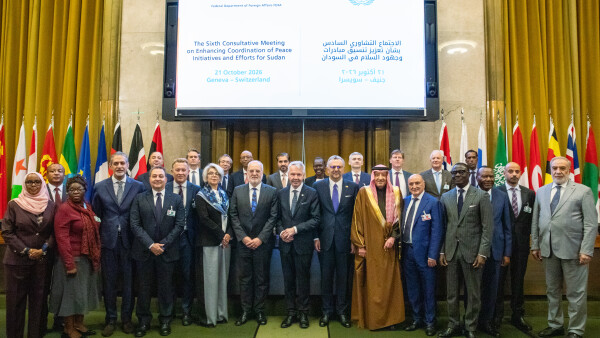
Sixth Consultative Meeting on Enhancing Coordination of Peace Initiatives and Efforts for Sudan
1
1
1
Edited News | UNICEF , WHO , UNHCR
Yemen war continues to force families from homes amid hunger and disease
More than 250,000 people have now fled renewed fighting in Yemen, the UN said on Tuesday, citing particular concern for those sheltering in the southwestern city of Taiz and the wider governorate, where access is “essentially blocked”.

1
1
1
Edited News | UNICEF
A little over one year since a ceasefire agreement was announced between Hamas fighters and Israel, more than 340 children have been reported killed and hundreds more injured, the UN Children’s Fund, UNICEF, said on Friday.

1
1
1
Edited News | UNICEF , IFRC
Six weeks after Nepal’s deadly flooding disaster, communities are still struggling to rebuild their lives, but they will need sustained help as global warming increases the risk of another Himalayan catastrophe, the UN Children’s Fund (UNICEF) said on Friday.

1
1
1
Edited News | WHO
In suspected Russia plague death, testing and monitoring underway – WHO
The death of a lab worker in Russia’s Siberia region has sparked concerns about plague being the cause, the UN World Health Organization (WHO) said on Tuesday, adding that it was following the situation closely.

1
1
Edited News | OHCHR , UNOG
UN Human Rights Chief Volker Türk on Friday provided and oral update to the 63rd session of the Human rights Council on Ukraine.

1
1
1
Edited News | OHCHR , UNOG
UN Human Rights Chief Volker Türk on Friday provided and oral update to the 63rd session of the Human rights Council on the human rights situation in Haiti.

1
1
1
Edited News | WHO
Repeated delays in bringing lifesaving medicines, prosthetics and more from Israel into Gaza risk having devastating consequences on Palestinians who urgently need them in the wartorn enclave, the UN World Health Organization (WHO) said on Friday. “A truck full of non-priority supplies or the right supplies arriving too late, doesn't save lives. That's the question that actually matters," said Dr Reinhilde Van De Weerdt, WHO Representative in the OPT.

1
1
1
Edited News | WHO
DRC: Early access to care and oxygen decisive for Ebola patients’ survival – WHO
In the Democratic Republic of the Congo (DRC), health workers fighting the country’s largest-ever Ebola outbreak are struggling to overcome critical challenges to patient care, the UN World Health Organization (WHO) warned on Tuesday.

1
1
1
Edited News | OCHA , UN
Civilians in Iran are continuing to feel the consequences of months of conflict and military escalation, the UN’s top official in the country has said, as loss of life, damage to civilian infrastructure and mounting economic pressures leave many facing continued uncertainty.