

The United Nations Office at Geneva
Multimedia Newsroom
UNDP highlights that the African continent is facing an unprecedented crisis
While Africa is yet to fully recover from the socio-economic repercussions of the COVID-19 pandemic, the Russia-Ukraine conflict poses another major threat to the global economy with many African countries being directly affected.
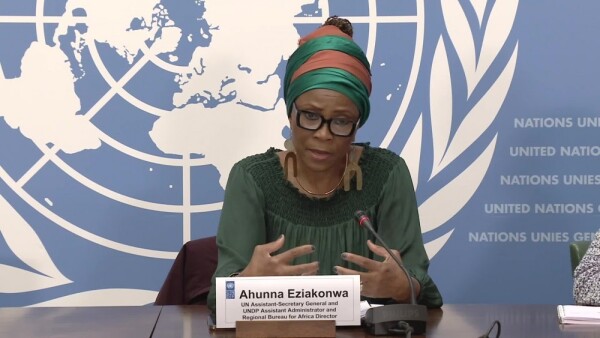
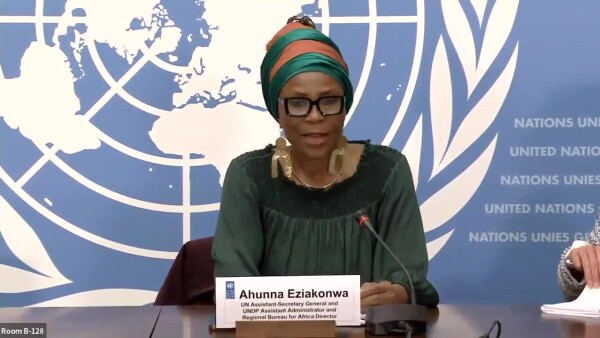
Speaking at a news briefing at the United Nations in Geneva, Ahunna Eziakonwa, UNDP’s Assistant Administrator and Regional Bureau for Africa Director said that “we have never experienced greater pressure and challenge on our ability to sustain peace and development on a healthy planet as we experience today. A global pandemic that upended the world and changed it forever. We have seen resulting from that, but also in terms of pre-existing conditions, rising poverty and inequality”.
Emphasizing that global solidarity is needed more than ever, UNDP’s Ahunna Eziakonwa added that “we saw how Covid- 19 complicated the effort to maintain or to overcome the insecurity that’s created by many forces including violent extremism and the impact of this, the consequence, affected live and livelihoods but also creating an immense discontent about the population which is led to a regression in democracy”.
The war in Ukraine affects food, fuel and financing of the African continent. For Raymond Gilpin, UNDP’s Africa Chief Economist and Head of the Strategy, Analysis and Research Team “this is an unprecedented crisis for the continent, and it’s unprecedented because the continent is facing a trifecta: the ongoing effects of Covid pandemic, the newly felt effects of the Russia-Ukraine war and thirdly the climate related challenges and pressures”.
Some countries in Africa depend on up to 80% of wheat coming from Russia and Ukraine, both often referred to as the world's breadbasket. The rise in prices that will begin could create another front of discontent and possibly unrest, warned Raymond Gilpin. “The global inflation has been imported into African economies, because Africa is so dependent on imports for food, fuel, medicines and consumer durables. We are going to see tensions, whether or not this will spill over into violent protests is unclear. But what history, particularly recent history, has told us is that this is a distinct possibility”.
UNDP stressed that particularly countries with upcoming elections where the electoral environment is already quite emotional could lead to additional social pressure.
As inflation rates are soaring, it is also becoming more difficult for household and companies to enhance property and to reduce poverty. “We were hoping to see a bounce back from the poverty challenges that we had experienced during Covid. An estimated 50 million Africans being pushed back into extreme poverty is going to be more difficult for them to climb out of poverty”, said UNDP’s Africa Chief Economist. Concerns are growing that a worldwide shortage of fertilizer will lead to rising food prices, with knock-on effects for agricultural production and food security.
Also the environment will be impacted by the current crisis. UNDP anticipates that about 100 million Africans who were able to afford sustainable energy before the Covid-19 outbreak, will return to unsustainable resources. “As the cost of fuel becomes more expensive, energy sources, energy prices, don’t fall in African countries, we are going to see millions of households going back to unsustainable energy sources, and this in many fragile environments, in particular looking at places like the Sahel”, said Raymond Gilpin, UNDP Africa Chief Economist“. He added that “we are going to see a lot more deforestation and a roll back of a significant progress that had been made in the greening of the Sahel.”
-ends-
- Exterior medium shot, Palais des Nations flag alley, a sunny day.
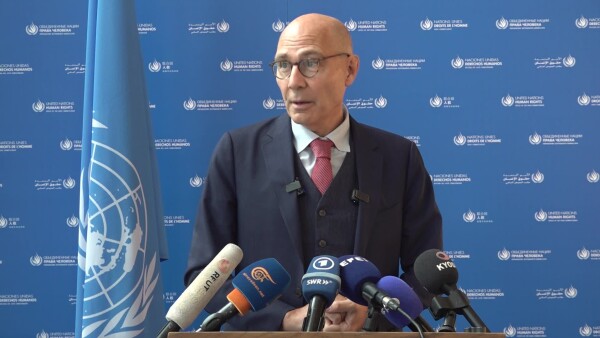
- Wide shot, podium with moderator in Press briefing room, Palais des Nations.
- SOUNDBITE (English) — Ahunna Eziakonwa, UNDP’s Assistant Administrator and Regional Bureau for Africa Director: “We have never experienced greater pressure and challenge on our ability to sustain peace and development on a healthy planet as we experience today. A global pandemic that upended the world and changed it forever. We have seen resulting from that, but also in terms of pre-existing conditions, rising poverty and inequality”.
- Close up, filming with cell phone
- SOUNDBITE (English) — Ahunna Eziakonwa, UNDP’s Assistant Administrator and Regional Bureau for Africa Director: “We saw how Covid-19 complicated the effort to maintain or to overcome the insecurity that’s created by many forces including violent extremism and the impact of this, the consequence, affected live and livelihoods but also creating an immense discontent about the population which is led to a regression in democracy”.
- Medium shot, UN technician in front of big screen
- SOUNDBITE (English) — Raymond Gilpin, UNDP Africa Chief Economist and Head of the Strategy, Analysis and Research Team: “This is an unprecedented crisis for the continent, and it’s unprecedented because the continent is facing a trifecta: the ongoing effects of Covid pandemic, the newly felt effects of the Russia-Ukraine war and thirdly the climate related challenges and pressures”.
- Medium shot, UN technician
- SOUNDBITE (English) — Raymond Gilpin, UNDP Africa Chief Economist and Head of the Strategy, Analysis and Research Team: “The global inflation has been imported into African economies, because Africa is so dependent on imports for food, fuel, medicines and consumer durables. We are going to see tensions, whether or not this will spill over into violent protests is unclear. But what history, particularly recent history, has told us is that this is a distinct possibility”.
- Medium shot, press briefing room with cameraman and speakers at the podium from behind
- SOUNDBITE (English) — Raymond Gilpin, UNDP Africa Chief Economist and Head of the Strategy, Analysis and Research Team: “We were hoping to see a bounce back from the poverty challenges that we had experienced during Covid. An estimated 50 million Africans being pushed back into extreme poverty is going to be more difficult for them to climb out of poverty”.
- Close up, press briefing attendant
- SOUNDBITE (English) — Raymond Gilpin, UNDP Africa Chief Economist and Head of the Strategy, Analysis and Research Team: “As the cost of fuel becomes more expensive, energy sources, energy prices, don’t fall in African countries, we are going to see millions of households going back to unsustainable energy sources, and this in many fragile environments, in particular looking at places like the Sahel. We are going to see a lot more deforestation and a roll back of a significant progress that had been made in the greening of the Sahel.”
- Wide shot, press briefing room with podium
- Medium shot, cameraman
- Medium shot, journalist
Similar Stories
1
12
1
1
Press Conferences , Images | UNOG
Closing Press Conference following the Sixth Consultative Meeting on Enhancing Coordination of Peace Initiatives and Efforts in Sudan

2
17
1
2
Edited News , Press Conferences | OCHA , WMO
Two UN agencies teamed up on Wednesday to issue an appeal for immediate assistance to help communities already being impacted by the strongest El Niño on record.

3
16
2
2
B-roll , Conferences , Edited News | UNITED NATIONS , UNOG
Sixth Consultative Meeting on Enhancing Coordination of Peace Initiatives and Efforts for Sudan
1
1
1
Press Conferences | CITES
Wildlife trade and conservation policy discussions at the 81st meeting of the CITES Standing Committee (SC81)

1
1
1
Edited News | UNICEF , WHO , UNHCR
Yemen war continues to force families from homes amid hunger and disease
More than 250,000 people have now fled renewed fighting in Yemen, the UN said on Tuesday, citing particular concern for those sheltering in the southwestern city of Taiz and the wider governorate, where access is “essentially blocked”.
1
1
1
Press Conferences | UNHCR , UNCTAD , WMO , OCHA , UNICEF , WHO
UNHCR Hungary’s 1956 Refugee Crisis: 70 Years On, UNCTAD World Investment Forum 2026, Doha, WMO Greenhouse Gas Bulletin and Climate Update for COP31, OCHA Afghanistan: Malnutrition, Girls’ Education and Recovery, UNICEF Yemen: Child Malnutrition and Unsafe Water in Taiz, WHO Inequalities in Noncommunicable Diseases and Risk Factors
1
1
1
Press Conferences | UNHCR
End of UNHCR's 77th Annual Executive Committee (ExCom) meeting week

1
1
1
Edited News | UNICEF
A little over one year since a ceasefire agreement was announced between Hamas fighters and Israel, more than 340 children have been reported killed and hundreds more injured, the UN Children’s Fund, UNICEF, said on Friday.
1
1
1
Press Conferences | UNICEF , IOM , UNHCR
UN Special Assistant to the Personal Envoy Office (SUDAN): Peace Initiatives and Efforts in Sudan; UNICEF: Dire situation of children in Gaza; IOM: Damaged Homes and Energy Attacks Risk Displacing Ukrainians for this winter; UNHCR: update on EXCOM week
1
1
1
Press Conferences | IOM , UNDRR
UN stresses importance of household preparedness for disaster risk reduction.

1
1
1
Edited News | UNICEF , IFRC
Six weeks after Nepal’s deadly flooding disaster, communities are still struggling to rebuild their lives, but they will need sustained help as global warming increases the risk of another Himalayan catastrophe, the UN Children’s Fund (UNICEF) said on Friday.
1
1
1
Statements , Press Conferences | OHCHR