

The United Nations Office at Geneva
Multimedia Newsroom
Edited News | OHCHR , UNOG , WFP
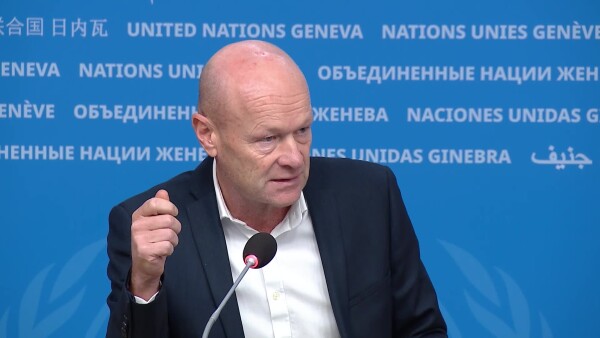
Le porte-parole des Nations unies pour les droits de l'homme, Thameen Al Kheetan, et le chef du bureau du HCDH dans les territoires palestiniens occupés, Ajith Sunghay, à propos du rapport sur les colonies en Cisjordanie
« La politique de colonisation d'Israël, ses actes d'annexion et la législation et les mesures discriminatoires connexes enfreignent le droit international et violent le droit des Palestiniens à l'autodétermination,» a déclaré le porte-parole Thameen Al-Kheetan lors du point de presse bihebdomadaire à Genève.
Al-Kheetan présentait un rapport du Bureau des droits de l'homme de l'ONU qui décrit le transfert continu de pouvoirs sur le Territoire palestinien occupé de l'armée israélienne au gouvernement.
« Le transfert par Israël de parties de sa propre population civile dans le territoire qu'il occupe constitue un crime de guerre,» a déclaré le porte-parole.
Le rapport, qui couvre une période de 12 mois jusqu'à la fin octobre 2024, fait référence à des plans de construction de plus de 20 000 unités de logement dans des colonies israéliennes nouvelles ou existantes à Jérusalem-Est uniquement, selon des organisations non gouvernementales israéliennes.
À Jérusalem-Est, 214 propriétés et structures palestiniennes ont été démolies. Plus de 10 300 unités dans des colonies israéliennes existantes dans le reste de la Cisjordanie sont en préparation, et un nombre sans précédent de 49 nouveaux avant-postes israéliens ont été établis.
« Le rapport souligne également des plans pour augmenter la fourniture de services du gouvernement israélien dans les colonies. Cela institutionnalise davantage des schémas de discrimination systématique, de ségrégation, d'oppression, de domination, de violence et d'autres actes inhumains contre le peuple palestinien,» a déclaré Al-Kheetan.
Le climat actuel a encouragé les colons israéliens à attaquer les Palestiniens, à les expulser de leurs maisons et à s'emparer de leurs terres. Au cours de la période couverte par le rapport, 612 Palestiniens ont été tués en Cisjordanie, y compris à Jérusalem-Est, par les forces de sécurité israéliennes et les colons. Vingt-quatre Israéliens ont également été tués dans des attaques présumées ou des affrontements avec des Palestiniens.
« La frontière entre la violence des colons et celle de l'État s'est estompée jusqu'à disparaître, avec des mesures prises par Israël pour militariser davantage le mouvement des colons, notamment en enrôlant des milliers de colons dans les forces de sécurité israéliennes opérant en Cisjordanie,» a déclaré Al-Kheetan.
« Israël prend des mesures sérieuses et accélérées pour annexer de plus en plus de parties du Territoire palestinien occupé en violation du droit international,» a déclaré Ajith Sunghay, le chef du Bureau des droits de l'homme de l'ONU pour le Territoire palestinien occupé, s'exprimant depuis Amman.
« En Cisjordanie, les colonies s'étendent à un rythme alarmant. Cela coïncide avec une série de mesures législatives et politiques qui permettent de plus en plus l'appropriation des terres palestiniennes et facilitent davantage l'extension de la souveraineté et des lois israéliennes sur la Cisjordanie,» a déclaré Sunghay.
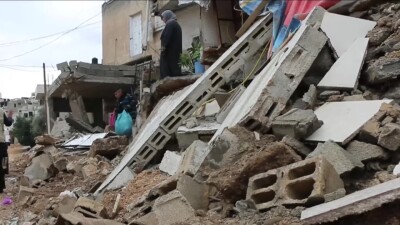
Sunghay a noté que le déplacement forcé massif des Palestiniens de leurs maisons et terres en Cisjordanie aggrave la situation. Une opération israélienne violente et en expansion constante, qui a commencé en janvier dernier dans le nord de la Cisjordanie, en particulier à Jénine, Tulkarem et Tubas, a jusqu'à présent tué 59 Palestiniens, déplacé des dizaines de milliers de personnes et vidé des camps de réfugiés entiers.
« Le déplacement est encore alimenté par l'augmentation continue des démolitions de maisons et des expulsions, la violence des colons qui ne peut plus être séparée de la violence de l'État, et l'appropriation quotidienne des terres palestiniennes pour des raisons de « sécurité » alléguées, seulement pour être plus tard attribuées aux colons,» a déclaré Sunghay.
« Nous avons ici un chemin juridique clair à suivre, confirmé l'année dernière par la Cour internationale de justice. L'occupation du territoire palestinien doit cesser aussi rapidement que possible, tous les colons israéliens doivent être évacués, et toute colonisation de ce territoire doit cesser immédiatement,» a-t-il souligné.
Pour plus d'informations et de demandes de médias, veuillez contacter :
Thameen Al-Kheetan : +41 22 917 4232 / thameen.alkheetan@un.org
Liz Throssell - + 41 22 917 9296 / elizabeth.throssell@un.org
Jeremy Laurence - + 41 22 917 9383 / jeremy.laurence@un.org
Taguez et partagez - Twitter : @UNHumanRights et Facebook : unitednationshumanrights
HISTOIRE : Orateur des droits de l'homme de l'ONU, Thameen Al-Kheetan, et Ajith Sunghay, chef du bureau pour le Territoire palestinien occupé, sur les colonies israéliennes
TRT : 03:46
SOURCE : OHCHR/UNOG/WFP
RESTRICTIONS : voir la liste des plans pour le matériel WFP, veuillez créditer WFP à l'écran
LANGUE : Anglais/NATS
RAPPORT D'ASPECT : 16:9
DATELINE : 18 mars 2025 GENÈVE, SUISSE / dateline WFP voir la liste des plans
LISTE DES PLANS
Similar Stories
1
1
1
Edited News | OCHA , UNICEF , WFP
Aid agencies warned on Friday of the fast-developing humanitarian emergency inside Taiz City in Yemen, which has been encircled by de facto Houthi forces fighting government troops along the country’s west coast.

2
17
1
2
Edited News , Press Conferences , Images | OCHA , WMO
Two UN agencies teamed up on Wednesday to issue an appeal for immediate assistance to help communities already being impacted by the strongest El Niño on record.

3
16
2
2
Edited News , B-roll , Conferences , Images | UNITED NATIONS , UNOG
Sixth Consultative Meeting on Enhancing Coordination of Peace Initiatives and Efforts for Sudan

1
1
1
Edited News | UNICEF , WHO , UNHCR
Yemen war continues to force families from homes amid hunger and disease
More than 250,000 people have now fled renewed fighting in Yemen, the UN said on Tuesday, citing particular concern for those sheltering in the southwestern city of Taiz and the wider governorate, where access is “essentially blocked”.

1
1
1
Edited News | UNICEF
A little over one year since a ceasefire agreement was announced between Hamas fighters and Israel, more than 340 children have been reported killed and hundreds more injured, the UN Children’s Fund, UNICEF, said on Friday.

1
1
1
Edited News | UNICEF , IFRC
Six weeks after Nepal’s deadly flooding disaster, communities are still struggling to rebuild their lives, but they will need sustained help as global warming increases the risk of another Himalayan catastrophe, the UN Children’s Fund (UNICEF) said on Friday.

1
1
1
Edited News | WHO
In suspected Russia plague death, testing and monitoring underway – WHO
The death of a lab worker in Russia’s Siberia region has sparked concerns about plague being the cause, the UN World Health Organization (WHO) said on Tuesday, adding that it was following the situation closely.

1
1
Edited News | OHCHR , UNOG
UN Human Rights Chief Volker Türk on Friday provided and oral update to the 63rd session of the Human rights Council on Ukraine.

1
1
1
Edited News | OHCHR , UNOG
UN Human Rights Chief Volker Türk on Friday provided and oral update to the 63rd session of the Human rights Council on the human rights situation in Haiti.

1
1
1
Edited News | WHO
Repeated delays in bringing lifesaving medicines, prosthetics and more from Israel into Gaza risk having devastating consequences on Palestinians who urgently need them in the wartorn enclave, the UN World Health Organization (WHO) said on Friday. “A truck full of non-priority supplies or the right supplies arriving too late, doesn't save lives. That's the question that actually matters," said Dr Reinhilde Van De Weerdt, WHO Representative in the OPT.

1
1
1
Edited News | WHO
DRC: Early access to care and oxygen decisive for Ebola patients’ survival – WHO
In the Democratic Republic of the Congo (DRC), health workers fighting the country’s largest-ever Ebola outbreak are struggling to overcome critical challenges to patient care, the UN World Health Organization (WHO) warned on Tuesday.

1
1
1
Edited News | OCHA , UN
Civilians in Iran are continuing to feel the consequences of months of conflict and military escalation, the UN’s top official in the country has said, as loss of life, damage to civilian infrastructure and mounting economic pressures leave many facing continued uncertainty.