

The United Nations Office at Geneva
Multimedia Newsroom
Speakers:
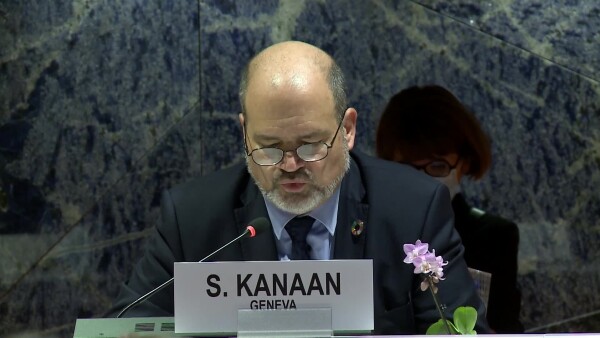
- Sami Kanaan, Mayor of Geneva
- Lord Norman Foster, Architect
- Olga Algayerova, Executive Secretary of the United Nations Economic Commission for Europe (UNECE)
- Tatiana Valovaya, Director-General of the United Nations at Geneva
Mayors and cities blaze the trail for a sustainable Covid-19 recovery
In the first major global meeting of local official since the onset of the COVID-19 pandemic, mayors gathered both physically and virtually at the UN in Geneva today to discuss current challenges, lessons learned and best practices.
The “Forum of Mayors”, as the event is called, was the first-ever such event convened by the United Nations Economic Commission for Europe (UNECE) and its Committee on Urban Development, Housing and Land Management
“We, the local elected officials, are on the front line, the representatives of the institutional structure which is closest to the population”, said Sami Kanaan, the mayor of Geneva.
“We are the most suited to understand the needs, aspirations and concerns of the population,” Mr. Kanaan said. “We are confronted on a daily basis with the very concrete problems of local communities, in particular on climate change and resilience in the face of crises, the key topics of today”.
Renowned British architect Lord Foster noted in his special address to the mayors that ”the pandemic has accelerated magnified trends which already existed before the pandemic”.
“The history of cities is the history of crisis, is the history of change, and historically cities have in the long term benefited from crisis. They have ended up as better cities,” Lord Foster said.
With 75 per cent of today’s population living in cities, the current health crisis made the need for more robust cities more evident than ever before. The pandemic has amplified and exposed the vulnerabilities of current urban realities, including overcrowded public transport, inadequate and unsanitary settlements, high levels of air pollution, and the lack of open green spaces to allow for social distancing.
According to UNECE, urban policymaking around the world remains decentralized. Insufficient exchange between the national and local governments makes it even more difficult for mayors and urban authorities to address such cross-cutting challenges.
Speakers from 32 cities as diverse as Glasgow, Milan, Kazan, Reykjavík, and Belgrade, sent a clear message that healthy populations require investments in making cities more resilient and sustainable. Some examples of their initiatives included: introducing temporary public spaces where people can walk or cycle while practicing social distancing, experimenting with new means of public transport, and decarbonizing heating systems.
In her opening remarks Olga Algayerova, Executive Secretary of the United Nations Economic Commission (UNECE) highlighted the chance to seize opportunities in the midst of crisis. “COVID-19 continues to be catastrophic” she said. “It also offers a chance to transform our cities and create a new normal. A ‘normal’ that benefits all people and our planet”.
“It is often said that cities are the places where future happens,” Ms Algayerova added . “Cities have always been a real-life testing ground for human innovation. Now we are presented with a life-time opportunity where we can shape our future more than ever before.”
Calling for a new era for the cooperation between national and local governments, Tatiana Valovaya, Director-General of the United Nations at Geneva said that “as frontline responders to this major health crisis, local governments are demonstrating the indispensable role in tackling the pandemic. But also in the achievement of the Sustainable Development Goals”.
Ms. Valovaya also spoke of the 75th anniversary of the United Nations this year, and the need to reinvigorate the organization by continuing to expanding participation to include more than national governments. Ms. Valovaya spoke of “the necessity of building more than multilateralism -- multilateralism of the 21 century, inclusive multilateralism which will include as key actors not only the governments but also international organizations, regional organizations, cities, local communities, private sector, professionals, academic experts, groups of young people and citizen as such. ”
“It is promising to see that local actors play a great role in advancing and revitalizing international cooperation, ” the UN Director-General said.
To mark the close cooperation between national and local authorities, city mayors and ambassadors got together for some soccer fun on the lawn of the Palais des Nations, under the theme “United for Our Goals” – shooting penalties with the aim to be the first to score 17 goals (in a nod to the 17 Sustainable Development Goals, or SDGs).
The outcome document from the meeting, known Geneva Declaration of Mayors, provides a blueprint for concrete steps that local authorities will take in the coming months and years to realize their cities’ potential for greater sustainability. It addresses concrete steps to be taken on climate action, urban tree planting, sustainable energy and transport, as well as affordable and adequate housing.
- Exterior wide shot, Palais des Nations flag alley, nations’ flags flying, a cloudy day.
- Wide shot, Room XVII in line with COVID-19 distancing measures, Palais des Nations.
- SOUNDBITE (French) – Sami Kanaan, Mayor of Geneva: “Nous, élus locaux, sommes en première ligne, les représentants de la structure institutionnelle la plus proche de la population. Et donc, la plus à-même de comprendre ses besoins, ses aspirations et ses préoccupations. Nous sommes confrontés au quotidien, aux problèmes très concrets des communautés locales notamment sur le changement climatique et la résilience face aux crises, les sujets clef de cette journée ».
- “We, the local elected officials, are on the front line, the representatives of the institutional structure which is closest to the population. And therefore, we are the most suited to understand the needs, aspirations and concerns of the population. We are confronted on a daily basis with the very concrete problems of local communities, in particular on climate change and resilience in the face of crises, the key topics of today”Focus pool on “Mayor’s Action” sign
- SOUNDBITE (English) — Lord Norman Foster, Architect:” The pandemic has accelerated magnified trends which already existed before the pandemic. The history of cities is the history of crisis, is the history of change, and historically cities have in the long term benefited from crisis. They have ended up as better cities”.
- Medium shot, screens in Room XVII of Olga Algayerova
- SOUNDBITE (English) — Olga Algayerova, Executive Secretary of the United Nations Economic Commission for Europe (UNECE): “Covid-19 continues to be catastrophic; it also offers a chance to transform our cities and created a new normal. A normal, that benefits all people and our planet”.
- Wide shot, Room XVII, Palais des Nations.
- SOUNDBITE (English) — Olga Algayerova, Executive Secretary of the United Nations Economic Commission for Europe (UNECE): “It is often said that cities are the places where future happens. Cities have always been a real-life testing ground for human innovation. Now we are presented with a life-time opportunity where we can shape our future more than ever before.”
- Medium shot, screens in Room XVII of Tatiana Valovaya
- SOUNDBITE (English) - Tatiana Valovaya, Director-General of the United Nations at Geneva: “As frontline responders to this major health crisis, local governments are demonstrating the indispensable role in tackling the pandemic. But also in the achievement for the Sustainable Development Goals”.
- Wide shot, Room XVII
- SOUNDBITE (English) - Tatiana Valovaya, Director-General of the United Nations at Geneva: “That’s why we are really speaking about the necessity of building more than multilateralism, multilateralism of the 21 century, inclusive multilateralism which will include as key actors not only the governments but also international organizations, regional organizations, cities, local communities, private sector, professionals, academic experts, groups of young people and citizen as such. ”
- Medium shot, Room XVII
- SOUNDBITE (English) - Tatiana Valovaya, Director-General of the United Nations at Geneva: “It is promising to see that local actors play a great role in advancing and revitalizing international cooperation”.
- Medium shot, podium with speakers
- Medium shot, podium with chair
- Medium shot, participant in Room XVII, Palais des Nations taking a photo
- Close up, name plates
- Divers shots of football match in Ariana Park at the Palais des Nations between mayors and ambassadors
- Zoom on “Geneva Declaration of Mayors”
- Pan on “Geneva Declaration of Mayors”
- Pan on mayors holding “Geneva Declaration of Mayors”
- Medium shot “Geneva Declaration of Mayors”
Similar Stories

2
17
1
2
Edited News , Press Conferences | OCHA , WMO
Two UN agencies teamed up on Wednesday to issue an appeal for immediate assistance to help communities already being impacted by the strongest El Niño on record.
3
16
2
2
B-roll , Conferences , Edited News | UNITED NATIONS , UNOG
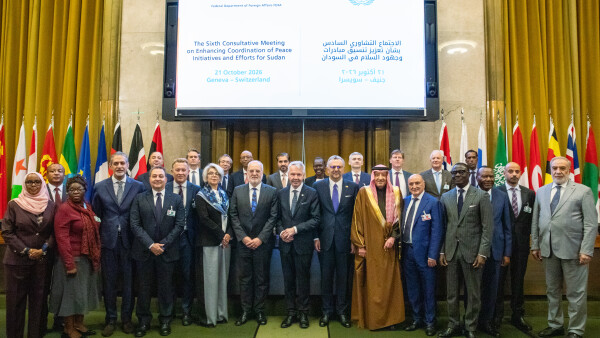
Sixth Consultative Meeting on Enhancing Coordination of Peace Initiatives and Efforts for Sudan
1
1
1
Edited News | UNICEF , WHO , UNHCR
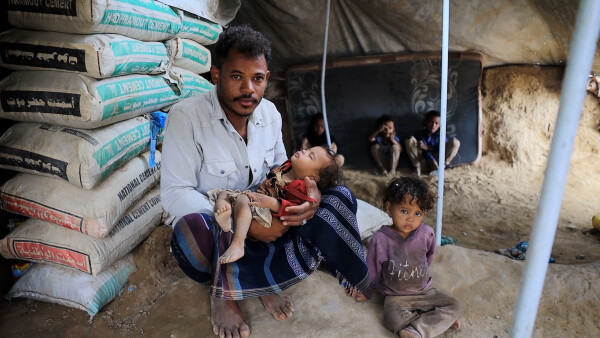
Yemen war continues to force families from homes amid hunger and disease
More than 250,000 people have now fled renewed fighting in Yemen, the UN said on Tuesday, citing particular concern for those sheltering in the southwestern city of Taiz and the wider governorate, where access is “essentially blocked”.

1
1
1
Edited News | UNICEF
A little over one year since a ceasefire agreement was announced between Hamas fighters and Israel, more than 340 children have been reported killed and hundreds more injured, the UN Children’s Fund, UNICEF, said on Friday.

1
1
1
Edited News | UNICEF , IFRC
Six weeks after Nepal’s deadly flooding disaster, communities are still struggling to rebuild their lives, but they will need sustained help as global warming increases the risk of another Himalayan catastrophe, the UN Children’s Fund (UNICEF) said on Friday.

1
1
1
Edited News | WHO
In suspected Russia plague death, testing and monitoring underway – WHO
The death of a lab worker in Russia’s Siberia region has sparked concerns about plague being the cause, the UN World Health Organization (WHO) said on Tuesday, adding that it was following the situation closely.

1
1
Edited News | OHCHR , UNOG
UN Human Rights Chief Volker Türk on Friday provided and oral update to the 63rd session of the Human rights Council on Ukraine.

1
1
1
Edited News | OHCHR , UNOG
UN Human Rights Chief Volker Türk on Friday provided and oral update to the 63rd session of the Human rights Council on the human rights situation in Haiti.

1
1
1
Edited News | WHO
Repeated delays in bringing lifesaving medicines, prosthetics and more from Israel into Gaza risk having devastating consequences on Palestinians who urgently need them in the wartorn enclave, the UN World Health Organization (WHO) said on Friday. “A truck full of non-priority supplies or the right supplies arriving too late, doesn't save lives. That's the question that actually matters," said Dr Reinhilde Van De Weerdt, WHO Representative in the OPT.

1
1
1
Edited News | WHO
DRC: Early access to care and oxygen decisive for Ebola patients’ survival – WHO
In the Democratic Republic of the Congo (DRC), health workers fighting the country’s largest-ever Ebola outbreak are struggling to overcome critical challenges to patient care, the UN World Health Organization (WHO) warned on Tuesday.

1
1
1
Edited News | OCHA , UN
Civilians in Iran are continuing to feel the consequences of months of conflict and military escalation, the UN’s top official in the country has said, as loss of life, damage to civilian infrastructure and mounting economic pressures leave many facing continued uncertainty.
1
1
1
Edited News | WHO , UNICEF
Aid agencies in Yemen highlighted the growing hunger emergency sparked by renewed fighting between Houthi opposition forces and Government troops, after mobile health clinics reported that hundreds of children displaced by the violence are suffering from the most deadly form of malnutrition.