

The United Nations Office at Geneva
Multimedia Newsroom
UN GENEVA PRESS BRIEFING
6 January 2026
United States Intervention in Venezuela
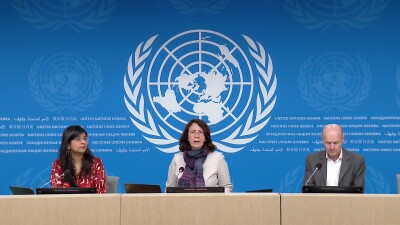
Alessandra Vellucci, Director of the United Nations Information Service in Geneva, said the Secretary-General had delivered remarks to the UN Security Council’s meeting on Venezuela on 5 January (read by Under-Secretary-General for Political and Peacebuilding Affairs Rosemary A. DiCarlo). The Secretary-General was deeply concerned about the possible intensification of instability in Venezuela, the potential impact on the region, and the precedence the United States military operation could set for how relations between and among states were conducted. The Secretary-General was also deeply concerned that rules of international law had not been respected regarding the military intervention on 3 January. The UN Charter enshrined the prohibition of the threat or use of force against the territorial integrity of any member state. The Secretary-General called on all Venezuelan actors to engage in an inclusive, democratic dialogue to determine their future, as well as on the international community to act in adherence to the principles, laws and rules, to promote peaceful coexistence.
Ravina Shamdasani, for the Office of the High Commissioner for Human Rights (OHCHR), said the High Commissioner for Human Rights was deeply worried about the situation in Venezuela following the United States of America’s military operation over the weekend. It was clear that the operation undermined a fundamental principle of international law: that States must not threaten or use force against the territorial integrity or political independence of any state. The United States had justified its intervention on the grounds of the Venezuelan Government’s longstanding and appalling human rights record, but accountability for human rights violations could not be achieved by unilateral military intervention in violation of international law. The people of Venezuela deserved accountability through a fair, victim-centred process.
The Office feared that the current instability and further militarisation in the country resulting from the intervention would only make the situation worse. The state of emergency declared by the Venezuelan authorities that took effect on Saturday raised concerns, as it authorised restrictions on free movement of people, the seizure of property necessary for national defence, and the suspension of the right to assembly, among other measures. The High Commissioner for Human Rights called on the United States and the Venezuelan authorities, as well as the international community, to ensure full respect for international law, including human rights.
The full statement is available here.
Responding to a question from the media, Ms. Shamdasani said the United States military operation violated the United Nations Charter, which stated that states must not threaten or use force against the territorial integrity or political independence of any state. Using human rights as a justification of this military intervention was not acceptable. The High Commissioner had stated that a narrative was emerging which sought to justify the military intervention as a response to the Maduro government's appalling human rights record.
But far from being a victory for human rights, this military intervention, which was in contravention of Venezuelan sovereignty and the UN Charter, damaged the architecture of international security, making every country less safe.
Answering another question, Ms. Shamdasani said the Office hadn’t been in touch with the Venezuelan Government over the past few days but were constantly in contact with civil society and were assessing the situation on the ground. The Office had been expelled from the country in February 2024 and had since been monitoring the situation from Panama. OHCHR were concerned about the establishment of the state of emergency, which enshrined measures which could be used to further limit Venezuelan people’s freedom, especially given the record the Government had in suppressing free speech and freedom of assembly, using the pretext of national security.
Ms. Shamdasani, answering another question, said it was important to have clarity: this was an action taken in contravention of international law, and the international community must come together with one voice to make that clear. This contravened the UN Charter, which was set up by member states. Ms Vellucci emphasised that the UN Charter needed to be upheld as a whole. It was vital to respect the Charter and international law.
Answering further questions Jens Laerke, for the United Nations Office for the Coordination of Humanitarian Affairs (OCHA), said OCHA had been responding to the humanitarian situation in Venezuela for several years. A response plan had been established late last year, identifying almost eight million people (a quarter of the population) in need of humanitarian assistance, asking for around 600 million USD. Of the nearly eight million people, nearly 900,000 people were in a high state of need, requiring food, nutrition and medical services, which the Venezuelan state had been unable to provide for many years. The recent events were politically dramatic, but the needs of people day to day had not drastically changed. This was the basis of OCHA’s work going forward this year.
Responding to an additional question, Mr. Laerke said he did not know if the United States administration planned to support humanitarian operations in Venezuela. The United States had recently pledged a substantial amount of money for several countries’ crises. Moving forward, the United Nations was trying to mobilise the entire donor base to step up, including for the 600 million USD response plan in Venezuela.
Answering another question, Eujin Byun, for the United Nations High Commissioner for Refugees (UNHCHR), said there were currently no reports of displacement or cross-border movement linked to the recent events. UNCHR were closely monitoring movements and were working with other UN partners to provide humanitarian assistance.
Ms. Shamdasani said the High Commissioner had been clear that this was an act which made states less safe around the world. It sent a signal that the powerful could do whatever they liked. OHCHR were calling on all states to speak with one voice, in defence of the UN Charter and international law.
Answering another question, Ms. Shamdasani said all efforts had been made by OHCHR to reestablish their presence in Venezuela and the door was always open. The High Commissioner had stated that the Office did not believe in points of no return and would always be there to support the Venezuelan people.
Responding to an additional question, Ms. Vellucci said the member states decide on the agenda of the Security Council and when the topic of Venezuela would be discussed again. So far there had been no word regarding a special session of the Human Rights Council.
Responding to a final question, Ms. Shamdasani clarified that it was Article 2.4 of the United Nations Charter which had been contravened.
Crans Montana Fire
Alessandra Vellucci, Director of the United Nations Information Service in Geneva, said the Director-General of the United Nations Office at Geneva had expressed condolences regarding the recent terrible incident in Crans Montana. As a mark of respect for the victims of the tragic fire, the United Nations Office at Geneva would fly the UN flag at half-mast on Friday 9 January, the day of national mourning declared by the Swiss Government.
Announcements
Ms. Vellucci said on Thursday 8 January 2026, the Organizational Meeting of the Human Rights Council would be held in the Assembly Hall at the Palais des Nations. The meeting would cover topics including: the election of President for the 20th cycle from the Group of Asia-Pacific States; the election of Vice-President for the 20th cycle from the Group of Latin American and Caribbean States; and the selection of “troikas” for upcoming sessions of the Universal Periodic Review Working Group.
Similar Stories
1
1
1
Press Conferences | IOM , ITU , UNECE , UNICEF , WHO , WMO
UNICEF: Ebola, DRC - children orphans or separating them from parents and caregivers; IOM: Humanitarian needs in Djibouti amid arrivals from Yemen and increased migrant movements; WHO: Darfur, scale of health needs far exceeds available resources; WMO co-sponsored Global Heat Forum, Bangkok, monthly Global Seasonal Climate Update; UNECE: UN Forum of Mayors; ITU Plenipotentiary Conference 2026; WHO: child and adolescent obesity guidelines and new global roadmap to tackle pregnancy hypertension, a leading cause of maternal mortality
1
1
1
Press Conferences | OCHA , UN WOMEN , UNHCR , WFP , WHO , WTO , UNEP
OCHA – $160M CERF allocation to 12 underfunded crises; UNHCR – 5.8M refugee children remain out of school amid funding cuts; UN Women – Middle East escalation and food security among women/girls; WHO – Gaza supplies and overall situation; WFP – Yemen food insecurity and impact on global hunger ; UNEP - First International Conference of the Global Framework on Chemicals in Geneva | 16-20 November 2026
1
1
1
Press Conferences | UNHCR , WHO
Yemen's health system nears collapse amid conflict, causing rising casualties and medicine shortages.
1
1
1
Press Conferences | HRC
Update by the Expert Mechanism to Advance Racial Justice and Equality in Law Enforcement
1
1
1
Press Conferences | WIPO , WHO , UNICEF , UNHCR , IOM , WFP , FAO
WIPO Global Innovation Index 2026 launch and press conference, WHO Composition of influenza vaccines for the 2027 Southern Hemisphere flu season, UNICEF Yemen hunger and malnutrition; UNHCR Sudan displacement into Chad; IOM Ebola and population movements in DRC; WFP emergency food assistance in Nepal; and FAO food loss and waste.
2
1
2
Press Conferences | UNCTAD
Gaza reconstruction needs reach $71.5 billion as Palestinian economy and public finances face severe strain. Latest UNCTAD report documents the loss of decades of development gains, economic collapse in Gaza and tightening economic constraints in the West Bank.
The report identifies three immediate priorities: transferring withheld Palestinian revenues, safeguarding the banking system and aligning reconstruction support with the documented scale of damage and economic losses.
1
1
1
Press Conferences | HRC
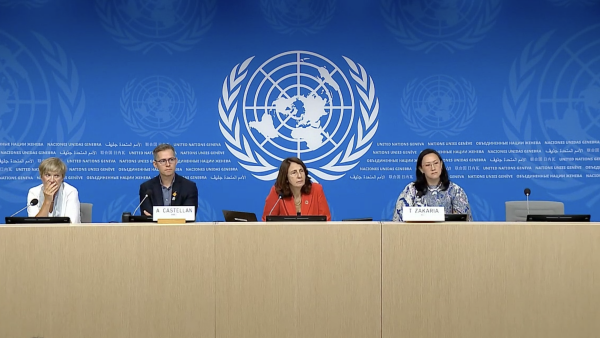
Press conference on the situation of human rights in Nicaragua by the UN Group of Human Rights Experts
1
1
1
Press Conferences | ITU , UNHCR , WHO , WMO
YEMEN - UNHCR: Escalating conflict in Yemen could fuel more displacement, refugee movement
CLIMATE - WHO / WMO: Health and Climate impact of El Niño
1
1
1
Press Conferences | HRC , OHCHR
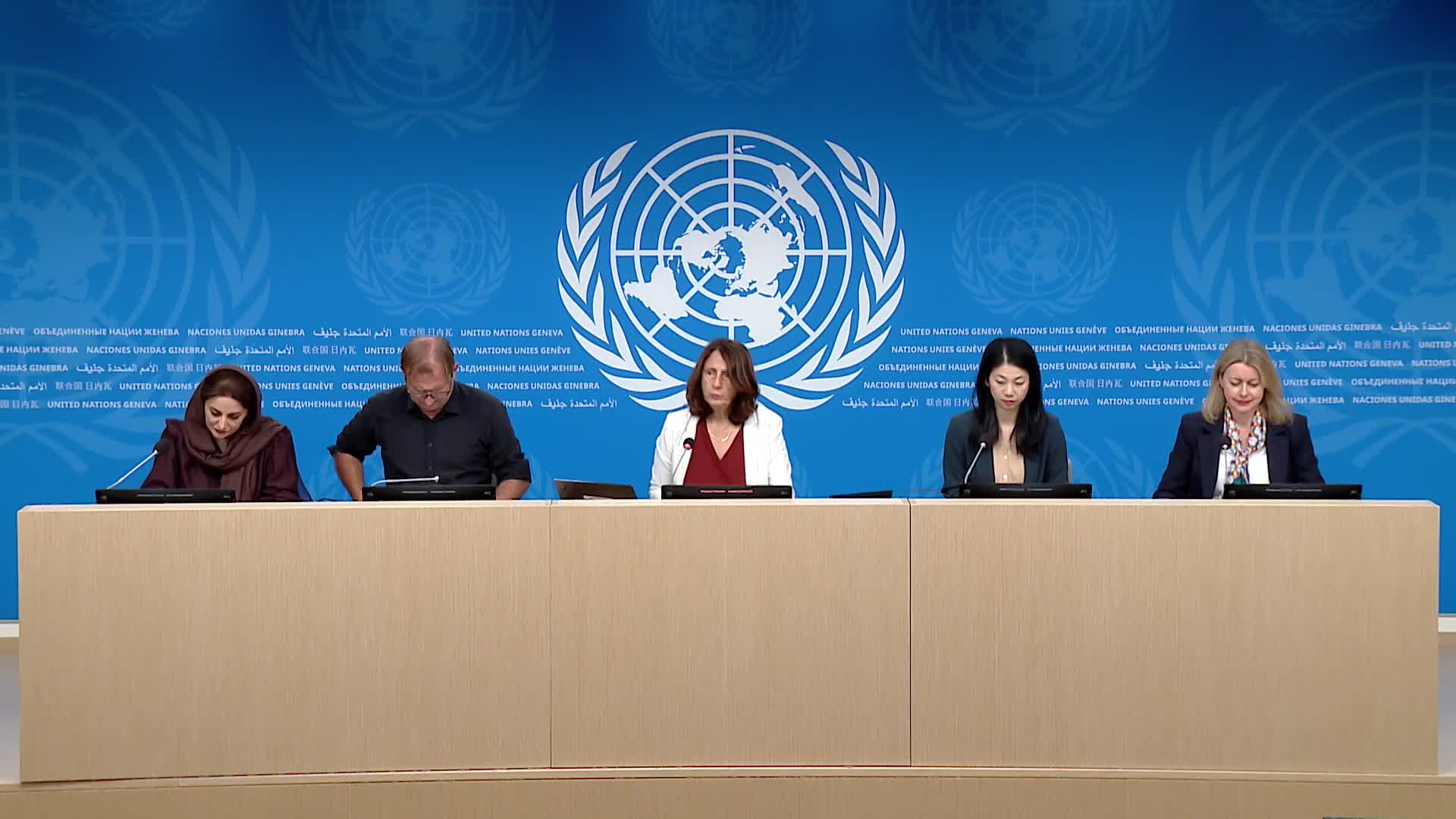
Mariana Katzarova discusses human rights in Russia as a UN Special Rapporteur.
1
1
1
Press Conferences | IOM , OHCHR , UN WOMEN , UNFPA , UNHCR , UNOPS , WHO
UN Geneva briefing: Yemen crisis worsens, urgent aid needed across multiple sectors.
1
1
1
Press Conferences | HRC
Press conference on the latest report of the Independent International Fact-Finding Mission on the Bolivarian Republic of Venezuela to the UN Human Rights Council
1
1
1
Press Conferences | OHCHR
Victims Still Waiting: A Global Briefing on Transitional Justice Around the World