

The United Nations Office at Geneva
Multimedia Newsroom
Press Conferences | OHCHR , UNHCR , UNICEF , WFP
UN Geneva Press Briefing - 13 February 2026
UN INFORMATION SERVICE GENEVA PRESS BRIEFING
13 February 2026
Mass returns to Afghanistan
Arafat Jamal, United Nations Refugee Agency (UNHCR), Representative in Afghanistan, speaking from Kabul, said since October 2023, 5.5 million people had returned to Afghanistan. In 2025, the 2.9 million returns to Afghanistan was the largest number of returns to any country ever recorded. In 2026, over 150,000 Afghans had already returned to the country, mostly from Iran and Pakistan. This represented a massive demographic shock and stood at 12 per cent of the total population. Afghanistan had a fragile economy and was a place of recurring natural disasters and droughts. Mr. Jamal explained that a four-percent decline in GDP/capita was expected in 2026 in an economy that was otherwise expected to grow. The difficult situation was compounded by border blockages, which prevented many supplies, including pharmaceuticals, from entering the country. More than half of returnees reported having no identity documents to prove their origin or who they were; a large majority of families lived on less than five USD per day. Some people were forced to leave their country again, after having faced difficult realities at home.
There were nonetheless pockets of hope, said Mr. Jamal, as those who had returned in 2025 had higher education levels and better connections to local markets, and could contribute to Afghanistan’s recovery. UNHCR had access, presence and experience built over the four decades in the country. UNHCR primarily focused on protection, housing and jobs, with a particular emphasis on women. The Agency remained prepared to respond to population movements within Afghanistan but remained deeply concerned by the shrinking asylum climate in the region. With such dire humanitarian situation and increasing population, foreign support was as needed as ever. For 2026, UNHCR needed at least million USD 216 to support displaced people and returnees; to date, this appeal was only eight per cent funded.
Replying to questions from the media, Mr. Jamal said that it had been four to five months that the blockade between Pakistan and Afghanistan had taken place. It affected numerous sectors, including agricultural workers in Afghanistan, who could no longer export their produce to Pakistan. The blockade on medicine was of particular concern. The majority of returnees in 2026 had been from Pakistan, being sent back involuntarily by the Pakistani authorities. UNHCR appealed to all countries not to send back categories-at-risk, including women, social activists, musicians, athletes, etc. The conditions on the ground in Afghanistan were tough, as traditional safety nets had been overwhelmed by the sheer numbers of people returning. Returns to Afghanistan was not a narrative of hope, stressed Mr. Jamal; these returns were the result partly of coercion, partly of their exhaustion and lack of options. Following close to four decades of notable generosity by both Pakistan and Iran, the dynamics had changed, not only in Pakistan and Iran, but also across Europe. For 2025, UNHCR had asked for USD 216 million, which had been funded 49 per cent, added Babar Baloch, also for UNHCR.
Human rights impacts of Cuba’s socio-economic crisis
Marta Hurtado, for the Office of the High Commissioner for Human Rights (OHCHR), stated that the OHCHR was extremely worried about Cuba’s deepening socio-economic crisis, amid a decades-long financial and trade embargo, extreme weather events, and the recent US measures restricting oil shipments. This was having an increasingly severe impact on the human rights of people in Cuba. Given the dependence of health, food, and water systems on imported fossil fuels, the current oil scarcity had put the availability of essential services at risk nationwide.
Intensive care units and emergency rooms were compromised, as were the production, delivery, and storage of vaccines, blood products, and other temperature-sensitive medications. In Cuba, more than 80 per cent of water pumping equipment depended on electricity, and power cuts were undermining access to safe water, sanitation, and hygiene. The fuel shortage had disrupted the rationing system and the regulated basic food basket, and had affected social protection networks – school feeding, maternity homes, and nursing homes, with the most vulnerable groups being disproportionately impacted. Access to essential goods and services, including food, water, medicine, and adequate fuel and electricity, should always be safeguarded, as they were fundamental in modern societies to the right to life and the ability to enjoy many other rights.
UN High Commissioner for Human Rights Volker Türk reiterated his call on all States to lift unilateral sectoral measures, given their broad and indiscriminate impact on the population. Policy goals could not justify actions that in themselves violate human rights.
Full statement is available here.
Responding to questions, Ms. Hurtado said that OHCHR was asking for the lifting of sectorial sanctions, which were impacting the daily life of Cubans. The country’s electrical system relied almost completely on electricity-producing plants which used oil. She gave examples of medical patients who were adversely affected by the lack of electricity, including dialysis patients. The food and water systems were also under extreme strain. OHCHR did not have a presence in the country but maintained relations with the Cuban authorities and offered technical assistance. Ms. Hurtado said that the unilateral US sanctions were not in line with the respect of human rights of Cubans. Measures needed to be in line with the UN Charter and international law, which was not the case here. Rolando Gómez, for the UN Information Service (UNIS), reminded that the UN General Assembly had for many years voted for the lifting of the unilateral US sanctions against Cuba.
Pressure on Special Procedures
On a question related to the special expert Francesca Albanese, Marta Hurtado, for the Office of the High Commissioner for Human Rights (OHCHR), said that OHCHR was concerned that UN officials and independent experts were subject to growing harassment and pressure by States. Meanwhile, killing of the Palestinians in Gaza continued, while in the West Bank Israel was not meeting its obligations as an occupying power.
Impact of cyclones in Madagascar
Tania Goossens, World Food Programme (WFP) Country Director for Madagascar, speaking from Antananarivo, said that over past three weeks Madagascar had been hit by back-to-back cyclones, leaving over 400,000 people with acute needs. Cyclone Gezani had made a landfall in the country’s second largest city, Toamasina, this week, which had then been visited by a UN delegation to assess the damage. Toamasina had barely any water or electricity, and first casualties had been now reported. Schools and hospitals, along with the WFP’s own warehouse, had suffered significant damage. Trees had been uprooted and debris was now blocking many streets. A multi-sectorial assessment had been conducted, which allowed to gather additional insights, and the results would be shared in the coming days. Special flights were being conducted for humanitarian actors, and the Government had declared a national disaster.
The lack of clean water and damaged infrastructure increased the risk of diseases, said Ms. Goossens. WFP was providing anticipatory cash assistance to 11,000 most vulnerable households, or some 50,000 people, allowing them to purchase food. In the immediate aftermath, WFP was mobilizing its remaining food stock, which would support 18,000 people. Urgent donor support was critically needed, stressed Ms. Goossens. This was not just an emergency response moment, but a chance to build longer-term sustainability and resilience. Before the cyclones, 1.75 million people had already been food insecure across Madagascar. WFP’s overall emergency response had a USD 18 million gap, which had already forced WFP to reduce its assistance.
Main risks for children in South Sudan amid escalating violence
Obia Achieng, United Nations Children’s Fund (UNICEF) Country Representative (a.i) in South Sudan, connecting from Juba, stated that since late December 2025, a devastating escalation of violence had spread across South Sudan. Some 280,000 people had been displaced in Jonglei State alone, the majority of whom women and children. For some of them it was the second or even third time they were being displaced. Some 53 per cent of those displaced were believed to be children. Most had fled with nothing and were sleeping in displacement camps. In South Sudan, killing and maiming of children, recruitment of children by armed groups, and gender-based violence against children were all prevalent. It was reported that 11 health facilities had been attacked and looted in recent months.
Mr. Achieng spoke of the reported outbreaks of cholera among displaced people, with hundreds of reported casualties. Some 825,000 children across several states were at risk of acute malnutrition, warned Mr. Achieng. Children with acute malnutrition without treatment were 12 times more likely to lose their life. UNICEF, other UN agencies, and NGOs remained committed to remain and respond to the ongoing crisis. The scale of what was unfolding in the country was immense, and what was really needed was a cessation of hostilities and unrestricted, unhindered humanitarian access, concluded Mr. Achieng.
Christian Lindmeier, for the World Health Organization (WHO), said that across South Sudan at least 19 attacks against health care had been recorded in 2025, leading to loss of life, injuries and destruction. The consequences for civilians were grave and immediate. Some 1.5 to two million people were facing restricted or no access to health services, including treatment of communicable diseases. Disease surveillance was weakening precisely when it was needed the most. This was a regional and global health security threat, stressed Mr. Lindmeier. Attacks on health care were serious violations of humanitarian law, warned Mr. Lindmeier. The climate of impunity had to be reversed. WHO called on all parties to stop attacks against health care and to respect international humanitarian law without exceptions.
Announcements
Rolando Gómez, for the UN Information Service (UNIS), informed that the Secretary-General was in Ethiopia to take part in the 39th African Union Summit, as well as the Africa-Italy Summit. He would also be meeting several African leaders. The Secretary-General would give a press conference at 3 pm (1 pm Geneva time) the following day.
The Security Council had discussed the situation in Yemen on 12 February, said Mr. Gómez. The Council would address the situation in Syria today and would be briefed by the Deputy Special Envoy and an OCHA representative.
The Committee on the Elimination of Discrimination against Women was reviewing today the report of Lesotho.
The Committee on Economic, Social and Cultural Rights would review on 17 February the report of Australia.
The Human Rights Council Advisory Committee would hold its 34th session from 16 to 20 February 2026 in Room XVI. During the one-week session, the Committee’s 18 independent experts would continue its work on the following mandates: technology-facilitated gender-based violence and its impact on women and girls; implications of plastic pollution for the full enjoyment of human rights; and impact of artificial intelligence systems on good governance.
Finally, today was the World Radio Day, marking the date in 1946 when UN Radio had been established. UN Radio had over time evolved into UN News. This year’s World Radio Day focused on artificial intelligence.
***
TOPICS
UNHCR Babar Baloch (PR) with Arafat Jamal, UNHCR Representative in Afghanistan (From Kabul)
· Update on mass Afghan returns and the humanitarian situation inside the country.
OHCHR Marta Hurtado (PR)
· Human rights impacts of Cuba’s socio-economic crisis
WFP Tania Goossens, WFP Country Director for Madagascar (From Antananarivo)
· Impact of Cyclone Gezani, Field visit to assess damage, emergency response to the most vulnerable populations in Madagascar.
UNICEF Ricardo Pires (PR) with Obia Achieng, UNICEF Country Representative (a.i) in South Sudan (From Juba)
· Main risks for children amid recent escalations of violence
Similar Stories
1
1
1
Press Conferences | IOM , UNDRR
UN stresses importance of household preparedness for disaster risk reduction.
1
1
1
Statements , Press Conferences | OHCHR
1
1
1
Press Conferences | UNHCR , UNICEF , IFRC , OHCHR , UN WOMEN , IOM , OCHA , WHO
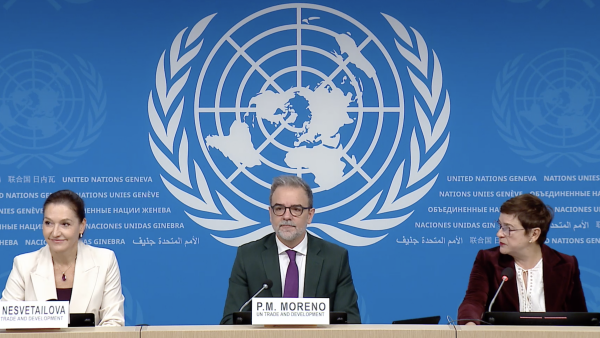
UNHCR – ExCom Meeting, UNICEF – Nepal Recovery, IFRC – Flash Floods, WHO – Mental Health, IOM – South Sudan Floods, OCHA – DRC Humanitarian aid, UNHCR – Sahel Displacement, UNICEF – Yemen Update, IOM – Gaza Shelter, UN Women – Gaza Women, OHCHR – Arrests and detentions of Syrians by Israeli force
2
1
2
Press Conferences | UNCTAD
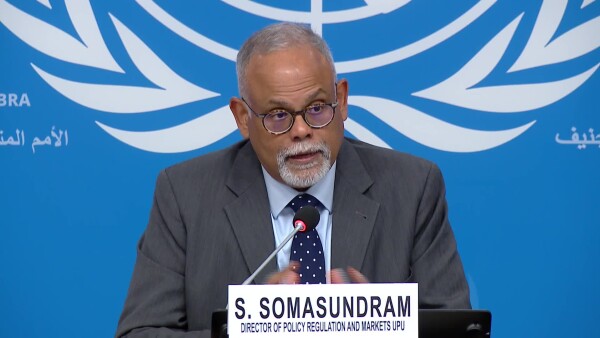
Presentation of the Trade and Developement Report 2026
Embargoed until 9 October 2026 at 11 a.m. (Geneva Time)
UNCTAD: UNCTAD’s flagship report finds that governments increasingly use industrial, trade, financial and technology policies to pursue economic and national security objectives. Market access and the ability to move into higher-value activities now depend more heavily on technology, finance and geopolitics.
1
1
1
Press Conferences | UPU
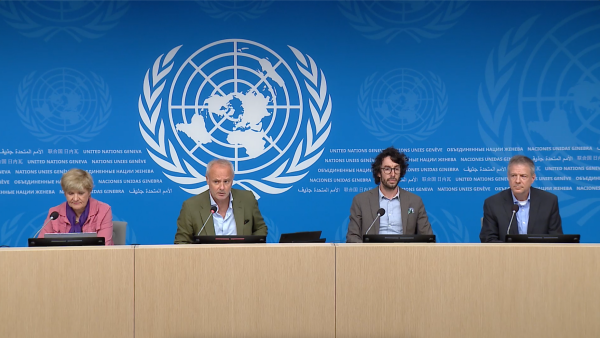
Release of the State of the Postal Sector Report 2026
1
1
1
Press Conferences | IOM , ITU , UNECE , UNICEF , WHO , WMO
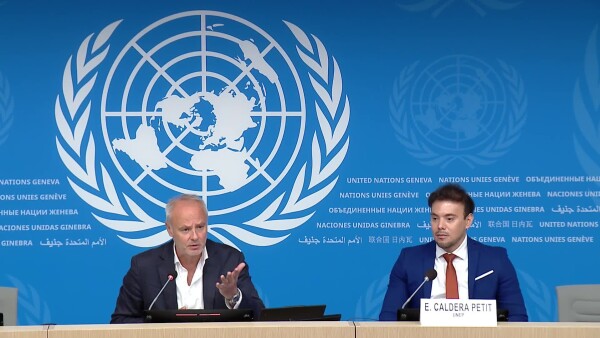
UNICEF: Ebola, DRC - children orphans or separating them from parents and caregivers; IOM: Humanitarian needs in Djibouti amid arrivals from Yemen and increased migrant movements; WHO: Darfur, scale of health needs far exceeds available resources; WMO co-sponsored Global Heat Forum, Bangkok, monthly Global Seasonal Climate Update; UNECE: UN Forum of Mayors; ITU Plenipotentiary Conference 2026; WHO: child and adolescent obesity guidelines and new global roadmap to tackle pregnancy hypertension, a leading cause of maternal mortality
1
1
1
Press Conferences | OCHA , UN WOMEN , UNHCR , WFP , WHO , WTO , UNEP
OCHA – $160M CERF allocation to 12 underfunded crises; UNHCR – 5.8M refugee children remain out of school amid funding cuts; UN Women – Middle East escalation and food security among women/girls; WHO – Gaza supplies and overall situation; WFP – Yemen food insecurity and impact on global hunger ; UNEP - First International Conference of the Global Framework on Chemicals in Geneva | 16-20 November 2026
1
1
1
Press Conferences | UNHCR , WHO
Yemen's health system nears collapse amid conflict, causing rising casualties and medicine shortages.
1
1
1
Press Conferences | HRC
Update by the Expert Mechanism to Advance Racial Justice and Equality in Law Enforcement
1
1
1
Press Conferences | WIPO , WHO , UNICEF , UNHCR , IOM , WFP , FAO
WIPO Global Innovation Index 2026 launch and press conference, WHO Composition of influenza vaccines for the 2027 Southern Hemisphere flu season, UNICEF Yemen hunger and malnutrition; UNHCR Sudan displacement into Chad; IOM Ebola and population movements in DRC; WFP emergency food assistance in Nepal; and FAO food loss and waste.
2
1
2
Press Conferences | UNCTAD
Gaza reconstruction needs reach $71.5 billion as Palestinian economy and public finances face severe strain. Latest UNCTAD report documents the loss of decades of development gains, economic collapse in Gaza and tightening economic constraints in the West Bank.
The report identifies three immediate priorities: transferring withheld Palestinian revenues, safeguarding the banking system and aligning reconstruction support with the documented scale of damage and economic losses.
1
1
1
Press Conferences | HRC
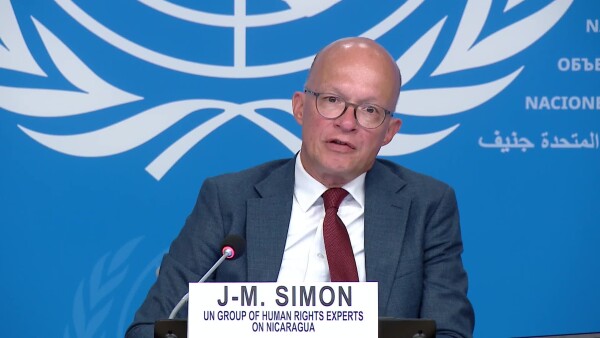
Press conference on the situation of human rights in Nicaragua by the UN Group of Human Rights Experts