

The United Nations Office at Geneva
Multimedia Newsroom
UN GENEVA PRESS BRIEFING
3 February 2026
Health Emergency Appeal 2026
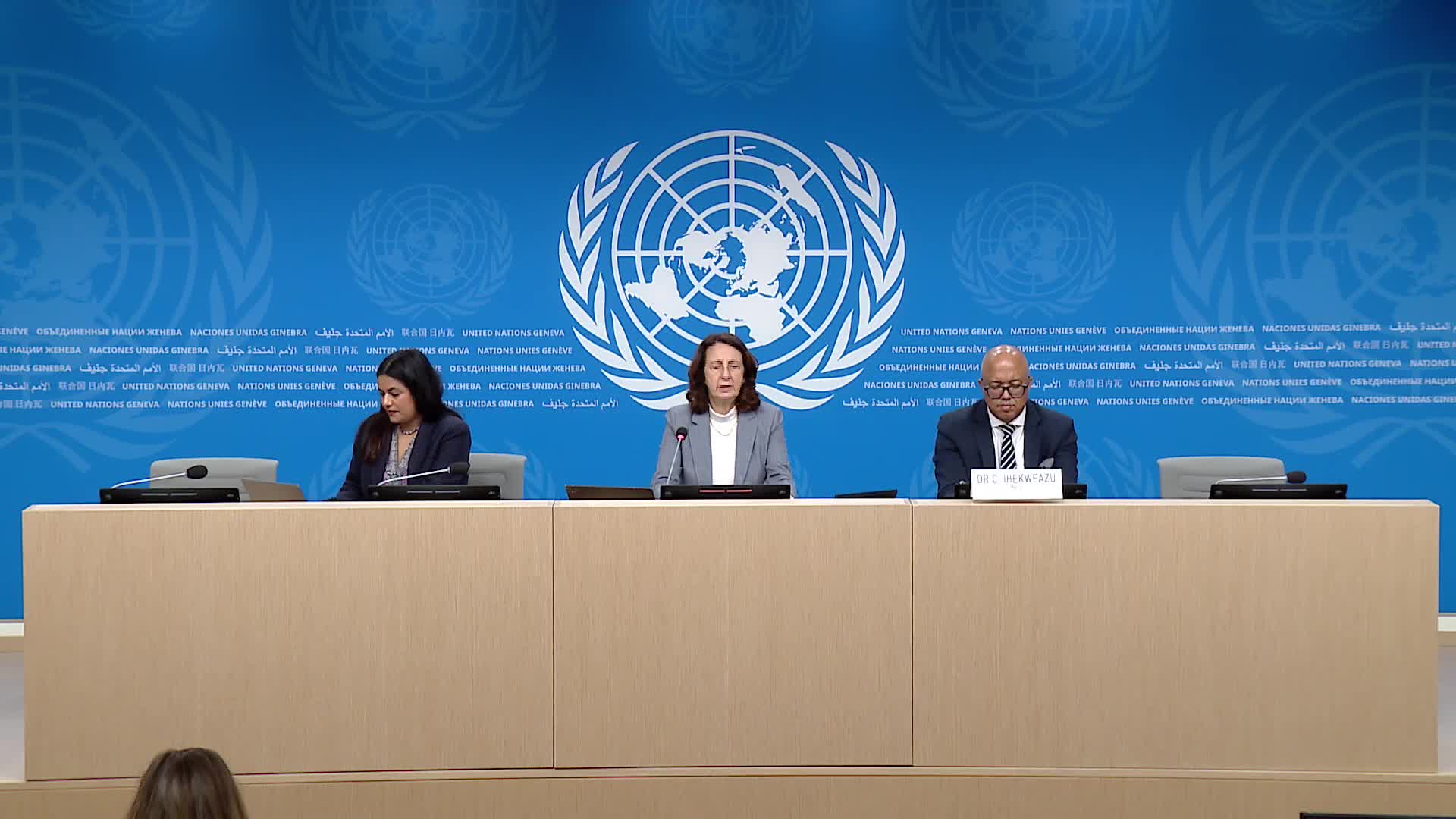
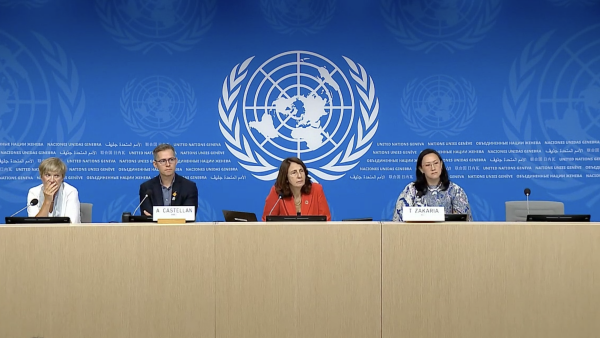
Dr. Chikwe Ihekweazu, Executive Director, World Health Organization (WHO) Health Emergencies Programme, said that a quarter of a billion people were living through humanitarian crises that stripped away the most basic protections: safety, shelter and access to health care. In these settings, health needs were surging, whether due to injuries, disease outbreaks, malnutrition or untreated chronic diseases. Yet, access to care was shrinking. Today, he said, WHO was appealing for USD one billion to sustain essential health services across the world’s most severe emergencies in 2026. This money would support the health response in 36 emergencies, including Gaza and the Middle East, Sudan, Ukraine, the Democratic Republic of the Congo, Haiti, and Myanmar. WHO was deeply worried about the vast needs and how to meet them. Already, 2025 had been an exceptionally difficult year: global funding cuts had forced 6,700 health facilities in 22 humanitarian settings to either close or reduce services, cutting 53 million people off from health care.
Families living on the edge faced impossible decisions, such as whether to buy food or medicine. People should never have to make these choices. This is why today WHO was appealing to the better sense of countries, and of people, and asking them to invest in a healthier, safer world. When people accessed care where they live, families stayed together, and crises were contained. Strong health systems detected threats early, stopped outbreaks from escalating and protected communities across borders. In 2025, WHO had responded to 50 health emergencies in 82 countries, reaching more than 30 million people with essential services. WHO had supported over 8,000 health facilities and deployed more than 1,400 mobile clinics providing health care. WHO had also coordinated the work of 1500 partners in humanitarian settings, and the deployment of over 100 international emergency medical teams, who provided 1.8 million medical consultations in over 20 countries. Health was priceless, stressed Dr. Ihekweazu, and it was one of the most cost-effective investments we could make. Today, WHO again called upon the world to invest in health.
Responding to questions from the journalists, Dr. Ihekweazu specified that in 2025 WHO had asked for USD 1.5 billion, of which it had received some USD 900 million. With that in mind and considering the current climate in the world, WHO had calibrated its ask for 2026. At the same time, WHO had prioritized its work, focusing on those most in need. The appetite for resource mobilization was smaller than in previous years, added Dr. Ihekweazu. On another question, he explained that very often WHO dealt with the consequences of conflicts around the world, which emphasized even more the need for peace and unrestricted humanitarian access. If WHO did not do this work, the consequences for people around the world would be even more serious. WHO was now using local partners more than ever – over 1,500 actors who helped deliver on the ground. While many countries had come forward to support the WHO and would likely support the 2026 appeal, there was a need to get more countries involved.
Every decision to respond and deploy WHO’s resources was always based on need rather than geopolitical or other calculations, said Dr. Ihekweazu in response to another question. Lots of lessons could still be learned from the COVID-19 pandemic, including on how to build systems, share information, and act in solidarity. The world needed more, not less, collaboration, and it was regrettable if one country decided to go in the opposite direction. WHO had not given up on Afghanistan or Yemen, said Dr. Ihekweazu answering another question; if anything, WHO would be willing to do more if it had more resources. He stressed the importance of the continued development of local resources, capabilities and resilience.
Responding to questions from the media on the meeting of the Executive Board of the World Health Organization, Christian Lindmeier, also for WHO, said that the Board had a long agenda, which would likely include some night sessions. The agenda included non-communicable diseases, primary health care, universal health care coverage, digital health, among other topics. The Board would also hear reports from the Director-General on WHO’s response to emergencies, the situation in the occupied Palestinian territories, and WHO’s work in Ukraine. WHO’s reform, budget and human resources would be discussed as well. For the time being, Argentina’s membership in the organization was scheduled to be discussed on 6 February.
Regarding medical evacuations from Gaza, Mr. Lindmeier said that the previous day five patients and seven companions had been evacuated through Rafah, with the help of WHO, first such evacuation in many months. However, more than 18,500 patients in Gaza still required specialized medical care, which was not available in Gaza, thus much more had to be done. Their conditions could be chronic, such as cancer or diabetes, as well as traumas caused by war. Prioritization and selection of patients to be evacuated were made by health authorities on the ground. Mr. Lindmeier explained that Egypt and Ireland had accepted the first evacuees, but many more counties had to step forward.
Humanitarian situation in Sudan
Pierre Kremer, Deputy Regional Director for Africa at the International Federation of Red Cross and Red Crescent Societies (IFRC), said that it had been 100 days since the escalation of the conflict in El Fasher. Those 100 days had seen too much fear and displacement, which followed 500 days of the siege of the city. Civilians had been paying the highest price throughout this entire period, said Mr. Kremer, and Sudan remained the worst humanitarian crisis in the world today. People had lost their loved ones, families had lost their homes and had been torn apart, women and girls had been raped, and too many people had been forced to flee with nothing. Access was still very limited into the city and the humanitarian situation remained dire. The al-Dabba camp for displaced people was 1,000 kilometers away, and thousands of people had walked that long to reach safety. Mr. Kremer stated that some of the people who had fled had later become volunteers with the Sudanese Red Crescent to help others in need. The conflict had to end, and civilians and humanitarian workers had to be protected. Since the beginning of the conflict, 21 volunteers had been killed in Sudan. Mr. Kremer once again emphasized the importance of protecting humanitarian workers and giving them necessary access to people in need. Speaking of Kordofan, Mr. Kremer said that volunteers continued to support affected communities when access was possible. Humanitarian organizations ought to be allowed to do what they were meant to do: save lives.
Responding to questions from the media, Mr. Kremer explained that IFRC still had volunteers in the city but had not been allowed to enter the city itself. IFRC had branches in each of the 18 provinces, including Kordofan, said Mr. Kremer. Unfortunately, many thousands of people were beyond reach in Kordofan today.
Announcements
On behalf of United Nations Environment Programme (UNEP), Alessandra Vellucci informed that the third part of the fifth session of the Intergovernmental Negotiating Committee — INC-5.3 — to develop an international legally binding instrument on plastic pollution, including in the marine environment, would take place at the Geneva International Conference Centre on 7 February. Regional consultations were planned for the morning at the same venue. Following the resignation of the former Chair of the INC, Luis Vayas Valdivieso of Ecuador, the Committee’s Bureau had met on 30 October 2025 and agreed to reconvene the fifth session for a one-day meeting to elect a new Chair and fill any Vice-Chair vacancies. As this resumed session would be procedural and focused on organizational matters, no substantive negotiations would take place. Ms. Vellucci said that the plenary could be watched remotely on UN Web TV. Media requests and enquiries were to be sent to UNEP’s media team at unep-incplastic.media@un.org; more information is available here.
Ms. Vellucci, for the UN Information Service (UNIS), informed that the Committee on the Elimination of Discrimination against Women was reviewing today the report of Viet Nam.
The Conference on Disarmament was holding this morning a public plenary meeting, the first one under the presidency of Mongolia.
Finally, 4 February was the International Day of Human Fraternity, on which occasion the Secretary-General’s message had been shared.
***
ANNOUNCEMENTS
- UNIS on behalf of United Nations Environment Programme
TOPICS
-WHO Shagun Kharewith Dr Chikwe Ihekweazu, Executive Director, WHO Health Emergencies Programme - WHO Health Emergency Appeal 2026: US$ 1 billion dollars needed to respond to the worst health crises and save lives
-IFRC Tommaso Della Longa with Pierre Kremer, Deputy Regional Director for Africa - IFRC's humanitarian response in Sudan
Similar Stories
1
1
1
Statements , Press Conferences | OHCHR
1
1
1
Press Conferences | UNHCR , UNICEF , IFRC , OHCHR , UN WOMEN , IOM , OCHA , WHO
UNHCR – ExCom Meeting, UNICEF – Nepal Recovery, IFRC – Flash Floods, WHO – Mental Health, IOM – South Sudan Floods, OCHA – DRC Humanitarian aid, UNHCR – Sahel Displacement, UNICEF – Yemen Update, IOM – Gaza Shelter, UN Women – Gaza Women, OHCHR – Arrests and detentions of Syrians by Israeli force
2
1
2
Press Conferences | UNCTAD
Presentation of the Trade and Developement Report 2026
Embargoed until 9 October 2026 at 11 a.m. (Geneva Time)
UNCTAD: UNCTAD’s flagship report finds that governments increasingly use industrial, trade, financial and technology policies to pursue economic and national security objectives. Market access and the ability to move into higher-value activities now depend more heavily on technology, finance and geopolitics.
1
1
1
Press Conferences | UPU
Release of the State of the Postal Sector Report 2026
1
1
1
Press Conferences | IOM , ITU , UNECE , UNICEF , WHO , WMO
UNICEF: Ebola, DRC - children orphans or separating them from parents and caregivers; IOM: Humanitarian needs in Djibouti amid arrivals from Yemen and increased migrant movements; WHO: Darfur, scale of health needs far exceeds available resources; WMO co-sponsored Global Heat Forum, Bangkok, monthly Global Seasonal Climate Update; UNECE: UN Forum of Mayors; ITU Plenipotentiary Conference 2026; WHO: child and adolescent obesity guidelines and new global roadmap to tackle pregnancy hypertension, a leading cause of maternal mortality
1
1
1
Press Conferences | OCHA , UN WOMEN , UNHCR , WFP , WHO , WTO , UNEP
OCHA – $160M CERF allocation to 12 underfunded crises; UNHCR – 5.8M refugee children remain out of school amid funding cuts; UN Women – Middle East escalation and food security among women/girls; WHO – Gaza supplies and overall situation; WFP – Yemen food insecurity and impact on global hunger ; UNEP - First International Conference of the Global Framework on Chemicals in Geneva | 16-20 November 2026
1
1
1
Press Conferences | UNHCR , WHO
Yemen's health system nears collapse amid conflict, causing rising casualties and medicine shortages.
1
1
1
Press Conferences | HRC
Update by the Expert Mechanism to Advance Racial Justice and Equality in Law Enforcement
1
1
1
Press Conferences | WIPO , WHO , UNICEF , UNHCR , IOM , WFP , FAO
WIPO Global Innovation Index 2026 launch and press conference, WHO Composition of influenza vaccines for the 2027 Southern Hemisphere flu season, UNICEF Yemen hunger and malnutrition; UNHCR Sudan displacement into Chad; IOM Ebola and population movements in DRC; WFP emergency food assistance in Nepal; and FAO food loss and waste.
2
1
2
Press Conferences | UNCTAD
Gaza reconstruction needs reach $71.5 billion as Palestinian economy and public finances face severe strain. Latest UNCTAD report documents the loss of decades of development gains, economic collapse in Gaza and tightening economic constraints in the West Bank.
The report identifies three immediate priorities: transferring withheld Palestinian revenues, safeguarding the banking system and aligning reconstruction support with the documented scale of damage and economic losses.
1
1
1
Press Conferences | HRC
Press conference on the situation of human rights in Nicaragua by the UN Group of Human Rights Experts
1
1
1
Press Conferences | ITU , UNHCR , WHO , WMO
YEMEN - UNHCR: Escalating conflict in Yemen could fuel more displacement, refugee movement
CLIMATE - WHO / WMO: Health and Climate impact of El Niño