

The United Nations Office at Geneva
Multimedia Newsroom
Press Conferences | UNICEF Giga , UNICEF , IOM , UNHCR , OHCHR , UNECE , WHO
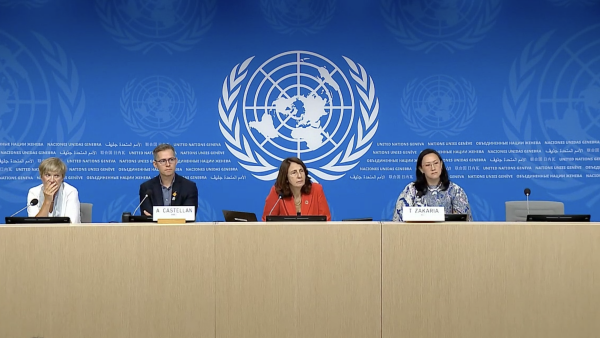
UN Geneva Press Briefing - 17 February 2026
Approaching four years of full-scale invasion of Ukraine
Munir Mammadzade, United Nations Children’s Fund (UNICEF) Country Representative in Ukraine, connecting from Kherson, said that Kherson remained under daily attacks which were destroying homes and critical infrastructure. Constant artillery shelling of the city continued, along with Russian attacks across the country. Mr. Mammadzade spoke of a mother and her two children who had recently been injured in shelling. UNICEF had provided them with psychosocial support and cash assistance, and the family was recovering today. Four years since the start of the full-scale invasion, however, few places offered a sanctuary. In Kherson, daily life was a matter of survival for children and their families. For many, childhood had literally moved underground; only 5,000 children were left in Kherson today, out of more than 60,000 that used to live in the city before the war. UNICEF supported underground child-protection hubs in the city and provided counseling support to children. Families were experiencing exhaustion from living in a hyper-alert stage around the clock. Underground protection hubs provided a bit of respite, said Mr. Mammadzade. UNICEF remained committed to helping children and their families carry on despite the dire situation. Child protection and education were both life-saving and life-changing activities, which ought to be protected even in the current climate of hyper-prioritization. UNICEF also provided winter cash assistance and helped local utilities with repairs, some of which helped families survive the harshest winter of this war.
One third of Ukrainian children remained displaced; some 1.8 million lived like refugees outside of the country. Attacks impacting civilian areas continued across the country, including western parts of Ukraine and Kyiv. Children’s lives, hospitals, schools, and other critical infrastructure continued to be destroyed. Mr. Mammadzade said that one in three adolescents aged 15-19 had been displaced, a recent survey showed. Despite everything, children and youth had not given up on their future, and UNICEF would not give up on them either.
Arthur Erken, International Organization for Migration (IOM) Regional Director in Europe, speaking from Vienna, stated that Russia’s full-scale invasion of Ukraine continued to inflict untold suffering on the Ukrainian people. As the war entered a protracted phase, needs continued to grow and outpaced available support. Missile and drone attacks on civilian energy infrastructure coupled with brutal winter conditions had made darkness and cold a daily reality for Ukrainians across the country. Power cuts now structured daily life: when families cooked, when children studied, when hospitals scheduled procedures. With temperatures down to –20°C, communities faced severe shortages of heating, electricity, and housing repairs. In one of every three displaced households, informed Mr. Erken, someone was living with a disability. In more than half, someone managed a chronic illness. These were not just statistics, but the daily realities that shaped every decision, from medical care to putting food on the table.
Since the escalation of the war, more than 4.4 million people had returned from displacement, which included over one million people who had returned from abroad. However, not all those who had crossed back into Ukraine had been able to return home, with 372,000 people still internally displaced within the country. Winter-related needs were widespread. To prevent further displacement, IOM urged the international community to scale up winterization, housing repairs, livelihoods support, and integrated mental health and psychosocial services, particularly in frontline and high-return areas. Without timely and adequate assistance, continued energy disruptions risked triggering further displacement and undermining recovery efforts. After four years of war, concluded Mr. Erken, resilience alone could not sustain families through yet another winter of blackouts and freezing temperatures. Safe housing, reliable energy, and essential services are not luxuries, but were fundamental to people’s safety, survival and dignity.
The full briefing note is available here.
2026 Sudan Regional Refugee Response Plan
Mamadou Diane Balde, United Nations Refugee Agency (UNHCR) Regional Director for Eastern and Southern Africa, speaking from Nairobi, said that, nearly three years since the outbreak of the war, Sudan remained the world’s largest displacement and worst humanitarian crisis. Fighting continued in several parts of the country, where essential services had collapsed. Humanitarian access remained restricted in many areas. Thousands of people continued to flee across borders each week, often arriving in already vulnerable yet generous regions, where public services and economic opportunities had been limited even before the crisis.
While host governments and local communities continued to demonstrate remarkable solidarity, their capacity was being pushed to the brink. Egypt now hosted the largest number of people fleeing Sudan, with registered refugee figures nearly quadrupling since 2023. Yet severe funding cuts had forced UNHCR to close two of its three registration centres, affecting people’s access to critical protection services. Available funding per refugee per month amounted to USD 4 in 2025, a drastic drop from USD 11 in 2022. UNHCR and 123 partners were urgently seeking USD 1.6 billion to deliver critical life-saving assistance and more dignified support to 5.9 million people across seven countries neighbouring Sudan by the end of the year. Most funds were needed for food security, followed by access to registration, addressing sexual and gender-based violence, providing health services, housing, etc. This appeal was about showing solidarity with the people of Sudan and the refugee-hosting countries. Mr. Balde stressed that investing in Sudan and the
Human rights violations and abuses against migrants in Libya
Thameen Al-Kheetan, for the Office of the High Commissioner for Human Rights (OHCHR), stated that a new UN report showed that migrants, refugees and asylum-seekers in Libya were subjected to ruthless and systematic human rights violations and abuses, which included killings, torture, sexual violence and trafficking. The report by OHCHR and the UN Support Mission in Libya found that migrants were rounded up and abducted by criminal trafficking networks, often with ties to the Libyan authorities, and criminal networks abroad. The report described how they were separated from their families, arrested and transferred to detention facilities without due process, often at gunpoint, in what amounted to arbitrary detention. In detention, migrants were routinely subjected to horrific violations and abuses, including slavery, torture, ill-treatment, forced labour, forced prostitution and other forms of sexual violence, ransom, extortion, as well as the confiscation and re-sale of their belongings and identification documents.
Mr. Al-Kheetan explained that the report uncovered an “exploitative model preying on migrants, asylum-seekers and refugees in situations of heightened vulnerability [that] has become ‘business as usual’ – a brutal and normalised reality”. He provided disturbing examples of Eritrean women who had been gang raped, one of whom died afterwards. There were no words to describe the never-ending nightmare these people are forced into, only to feed the mounting greed of traffickers and those in power profiting from a system of exploitation. OHCHR called on the Libyan authorities to release immediately all those arbitrarily detained in both unofficial and official detention centres, to cease dangerous interception practices, and to decriminalise irregular entry, stay and exit from the country.
Suki Nagra, UN Human Rights representative at the UN mission in Libya, connecting from London, explained that the report was a result of robust research in 2024 and 2025, and was based on interviewing over 100 survivors. Mr. Nagra shared a testimony of a Nigerian woman, who had endured several years of sexual servitude and domestic slavery, before being able to leave the country. Another survivor had spoken of underage girls being gang raped. Yet another woman spoke of the exploitation of her husband, who had been trapped to work without pay or food. Ms. Nagra also gave examples of others who had been let go only when their families paid a ransom. Many asylum seekers, migrants and refugees endured a vicious abuse cycle, which the OHCHR wanted to highlight in its report.
More details are available here.
Impact of Cyclone Gezani in Madagascar
Roger Charles Evina, International Organization for Migration (IOM) Chief of Mission in Madagascar, speaking from Antananarivo, said that since Tropical Cyclone Gezani had made landfall in northeastern Madagascar on 10 February, at least 59 people had lost their lives, 15 remained missing, and more than 800 had been seriously injured. Flooding, power and water outages, and severe infrastructure damage had cut off road access to many affected areas. Over 25,000 homes had been destroyed and nearly 50,000 buildings damaged including schools, hospitals, and health centres. More than 423,000 people across five regions were impacted, with the greatest needs in Analanjirofo, Atsinanana, Alaotra Mangoro, Analamanga, and surrounding areas.
Immediate priorities included emergency shelter and essential household items, water and sanitation support to prevent disease outbreaks, medical care, protection and mental health services, and reliable data on displacement and needs. IOM had pre-positioned teams and resources ahead of the cyclone and had deployed staff to affected areas. IOM was conducting displacement tracking across 48 sites in 25 districts to guide response efforts. Early findings showed that many sites lacked electricity and safe water, most displaced people were sleeping in buildings without roofs, and sanitation facilities were insufficient. IOM was supporting camp coordination and management, targeting households for shelter assistance, and working closely with national authorities, OCHA, and humanitarian partners. Mr. Evina stressed that urgent financial support was needed to scale up assistance for more than 423,000 affected people.
Ricardo Pires, for the United Nations Children’s Fund (UNICEF), said that at least 6,000 children had been displaced by the latest climate disaster. Children were once again at a sharp end of climate-related shocks. Health facilities and schools on which children had relied on, were now partially or completely destroyed. UNCIEF was helping children stay away from places that were not safe, and doing what it could to ensure there would be no spread of water-borne diseases.
Maternal mortality in conflict
Dr. Jenny Cresswell, Scientist at the World Health Organization (WHO) Human Reproductive Programme, informed that today WHO was releasing a technical brief that showed that nearly six in ten maternal deaths globally now occurred in countries affected by conflict or fragility. In 2023, an estimated 260,000 women had died from causes related to pregnancy and childbirth; around 160,000 of those deaths had occurred in settings experiencing conflict or institutional fragility. Most women dying in pregnancy today were not dying because we lack medical solutions; they were dying because of structural weaknesses in health systems often rooted in conflict, crisis, and instability. The overwhelming majority of those deaths could be prevented. Dr. Cresswell explained that a woman living in a conflict-affected country today faced a lifetime risk of maternal death of 1 in 51, while in stable settings, that risk was 1 in 593. These were not abstract statistics: they reflected real women, real families, and real systems under strain.
However, there was another side to this story: one of many countries showing resilience and action. In Ethiopia, for example, where conflict and drought continued, and displacement had severely disrupted maternal services, WHO and partners had launched the Service Delivery Innovations project in affected regions. Since 2022, the number of women giving birth with a skilled health worker present in the targeted areas had increased from about 12,800 to more than 17,600. Antenatal care had risen sharply, and dropout rates had been cut nearly in half. Even in conflict, progress was possible. Dr. Cresswell reminded that the world had committed to reducing global maternal mortality to fewer than 70 deaths per 100,000 live births by 2030 but was way off track. Maternal health in fragile settings had to be protected, which meant investing in primary health care, protecting health workers and facilities, ensuring emergency obstetric services remain functional during crises, as well as strengthening data systems so every maternal death was counted. No woman should lose her life while giving life.
Further details are available here.
Jordan accedes UN Water Convention
Thomas Croll-Knight, for the United Nations Economic Commission for Europe (UNECE), informed that Jordan had acceded to the 1992 UN Convention on the Protection and Use of Transboundary Watercourses and International Lakes (UN Water Convention), in a move aimed at strengthening cooperation over shared water resources in one of the world’s most water-scarce regions. The accession followed that of Iraq in 2023 and further expanded participation from the region in the agreement. Jordan was the 59th Party to the Convention, joining 18 states from Africa, Asia, and Latin America to have joined this treaty in the last ten years.
Mr. Croll-Knight said that Jordan faced severe water scarcity and ranked amongst the world’s water-poorest countries. Around 40 percent of Jordan’s water resources were shared with neighbouring countries, including Iraq, Israel, Lebanon, Palestine, Saudi Arabia, and Syria, which made cooperation over transboundary surface and groundwater essential. Water management challenges continued to intensify in Jordan, driven by population growth, the significant refugee population, and climate pressures, and water security was a national priority, championed at the highest political level. By joining the UN Water Convention and its community of practice, Jordan was gaining access to a global, legal and institutional framework for the equitable and sustainable management of domestic and transboundary waters.
More information on the UN Water Convention can be found here.
Announcements
Daniel Ginsianmung, for Giga, said that nearly one third of the world remained offline today: about 2.2 billion people did not have internet access. Connectivity was no longer just a convenience; it was a lifeline. Today, Giga was opening submissions for the 2026 Giga Photo Award under the theme “The Urgency of Connectivity,” calling for visual stories from conflict settings, climate-induced disasters, health emergencies and displacement. Giga especially encouraged submissions from journalists and visual storytellers in the Global South and from local reporters documenting underreported situations. This year’s winning images would be exhibited in Geneva in June and October. Awards included fellowships, mentorship opportunities and a global publication. More information can be found here.
Thomas Croll-Knight, for the United Nations Economic Commission for Europe (UNECE), reminded that the 88th session of the Inland Transport Committee was starting at the Palais des Nations today.
Alessandra Vellucci, for the UN Information Service (UNIS), informed that on 22 February, the Secretary-General would travel to Geneva, where on 23 February he would deliver remarks at the opening of the 61st session of the Human Rights Council. Later that day, the Secretary-General would address the High-Level Segment of the Conference on Disarmament. He would also hold bilateral meetings with leaders and ministers attending the Human Rights Council, as well as a meeting with a group of human rights NGOs. The Secretary-General was also scheduled to participate in an event hosted by the Vice-President of the Swiss Federal Council, Ignazio Cassis, to mark the completion of the Portail des Nations building, UN Geneva’s new visitor center.
Ms. Vellucci further informed that on 23 February at 2 pm, the Permanent Mission of Israel would hold a stakeout in Hall XIV, at which Ambassador Daniel Meron would address the media.
The Conference on Disarmament was holding this morning a public plenary meeting – the first one under the presidency of Morocco - during which it would hear an address by Dr. Seyed Abbas Araghchi, Minister of Foreign Affairs of the Islamic Republic of Iran. The meeting could be followed through a live audio streaming the link to which would be sent out to all accredited journalists.
The Committee on the Elimination of Discrimination against Women was going to close its 92nd session on 20 February at 5 pm and issue its concluding observations on the eight countries reviewed: Vietnam, Iraq, Lithuania, Netherlands, Argentina, Czechia, El Salvador, and Lesotho.
The Committee on Economic, Social and Cultural Rights was reviewing today the report of Australia.
***
Similar Stories
1
1
1
Statements , Press Conferences | OHCHR
1
1
1
Press Conferences | UNHCR , UNICEF , IFRC , OHCHR , UN WOMEN , IOM , OCHA , WHO
UNHCR – ExCom Meeting, UNICEF – Nepal Recovery, IFRC – Flash Floods, WHO – Mental Health, IOM – South Sudan Floods, OCHA – DRC Humanitarian aid, UNHCR – Sahel Displacement, UNICEF – Yemen Update, IOM – Gaza Shelter, UN Women – Gaza Women, OHCHR – Arrests and detentions of Syrians by Israeli force
2
1
2
Press Conferences | UNCTAD
Presentation of the Trade and Developement Report 2026
Embargoed until 9 October 2026 at 11 a.m. (Geneva Time)
UNCTAD: UNCTAD’s flagship report finds that governments increasingly use industrial, trade, financial and technology policies to pursue economic and national security objectives. Market access and the ability to move into higher-value activities now depend more heavily on technology, finance and geopolitics.
1
1
1
Press Conferences | UPU
Release of the State of the Postal Sector Report 2026
1
1
1
Press Conferences | IOM , ITU , UNECE , UNICEF , WHO , WMO
UNICEF: Ebola, DRC - children orphans or separating them from parents and caregivers; IOM: Humanitarian needs in Djibouti amid arrivals from Yemen and increased migrant movements; WHO: Darfur, scale of health needs far exceeds available resources; WMO co-sponsored Global Heat Forum, Bangkok, monthly Global Seasonal Climate Update; UNECE: UN Forum of Mayors; ITU Plenipotentiary Conference 2026; WHO: child and adolescent obesity guidelines and new global roadmap to tackle pregnancy hypertension, a leading cause of maternal mortality
1
1
1
Press Conferences | OCHA , UN WOMEN , UNHCR , WFP , WHO , WTO , UNEP
OCHA – $160M CERF allocation to 12 underfunded crises; UNHCR – 5.8M refugee children remain out of school amid funding cuts; UN Women – Middle East escalation and food security among women/girls; WHO – Gaza supplies and overall situation; WFP – Yemen food insecurity and impact on global hunger ; UNEP - First International Conference of the Global Framework on Chemicals in Geneva | 16-20 November 2026
1
1
1
Press Conferences | UNHCR , WHO
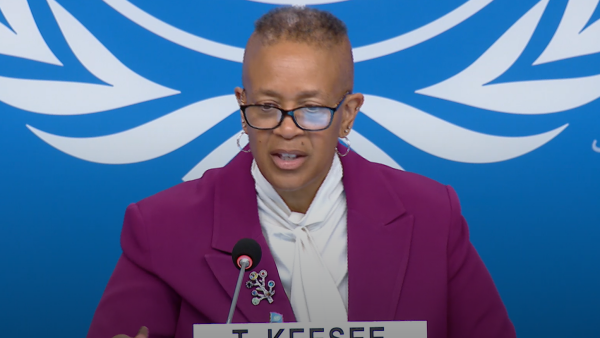
Yemen's health system nears collapse amid conflict, causing rising casualties and medicine shortages.
1
1
1
Press Conferences | HRC
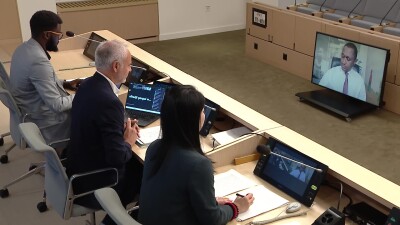
Update by the Expert Mechanism to Advance Racial Justice and Equality in Law Enforcement
1
1
1
Press Conferences | WIPO , WHO , UNICEF , UNHCR , IOM , WFP , FAO
WIPO Global Innovation Index 2026 launch and press conference, WHO Composition of influenza vaccines for the 2027 Southern Hemisphere flu season, UNICEF Yemen hunger and malnutrition; UNHCR Sudan displacement into Chad; IOM Ebola and population movements in DRC; WFP emergency food assistance in Nepal; and FAO food loss and waste.
2
1
2
Press Conferences | UNCTAD
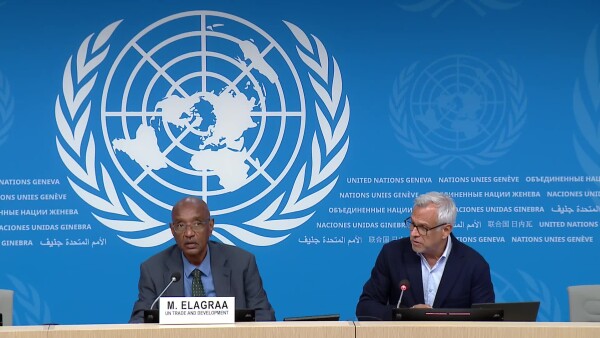
Gaza reconstruction needs reach $71.5 billion as Palestinian economy and public finances face severe strain. Latest UNCTAD report documents the loss of decades of development gains, economic collapse in Gaza and tightening economic constraints in the West Bank.
The report identifies three immediate priorities: transferring withheld Palestinian revenues, safeguarding the banking system and aligning reconstruction support with the documented scale of damage and economic losses.
1
1
1
Press Conferences | HRC
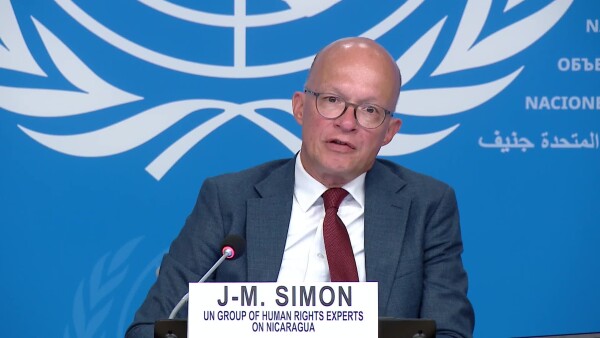
Press conference on the situation of human rights in Nicaragua by the UN Group of Human Rights Experts
1
1
1
Press Conferences | ITU , UNHCR , WHO , WMO
YEMEN - UNHCR: Escalating conflict in Yemen could fuel more displacement, refugee movement
CLIMATE - WHO / WMO: Health and Climate impact of El Niño