

The United Nations Office at Geneva
Multimedia Newsroom
Global Forests Resources Assessment
Anssi Pekkarinen, Senior Forestry Officer at the Food and Agriculture Organization (FAO), said that the Global Forest Resources Assessment just launched by FAO was the most comprehensive report of that kind, covering more than 60 variables and the period from 1990 to 2020. The main message of the assessment was that the forest loss was continuing but slowing down, even if not nearly enough. The world had lost 178 million hectares of forest since 1990, which was an area about the size of Libya. There were some 4.08 billion hectares of forests globally. The loss of forests was continuing globally, with Africa being the hot spot, followed by South America. Since 1990, some 420 million hectares of forests had been lost to other uses, such as agriculture. More than 700 million hectares of forest were currently in the legally established protected areas, and globally, some 18 percent of all forests had sustainable management plans in place, informed Mr. Pekkarinen. All the data was now available, by countries, territories and variables, in an easy-to-use digital format.
Responding to a question, Mr. Pekkarinen said that the data was available in French and other languages, whereas the report was being translated. The related press release with Mr. Pekkarinen’s contact details would be shared with the media shortly.
The 2020 Global Forest Resources Assessment is available here.
COVID-19 and internal displacement in Yemen
Paul Dillon, for the International Organization for Migration (IOM), said that COVID-19 had emerged as a new cause of internal displacement and misery for thousands of conflict-weary Yemenis. IOM’s Displacement Tracking Matrix reported that more than 100,000 people had been forced to flee due to fighting and insecurity since January. The situation was especially dire in places like Aden where hospitals were turning away suspected cases, and news reports had shown large numbers of graves being dug.
Displaced people in Yemen who had been the worst affected by nearly six years of conflict were now leaving virus hotspots. Some were moving from Aden and Lahj to areas within the same governorates less affected by the outbreak, while others were going to districts in Abyan, despite active fighting in other parts of that governorate. Many of those displaced as a result of the outbreak had been already living in displacement and were moving for the second, third or fourth time. While the official number of COVID-19 cases in Yemen remained low, given limited testing capacity and concerns among the local population about seeking treatment, the humanitarian community was working under the assumption that the actual numbers were much higher.
Alessandra Vellucci, for the UN Information Service (UNIS), recalled that aid agencies required 385 million USD in funding to support COVID-19 operations, including $304 million for health. As of yesterday, 20 July, the operation had received only $55 million – a mere 14 per cent of what was actually needed.
Responding to a question, Mr. Dillon said that nearly half of the health infrastructure in the country had been destroyed as a result of the long-lasting hostilities.
Full press release, including B-roll and photos, is available here.
Other announcements
Fernando Puchol, for the World Trade Organization (WTO), informed that on 22 and 23 July there would be a session of the General Council, the last one under Roberto Azevedo as the WTO Director-General. The previous week, the eight candidates for next DG had made their presentations to the Council and addressed the media. This week the Council would also decide, by consensus, which of the current Deputies Director-General would become the acting DG once Mr. Azevedo left on 31 August. The Council would also discuss the request of Turkmenistan to receive an observer status.
On 22 July, the WTO spokesperson Keith Rockwell would brief the media in Room B at the WTO, and on 23 July, Roberto Azevedo would give a press conference at the WTO at 1 p.m.; details on the logistics of both conferences would be sent out to the media shortly.
Tarik Jašarević, for the World Health Organization (WHO), informed that today at 3 p.m. there would be a webinar on the “infodemics” conference. The webinar would discuss the results of the closed sessions of the conference, which had taken place over the past two and a half weeks. The webinar was open to everyone, who could ask questions in the chat format. There was huge interest in the topic, which was why the webinar would be open to the general public. If there was media interest in the topic, a separate press briefing could possibly be organized. The use of any medical products in any country was authorized by national health regulatory agencies which regulated their use, said Mr. Jašarević in a response to a question; WHO hoped that any potential treatment would go through a rigorous process. Mr. Jašarević also said that the regular WHO press conferences should, in general, now be taking place on Mondays and Thursdays.
Alessandra Vellucci, for the UN Information Service (UNIS), informed that the Human Rights Committee was still holding its 129th session online, which could be followed live at UN WebTV. The session would end on 24 July in the afternoon.
Ms. Vellucci also informed that UN Special Envoy for Syria Geir Pedersen would address the Security Council on 23 July, the first part of which would be webcast at UN Web TV.
Ms. Vellucci said that the next Ciné-ONU, organized jointly by UN Brussels, Vienna and Geneva, would take place with an online screening of “Wake up on Mars”, to be followed by a panel discussion on 22 July at 5 p.m.
Finally, Ms. Vellucci said that a virtual exhibition on UN@75, "75 Years, 75 Documents" prepared by the Dag Hammarskjöld Library, could be accessed now. The exhibition highlighted key documents that had shaped international relations and featured UN accomplishments and action on recent global issues such as climate change, gender equality, migration, and the COVID-19 pandemic. The exhibition could also be accessed through the UN75 website: https://www.un.org/un75
Similar Stories
1
1
1
Press Conferences | UN WOMEN , WFP , WHO
UN WOMEN: Sudan Women and girls one year after the fall of El Fasher; increasing drone attacks across the country; WFP: DRC - Ebola spreads to eighth DRC province as WFP delivers food, builds treatment centres and keeps supplies moving; WHO - Update on Ebola (Bundibugyo Virus Disease)
1
12
1
1
Press Conferences , Images | UNOG
Closing Press Conference following the Sixth Consultative Meeting on Enhancing Coordination of Peace Initiatives and Efforts in Sudan

2
17
1
2
Edited News , Press Conferences , Images | OCHA , WMO
Two UN agencies teamed up on Wednesday to issue an appeal for immediate assistance to help communities already being impacted by the strongest El Niño on record.
1
1
1
Press Conferences | CITES
Wildlife trade and conservation policy discussions at the 81st meeting of the CITES Standing Committee (SC81)
1
1
1
Press Conferences | UNHCR , UNCTAD , WMO , OCHA , UNICEF , WHO
UNHCR Hungary’s 1956 Refugee Crisis: 70 Years On, UNCTAD World Investment Forum 2026, Doha, WMO Greenhouse Gas Bulletin and Climate Update for COP31, OCHA Afghanistan: Malnutrition, Girls’ Education and Recovery, UNICEF Yemen: Child Malnutrition and Unsafe Water in Taiz, WHO Inequalities in Noncommunicable Diseases and Risk Factors
1
1
1
Press Conferences | UNHCR
End of UNHCR's 77th Annual Executive Committee (ExCom) meeting week
1
1
1
Press Conferences | UNICEF , IOM , UNHCR
UN Special Assistant to the Personal Envoy Office (SUDAN): Peace Initiatives and Efforts in Sudan; UNICEF: Dire situation of children in Gaza; IOM: Damaged Homes and Energy Attacks Risk Displacing Ukrainians for this winter; UNHCR: update on EXCOM week
1
1
1
Press Conferences | IOM , UNDRR
UN stresses importance of household preparedness for disaster risk reduction.
1
1
1
Statements , Press Conferences | OHCHR
1
1
1
Press Conferences | UNHCR , UNICEF , IFRC , OHCHR , UN WOMEN , IOM , OCHA , WHO
UNHCR – ExCom Meeting, UNICEF – Nepal Recovery, IFRC – Flash Floods, WHO – Mental Health, IOM – South Sudan Floods, OCHA – DRC Humanitarian aid, UNHCR – Sahel Displacement, UNICEF – Yemen Update, IOM – Gaza Shelter, UN Women – Gaza Women, OHCHR – Arrests and detentions of Syrians by Israeli force
2
1
2
Press Conferences | UNCTAD
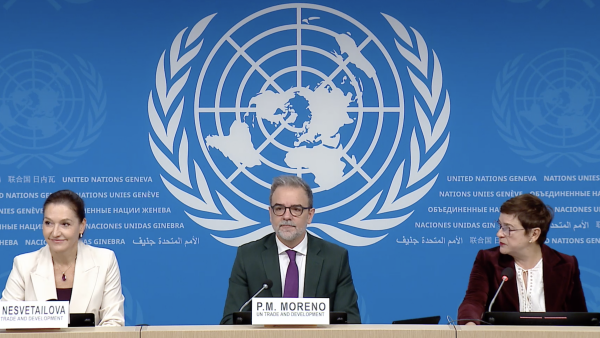
Presentation of the Trade and Developement Report 2026
Embargoed until 9 October 2026 at 11 a.m. (Geneva Time)
UNCTAD: UNCTAD’s flagship report finds that governments increasingly use industrial, trade, financial and technology policies to pursue economic and national security objectives. Market access and the ability to move into higher-value activities now depend more heavily on technology, finance and geopolitics.
1
1
1
Press Conferences | UPU
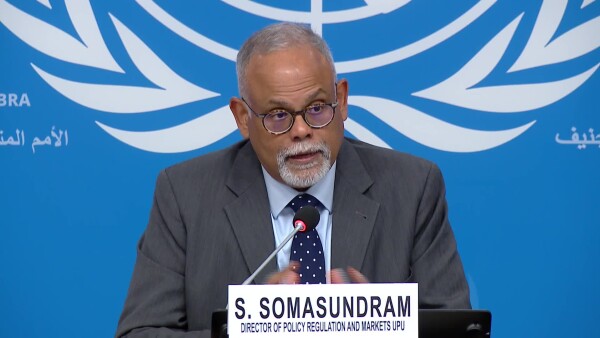
Release of the State of the Postal Sector Report 2026