

The United Nations Office at Geneva
Multimedia Newsroom
Press Conferences , Edited News | OHCHR
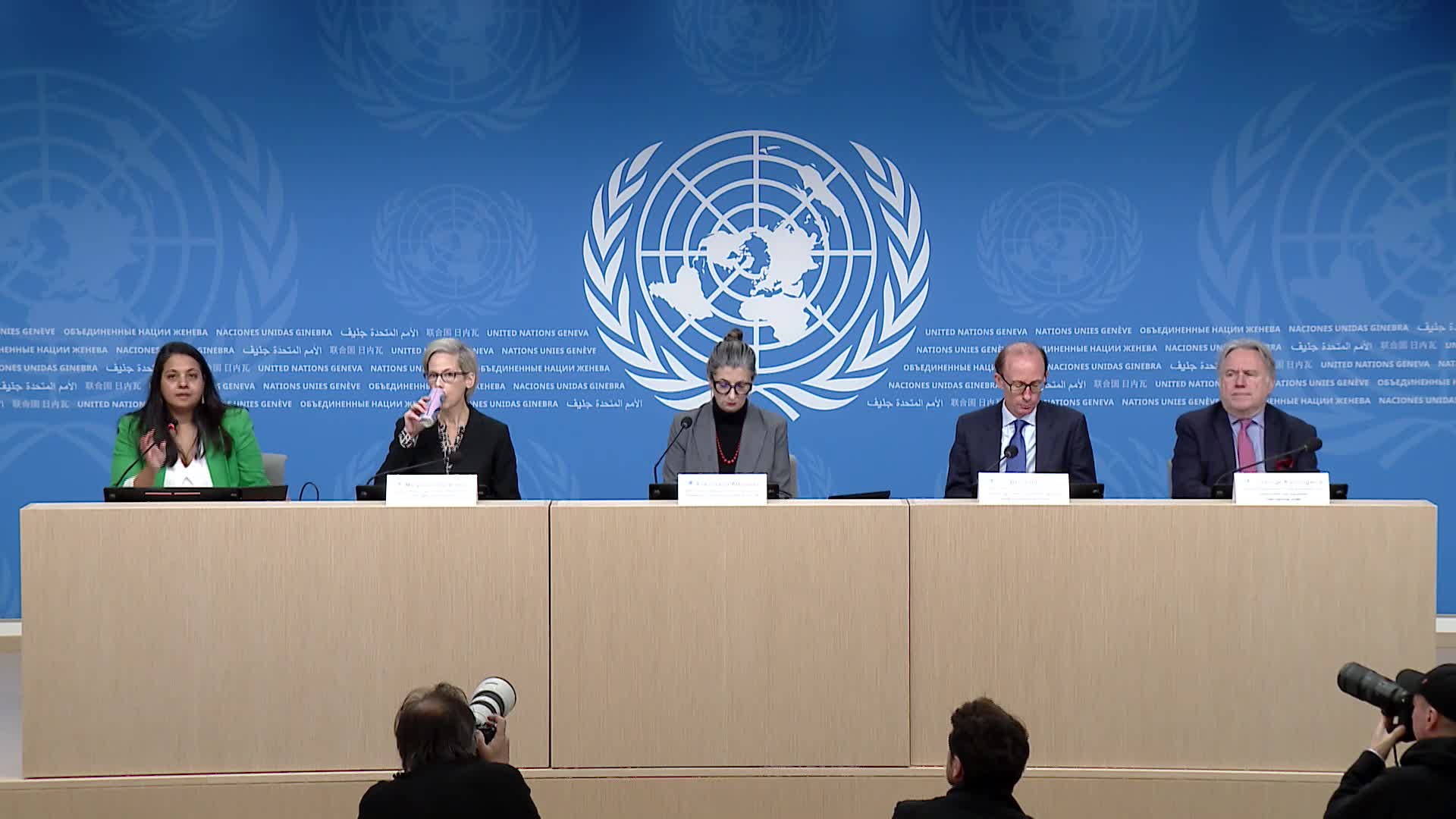
OHCHR Press Conference: Human Rights in Gaza and OPT - 11 December 2024
Rights experts call for end to impunity for Israel’s violations of international law
Four independent human rights experts jointly called on Wednesday for the international community to sanction Israel’s conduct of hostilities in the Occupied Palestinian Territory as well as in the wider Middle East region - including in Syria, Lebanon and Iran. They also called for the restoration of trust in the international justice system through the abandonment of “extreme interpretations” and “double standards” in the application of the universal norms which regulate the conduct of war.
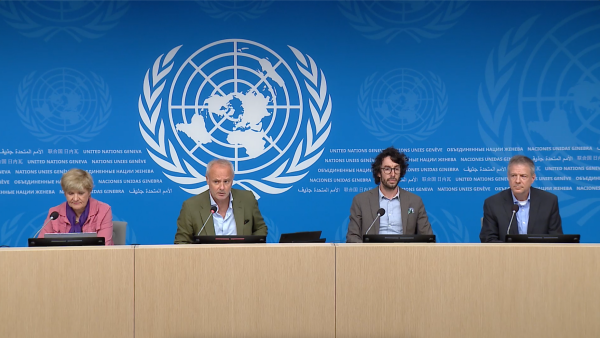
The four Special Rapporteurs - independent experts advising the Human Rights Council in their personal capacities – were speaking at a press conference in Geneva today.
“We ask for one simple thing: compliance with international humanitarian law - it’s not charity, it’s an obligation,” said Francesca Albanese, the Special Rapporteur on the situation of human rights in the Occupied Palestinian Territory, speaking at a press conference at the United Nations in Geneva today. (Special Rapporteurs are independent human rights experts appointed by the Human Rights Council to fulfil advisory functions in their individual capacities.)
Citing the very high casualty figures among Palestinian civilians, as well as the blockages to humanitarian aid and the expansion of settlements, among a list of violations, Ms. Albanese questioned what she called the weak response from the UN Member States, even in the face of attacks on its own staff, premises, and representatives. “There are never sanctions on Israel - judicial processes are either ignored or circumvented, and trade continuous and diplomatic ties remain intact. Member States seem to be paralyzed or awestruck, many of them still normalizing the occupation,” Ms. Albanese said.
Ben Saul, the rights expert on the promotion and protection of human rights and fundamental freedoms while countering terrorism, said that “one of the striking features of the last 14 months is how Israel has used counterterrorism rhetoric to justify exceptional extreme violence against Palestinians, accompanied by a chronic dehumanization of the Palestinian people, which, of course, allows them to be killed, in large numbers — at the political level and also through the legal measures that Israel has taken.”
Mr. Saul pointed out that insufficient attention has been focused on what he described as “extreme” and non-standard legal interpretations of international humanitarian law and human rights law being applied by Israel to justify unprecedented levels of violence. “This last campaign, in Gaza, is unprecedented in the history of warfare in recent years,” Mr. Saul said, adding that includes “deliberate attacks on civilians, indiscriminate attacks, disproportionate attacks, starvation, denial of humanitarian relief, suppression of NGOs and UNRWA as “terrorists”, a complete lack of credible accountability through the Israeli military and civilian justice system.”
He explained that “Israel has enabled this violence by taking very extreme, exceptional interpretations of international humanitarian law to impose a kind of cloak of legality on what they're doing. So, they've expanded the definition of what is a military objective. They've expanded the category of people they call fighters who can be attacked. They’ve imposed very large numbers, on the civilian casualty counts, that they tolerate in targeting.”
Mr. Saul echoed the call for credible investigations, and an end to impunity, noting that most violations have “gone unchallenged by the States that matter and that can have a real influence to change Israel's behavior on the ground.” Mr. Saul pointed specifically to Germany and the United States, as suppliers of the great majority of Israel’s military hardware, as being countries that could use their influence to end many of these human rights violations.
Margaret Satterthwaite, the Special Rapporteur on the independence of judges and lawyers, stressed the role of international justice, particularly the International Criminal Court (ICC), in holding perpetrators accountable for genocide, war crimes, and crimes against humanity. She criticized the United States government for undermining the ICC with “outrageous” threats and stressed the need for international justice to be equitably applied to all.
“It’s time to end the double standards,” Ms. Satterthwaite said. “International justice exists or does not. We can't abide by justice for people from some States and the protection of the law for some people with impunity, for people from other States, and an abandonment of the resulting victims.”
George Katrougalos, the Special Rapporteur on the promotion of a democratic and equitable international order, a former Minister of Foreign Affairs of Greece, echoed the concern for the broader consequences of impunity for the international order, warning that Israel’s actions risk creating a two-tiered system where some States are immune to consequences. “One of the ways that we have to put pressure upon governments to respect their legal obligations is by demonstrating our willingness to defend human rights and be against injustices,” he said, emphasizing that the current situation went far beyond legal issues. “We have, all of us, a moral responsibility.”
— ends —
Story: “Rights experts: end Israel impunity” – 11 December 2024
Speakers are:
- Francesca Albanese, Special Rapporteur on the situation of human rights in the Palestinian Territory occupied since 1967
- Margaret Satterthwaite, Special Rapporteur on the independence of judges and lawyers
- Ben Saul, Special Rapporteur on the promotion and protection of human rights and fundamental freedoms while countering terrorism
- George Katrougalos, Special Rapporteur on the promotion of a democratic and equitable international order
TRT: 3’26”
SOURCE: UNTV CH
LANGUAGE: ENGLISH / NATS
ASPECT RATIO: 16:9
DATELINE: 11 December 2024 - GENEVA, SWITZERLAND
Geneva Press Conference
SHOTLIST
- Exterior medium shot: UN flag alley.
- Wide shot of speakers at the podium in the press conference room.
- SOUNDBITE (English) Francesca Albanese, Special Rapporteur on the situation of human rights in the Palestinian Territory occupied since 1967: “We ask one simple, very simple thing, all of us in unison: the compliance with international law. It's not charity, it's an obligation.”
- Wide shot of photographers in the press conference room.
- SOUNDBITE (English) Francesca Albanese, Special Rapporteur on the situation of human rights in the Palestinian Territory occupied since 1967: “There are never sanctions on Israel. Judicial processes are either ignored or circumvented, and trade continuous and diplomatic ties remain intact. Member States seem to be paralyzed or struck, many of them still normalizing the occupation.”
- Wide shot of the press conference room.
7. SOUNDBITE (English) Ben Saul, Special Rapporteur on the promotion and protection of human rights and fundamental freedoms while countering terrorism: “One of the striking features of the last 14 months is how Israel has used counterterrorism rhetoric to justify exceptional extreme violence against Palestinians, accompanied by a chronic dehumanization of the Palestinian people, which, of course, allows them to be killed in large numbers at the political level and also through the legal measures that Israel has taken.”
- Wide shot of photographers and journalists in the press conference room.
- SOUNDBITE (English) Ben Saul, Special Rapporteur on the promotion and protection of human rights and fundamental freedoms while countering terrorism: “This last campaign in Gaza is unprecedented in the history of warfare and in recent years. It's not just that there have been extreme violations which have been well documented. So, we all, over the past 14 months, have seen deliberate attacks on civilians, indiscriminate attacks, disproportionate attacks, starvation, denial of humanitarian relief, suppression of NGOs and UNRWA as “terrorists”, a complete lack of credible accountability through the Israeli military and civilian justice system.”
- Close shot of photographer in the press conference room.
- SOUNDBITE (English) Ben Saul, Special Rapporteur on the promotion and protection of human rights and fundamental freedoms while countering terrorism: “Israel has enabled this violence by taking very extreme, exceptional interpretations of international humanitarian law to impose a kind of cloak of legality on what they're doing. So, they've expanded the definition of what is a military objective. They've expanded the category of people they call fighters who can be attacked. They impose very large numbers on the civilian casualty counts that they tolerate in targeting.”
- Medium shot of speakers at the podium.
- SOUNDBITE (English) Ben Saul, Special Rapporteur on the promotion and protection of human rights and fundamental freedoms while countering terrorism: “Much of this has gone unchallenged by the States that matter and that can have a real influence to change Israel's behavior on the ground.”
- Wide shot of speakers at the podium and press conference room.
- SOUNDBITE (English) Margaret Satterthwaite, Special Rapporteur on the independence of judges and lawyers: “It's time to end the double standards: international justice exists or does not. We can't abide by justice for people from some States and the protection of the law for some people with impunity, for people from other States, and an abandonment of the resulting victims.”
- Wide shot of the press conference room.
- SOUNDBITE (English) George Katrougalos, Special Rapporteur on the promotion of a democratic and equitable international order: “We have, all of us, a moral responsibility. One of the ways that we have to (put) pressure upon governments to respect their legal obligations is by demonstrating our willingness to defend human rights and be against injustices.”
- Various shots of journalists in the press conference room.
Similar Stories
1
1
1
Press Conferences | UNHCR
End of UNHCR's 77th Annual Executive Committee (ExCom) meeting week

1
1
1
Edited News | UNICEF
A little over one year since a ceasefire agreement was announced between Hamas fighters and Israel, more than 340 children have been reported killed and hundreds more injured, the UN Children’s Fund, UNICEF, said on Friday.
1
1
1
Press Conferences | UNICEF , IOM , UNHCR
UN Special Assistant to the Personal Envoy Office (SUDAN): Peace Initiatives and Efforts in Sudan; UNICEF: Dire situation of children in Gaza; IOM: Damaged Homes and Energy Attacks Risk Displacing Ukrainians for this winter; UNHCR: update on EXCOM week

1
1
1
Press Conferences | IOM , UNDRR
UN stresses importance of household preparedness for disaster risk reduction.

1
1
1
Edited News | UNICEF , IFRC
Six weeks after Nepal’s deadly flooding disaster, communities are still struggling to rebuild their lives, but they will need sustained help as global warming increases the risk of another Himalayan catastrophe, the UN Children’s Fund (UNICEF) said on Friday.

1
1
1
Statements , Press Conferences | OHCHR

1
1
1
Press Conferences | UNHCR , UNICEF , IFRC , OHCHR , UN WOMEN , IOM , OCHA , WHO
UNHCR – ExCom Meeting, UNICEF – Nepal Recovery, IFRC – Flash Floods, WHO – Mental Health, IOM – South Sudan Floods, OCHA – DRC Humanitarian aid, UNHCR – Sahel Displacement, UNICEF – Yemen Update, IOM – Gaza Shelter, UN Women – Gaza Women, OHCHR – Arrests and detentions of Syrians by Israeli force

2
1
2
Press Conferences | UNCTAD
Presentation of the Trade and Developement Report 2026
Embargoed until 9 October 2026 at 11 a.m. (Geneva Time)
UNCTAD: UNCTAD’s flagship report finds that governments increasingly use industrial, trade, financial and technology policies to pursue economic and national security objectives. Market access and the ability to move into higher-value activities now depend more heavily on technology, finance and geopolitics.

1
1
1
Press Conferences | UPU
Release of the State of the Postal Sector Report 2026

1
1
1
Edited News | WHO
In suspected Russia plague death, testing and monitoring underway – WHO
The death of a lab worker in Russia’s Siberia region has sparked concerns about plague being the cause, the UN World Health Organization (WHO) said on Tuesday, adding that it was following the situation closely.
1
1
1
Press Conferences | IOM , ITU , UNECE , UNICEF , WHO , WMO
UNICEF: Ebola, DRC - children orphans or separating them from parents and caregivers; IOM: Humanitarian needs in Djibouti amid arrivals from Yemen and increased migrant movements; WHO: Darfur, scale of health needs far exceeds available resources; WMO co-sponsored Global Heat Forum, Bangkok, monthly Global Seasonal Climate Update; UNECE: UN Forum of Mayors; ITU Plenipotentiary Conference 2026; WHO: child and adolescent obesity guidelines and new global roadmap to tackle pregnancy hypertension, a leading cause of maternal mortality

1
1
Edited News | OHCHR , UNOG
UN Human Rights Chief Volker Türk on Friday provided and oral update to the 63rd session of the Human rights Council on Ukraine.