

The United Nations Office at Geneva
Multimedia Newsroom
Press Conferences | UNHCR , WHO , WFP
Bi-weekly press briefing - 23 January 2024
PRESS BRIEFING BY THE UNITED NATIONS INFORMATION SERVICE
23 January 2024
Situation in Gaza
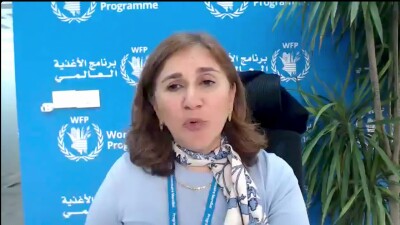
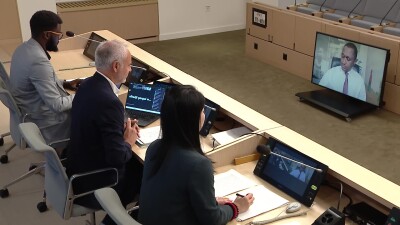
Abeer Etefa, World Food Programme (WFP) Senior Communications Officer and Spokesperson for the Middle East and North Africa, speaking from Cairo, said that three months into the conflict, the situation in Gaza was slipping into a much more catastrophic situation evidenced by waves of displacement, people cramped in the southern part of the Gaza Strip, and the rampant spread of disease amounting to a looming threat of famine. Currently, there was an intensification of efforts to scale up WFP food assistance operations. WFP managed to get 21,000 tonnes of food supplies, which was enough for 2 million people in Gaza for one month, but these supplies were either in Egypt on the way, or already loaded on trucks on the border with Gaza. So far and since the beginning of this conflict, WFP managed to get over 1,400 trucks carrying around 24 tonnes of food commodities in Gaza; that included food parcels of canned food like beans, wheat flour, fortified biscuits, and supplementary feeding for commodities for pregnant and breastfeeding mothers. In January alone and until yesterday, there were around 730 trucks that had around 15,000 tonnes of food that had crossed into Gaza. It remained extremely difficult to get into northern Gaza; very little assistance had made it beyond the southern part of the Gaza Strip.
WFP was working with 18 contracted shops, three partners, and tens of community representatives to deliver assistance to families residing outside UN shelters in Rafah and Deir El Balah as quickly as possible in areas close to them. To ensure people had access to bread, a staple in the Palestinian diet, WFP was providing wheat flour, salt, yeast, and sugar to eight bakeries (6 in Rafah and 2 in Deir El Balah). For the first time in six weeks, since the humanitarian pause, WFP was able to deliver 200 metric tonnes of food supplies for around 15,000 people in Gaza City. All areas north of Wadi Gaza had been extremely difficult to reach because of the restricted access to the area.
The threat of famine was a big fear, Ms. Etefa noted. More than half a million people in Gaza faced catastrophic food insecurity and the risk of famine increased each day as the conflict limited the delivery of life saving humanitarian assistance to people in need. The Integrated Food Security and Nutrition Phase Classification (IPC) report found devastating levels of food insecurity in Gaza and confirmed that the entire population of Gaza – roughly 2.2 million people – were at risk of worse levels of acute food insecurity, and almost a quarter of the population, more than half a million people, were at risk of starving. There were many reports of malnutrition of children. The shortage of water was also making things worse. Children were getting weaker with diarrhoea, and pregnant women were not receiving enough to eat.
Responding to questions, Ms. Etefa said the access to north Gaza involved a process of clearance and deconfliction with the Israeli authorities to ensure the convoys were passing into areas in a safe manner. Ms. Etefa stressed that the entire population of Gaza was in IPC phase three; that's the level of need that required sustained and regular food assistance, and more than half a million people were already in category phase five, which was the most severe level of food insecurity that the IPC had ever classified in any given country or conflict areas. This was uncharted territory when it came to the IPC findings, Ms. Etefa added.
Responding to further questions, Ms. Etefa stated that the situation in Gaza was getting worse given the limited flow of food supplies to affected areas, and the communication blackout, which impacted distribution operations. In terms of the comparison between the conflict in Gaza and any other conflict in terms of access to food and food insecurity, the situation in Gaza was unprecedented. The surge in the number of individuals classified under IPC five and the very short time in which this had happened was a deeply alarming development. This designation represented the highest level of food insecurity, indicating a critical and dire situation.
Responding to additional questions, Ms. Etefa stressed that in absence of a humanitarian pause, and limited access of supplies to people in need, the situation was going to get worse. There were enough food supplies for 2 million Gaza people at the border but not yet inside Gaza. Regular access to all the areas in Gaza and a ceasefire was needed. Ms. Etefa noted that the limitation of supplies getting into the north of Gaza appeared to be systematic.
Answering questions, Alessandra Vellucci, for the United Nations Information Service, informed that according to the Office for the Coordination of Humanitarian Affairs (OCHA), only seven of the 29 planned missions to Gaza in the first two weeks of January were carried out - that was 24 per cent. The remainder of the missions were denied access by the Israeli authorities. This was a significant increase in denials compared with the previous months between October and December when 14 per cent, or six out of 43 missions planned to the north were denied, while the remaining 86 per cent, or 37 out of 43, took place. These denials prevented the scale up of humanitarian assistance and added significant cost to the overall response. The capacity of humanitarian agencies to operate safely and effectively also remained heavily compromised by the long-term restrictions applied by the Israeli authorities on the import of critical humanitarian equipment into Gaza.
Christian Lindmeier for the World Health Organization added that WHO had managed to carry out some missions inside Gaza these last days with one of the convoys carrying mainly fuel. The situation inside hospitals was very grave; people were waiting to be operated on and waiting for food and water. Since 18 January, there were 88 WHO trucks that had crossed into Gaza with medicine. These deliveries had to be sustainable throughout all of Gaza to provide what was needed for the population. The current level of supplies getting into Gaza was far too low. There was a need for constant access into Gaza and throughout Gaza to supply everybody in urgent need, as well as hospitals with medicines, surgical equipment, food, water, and fuel. The obligations under international humanitarian law had to be fulfilled.
Responding to questions, Mr. Lindmeier said there were currently 14 partially functioning hospitals in Gaza, seven in north and seven in the south, and two minimally functioning ones; 20 hospitals in Gaza were not functioning at all at present. As stated by the WHO Director-General the previous night, patients and individuals seeking refuge in these facilities were currently endangered. There were also many obstacles that prevented new or additional injured people from reaching the hospitals. This situation was entirely unacceptable and went against the principles that any healthcare facility worldwide should uphold.
Health trajectory in Yemen
Dr. Arturo Pesigan, World Health Organization (WHO) Representative in Yemen, speaking from Aden, Yemen, said that after nearly a decade of conflict, Yemen remained one of the world's worst humanitarian and health emergencies. Millions of children were born into the war, many had grown up witnessing conflict and all people of Yemen had lived through some of the harshest humanitarian and health crises. Recent events over the Red Sea and attacks on Yemen, as the situation in the occupied Palestinian territory worsened, risked reversing the hard-gained progress for peace and stability in Yemen. The people of Yemen had lived through deep devastation, hunger, and violence. They deserved a life of peace and progress, Dr. Pesigan added.
The UN-brokered truce and peace talks raised many hopes that the prolonged conflict would soon end, and that the country was on the path of sustainable peace. This year, 17.8 million people needed health support; 2.4 million children under the age of five were malnourished - about half of Yemen's children; and only 51 per cent of health facilities were fully operational, while 36 per cent were providing limited services. Moreover, around 29 per cent of functioning hospitals were without specialist doctors. The extent to which these indicators would affect Yemen's long-term health and development could not yet be measured, but its impact was expected to distress generations of Yemenis.
The governorates affected by the increasing insecurity were facing the worst health and development challenges, Dr. Pesigan stated. Hodeida governorate alone hosted 135,000 internally displaced households, and 916 IDP [internally displaced persons] camps. This had increased the socio-economic concerns facing communities and health facilities. The governorate, as in the rest of the country, was overwhelmed by endemic diseases such as malaria, dengue, measles, diphtheria, and acute watery diarrhea (suspected of being cholera). Since the beginning of this year, 3,940 cases of acute watery diarrhea and suspected cholera cases were reported, with 13 associated deaths. The disease first emerged among mobile communities, whose movement was difficult to track or control. Cases had been reported among host communities. Between 2016 and 2021, Yemen was classified as the world’s largest outbreak of cholera, with over 2.5 million reported cases.
WHO was facing a severe shortage of humanitarian support in the country. The funding gap in the 2023 reached 93 per cent. WHO was able to support 126 health facilities compared to 227 in January of 2022; that was, dropping support from 101 health facilities that used to provide life-saving services to entire communities. These numbers had very direct, inconceivable implications on human lives. Today, Yemen was at a critical crossroads. The days to come would determine the future of more than 35 million people: whether humanitarian and developmental progress would be reversed or if Yemen would be on the road towards peace, Dr. Pesigan added.
Loss of Life of Rohingya at Sea
Matthew Saltmarsh, for the United Nations High Commissioner for Refugees (UNHCR), stated that the Agency was deeply alarmed by statistics revealing a surge in the number of desperate Rohingya refugees reportedly dying or going missing while taking risky boat journeys in the Andaman Sea and the Bay of Bengal during 2023. Some 570 Rohingya were reported to have perished or gone missing last year in South-East Asian waters, with nearly 4,500 embarking on deadly sea journeys – a significant increase on previous years. The number of reported missing, or dead people was the highest since 2014, when the total reached 730. The findings for 2023 included some shocking details spelled out by survivors who shared horrifying accounts of abuse and exploitation during the journey, including gender-based violence. Estimates showed one Rohingya was reported to have died or gone missing for every eight people attempting the journey in 2023. This made the Andaman Sea and Bay of Bengal one of the deadliest stretches of water in the world.
Most attempting these journeys were children and women – some 66 per cent of those embarking on these deadly journeys, Mr. Saltmarsh added. The refugees had been departing from Bangladesh and, to a lesser extent, Myanmar. In a single deadly incident in November 2023, it was feared that some 200 Rohingya lost their lives when their boat was reported to have sunk in the Andaman Sea. Prior to that, from January to August last year, there were at least three serious wrecks with 30 dead and 177 reported missing. These figures provided a chilling reminder that failure to act to save people in distress resulted in deaths. More and more desperate people were dying under the watch of numerous coastal States in the absence of timely rescue and disembarkation to the nearest place of safety.
UNHCR called on regional coastal authorities to take urgent action to prevent future tragedies. Saving lives and rescuing those in distress at sea was a humanitarian imperative and a longstanding duty under international maritime law. UNHCR was working with impacted States and other stakeholders, including refugees, to develop a comprehensive regional response to address these perilous journeys. The root causes of these maritime movements had to be addressed, and the international community had to step up implementing the pledges made at the Global Refugee Forum in Geneva in December 2023 to advance solutions for Rohingya refugees and enhance their self-reliance to provide hope and reduce the compulsion to take dangerous boat journeys.
Responding to a question, Matthew Saltmarsh noted that these crossings were made in incredibly fragile, overcrowded vessels, which were particularly vulnerable and susceptible to accidents. UNHCR reiterated its call that saving lives and rescuing those in distress at sea was a humanitarian imperative, as well as a long-standing duty under international maritime law.
Announcements
Christian Lindmeier, for the World Health Organization (WHO), announced that the Framework Convention on Tobacco Control, the WTO Framework Convention on Tobacco Control, was going to hold an opening press conference of the global tobacco controlling control governing bodies on Tuesday, 30 January at 3 p.m. and that the Conference of the Parties, the COP-10, which was postponed from last year, would take place in Panama from 5 to 10 February 2024, followed by the so-called MOP, the Meeting of the Parties of the Conference of the Parties. The theme of the meeting was "Together: Promoting Healthier Lives"; among the topics being discussed were tobacco advertising, promotion, and sponsorship. Next week's press briefing was open to UNOG-accredited press corps only and would be virtual. It would feature the Head of the Framework Convention, Adriana Blanco. A media advisory would be sent later today; registration would be required to attend.
Alessandra Vellucci, for the United Nations Information Service, informed that the Committee on the Rights of the Child was continuing this morning its review of the report of the Russian Federation. The Committee would begin this afternoon its review of the report of Lithuania.
The Conference on Disarmament was holding this morning the first public plenary of its 2024 session, under the Presidency of India. Tatiana Valovaya, Director-General of the United Nations Office at Geneva, and Secretary-General of the Conference on Disarmament would address the Conference at 10 a.m. on Thursday, 25 January.
Ms. Vellucci informed that at 1 p.m. on Friday, 26 January, there would be an event to commemorate the International Day of Remembrance of the Victims of the Holocaust at UN Geneva. An invitation for this commemoration was going to be shared with the journalists.
Similar Stories
1
1
1
Press Conferences | UNHCR
End of UNHCR's 77th Annual Executive Committee (ExCom) meeting week
1
1
1
Press Conferences | UNICEF , IOM , UNHCR
UN Special Assistant to the Personal Envoy Office (SUDAN): Peace Initiatives and Efforts in Sudan; UNICEF: Dire situation of children in Gaza; IOM: Damaged Homes and Energy Attacks Risk Displacing Ukrainians for this winter; UNHCR: update on EXCOM week
1
1
1
Press Conferences | IOM , UNDRR
UN stresses importance of household preparedness for disaster risk reduction.
1
1
1
Statements , Press Conferences | OHCHR
1
1
1
Press Conferences | UNHCR , UNICEF , IFRC , OHCHR , UN WOMEN , IOM , OCHA , WHO
UNHCR – ExCom Meeting, UNICEF – Nepal Recovery, IFRC – Flash Floods, WHO – Mental Health, IOM – South Sudan Floods, OCHA – DRC Humanitarian aid, UNHCR – Sahel Displacement, UNICEF – Yemen Update, IOM – Gaza Shelter, UN Women – Gaza Women, OHCHR – Arrests and detentions of Syrians by Israeli force
2
1
2
Press Conferences | UNCTAD
Presentation of the Trade and Developement Report 2026
Embargoed until 9 October 2026 at 11 a.m. (Geneva Time)
UNCTAD: UNCTAD’s flagship report finds that governments increasingly use industrial, trade, financial and technology policies to pursue economic and national security objectives. Market access and the ability to move into higher-value activities now depend more heavily on technology, finance and geopolitics.
1
1
1
Press Conferences | UPU
Release of the State of the Postal Sector Report 2026
1
1
1
Press Conferences | IOM , ITU , UNECE , UNICEF , WHO , WMO
UNICEF: Ebola, DRC - children orphans or separating them from parents and caregivers; IOM: Humanitarian needs in Djibouti amid arrivals from Yemen and increased migrant movements; WHO: Darfur, scale of health needs far exceeds available resources; WMO co-sponsored Global Heat Forum, Bangkok, monthly Global Seasonal Climate Update; UNECE: UN Forum of Mayors; ITU Plenipotentiary Conference 2026; WHO: child and adolescent obesity guidelines and new global roadmap to tackle pregnancy hypertension, a leading cause of maternal mortality
1
1
1
Press Conferences | OCHA , UN WOMEN , UNHCR , WFP , WHO , WTO , UNEP
OCHA – $160M CERF allocation to 12 underfunded crises; UNHCR – 5.8M refugee children remain out of school amid funding cuts; UN Women – Middle East escalation and food security among women/girls; WHO – Gaza supplies and overall situation; WFP – Yemen food insecurity and impact on global hunger ; UNEP - First International Conference of the Global Framework on Chemicals in Geneva | 16-20 November 2026
1
1
1
Press Conferences | UNHCR , WHO
Yemen's health system nears collapse amid conflict, causing rising casualties and medicine shortages.
1
1
1
Press Conferences | HRC
Update by the Expert Mechanism to Advance Racial Justice and Equality in Law Enforcement
1
1
1
Press Conferences | WIPO , WHO , UNICEF , UNHCR , IOM , WFP , FAO
WIPO Global Innovation Index 2026 launch and press conference, WHO Composition of influenza vaccines for the 2027 Southern Hemisphere flu season, UNICEF Yemen hunger and malnutrition; UNHCR Sudan displacement into Chad; IOM Ebola and population movements in DRC; WFP emergency food assistance in Nepal; and FAO food loss and waste.