

The United Nations Office at Geneva
Multimedia Newsroom
UN GENEVA PRESS BRIEFING
15 July 2025
Situation in the occupied Palestinian territory
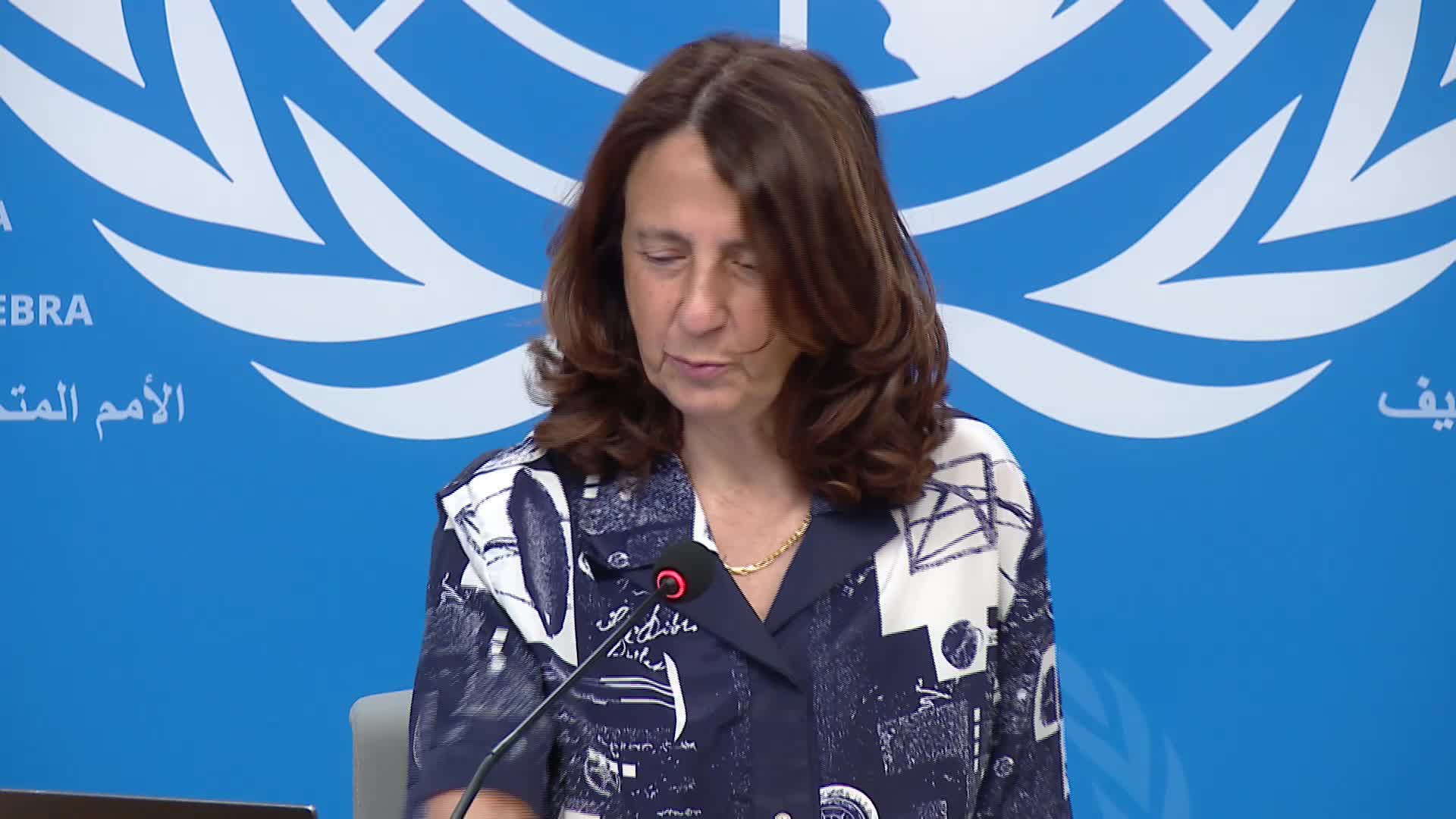
Juliette Touma, for the United Nations Relief and Works Agency (UNRWA), speaking from Amman, provided the latest health data from the Gaza Strip. UNRWA medical teams confirmed that malnutrition rates were increasing in Gaza, since the tightening of the siege at the beginning of March. UNRWA health teams had screened over 240,000 children under five, since January 2024. One in ten children screened had been found to be malnourished. Before the war, acute malnutrition had been rarely seen in the Gaza Strip. The growing number of children in need was overwhelming the already devastated capacities in the Gaza Strip. Ms. Touma provided an example of Ahlam, an eight-month-old baby girl, whose family had been displaced almost once per week over recent weeks. Sleeping in tents, Ahlam was severely malnourished, and her condition kept getting worse by the day; her immune system had been damaged by the trauma, poor hygiene, low-quality water and very little food supply. Ms. Touma said that UNRWA continued to be the largest humanitarian agency in Gaza, but it had been banned from brining any humanitarian supplies into the enclave. More than 60 percent of essential medicine was currently missing, including medicines for hypertension and antibiotics. UNRWA has over 600 trucks with supplies just outside of Gaza, all waiting to come in. During the ceasefire earlier in the year, the United Nations had provided scaled-up, dignified assistance to the people of Gaza. This functioning system had been replaced with a system that took more lives than it saved. The people of Gaza now needed more than food; they needed safety, but there was no safety in Gaza, and nobody was spared. The UN, including UNRWA, needed to be allowed to its work, stressed Ms. Touma.
Talking about the occupied West Bank, Ms. Touma said that a silent war was surging there, and people were cut off from their employment and social benefits. The impact of the ongoing military forces and settler violence were forcing more people to be displaced. This violence was now the longest since the second intifada in early 2000s, and it was causing the largest displacement of Palestinians in the West Bank since 1967.
UNRWA was continuing to operate, despite all the challenges and hurdles across the occupied Palestinian territories. There were 14,000 UNRWA staff across the oPt who continued to provide services to people in need. In Gaza, UNRWA medical teams provided 15,000 medical consultations per day, informed Ms. Touma. This year alone, UNRWA had provided drinking water to some 1.3 million people in the Gaza Strip. UNRWA had also reached more than half a million of boys and girls with psychological aid in the Gaza Strip. In the West Bank, in this school year, UNRWA had provided education to 40,000 boys and girls in the West Bank. Ms. Touma informed about the updated “Claims versus Facts” page on the UNRWA website.
Thameen Al-Kheetan, for the Office of the High Commissioner for Human Rights (OHCHR), stated that Israeli settlers and security forces had intensified their killings, attacks and harassment of Palestinians in the occupied West Bank, including East Jerusalem, in the past weeks. This included the demolition of hundreds of homes and forced mass displacement of Palestinians, contributing to the ongoing consolidation of annexation of West Bank territory by Israel, in violation of international law. Since the launch of Israel’s operation “Iron Wall” in the north of the occupied West Bank earlier this year, about 30,000 Palestinians remained forcibly displaced. Israeli forces had shot live ammunition at unarmed Palestinians, including those trying to return to their homes in the camps of Jenin, Tulkarem and Nur Shams.
Israeli security forces had often used unnecessary or disproportionate force, including lethal force against Palestinians who had not posed an imminent threat to life. The youngest victim, two-year-old Laila Khatib, had been shot in the head by Israeli security forces on 25 January while inside her house in Ash-Shuhada village, in Jenin. On 3 July, 61-year-old Walid Badir had been shot and killed by Israeli security forces, reportedly while cycling back home from prayers, passing through the outskirts of the Nur Shams camp. These two were among at least 964 Palestinians killed since 7 October 2023 by Israeli forces and settlers in the occupied West Bank, including East Jerusalem. Also, since 7 October 2023, 53 Israelis had been killed in reported attacks by Palestinians or in armed clashes, 35 in the West Bank and 18 in Israel.
In June, the UN had recorded the highest monthly injury toll of Palestinians in over two decades. In all, 96 Palestinians had been injured by Israeli settlers. During the first half of 2025, there had been 757 settler attacks that resulted in Palestinian casualties or property damage – a 13 per cent increase on the same period in 2024. Since the start of operation “Iron Wall”, Israeli security forces had issued demolition orders for about 1,400 homes in the north of the occupied West Bank. These large-scale demolitions, if not rendered necessary by military operations, violated Israel’s obligations as the occupying power. Mr. Al-Kheetan stressed that Israel had to immediately stop these killings, harassment and home demolitions across the occupied Palestinian territory. As the occupying power, Israel had to take all feasible measures to ensure public order and safety in the West Bank. It was under the obligation to protect Palestinians from settler attacks and to end the unlawful use of force by its security forces.
Full statement is available here.
Alessandra Vellucci, for the United Nations Information Service (UNIS), quoted the Secretary-General who stated that a permanent ceasefire in Gaza was absolutely needed. That ceasefire had to lead to a solution which would include two States living in peace, side by side.
Responding to questions from the media, Mr. Al-Kheetan, for the OHCHR, confirmed that forced displacement in the West Bank was of huge concern for the OHCHR. International law was very clear when it came to the obligations of the occupying power: bringing about a permanent demographic change in the occupied territory could amount to a war crime and ethnic cleansing. Speaking about a proposed so-called “humanitarian city” in Rafah, Mr. Al-Kheetan stressed that such calls raised fears of a forcible transfer and further forced displacement. Ms. Touma, for UNRWA, said that establishing such a “humanitarian city” would amount to creating a massive concentration camp, as stated by the UNRWA Commissioner General recently. Of the 240,000 children under five screened in UNRWA clinics since January 2024, ten percent were malnourished, reiterated Ms. Touma. She reminded that children constituted half a population of the Gaza Strip.
On another question, Mr. Al-Kheetan informed that it was international human rights law, rather than international humanitarian law, that applied to the occupied West Bank; security forces present there should be engaged in maintaining law and order rather than conduct military operations. And the latter had to be proportioned, which was clearly not the case in many of the circumstances described above, although it could not be excluded that some of the Palestinians killed in the West Bank might have been armed. Independent investigations were needed in each killing.
Mr. Al-Kheetan specified that 875 people had been verified as killed in Gaza while trying to get food, 674 of whom killed in the vicinity of the “Gaza Humanitarian Foundation” sites; the remaining 201 had been killed on the route of aid convoys. The figures provided by the health authorities in Gaza had historically been very close to the verified UN figures, which followed very strict methodology. OHCHR repeated that there had to be investigations in each killing, and those responsible had to be held to account. Ms. Touma said that UNRWA and other UN teams on the ground had spoken to the survivors of those killings in Gaza. Some 330 UNRWA staff had been killed so far, and 80 percent of UNRWA schools had been hit, reminded Ms. Touma. Until international media was allowed to go into Gaza and report first-hand on what was happening to the people in Gaza, the ”claims versus facts” narrative was going to continue. Over 30,000 Palestinians remained forcibly displaced in the occupied West Bank, reiterated Mr. Al-Kheetan.
Situation in Ukraine
Elizabeth Throssell, for the Office of the High Commissioner for Human Rights (OHCHR), stated that, according to OHCHR’s latest information, so far this month at least 139 civilians had reportedly been killed and 791 injured in Ukraine amid intense and successive waves of missile and drone strikes launched by Russia. In an overnight attack on 12 July, Russian armed forces had reportedly deployed 597 Shahed loitering munitions and decoy drones, and 26 missiles. Two civilians had been killed and 41 reportedly injured. Damage to civilian infrastructure had been reported across several regions, including Chernivtsi, Lviv, Cherkasy, Volyn, and Kirovohrad, far away from the frontline. On 9 July alone, Russian armed forces had launched a record number of long-range drones against Ukraine – 728.
The devastating physical and psychological impact on civilians of repeated attacks on their areas of residence - in this and other conflicts – could not be captured by numbers alone. People had to spend hours sheltering, including in basements, corridors and available refuges such metro stations. Children, older people and people with disabilities were especially vulnerable to the prolonged stress and disruption of sleep, and, in some cases, were unable to get to shelter. Intense and sustained attacks using explosive weapons with wide area effects in populated areas were likely to have indiscriminate impacts and as such raised serious concerns as to their compliance with international humanitarian law.
UN High Commissioner for Human Rights Volker Türk reiterated that an immediate ceasefire was needed now to end this unbearable suffering. Russia’ full-scale armed attack on Ukraine had to urgently be halted and work on a lasting peace, in line with international law had to intensify. Türk also highlighted that it was vital that any negotiations focus on a coordinated push – as immediate steps - to end attacks that affect civilians, protect the rights of people in occupied territory, return forcibly transferred or deported children, establish humanitarian corridors across the line of control, and end the torture and ill treatment of prisoners of war and other detainees.
OHCHR statement in full can be found here.
Dr. Jarno Habicht, World Health Organization (WHO) Representative in Ukraine, speaking from Kyiv, said that civilian casualties had almost doubled between April and June 2025, compared to the first quarter of the year; attacks on health had reached over 2,500 attacks, a violation of humanitarian law. Health care was no longer a safe place for patients and medical personnel, stressed Dr. Habicht.
The latest health needs assessment from April 2025 showed that more than 70 percent of people reported experiencing mental health issues for the past 12 months, and every second person reported significant stress recently in the past two months. While access to mental health services and support had improved, not everybody in need sought help. Over 125,000 healthcare workers had been trained in WHO tool MHGap to be able to provide mental health support. Community mental health centers were established and expanding, with WHO and partners providing trainings. Public financing for mental health had increased two times compared to pre-war situation. Dr. Habicht also spoke about health inequities present among displaced, frontline populations and rural areas. In close to frontline, less people had access to family doctor or had visited doctor. In the past year, WHO had dispatched 15 teams in 82 locations, providing some 7,500 consultations. WHO had been part of 25 interagency convoys and 12 dedicated WHO convoys, distributing medicines to people in communities, trauma and non-communicable disease kits to health care workers, and support to over 100,000 people.
Finally, Dr. Habicht informed that humanitarian partners funding after half a year had reached 35.5 percent (USD 46.5 million), which had allowed WHO and 100 partners to reach one million people, while the target was three million people. Both more support and more long-term investment were needed, stressed Dr. Habicht.
Answering questions, Dr. Habicht, for WHO, said that the statistics provided covered all attacks on health and medical personnel. On another question, Ms. Throssell, for the OHCHR, said that verification and monitoring done by the OHCHR was done in line with its methodology and took time, and the real, final figures were likely to be higher. Since February 2022, the OHCHR had verified deaths of 13,518 civilians. Accountability had to be at the heart of any efforts towards ceasefire, stressed Ms, Throssell. Answering another question, she said that OHCHR had staff doing human rights monitoring in Ukraine, and its latest report covered the first five months in 2025. The report also referred to the 99 reported civilian casualties inside Russia. The circumstances of many incidents needed further verification, but the OHCHR had no access to the Russian Federation, she reminded.
Announcements
Alessandra Vellucci, for the United Nations Information Service (UNIS), informed that the Human Rights Committee would hold a public meeting at 3 pm today to review its concluding observations on State reports. The Committee would conclude its session on 17 July and issue its concluding observations on the seven countries reviewed: Kazakhstan, Guinea-Bissau, North Macedonia, Latvia, Spain, Haiti, and Vietnam.
On 28 July, the 2025 Conference on Disarmament would begin its third and final part of the annual session, under the presidency of Malaysia.
***
TOPICS
UNRWA Juliette Touma, Director of Communications (From Amman)
Update on latest malnutrition screening findings from UNRWA clinics in Gaza and
update on West Bank
OHCHR Thameen Al-Kheetan (PR)
Occupied Palestinian territory: Killing and forced displacement of Palestinians by
Israeli forces and settlers in the West Bank
Liz Throssell (PR)
Ukraine: Impact on civilians of intense missile and drone strikes by Russia
WHO Tarik Jašarević (Zoom) with Dr. Jarno Habicht, WHO Representative / Head of
Country Office in Ukraine (From Kyiv)
The health situation in Ukraine, along with response and recovery efforts
Similar Stories

1
1
1
Press Conferences | UNHCR
End of UNHCR's 77th Annual Executive Committee (ExCom) meeting week

1
1
1
Press Conferences | UNICEF , IOM , UNHCR
UN Special Assistant to the Personal Envoy Office (SUDAN): Peace Initiatives and Efforts in Sudan; UNICEF: Dire situation of children in Gaza; IOM: Damaged Homes and Energy Attacks Risk Displacing Ukrainians for this winter; UNHCR: update on EXCOM week

1
1
1
Press Conferences | IOM , UNDRR
UN stresses importance of household preparedness for disaster risk reduction.

1
1
1
Statements , Press Conferences | OHCHR

1
1
1
Press Conferences | UNHCR , UNICEF , IFRC , OHCHR , UN WOMEN , IOM , OCHA , WHO
UNHCR – ExCom Meeting, UNICEF – Nepal Recovery, IFRC – Flash Floods, WHO – Mental Health, IOM – South Sudan Floods, OCHA – DRC Humanitarian aid, UNHCR – Sahel Displacement, UNICEF – Yemen Update, IOM – Gaza Shelter, UN Women – Gaza Women, OHCHR – Arrests and detentions of Syrians by Israeli force

2
1
2
Press Conferences | UNCTAD
Presentation of the Trade and Developement Report 2026
Embargoed until 9 October 2026 at 11 a.m. (Geneva Time)
UNCTAD: UNCTAD’s flagship report finds that governments increasingly use industrial, trade, financial and technology policies to pursue economic and national security objectives. Market access and the ability to move into higher-value activities now depend more heavily on technology, finance and geopolitics.

1
1
1
Press Conferences | UPU
Release of the State of the Postal Sector Report 2026
1
1
1
Press Conferences | IOM , ITU , UNECE , UNICEF , WHO , WMO
UNICEF: Ebola, DRC - children orphans or separating them from parents and caregivers; IOM: Humanitarian needs in Djibouti amid arrivals from Yemen and increased migrant movements; WHO: Darfur, scale of health needs far exceeds available resources; WMO co-sponsored Global Heat Forum, Bangkok, monthly Global Seasonal Climate Update; UNECE: UN Forum of Mayors; ITU Plenipotentiary Conference 2026; WHO: child and adolescent obesity guidelines and new global roadmap to tackle pregnancy hypertension, a leading cause of maternal mortality
1
1
1
Press Conferences | OCHA , UN WOMEN , UNHCR , WFP , WHO , WTO , UNEP
OCHA – $160M CERF allocation to 12 underfunded crises; UNHCR – 5.8M refugee children remain out of school amid funding cuts; UN Women – Middle East escalation and food security among women/girls; WHO – Gaza supplies and overall situation; WFP – Yemen food insecurity and impact on global hunger ; UNEP - First International Conference of the Global Framework on Chemicals in Geneva | 16-20 November 2026
1
1
1
Press Conferences | UNHCR , WHO
Yemen's health system nears collapse amid conflict, causing rising casualties and medicine shortages.
1
1
1
Press Conferences | HRC
Update by the Expert Mechanism to Advance Racial Justice and Equality in Law Enforcement
1
1
1
Press Conferences | WIPO , WHO , UNICEF , UNHCR , IOM , WFP , FAO
WIPO Global Innovation Index 2026 launch and press conference, WHO Composition of influenza vaccines for the 2027 Southern Hemisphere flu season, UNICEF Yemen hunger and malnutrition; UNHCR Sudan displacement into Chad; IOM Ebola and population movements in DRC; WFP emergency food assistance in Nepal; and FAO food loss and waste.