

The United Nations Office at Geneva
Multimedia Newsroom
STORYLINE
More than 66,000 directly affected by Afghanistan’s quake victims
The United Nations Office for the Coordination of Humanitarian Affairs (OCHA) has launched a multi-sectoral Herat Earthquake Response Plan in response to a series of powerful earthquakes that rocked Herat Province since 7 October.
In an update, OCHA reported that at least 1,480 people have been killed and 1,950 wounded.
Satellite imagery indicates that 289 villages have been severely impacted with many destroyed. The most recent earthquake on 15 October affected an estimated 30 new villages, forcing families to live in makeshift shelters or informal settlements. Speaking from Kabul, Katherine Carey, deputy head of the OCHA office in Kabul said that around 66,300 people had also been directly impacted across six primary districts.
Many of those who left their homes following the initial earthquake are now residing outside in either makeshift or temporary shelters out of fear of additional aftershocks, Ms. Carey added.
According to the OCHA spokesperson, the earthquake's impact is far-reaching with
reports of more than 3,700 homes completely destroyed and around 5,000 homes severely damaged. Upwards of 2,600 homes have sustained some kind of damage, along with schools and healthcare facilities.
As winter approaches, concern is also growing as people will be exposed to harsh weather and health risks.
With food resources limited and damaged water and sanitation points, fears are rising about disease outbreaks: “The priority really is to ensure that these families and communities have some protection from the elements.
“In terms of shelter requirements, obviously the immediate priority is to ensure that people not residing out in the open completely and they have some kind of protection,” Ms. Carey explained. “So, in the first instance we are providing families with emergency tents. But the reality is, is that will only be able to withstand them for so long as well. We will have to move them in some kind of transitional shelter, normally a sort of repurposed, prefabricated kind of module that is a bit more like a sort of temporary structure,” Ms. Carey added.
To help, the UN’s Herat Earthquake Response Plan requires some $93 million for 114,000 people. The OCHA spokesperson called on the community not to forget Afghanistan amid other high global needs: “We're able to provide the populations with the assistance they need insofar as we have the resources and the supplies to do so. We're already using existing stock that we have in country of tents, for example, and medical supplies and medicines and also of wash kits and hygiene kits and kits. And those will need to be replenished also as well,” she said.
ends
STORY: Update on Afghanistan’s earthquake response - OCHA
TRT: 02:17”
SOURCE: UNTV CH
RESTRICTIONS: NONE
LANGUAGE: ENGLISH
ASPECT RATIO: 16:9
DATELINE: 17 OCTOBER 2023, GENEVA, SWITZERLAND
SHOTLIST
1. Exterior wide shot, United Nations flag flying.
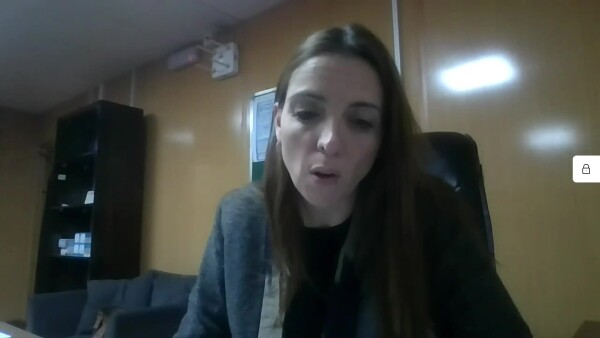
2. View of interview with OCHA spokesperson.
3. SOUNDBITE: (ENGLISH) Katherine Carey, Deputy Head of Office, OCHA Afghanistan: “The information that we've got from our assessments that we've completed is about 66,300 people directly impacted across six primary districts that have sadly been just shy of 1500 people killed and around 2000 injured. The majority of those killed or injured were actually killed and injured in the first earthquake that took place on the 7th of October, after which many people left their homes and are actually residing outside in either makeshift or temporary shelters as well, out of fear that there may be additional aftershocks and the houses may collapse.”
4. View of interview with OCHA spokesperson.
5. SOUNDBITE: (ENGLISH) Katherine Carey, Deputy Head of Office, OCHA Afghanistan: “We've got reports of more than 3700 homes completely destroyed, around 5000 homes have been severely damaged. And then there are upwards of 2600 homes that have sustained some kind of damage. So this is affecting, you know, several thousand families in fairly remote, impoverished communities as well.”
6. View of interview with OCHA spokesperson.
7. SOUNDBITE: (ENGLISH) Katherine Carey, Deputy Head of Office, OCHA Afghanistan: “The priority really is to ensure that these families and communities have some protection from the elements, especially with winter fast approaching.
8. View of interview with OCHA spokesperson.
9. SOUNDBITE: (ENGLISH) Katherine Carey, Deputy Head of Office, OCHA Afghanistan:
In the first instance, we are providing families with emergency tents. But the reality is, is that will only be able to withstand them for so long as well. We will have to move them in some kind of transitional shelter, normally a sort of repurposed, prefabricated kind of module that is a bit more like a sort of temporary temporary structure.”
10. View of interview with OCHA spokesperson.
11. SOUNDBITE: (ENGLISH) Katherine Carey, Deputy Head of Office, OCHA Afghanistan: “Yesterday we launched an earthquake response plan outlining our requirements to meet the needs of the priority affected population over the course of winters up until March next year. And of course, you know, we're able to provide the populations with the assistance they need insofar as we have the resources and the supplies to do so.”
12. Screen with OCHA spokesperson.
13. View of interview with OCHA spokesperson.
14. View of interview with OCHA spokesperson.
Similar Stories

1
1
1
Edited News | OCHA , UNICEF , WFP
Aid agencies warned on Friday of the fast-developing humanitarian emergency inside Taiz City in Yemen, which has been encircled by de facto Houthi forces fighting government troops along the country’s west coast.

2
17
1
2
Edited News , Press Conferences , Images | OCHA , WMO
Two UN agencies teamed up on Wednesday to issue an appeal for immediate assistance to help communities already being impacted by the strongest El Niño on record.

3
16
2
2
Edited News , B-roll , Conferences , Images | UNITED NATIONS , UNOG
Sixth Consultative Meeting on Enhancing Coordination of Peace Initiatives and Efforts for Sudan

1
1
1
Edited News | UNICEF , WHO , UNHCR
Yemen war continues to force families from homes amid hunger and disease
More than 250,000 people have now fled renewed fighting in Yemen, the UN said on Tuesday, citing particular concern for those sheltering in the southwestern city of Taiz and the wider governorate, where access is “essentially blocked”.

1
1
1
Edited News | UNICEF
A little over one year since a ceasefire agreement was announced between Hamas fighters and Israel, more than 340 children have been reported killed and hundreds more injured, the UN Children’s Fund, UNICEF, said on Friday.

1
1
1
Edited News | UNICEF , IFRC
Six weeks after Nepal’s deadly flooding disaster, communities are still struggling to rebuild their lives, but they will need sustained help as global warming increases the risk of another Himalayan catastrophe, the UN Children’s Fund (UNICEF) said on Friday.

1
1
1
Edited News | WHO
In suspected Russia plague death, testing and monitoring underway – WHO
The death of a lab worker in Russia’s Siberia region has sparked concerns about plague being the cause, the UN World Health Organization (WHO) said on Tuesday, adding that it was following the situation closely.

1
1
Edited News | OHCHR , UNOG
UN Human Rights Chief Volker Türk on Friday provided and oral update to the 63rd session of the Human rights Council on Ukraine.

1
1
1
Edited News | OHCHR , UNOG
UN Human Rights Chief Volker Türk on Friday provided and oral update to the 63rd session of the Human rights Council on the human rights situation in Haiti.

1
1
1
Edited News | WHO
Repeated delays in bringing lifesaving medicines, prosthetics and more from Israel into Gaza risk having devastating consequences on Palestinians who urgently need them in the wartorn enclave, the UN World Health Organization (WHO) said on Friday. “A truck full of non-priority supplies or the right supplies arriving too late, doesn't save lives. That's the question that actually matters," said Dr Reinhilde Van De Weerdt, WHO Representative in the OPT.

1
1
1
Edited News | WHO
DRC: Early access to care and oxygen decisive for Ebola patients’ survival – WHO
In the Democratic Republic of the Congo (DRC), health workers fighting the country’s largest-ever Ebola outbreak are struggling to overcome critical challenges to patient care, the UN World Health Organization (WHO) warned on Tuesday.

1
1
1
Edited News | OCHA , UN
Civilians in Iran are continuing to feel the consequences of months of conflict and military escalation, the UN’s top official in the country has said, as loss of life, damage to civilian infrastructure and mounting economic pressures leave many facing continued uncertainty.