

The United Nations Office at Geneva
Multimedia Newsroom
Edited News , Press Conferences | FAO , UNICEF , WFP , WHO
FAO, WFP, WHO, UNICEF, IFAD Press Conference: State of Food Security and Nutrition in the World (SOFI) report - 12 July 2023
122 million more people pushed into hunger since 2019 amid multiple crises, reveals UN report
Approximately 735 million people face hunger today, compared to 613 million in 2019, the UN said on Wednesday.
The pandemic, repeated weather shocks and conflicts including the war in Ukraine are to blame, according to the latest State of Food Security and Nutrition in the World (SOFI) report published jointly by five United Nations specialized agencies.
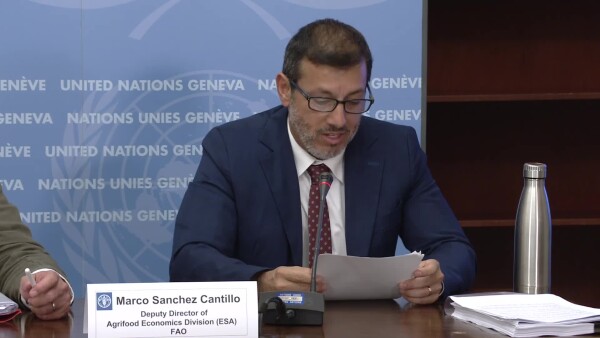
“Between 691 and 783 million people in the world faced hunger in 2022. If we consider the mid-range, which is about 735 million people, it is still 122 million people more who faced hunger in 2022 compared to 2019, before the pandemic,” said Marco Sanchez Cantillo, Deputy Director of Agrifood Economics Division at the Food and Agriculture Organization (FAO) at a press conference in Geneva.
According to FAO’s projections, almost 600 million people will still be facing hunger in 2030.
Asia and Latin America made progress in hunger reduction last year, but it was still on the rise in Western Asia, the Caribbean and throughout all subregions of Africa in 2022.
Africa remains the worst-affected region with one in five people facing hunger, more than twice the global average.
These trends jeopardize the achievement of the Sustainable Development Goal target of Zero Hunger by 2030. Concerns are high too at the UN World Food Programme (WFP) which reports that 345 million people face acute food insecurity in the countries where it operates. “It’s a 200 million increase compared to 2020, it’s staggering,” emphasized Gian Carlo Cirri, Head of the Geneva Office. As a result, WFP has been scaling up its operations and reached an unprecedented 160 million people in 2022.
But “at the rate of incoming resources to address the food crisis, we expect there will be a 60 per cent gap in our operations, and this is of course, quite worrisome,” added Mr. Cirri.
While food insecurity affects both urban and rural households, it is strongest in rural areas, where 80 per cent of the world’s poorest people live. Many of them are small-scale farmers. They produce one-third of the world’s food and 70 per cent of the food in Africa and Asia, according to the International Fund for Agricultural Development (IFAD). “Meanwhile, they struggle to feed themselves and they bear the brunt of tremendous challenges, the least being climate change,” explained Ms. Hélène Papper, IFAD’s Director for Global Communications and Advocacy. “But they only receive 1.7 per cent of global climate finance. This is wrong and we must shift this terrible dichotomy,” she added, insisting that investment in agriculture is two to three times more effective at reducing poverty than investment in any other sector.
On a more positive note, the UN Children’s Fund, UNICEF, reported progress in exclusive breastfeeding: “48 percent of babies under six months of age benefit from this ultimate child survival practice, close to the 2025 target,” said UNICEF’s Chika Hayashi, Statistics and Monitoring Senior Advisor, Nutrition. However, more efforts will be required to meet the 2030 malnutrition targets and allow more people to access healthy diets.
With almost seven in 10 people projected to be living in cities by 2050, the report calls on governments to push for policies and legislation that support better rural-urban infrastructure and connectivity and that link small-scale producers and small agri-businesses to fair and lucrative markets.
Ends
EDIT:
DURATION (TRT): 02’37”
SOURCE: UNTV CH
LANGUAGE: ENGLISH
ASPECT RATIO: 16:9
DATELINE: 12 July 2023
FAO, WHO, UNICEF, WFP, IFAD Press Conference
LOCATION: GENEVA, SWITZERLAND
SHOTLIST
- Exterior wide shot: UN flag alley UN Geneva.
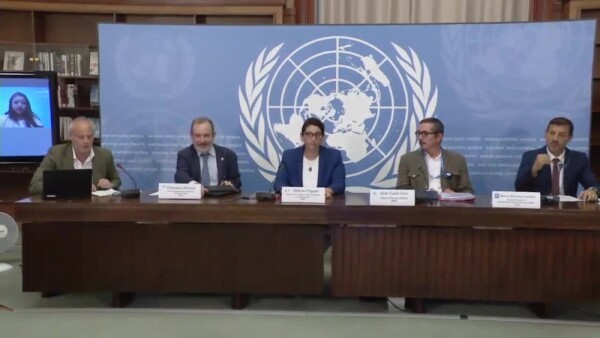
- Wide shot, Press room, UN Geneva
- SOUNDBITE (ENGLISH) Marco Sanchez Cantillo, Deputy Director of Agrifood Economics Division (ESA) – FAO: “It is estimated that between 691 and 783 million people in the world faced hunger in 2022. If we consider the mid-range, which is about 735 million people, it is still 122 million people more who faced hunger in 2022 compared to 2019, before the pandemic.”
- Medium shot of speakers at the podium
- SOUNDBITE (ENGLISH) Gian Carlo Cirri, Head of Geneva Office - WFP: “At the rate of incoming resources to address the food crisis, we expect that there will be a 60 percent gap in our operations, and this is of course, quite worrisome.”
- Wide shot of Press room and speakers at the podium
- SOUNDBITE (ENGLISH) Gian Carlo Cirri, Head of Geneva Office - WFP: “345 million people are facing acute food insecurity. This is a major increase when compared to 2020: it’s a 200 million increase, it's a staggering. So, we have been scaling up, in WFP, our operations and we've reached a number of persons we never reached before with 160 million people reached in 2022.”
- Cutaway: close shot of laptop screen with speakers in the background
- SOUNDBITE (ENGLISH) Hélène Papper, Director for Global Communications and Advocacy – IFAD: “They produce one third of the world's food. 70 percent of the food in Africa and Asia. Meanwhile, they struggle to feed themselves and they bear the brunt of tremendous challenges as we all face today, the least being climate change. But they only receive 1.7 percent of global climate finance. This is wrong and we must shift this terrible dichotomy.”
- Cutaway: close shot of journalist
- SOUNDBITE (ENGLISH) Hélène Papper, Director for Global Communications and Advocacy – IFAD: “Data clearly shows that investment in agriculture is two to three times more effective at reducing poverty than investment in any other sector.”
- Cutaway: medium shot of journalists listening
- SOUNDBITE (ENGLISH) Chika Hayashi, Statistics and Monitoring Senior Advisor, Nutrition – UNICEF: “Breastfeeding, which is the ultimate child survival intervention, has also increased by ten percentage points in the last 12 years to 48 percent and therefore seems to be actually the only nutrition indicator that's on track to achieve the World Health Assembly’s global nutrition target of 50 percent by 2025.”
- Various shots of Press conference room
Similar Stories
1
1
1
Press Conferences | WMO , UNHCR , WHO , ILO
WMO: Greenhouse Gas Bulletin; UNHCR: As attacks intensify UNHCR urges support for war ravaged Ukrainians; WHO: Clinical trials in DRC: vaccines and beyond; ILO: New global and regional estimates on domestic work, informality and working conditions
1
1
1
Edited News | OCHA , UNICEF , WFP
Aid agencies warned on Friday of the fast-developing humanitarian emergency inside Taiz City in Yemen, which has been encircled by de facto Houthi forces fighting government troops along the country’s west coast.
1
1
1
Press Conferences | UN WOMEN , WFP , WHO
UN WOMEN: Sudan Women and girls one year after the fall of El Fasher; increasing drone attacks across the country; WFP: DRC - Ebola spreads to eighth DRC province as WFP delivers food, builds treatment centres and keeps supplies moving; WHO - Update on Ebola (Bundibugyo Virus Disease)
1
12
1
1
Press Conferences , Images | UNOG
Closing Press Conference following the Sixth Consultative Meeting on Enhancing Coordination of Peace Initiatives and Efforts in Sudan

2
17
1
2
Edited News , Press Conferences , Images | OCHA , WMO
Two UN agencies teamed up on Wednesday to issue an appeal for immediate assistance to help communities already being impacted by the strongest El Niño on record.
3
16
2
2
Edited News , B-roll , Conferences , Images | UNITED NATIONS , UNOG
Sixth Consultative Meeting on Enhancing Coordination of Peace Initiatives and Efforts for Sudan
1
1
1
Press Conferences | CITES
Wildlife trade and conservation policy discussions at the 81st meeting of the CITES Standing Committee (SC81)

1
1
1
Edited News | UNICEF , WHO , UNHCR
Yemen war continues to force families from homes amid hunger and disease
More than 250,000 people have now fled renewed fighting in Yemen, the UN said on Tuesday, citing particular concern for those sheltering in the southwestern city of Taiz and the wider governorate, where access is “essentially blocked”.
1
1
1
Press Conferences | UNHCR , UNCTAD , WMO , OCHA , UNICEF , WHO
UNHCR Hungary’s 1956 Refugee Crisis: 70 Years On, UNCTAD World Investment Forum 2026, Doha, WMO Greenhouse Gas Bulletin and Climate Update for COP31, OCHA Afghanistan: Malnutrition, Girls’ Education and Recovery, UNICEF Yemen: Child Malnutrition and Unsafe Water in Taiz, WHO Inequalities in Noncommunicable Diseases and Risk Factors
1
1
1
Press Conferences | UNHCR
End of UNHCR's 77th Annual Executive Committee (ExCom) meeting week

1
1
1
Edited News | UNICEF
A little over one year since a ceasefire agreement was announced between Hamas fighters and Israel, more than 340 children have been reported killed and hundreds more injured, the UN Children’s Fund, UNICEF, said on Friday.
1
1
1
Press Conferences | UNICEF , IOM , UNHCR
UN Special Assistant to the Personal Envoy Office (SUDAN): Peace Initiatives and Efforts in Sudan; UNICEF: Dire situation of children in Gaza; IOM: Damaged Homes and Energy Attacks Risk Displacing Ukrainians for this winter; UNHCR: update on EXCOM week